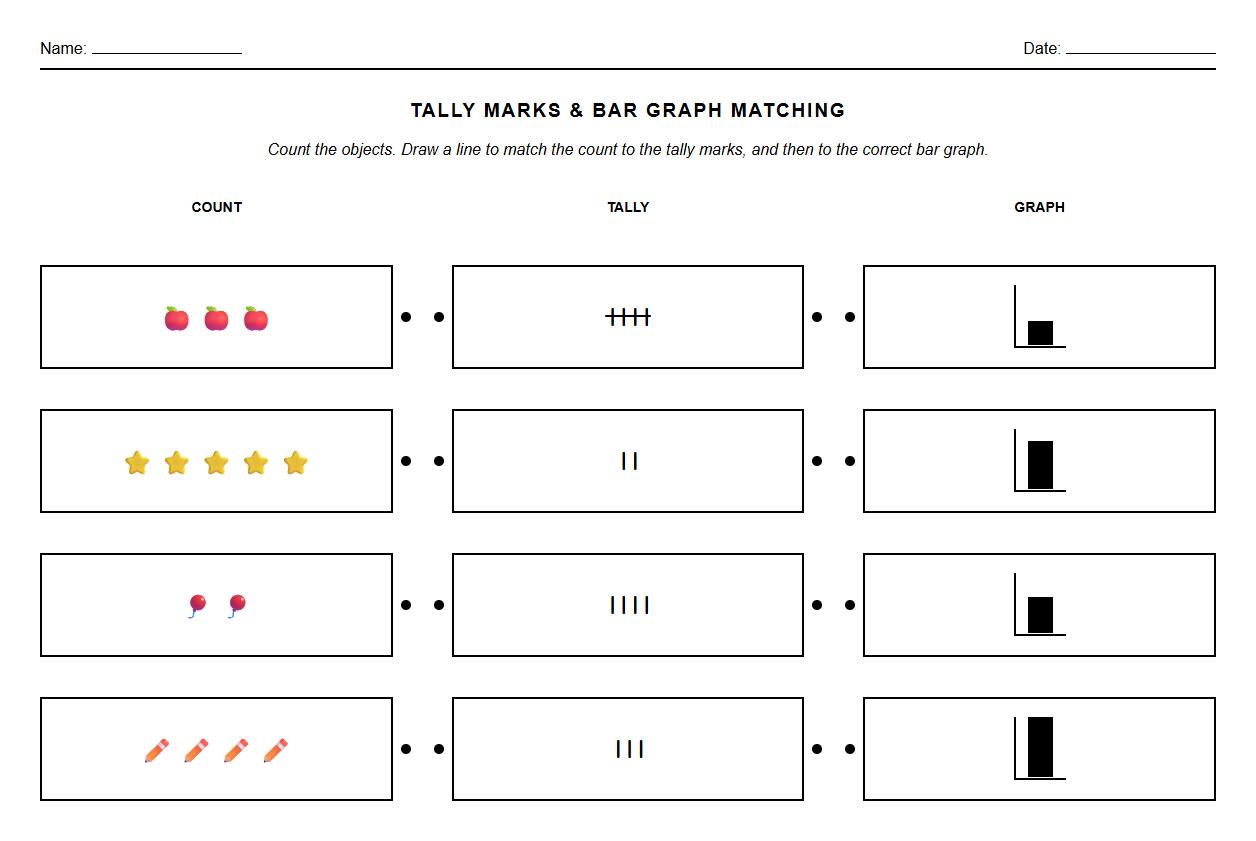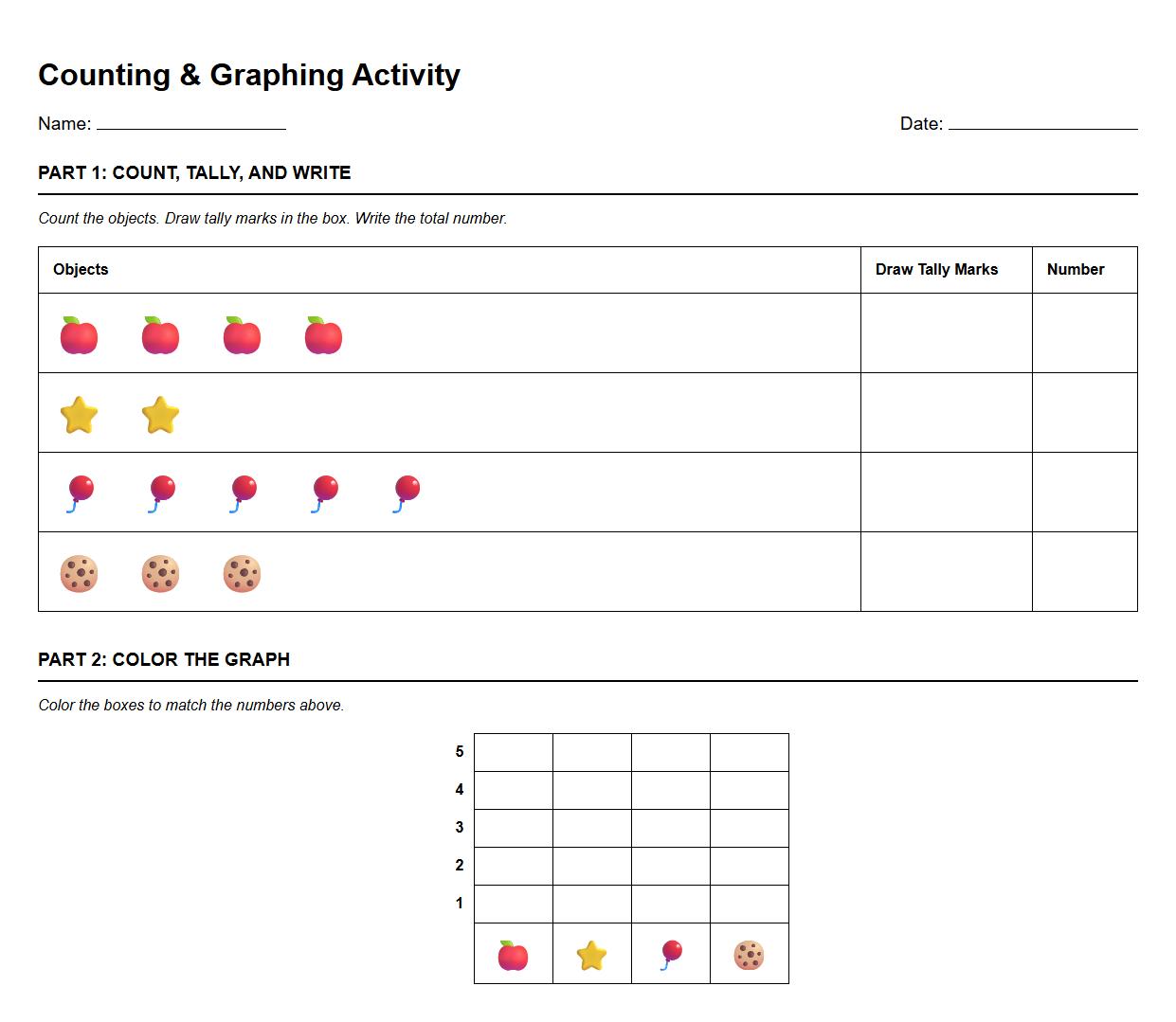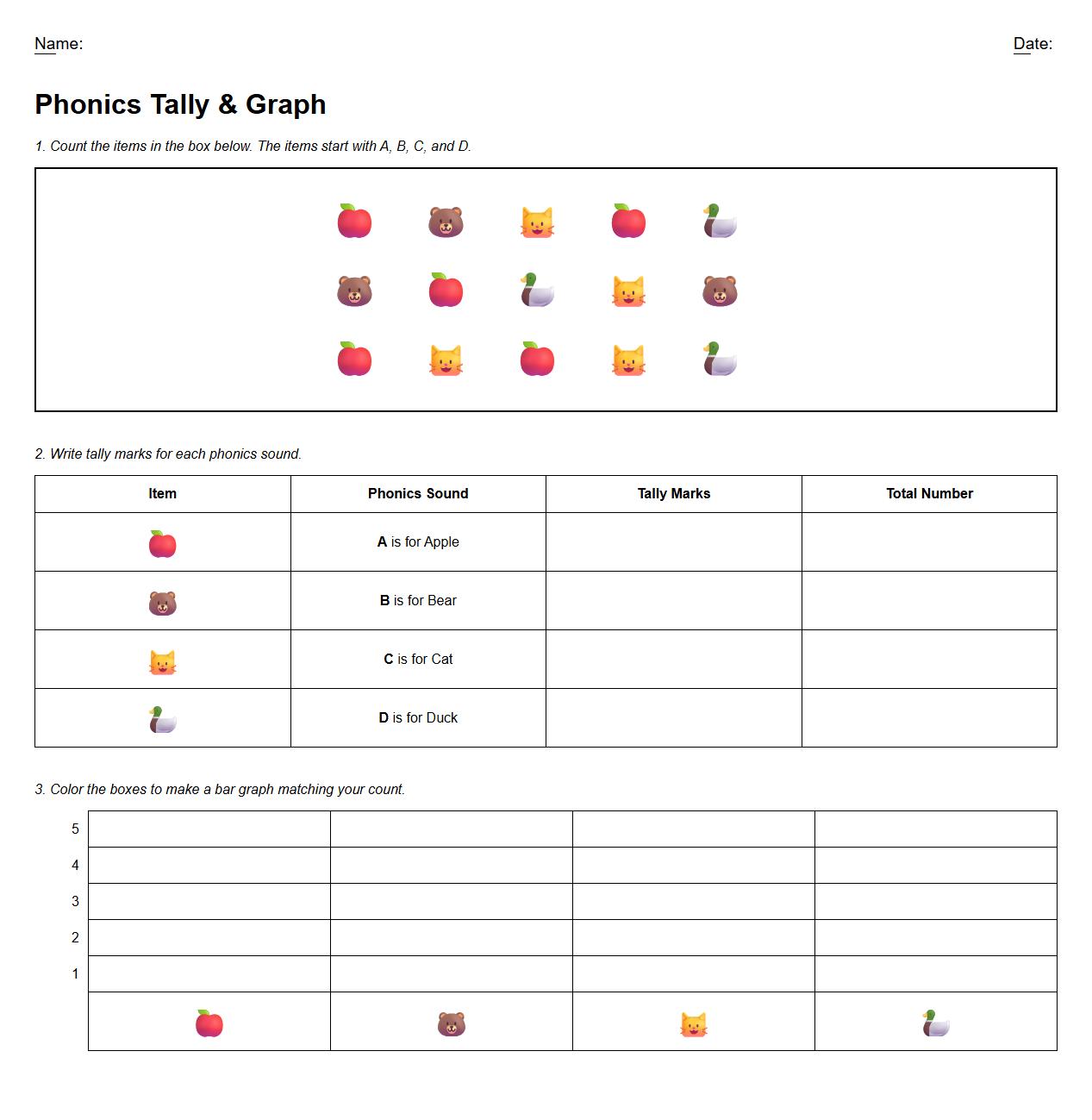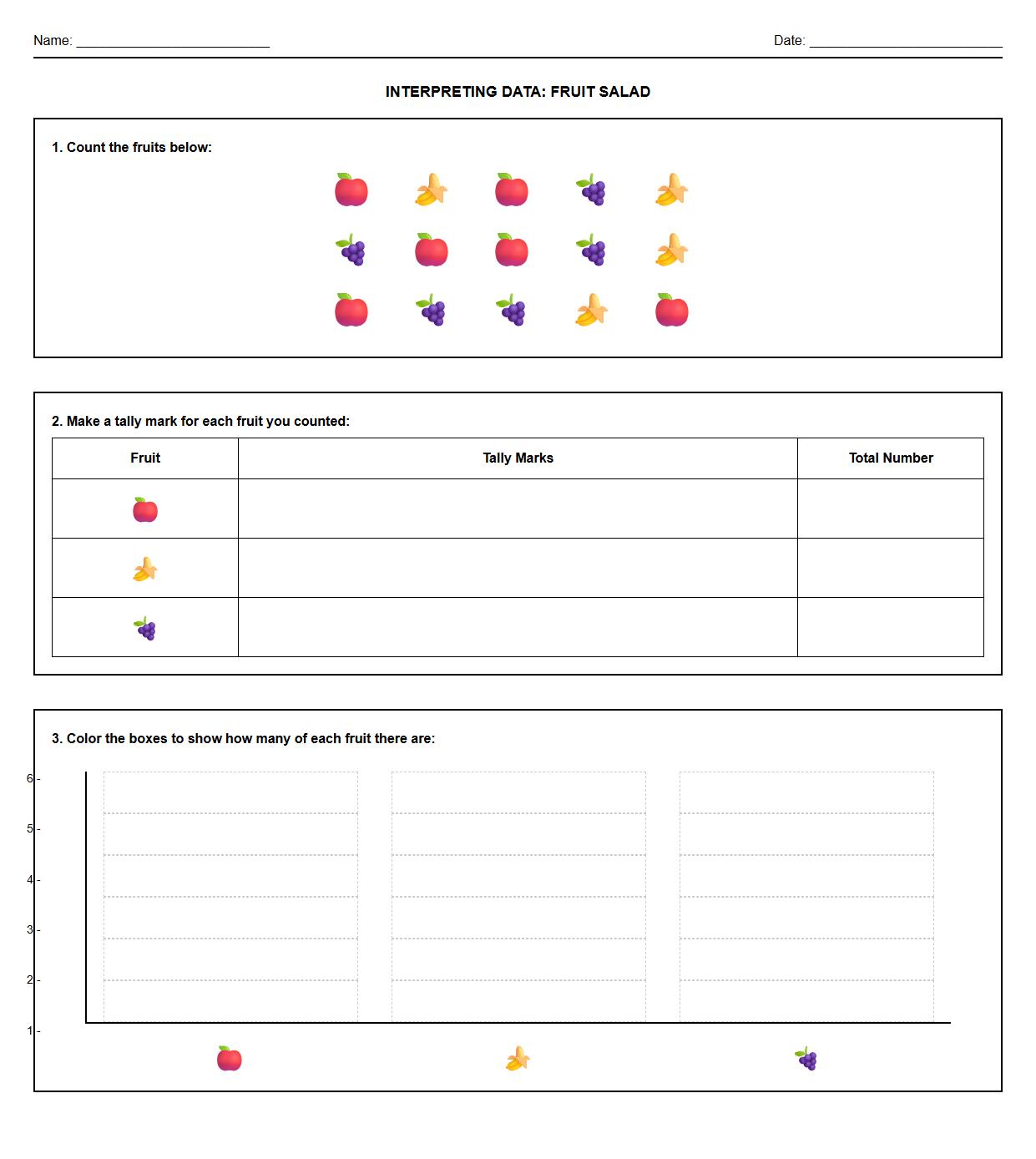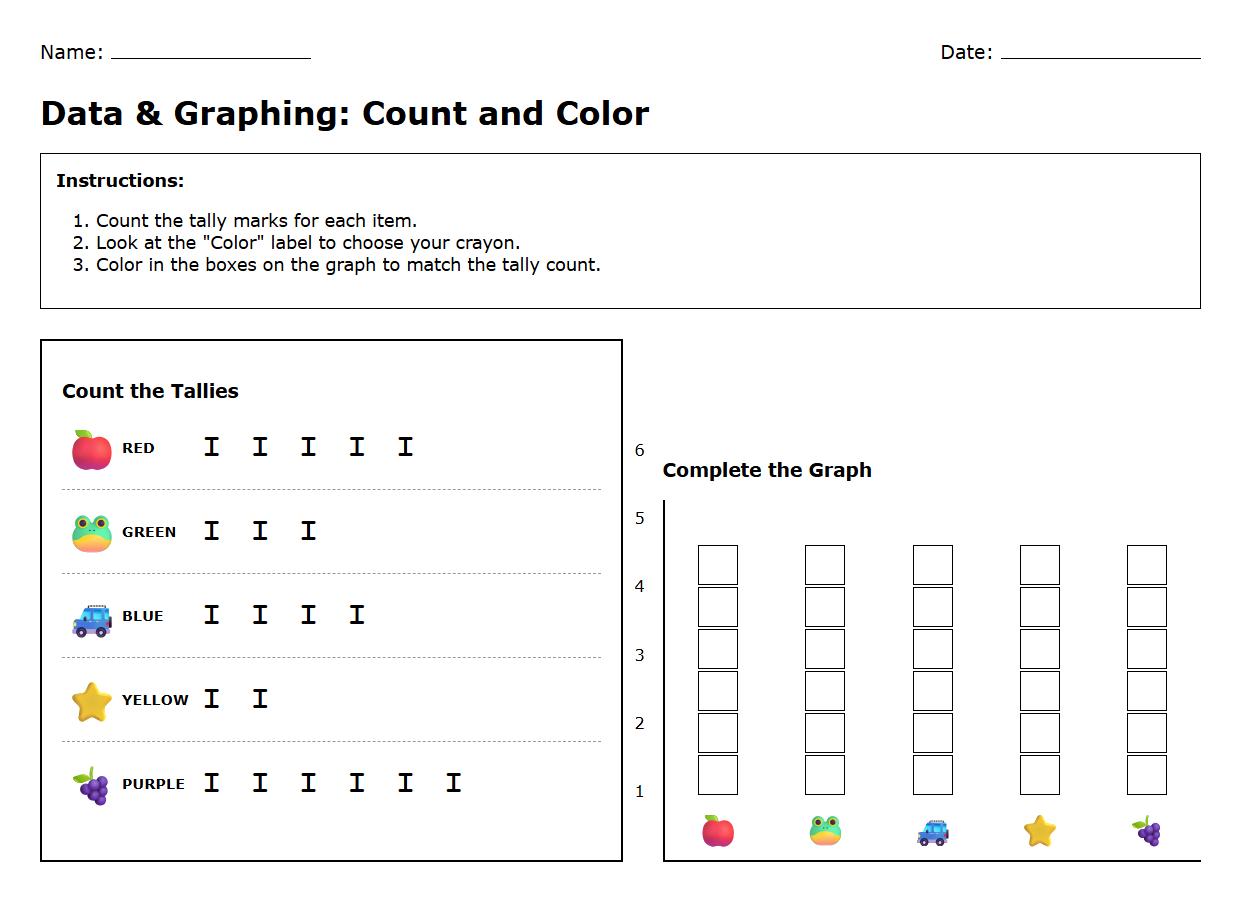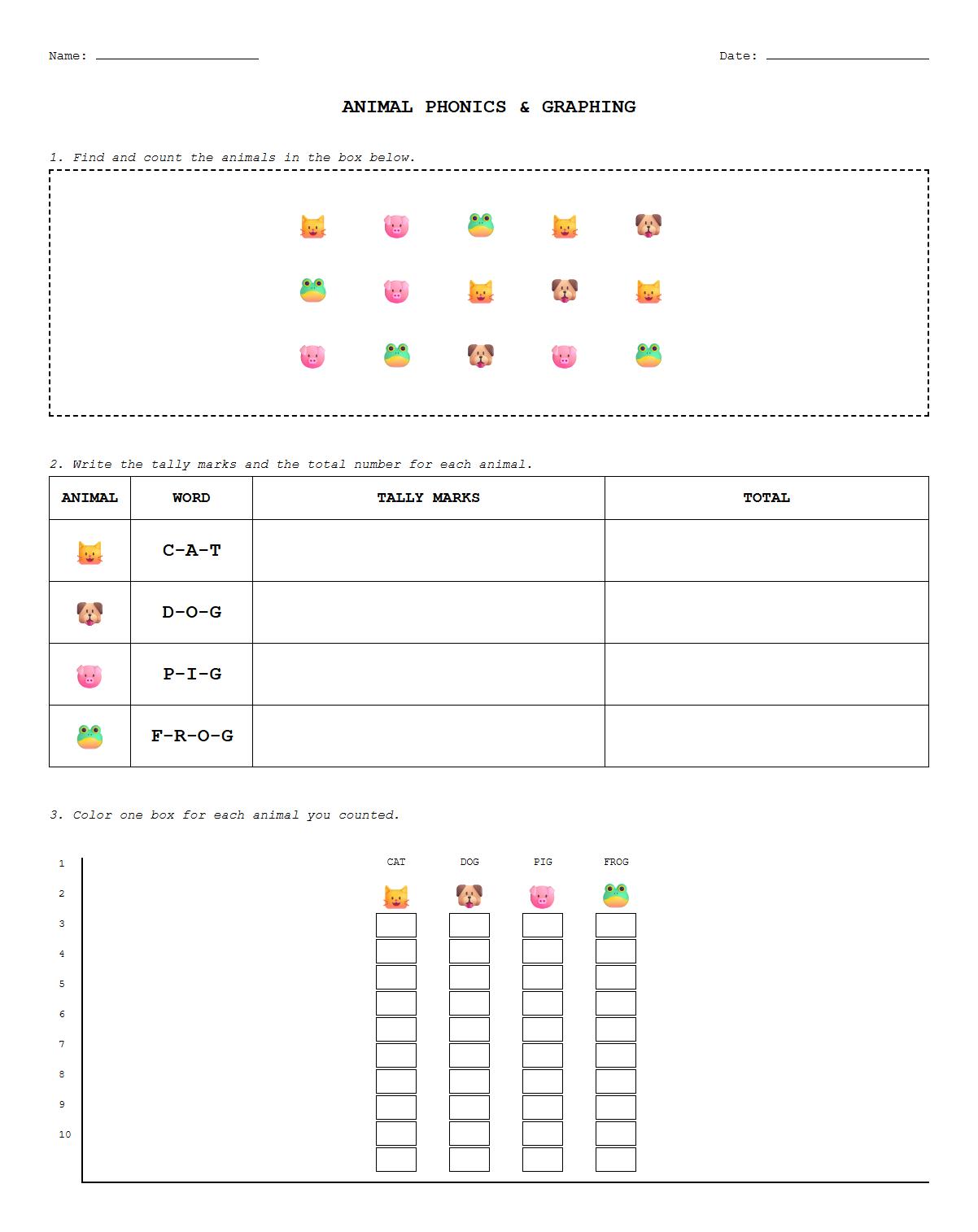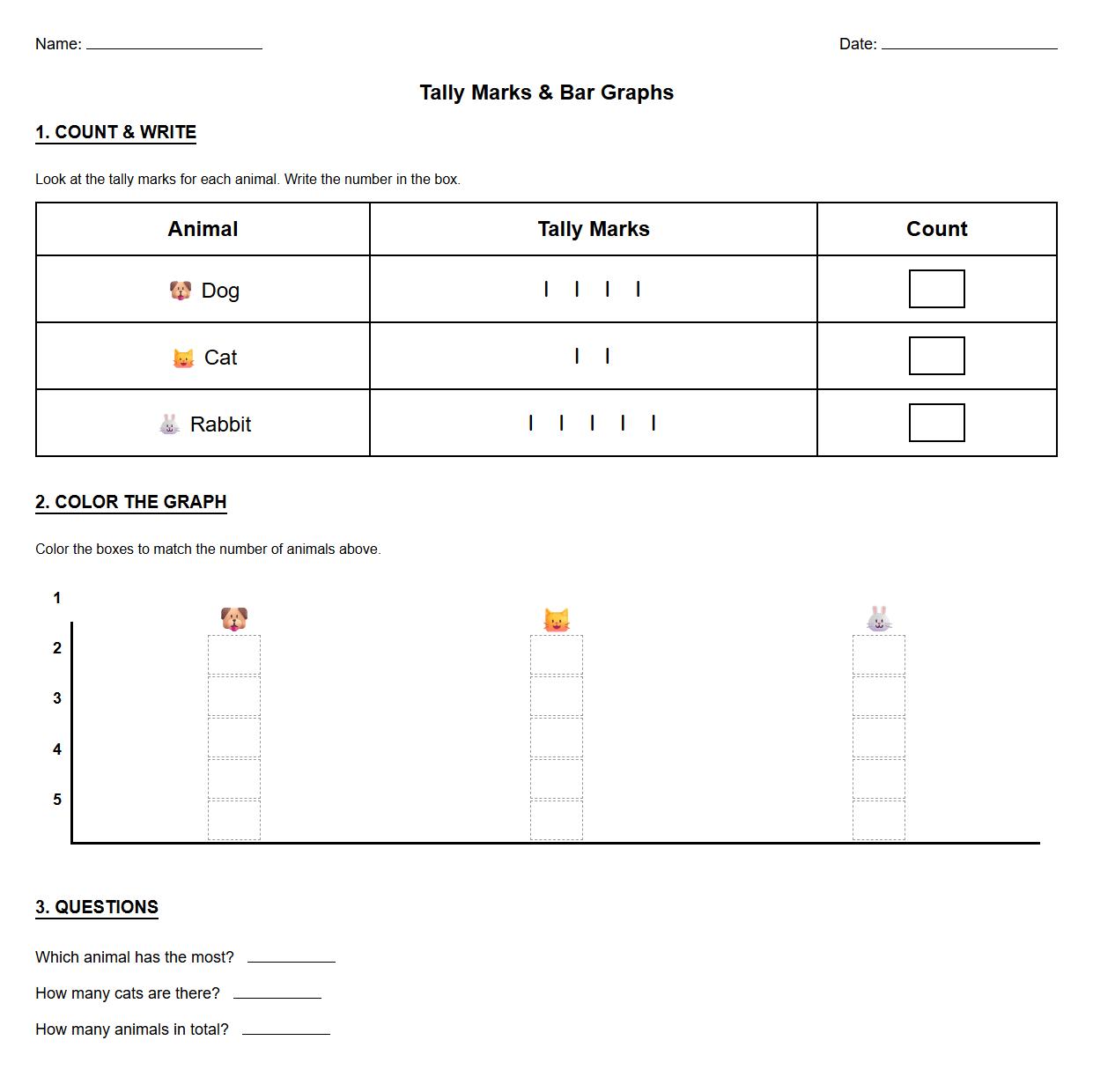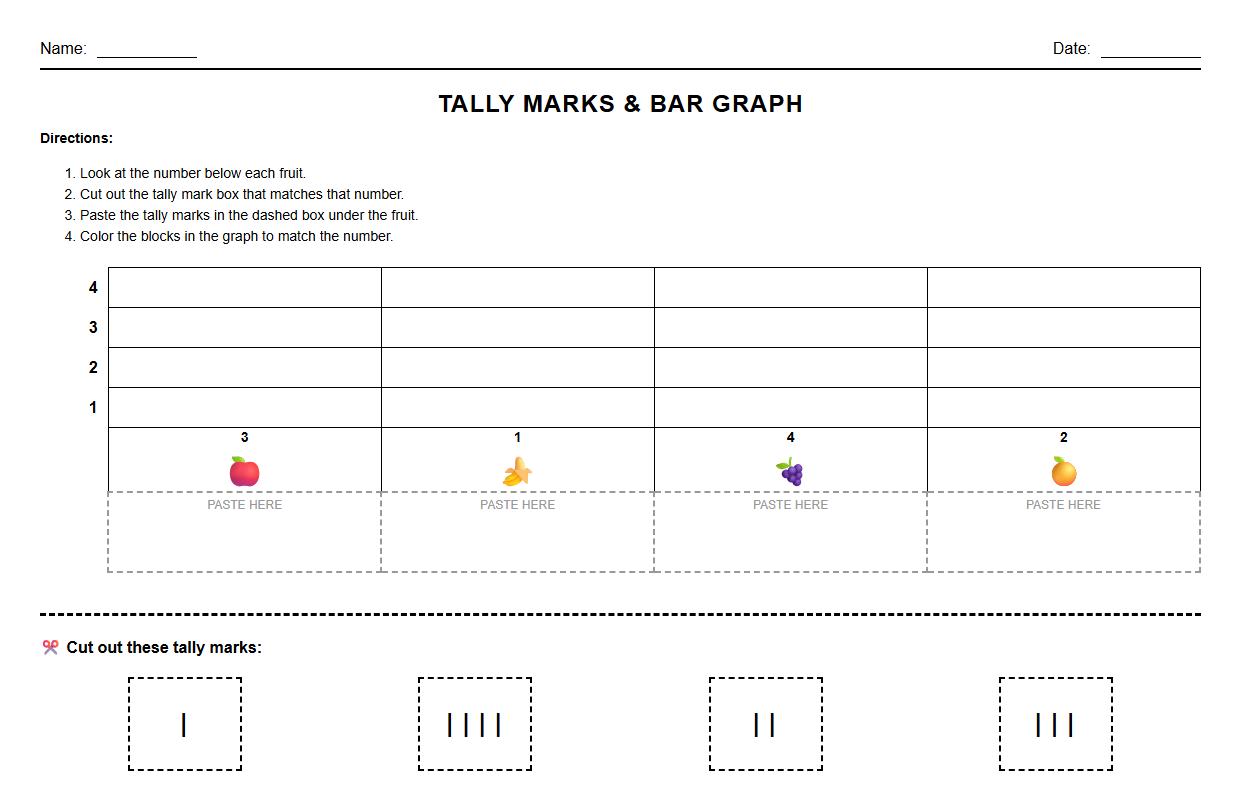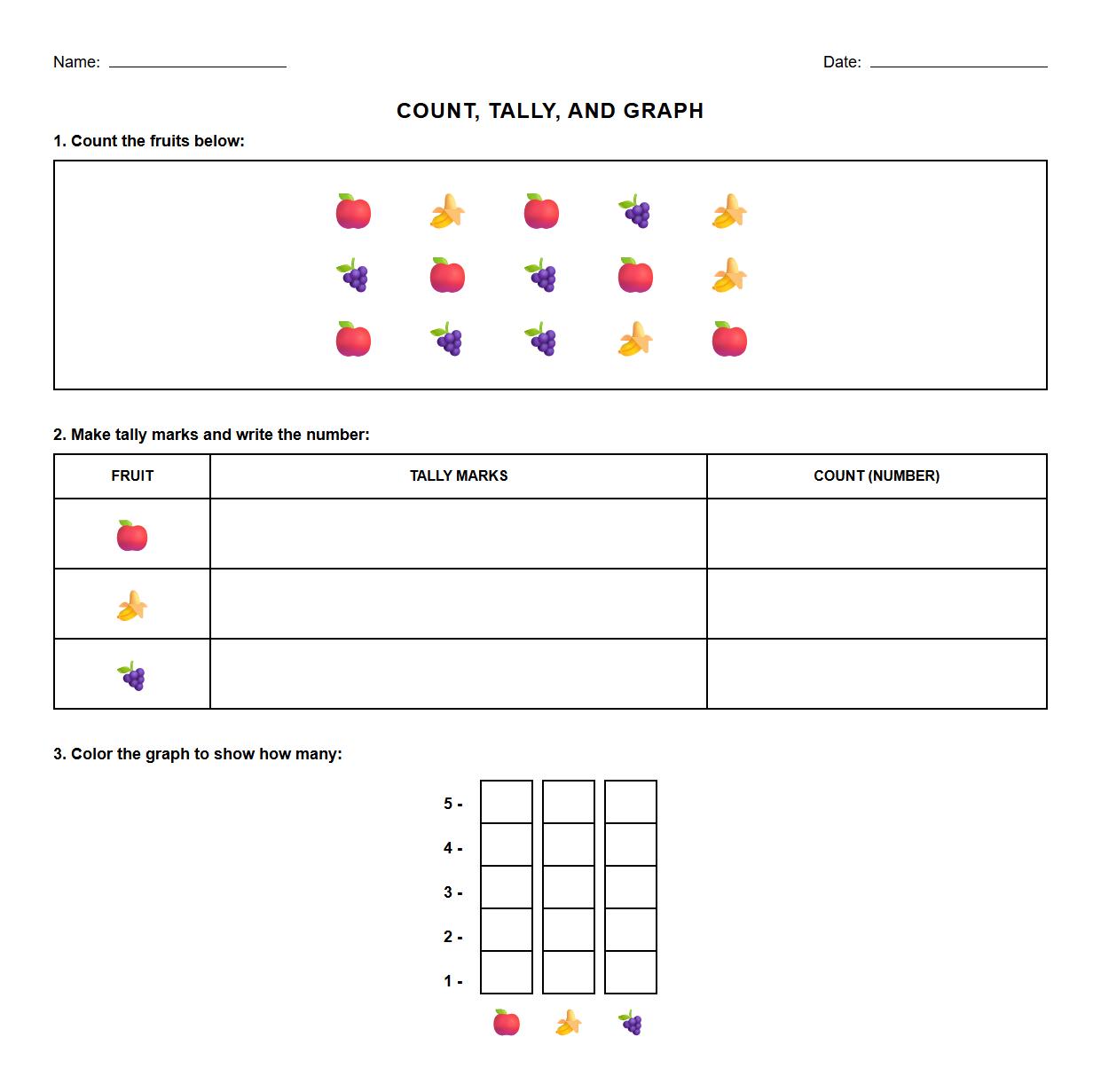
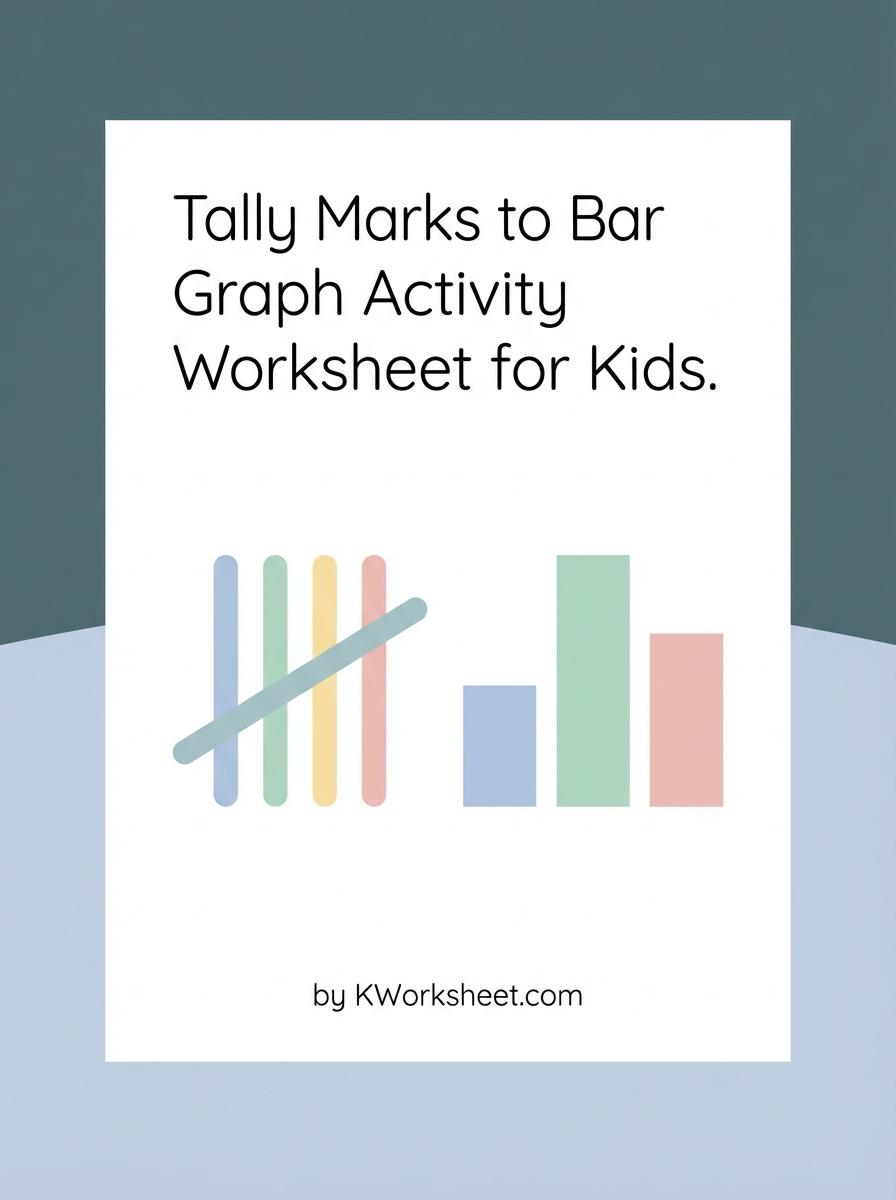
Tally marks help kids organize data by grouping counts in sets of five, making it easy to visualize quantities. Converting tally marks to bar graphs introduces children to data representation and interpretation skills. Explore our engaging worksheets to practice converting tally marks into colorful bar graphs.
Tally Marks Counting Guide
To find the total items in the tally marks, count each set carefully and add the numbers together. Tally marks are usually grouped in fives, making counting quicker and easier for young learners. Encourage children to use the grouping method to improve their counting skills. This exercise helps develop number recognition and addition skills.
Identifying Highest and Lowest Tally Counts
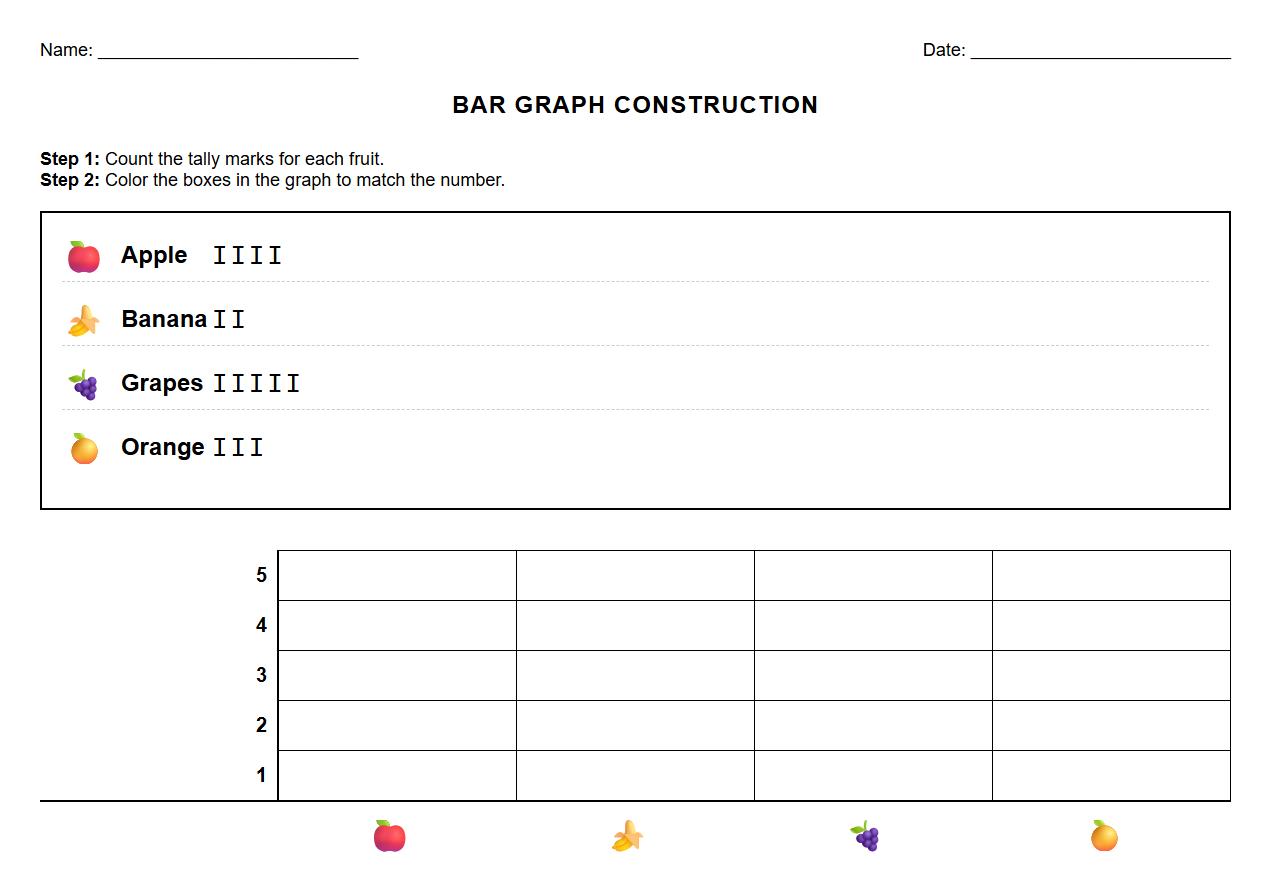
Look closely at each item's tally marks to determine which has the highest and lowest tally count. The item with the most groups of five and extra marks is the highest. The item with the fewest tallies is the lowest. Comparing these helps children practice observation and analytical skills.
Comparing Apples and Oranges
Count the tally marks for both apples and oranges to see how many more apples there are. Subtract the orange tally count from the apple tally count to find the difference. This comparison reinforces subtraction concepts and encourages attention to detail. It also promotes understanding of quantity differences in everyday objects.
Comparing Bar Heights for Bananas and Grapes
The height of the bar for bananas on the bar graph shows how many bananas were counted, just like grapes. Compare the two bar heights to see if bananas are taller, shorter, or equal in quantity to grapes. This visual comparison strengthens learning about data representation. Children learn to interpret and compare numerical data using graphs.
Number of Bars on the Bar Graph
Count how many bars appear on the bar graph to identify how many items are being represented. Each bar stands for a different fruit or object tally counted. Knowing the number of bars helps children categorize and organize information visually. This skill is key for understanding basic graphing concepts.
Items with Equal Tally Marks
Check which two items have the exact same number of tally marks. Identifying these equals teaches children about equality in data sets. It also helps them make connections between numbers using visual information. This activity fosters comparison and matching skills.
Difference Between Tallest and Shortest Bars
Find the tallest and shortest bars on the bar graph and calculate the difference in their heights. This difference shows the range of data values present. Teaching this helps kids understand variability in data sets and basic subtraction. Visualizing the difference supports conceptual learning of measurement.
Effect of Adding Two Oranges on the Bar Graph
If you add two more oranges, the orange bar will grow taller by two units. This change will make the bar graph update to reflect the new total count for oranges. Explaining this helps children learn how data changes affect graph visuals. It also introduces concepts of real-time data updates and dynamic graphs.
Drawing Tally Marks to Match Pears Bar Graph
To draw tally marks matching the pears' bar on the graph, count the bar height. Draw groups of five tally marks for every five units, then add any extra tally marks for additional units. Practicing this skill reinforces the link between tally marks and bar graph data. This activity enhances fine motor skills and number representation.


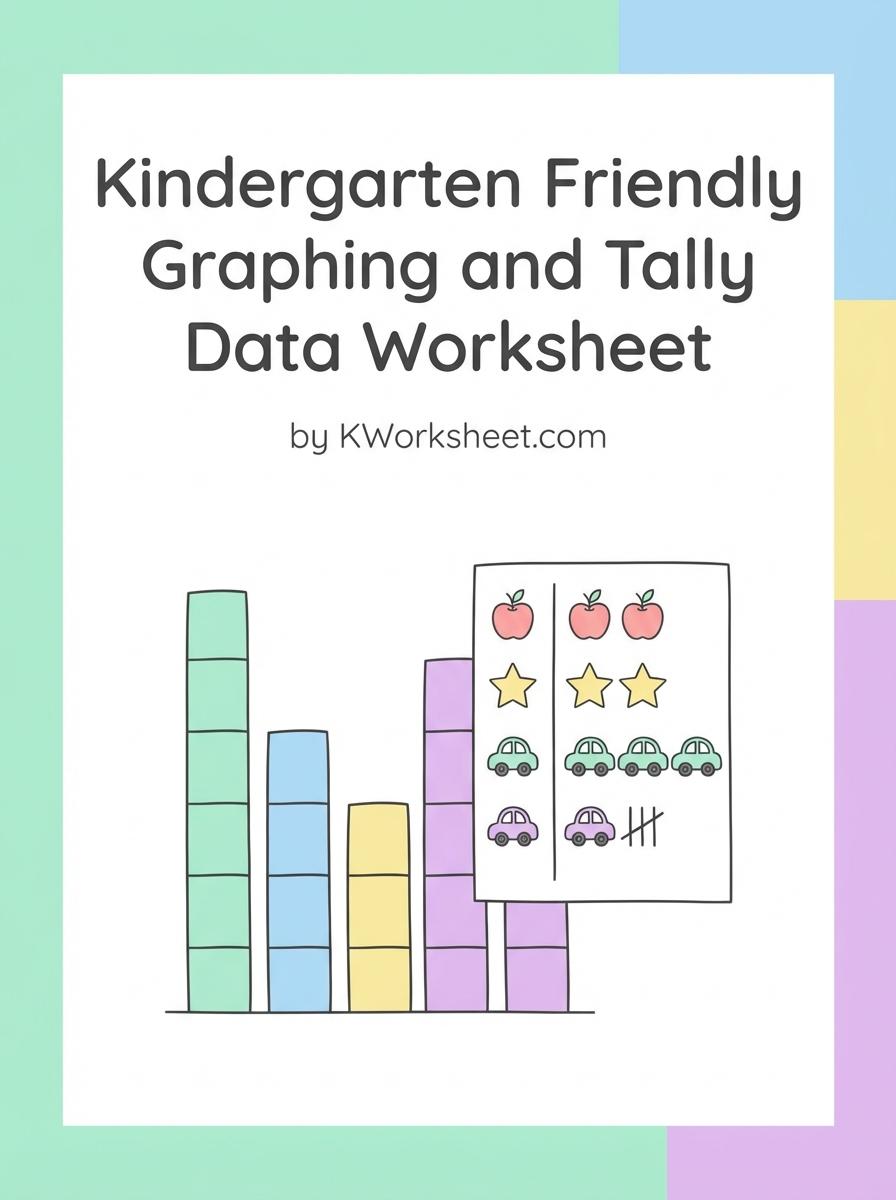
Kindergarten Friendly Graphing and Tally Data Worksheet