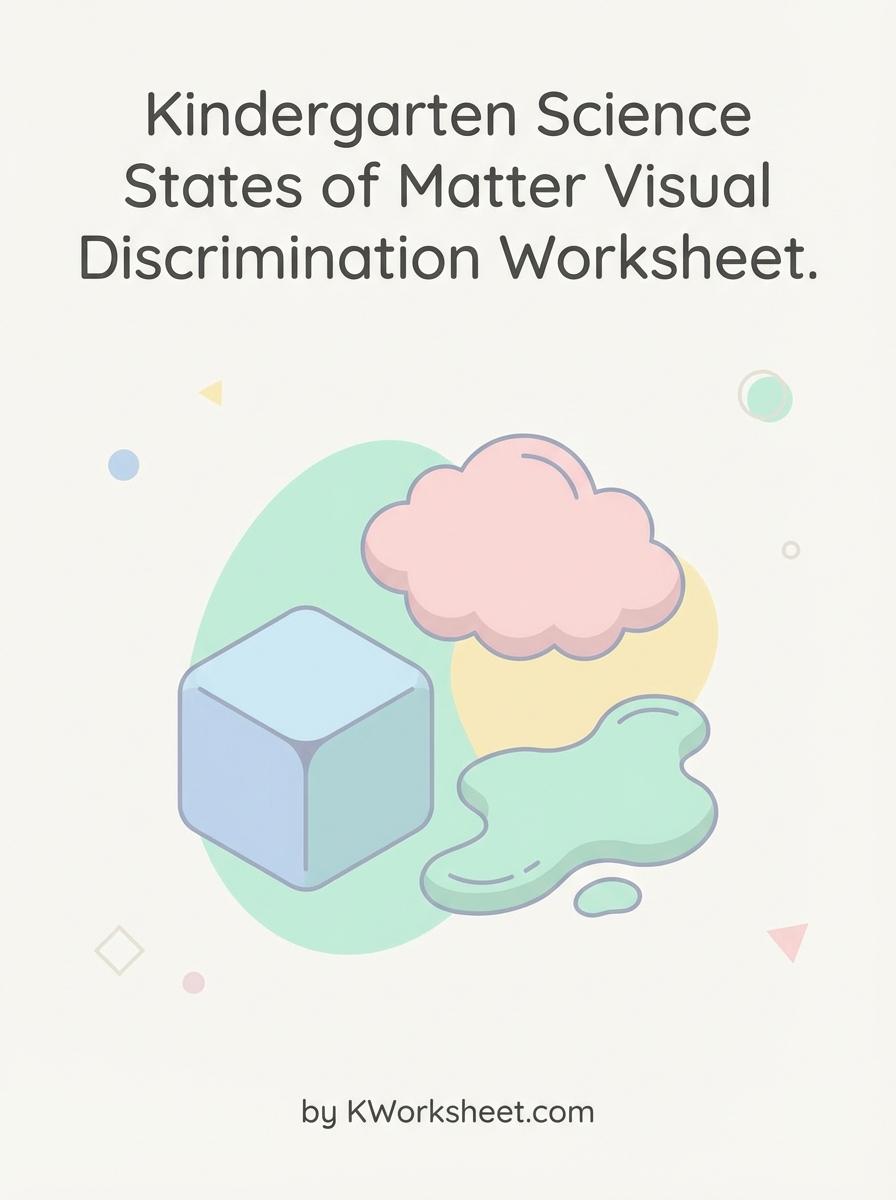
Explore the fundamental concepts of solids, liquids, and gases with this engaging Kindergarten Science States of Matter Visual Discrimination Worksheet. Perfect for developing observation and classification skills, it helps young learners identify and differentiate between various states of matter through colorful illustrations. Check out the available worksheets to enhance your child's early science education today.
Identifying Solids
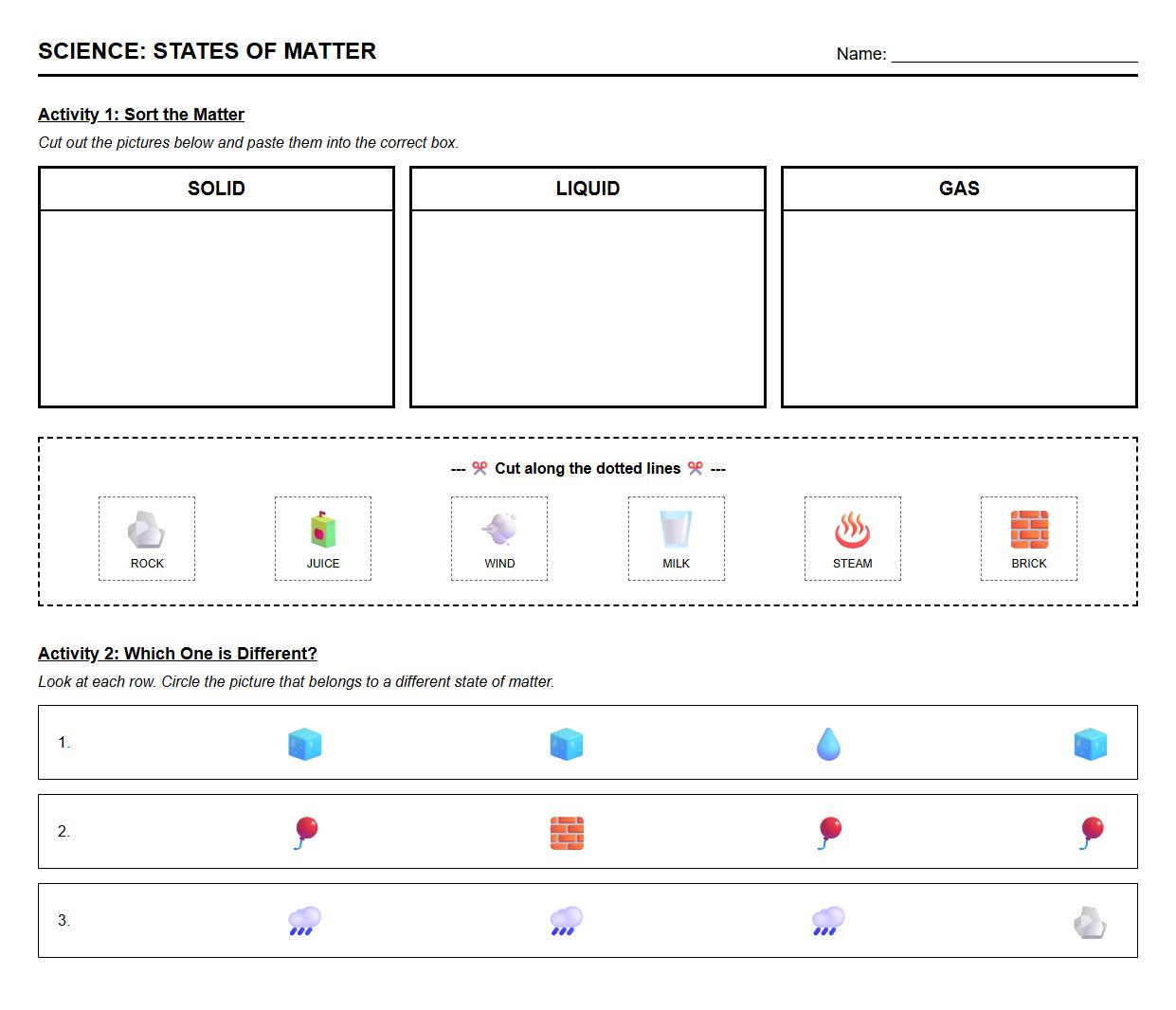
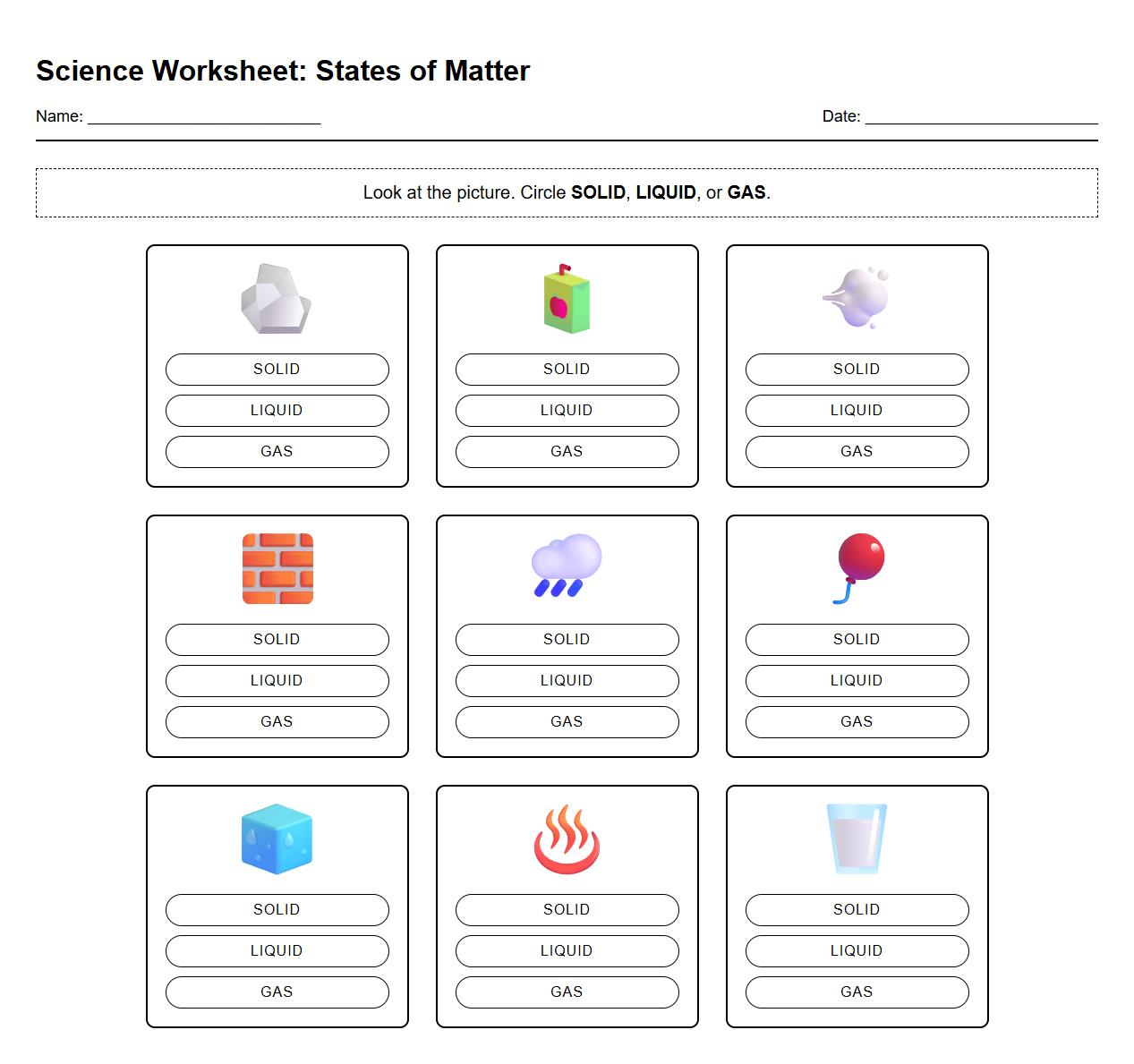
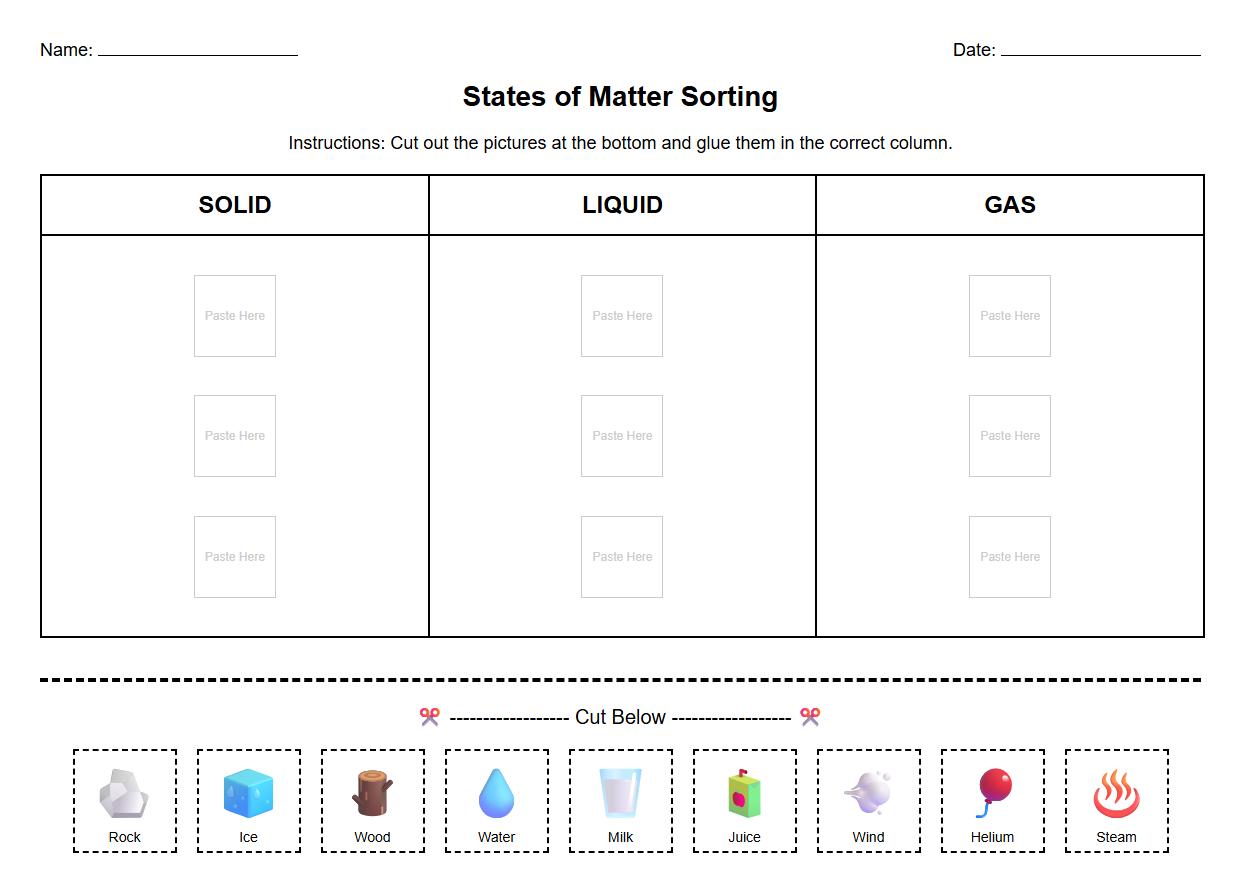
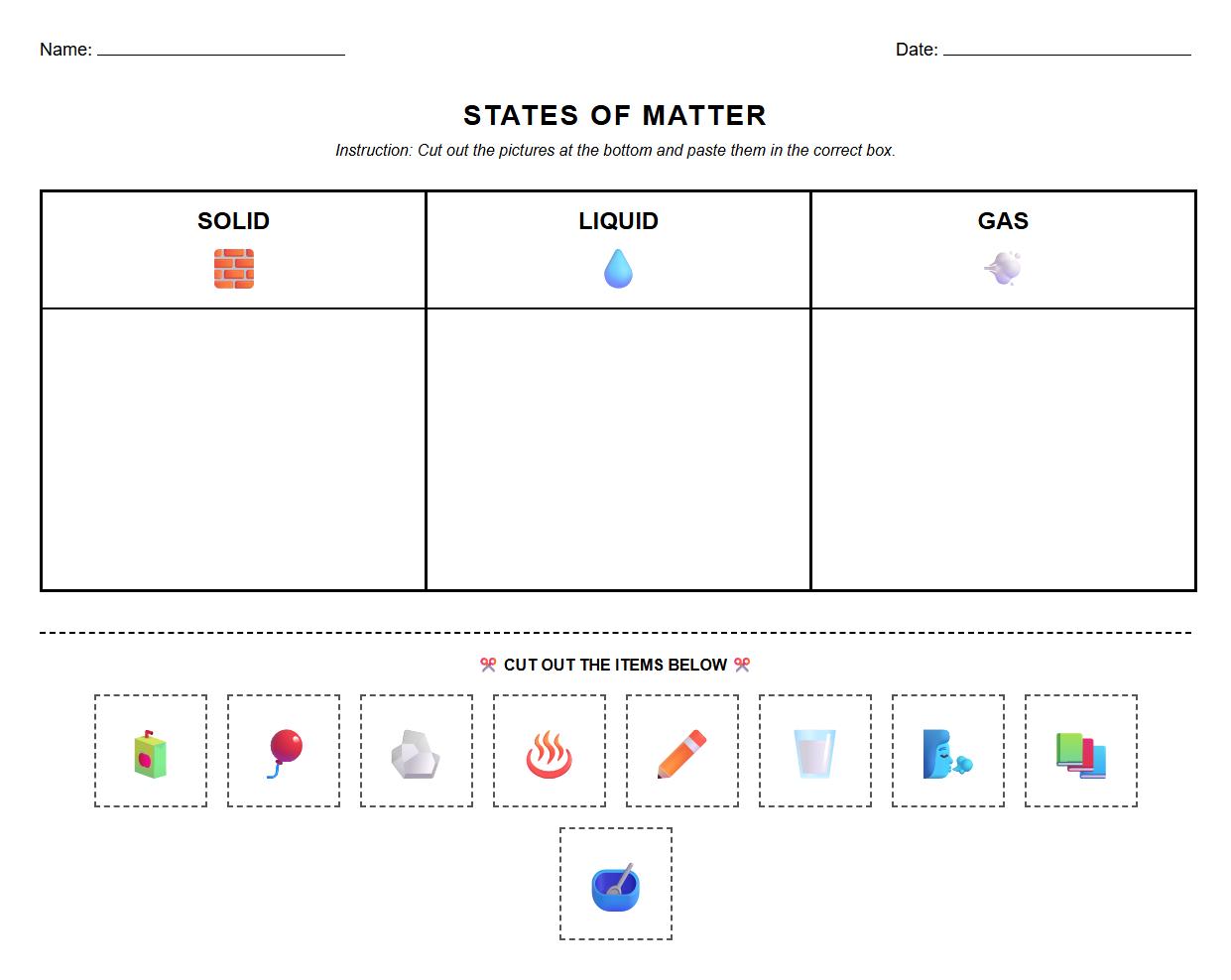
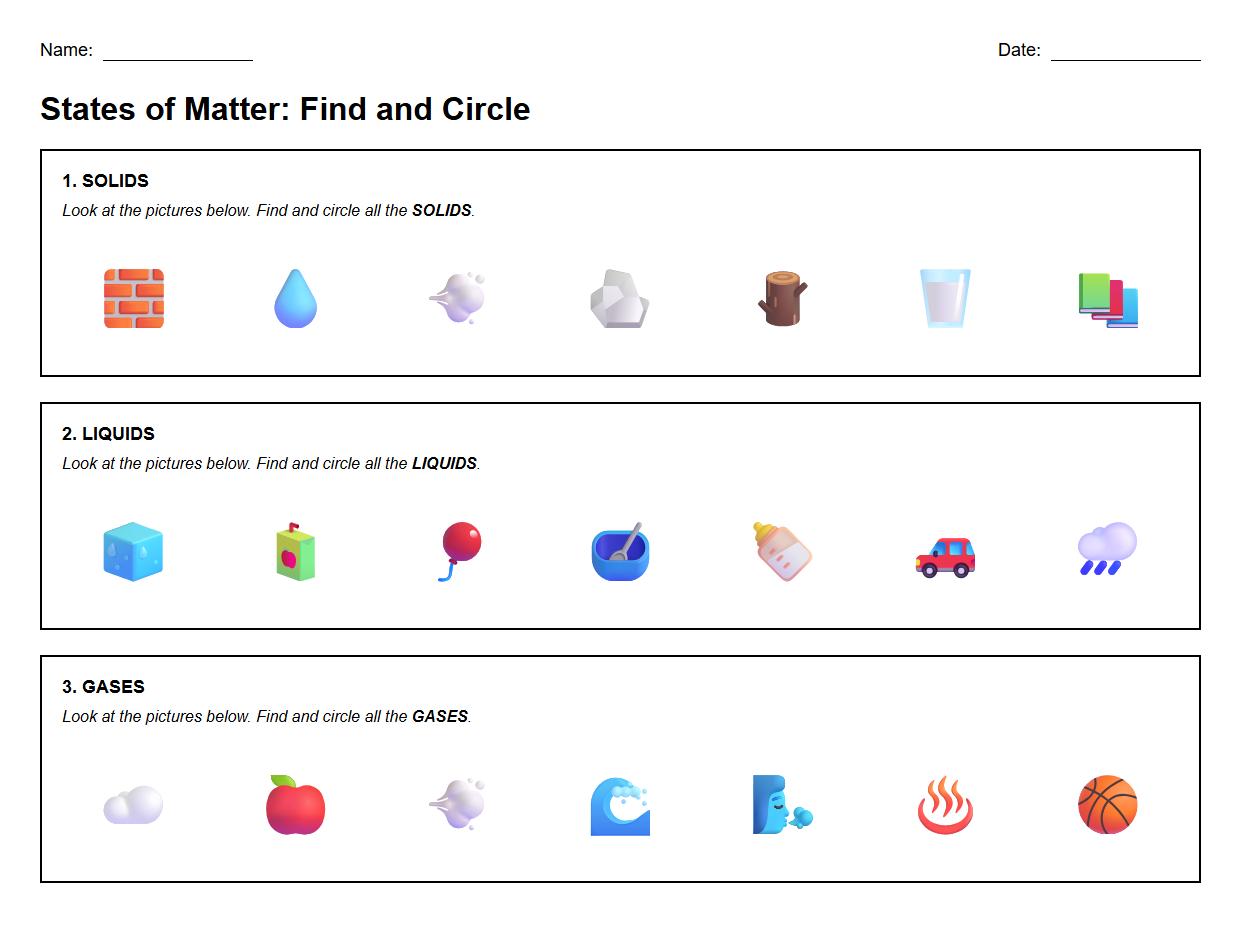
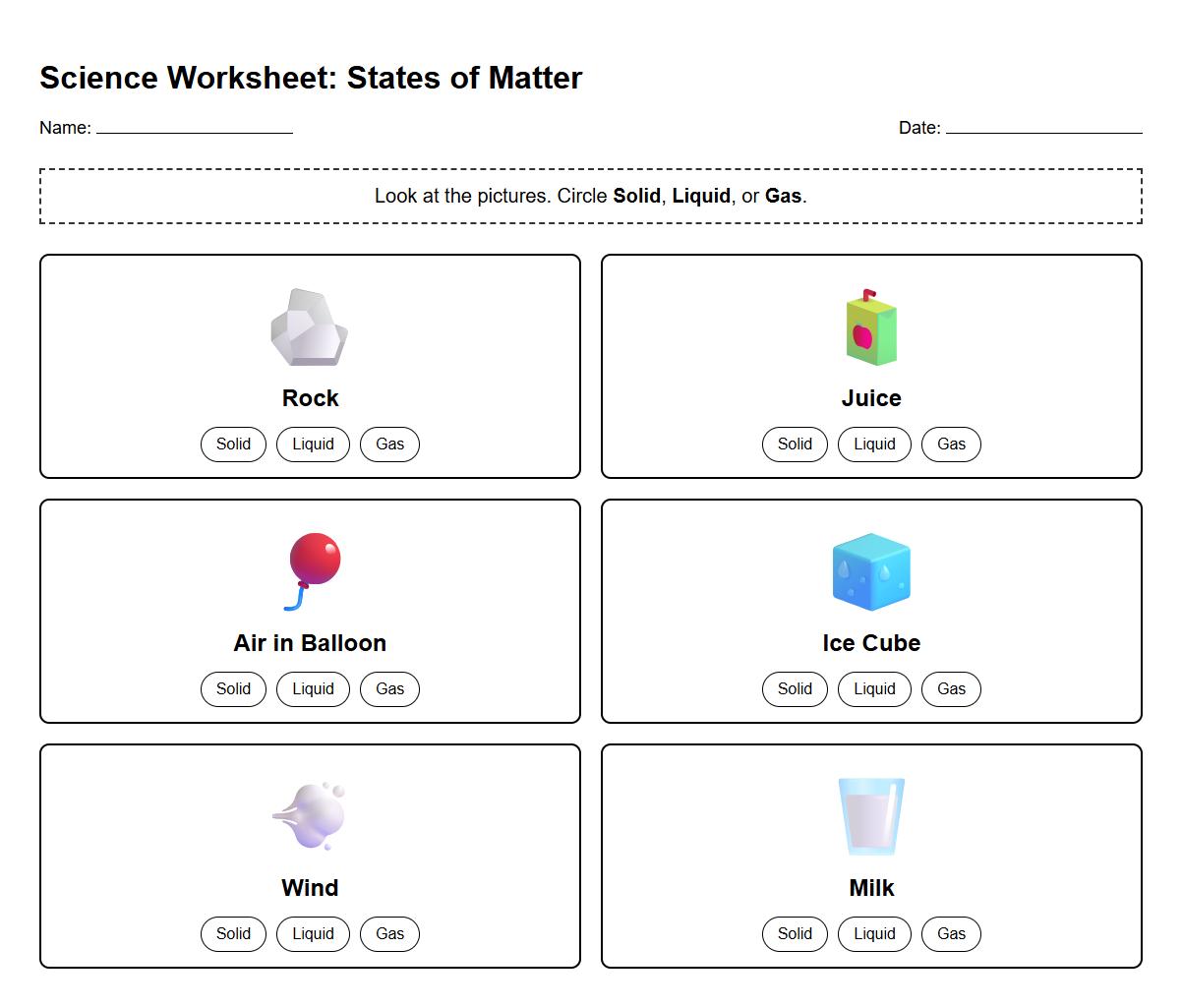
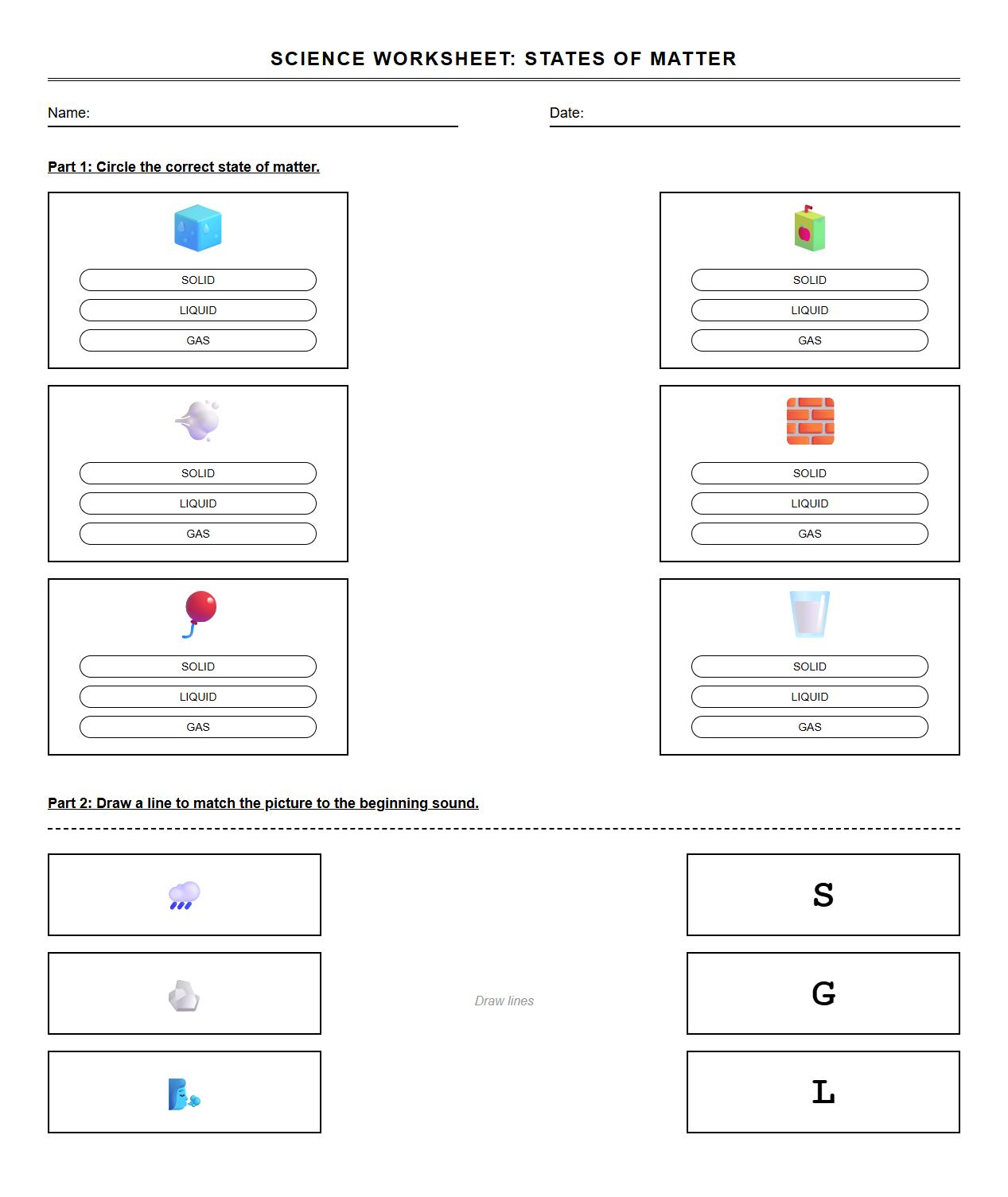
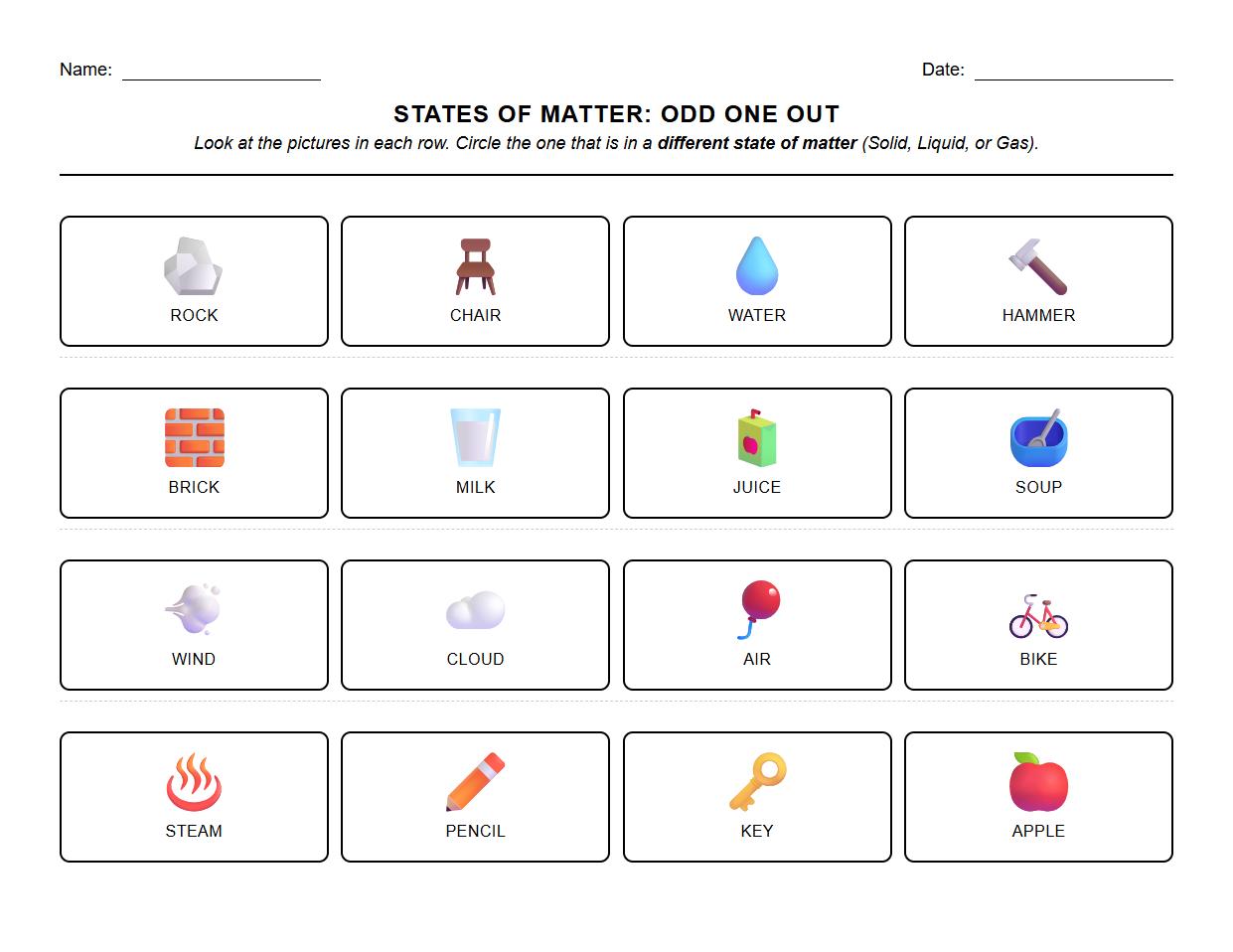
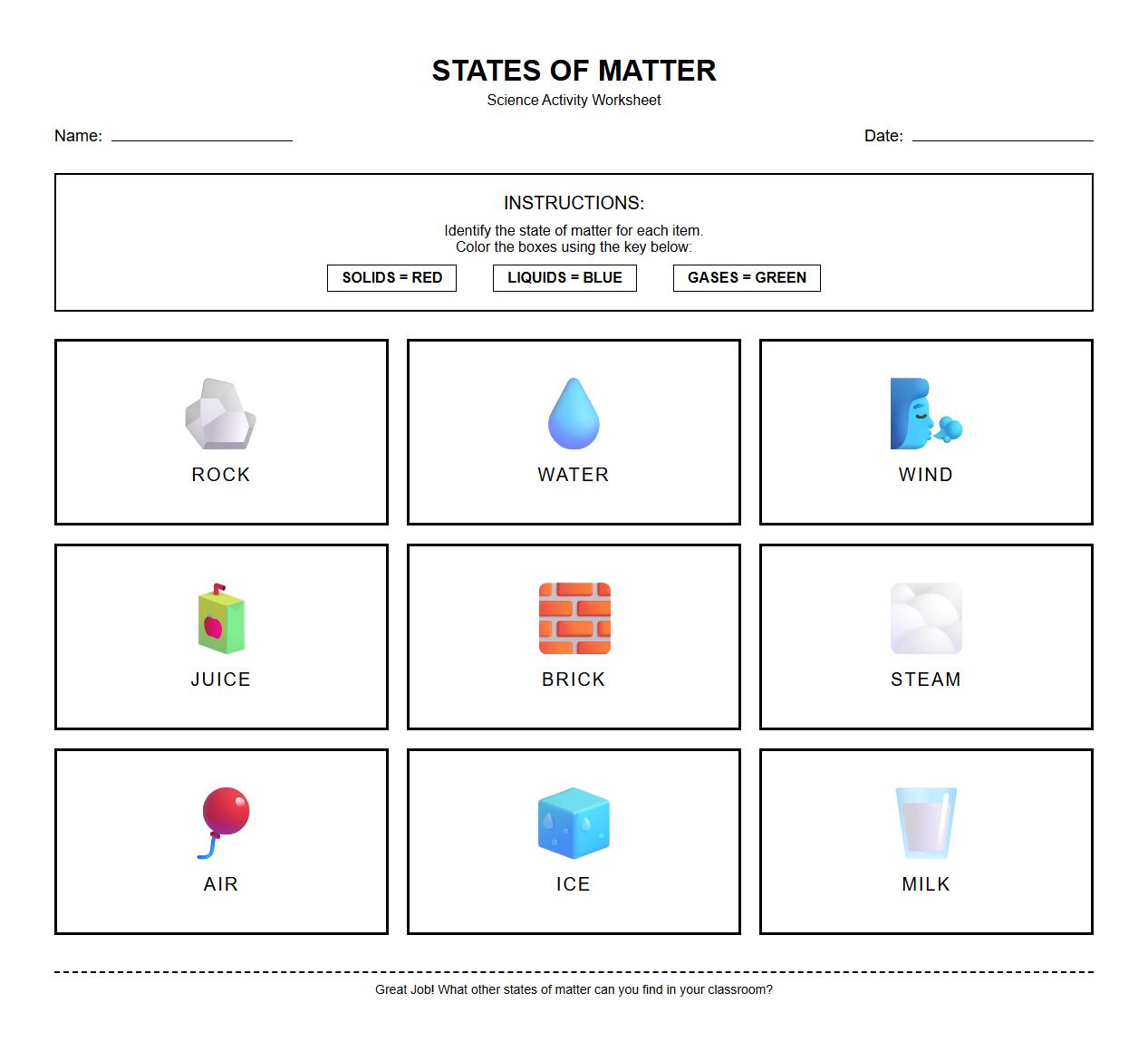
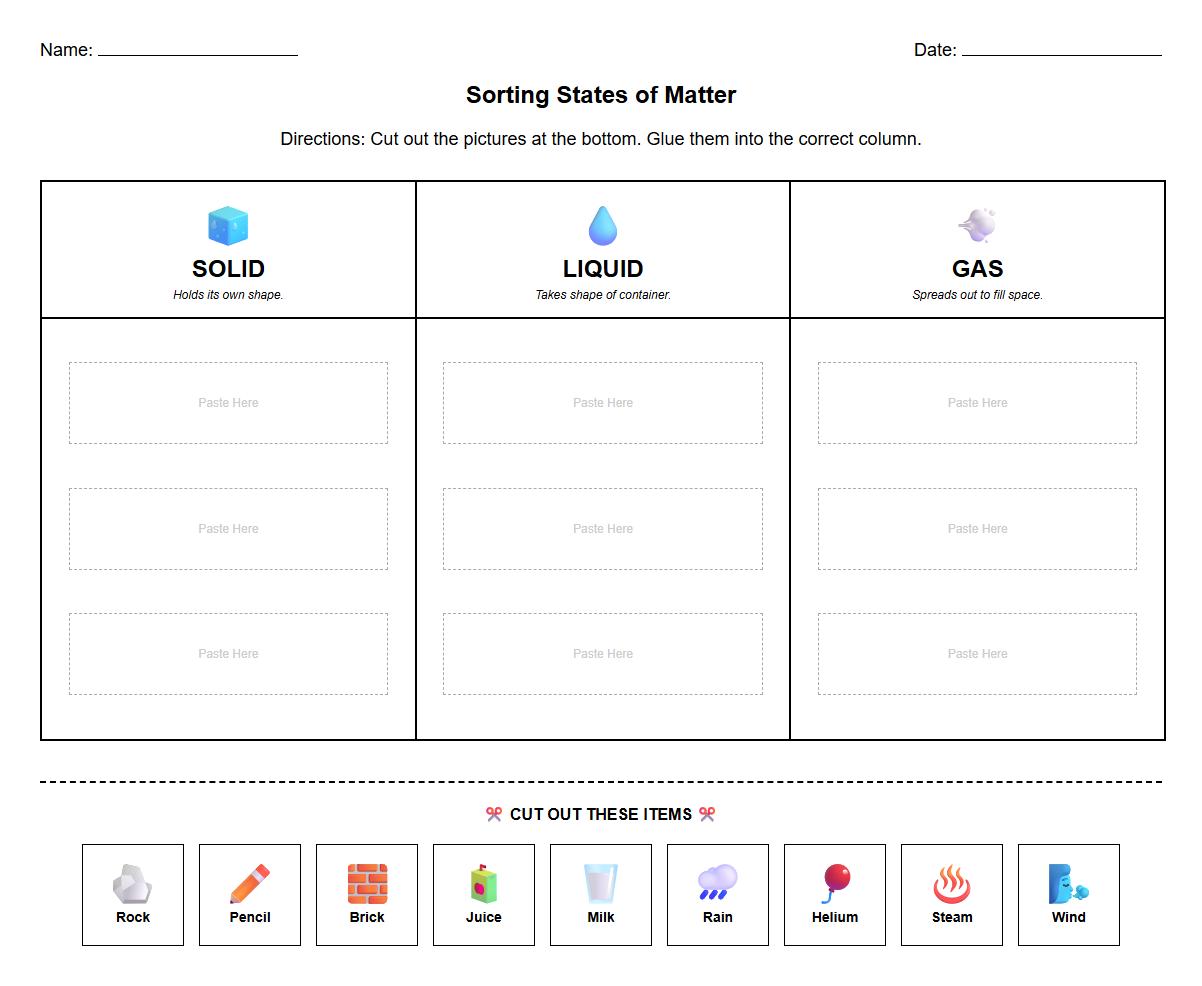
Look carefully at the pictures and find the one that shows a solid. Solids have a fixed shape and do not change unless broken. Examples include a rock or a book. Help children understand how solids feel firm and stable.
Finding Liquids
Which object is a liquid? Liquids flow and take the shape of their container. Water, juice, or milk are common examples. Encourage kids to point out the container holding the liquid.
Recognizing Gases
Identify the item that is a gas. Gases are invisible or hard to see but fill the space around them, like air or steam. Teach children that gas spreads out and doesn't have a fixed shape.
Water Identification
Circle the image that looks like water. Water is a clear liquid essential for life and can be found in many containers. Help kids notice how water moves and reflects light.
Changing Shapes
Point to the picture that represents something that can change its shape. Liquids and gases change shape depending on their container. Solids keep their shape, so focus on flowing or spreading items.
Objects That Cannot Flow
Which object cannot flow? Solids cannot flow because their particles are tightly packed. Ask children to identify the items that stay the same shape. This helps them understand the difference between solids and liquids.
Filling Containers
Choose the item that fills a container completely. Liquids and gases fill the space available, but solids do not. Demonstrate using examples like water filling a glass or air filling a balloon.
Pouring Objects
Identify the picture that can be poured. Liquids can be poured from one container to another, unlike solids or gases. This activity helps children understand liquid properties by visual comparison.
Spotting Air
Which of these looks like air? Air is a gas and often invisible, but sometimes we can see it in balloons or bubbles. Teach children to observe the space filled by something that can move and change shape easily.
Objects with Fixed Shape
Find the object that keeps its own shape. Solids maintain shape without needing a container. Encourage kids to compare solid objects with liquids and gases to understand physical states.


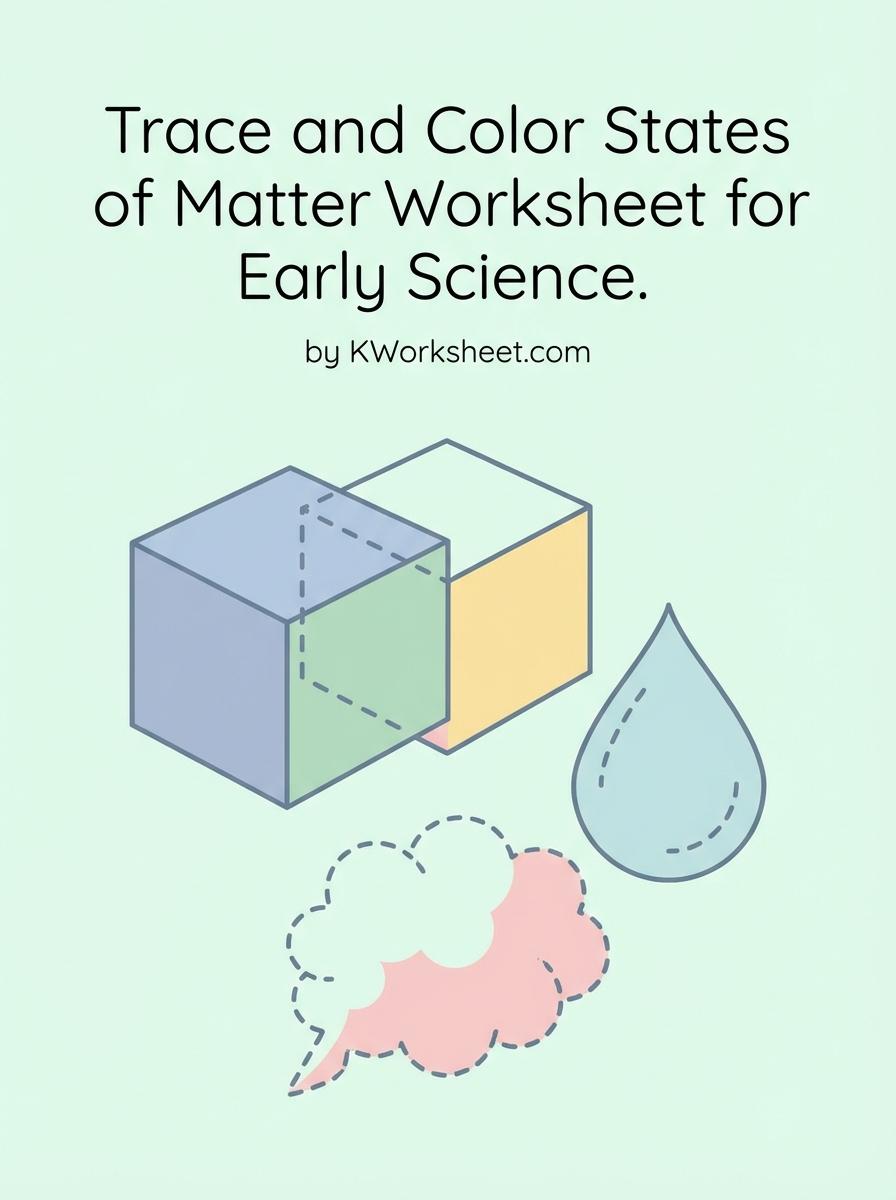
Trace and Color States of Matter Worksheet for Early Science