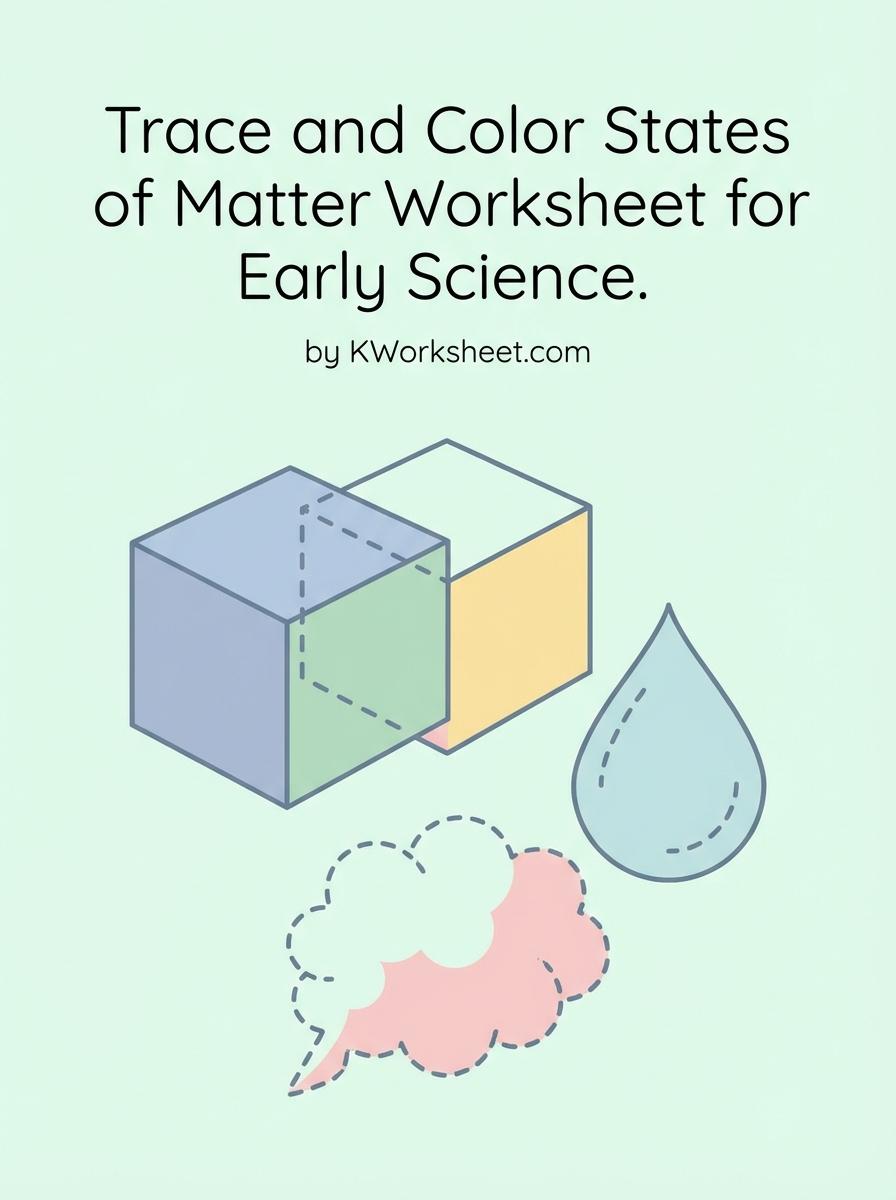
Young learners develop an understanding of solids, liquids, and gases by tracing and coloring activities that reinforce key concepts of states of matter. This hands-on approach enhances fine motor skills while introducing basic science vocabulary and properties of matter. Explore the available worksheets to engage children in interactive science learning.
The Three Main States of Matter in the Worksheet
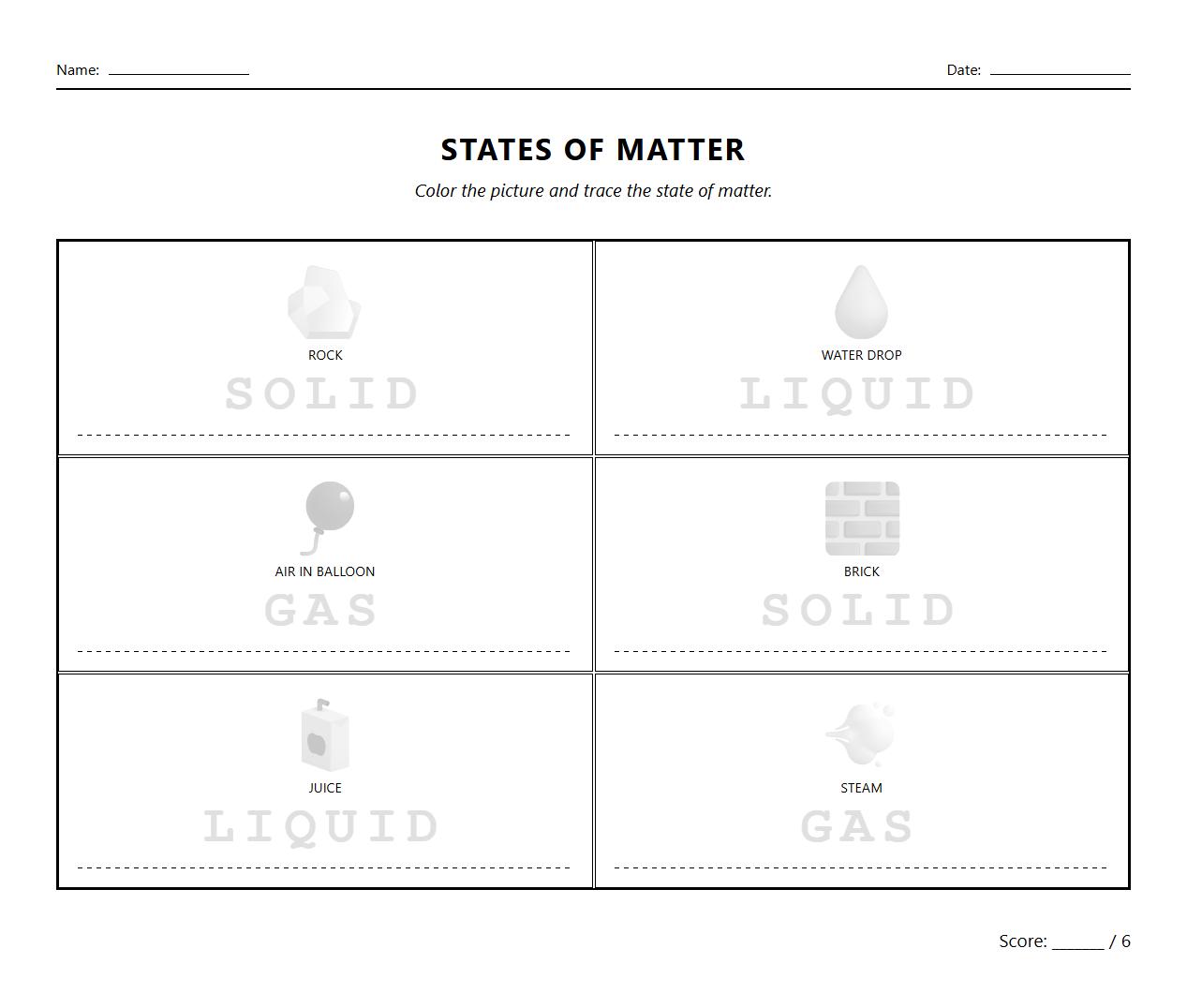
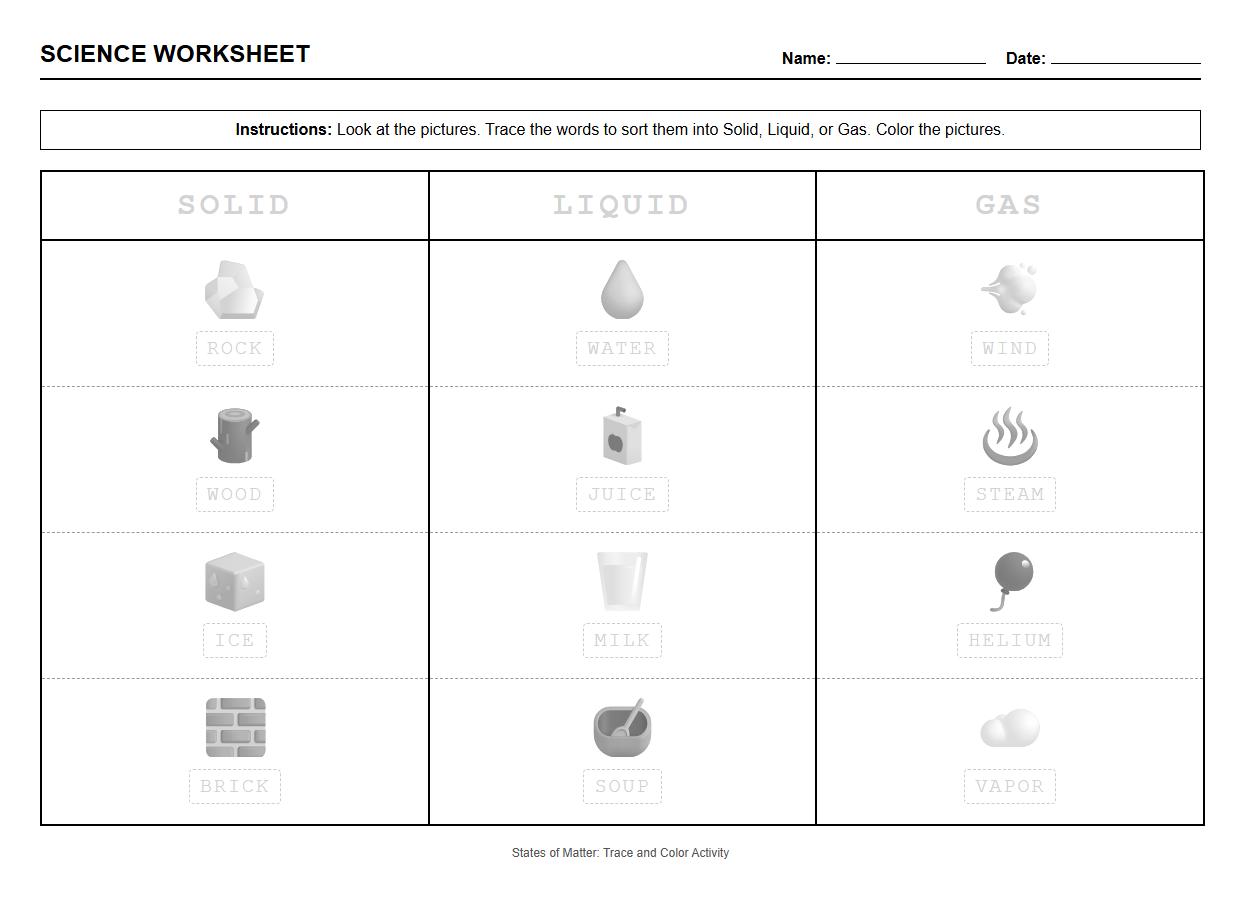
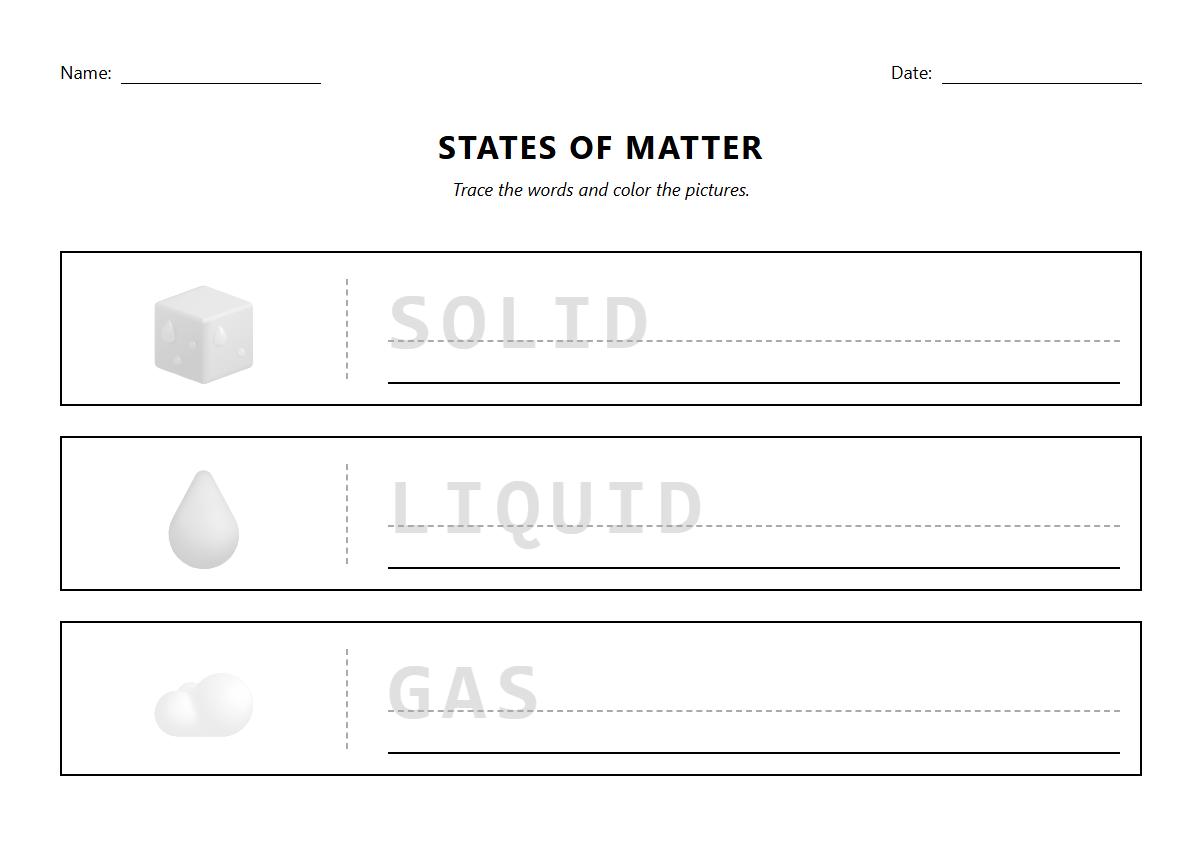
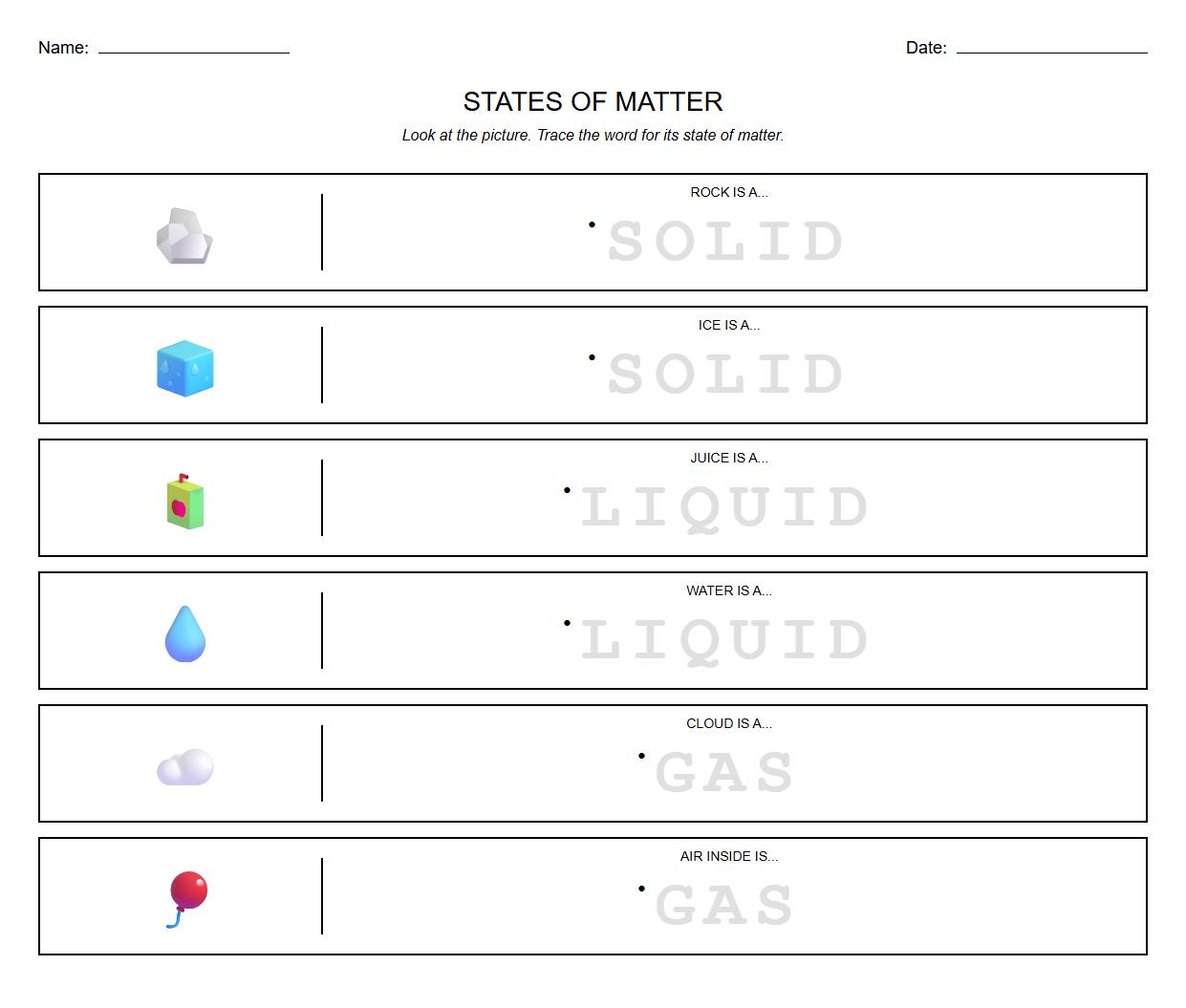
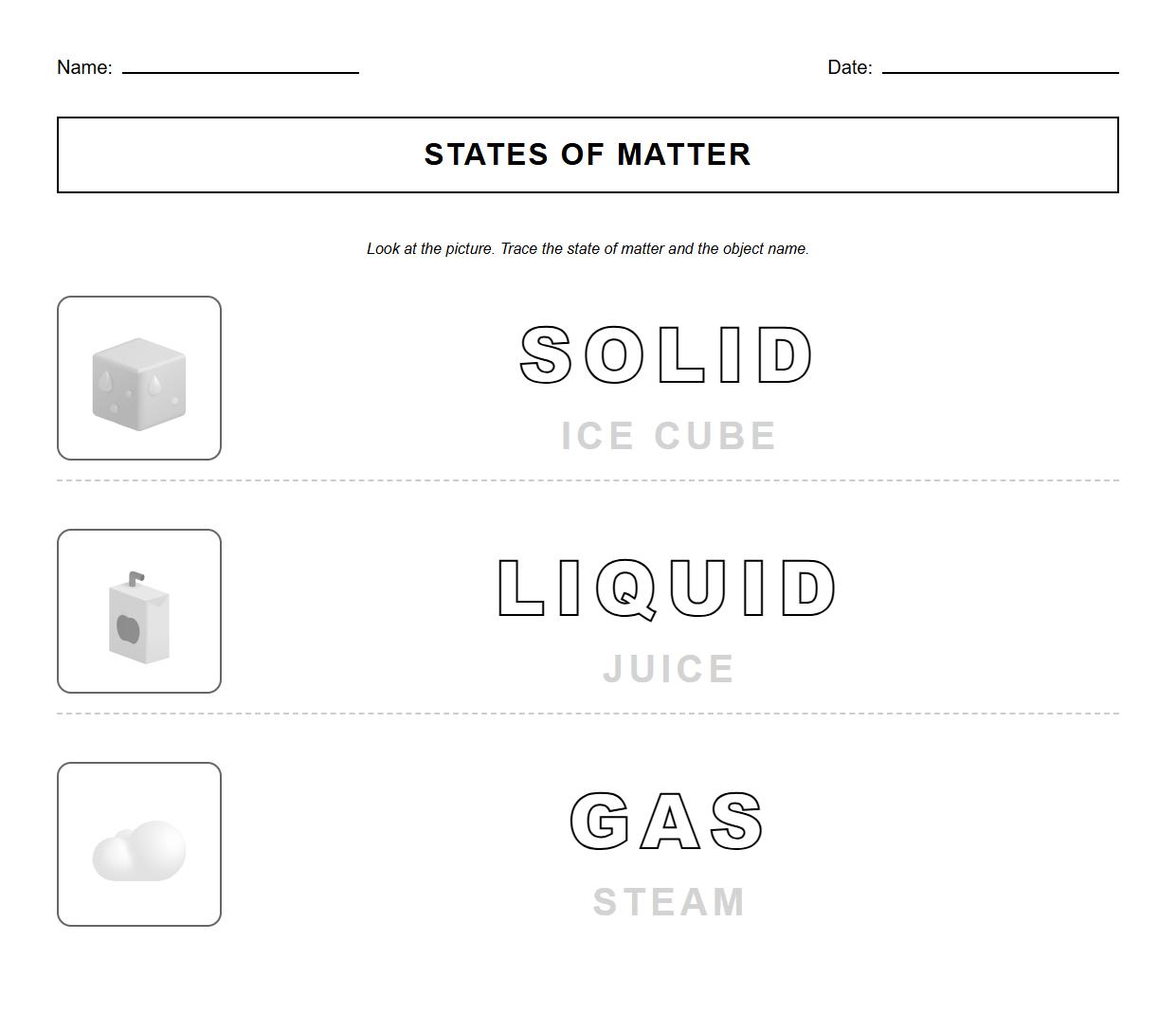
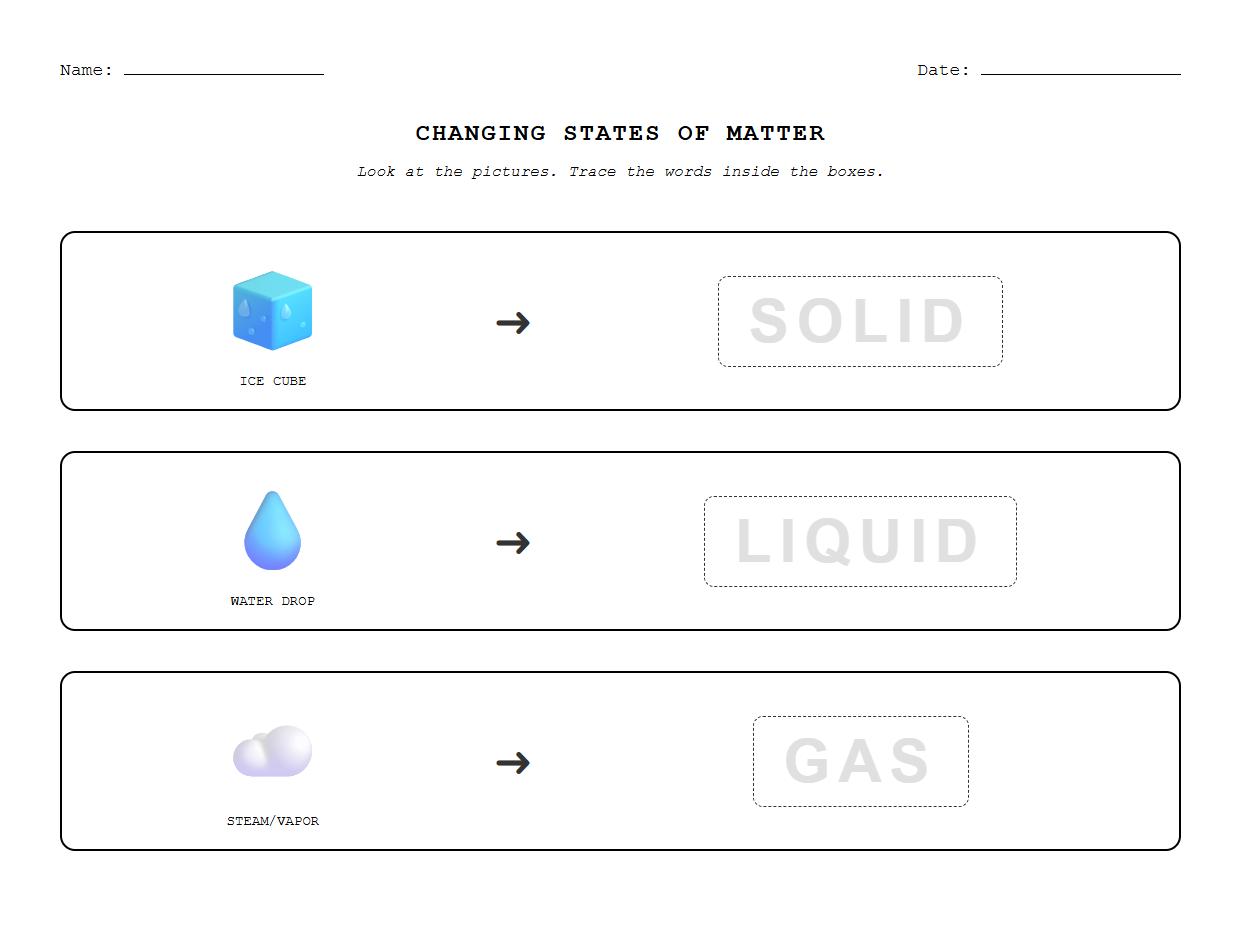
The worksheet highlights the three main states of matter: solids, liquids, and gases. Each state is illustrated with colorful and simple pictures to help children understand the concept easily. These visuals assist in teaching young learners about diverse materials they encounter daily. Identifying these states is crucial for early science education.
Tracing and Coloring the Pictures of Solids
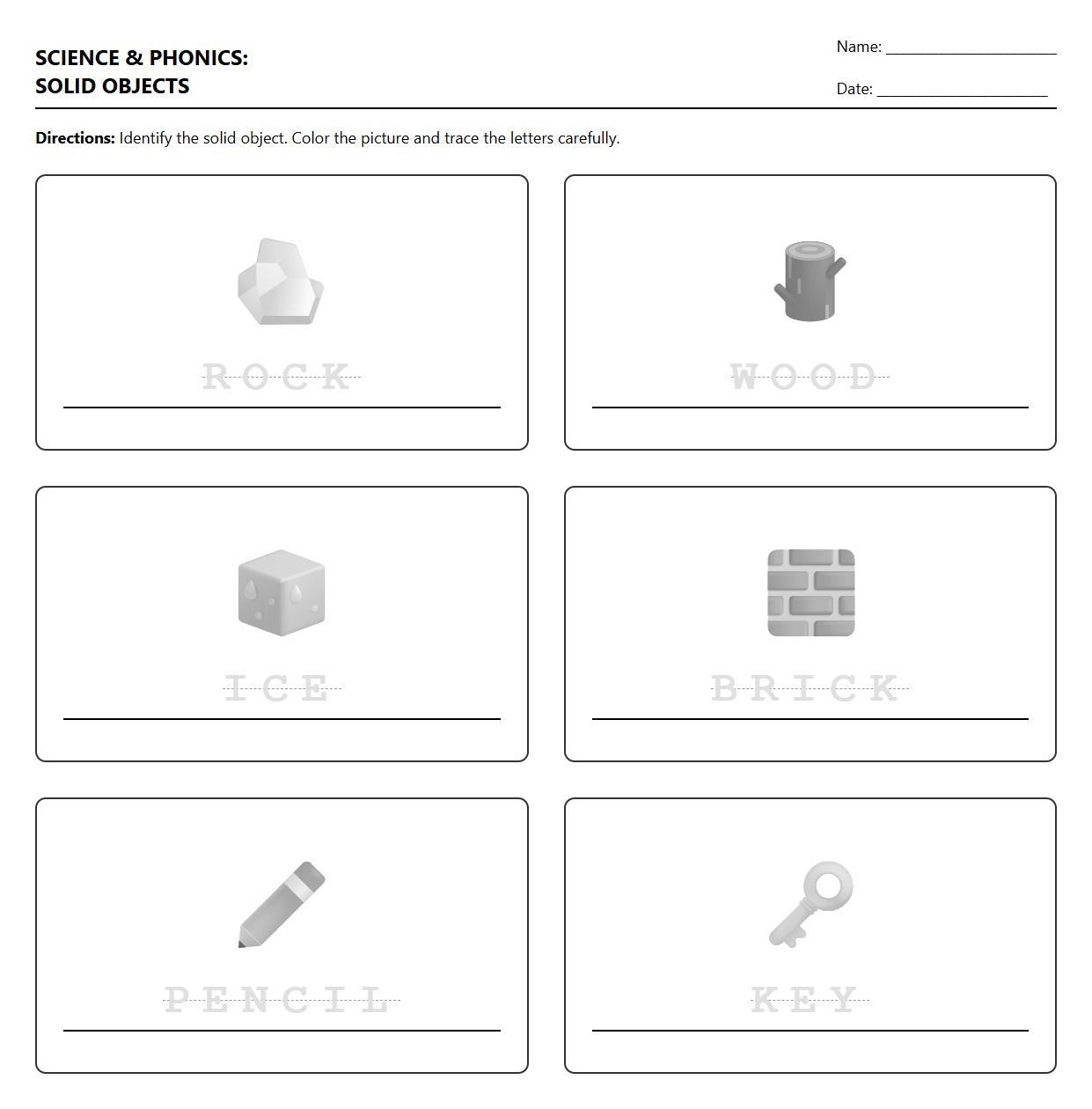
Teachers and parents can guide children to trace and color the solid objects shown in the worksheet. Solids have a fixed shape and volume, making them easy to recognize and trace. Use bright colors to keep the activity fun and engaging for kindergarteners. This helps develop their fine motor skills alongside scientific knowledge.
Objects Representing Liquids in the Worksheet
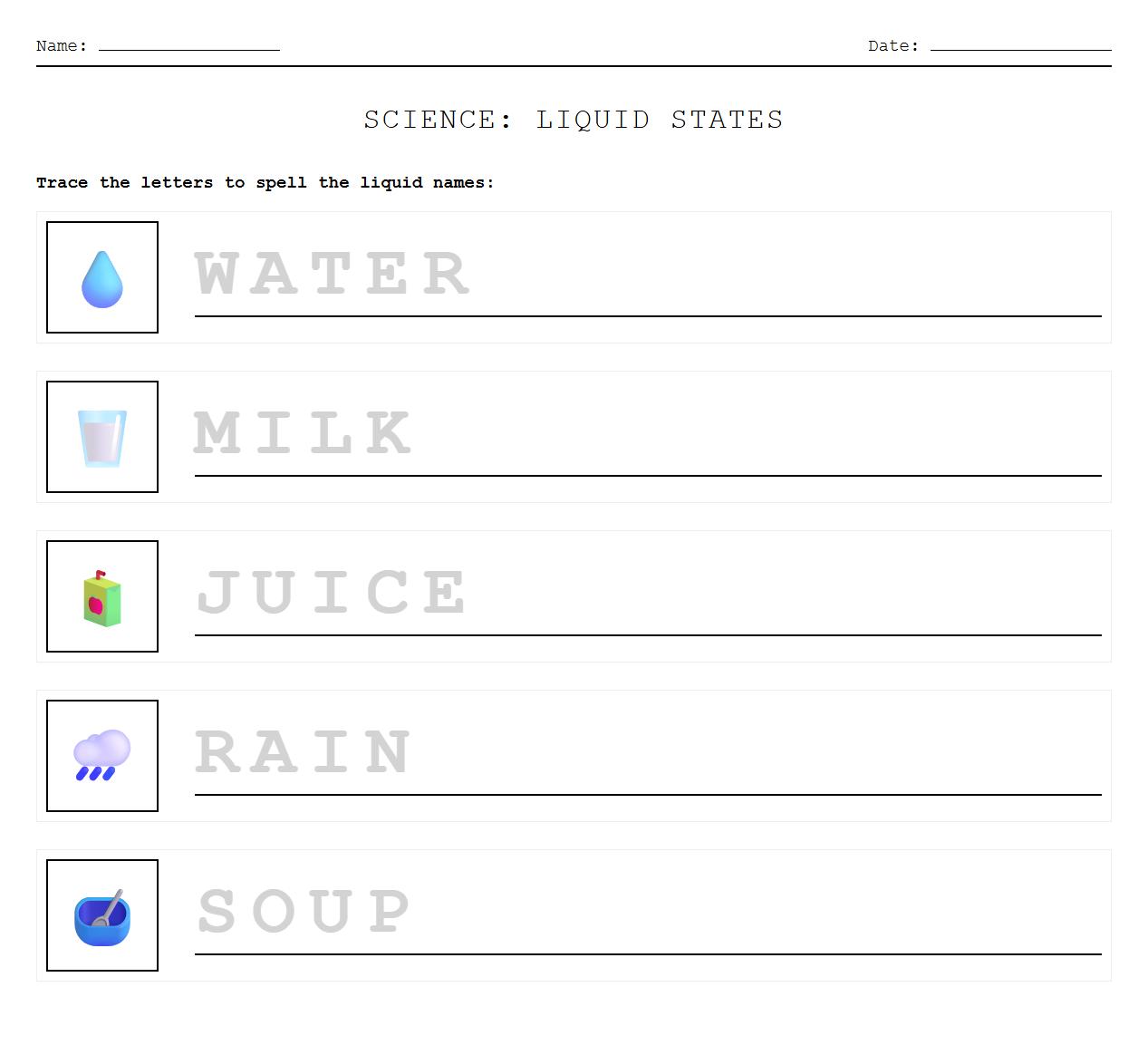
The worksheet includes pictures of liquids like water in a glass or juice in a container. These images represent liquid objects which take the shape of their container. Liquids are depicted with smooth, flowing outlines to show their flexible yet definite volume. Highlighting liquids teaches kids how matter can change shape.
Distinguishing Liquids from Gases in the Images
You can tell the difference by observing shape and boundaries: liquids have definite volume but no fixed shape, while gases fill the space available. Liquids appear contained in bottles or cups, whereas gases are shown as clouds or puffs in the air. This visual contrast helps children grasp the unique properties of each state. Understanding these differences is essential for foundational science learning.
Color to Trace the State of Matter Called Gas
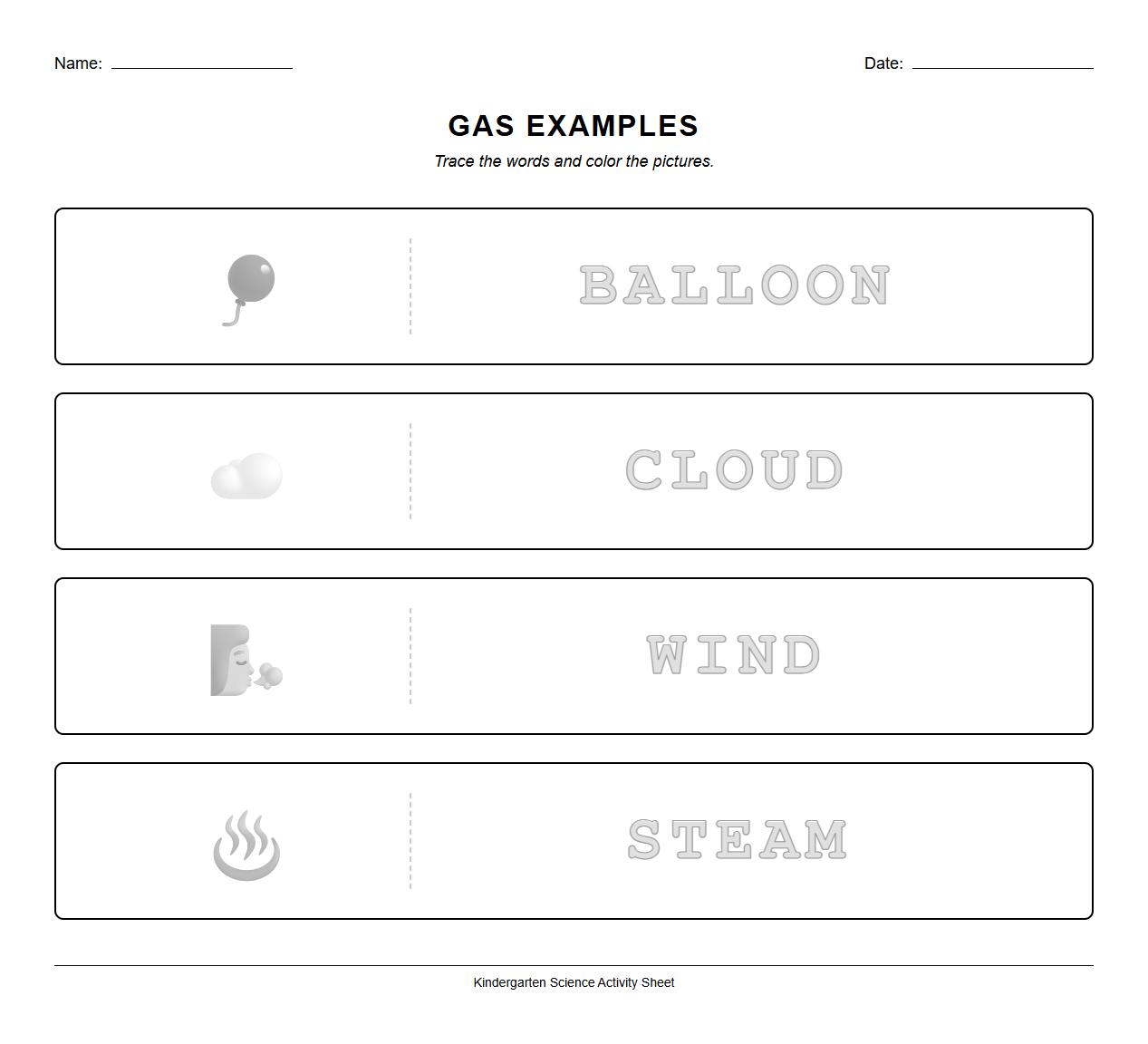
For tracing gases, it is recommended to use light, airy colors such as soft blue or pale gray. These colors represent the invisible and intangible nature of gases. Encouraging creative coloring makes the learning process enjoyable. It also helps children associate colors with specific states of matter.
Living Things Shown as Solids in the Worksheet
The worksheet might feature living things like a tree or a pet dog depicted as solid objects. These elements are static and hold a definite shape, emphasizing the solid state. Including living solids makes the concepts relatable for children. It connects science to everyday life.
Name One Solid Object and Trace It in the Worksheet
One example of a solid in the worksheet could be an apple. Children are encouraged to trace the apple's outline and color it. This exercise builds attention to detail and strengthens understanding of solids. Interactive tracing aids memory retention.
State of Matter That Can Change Its Shape Easily
Liquids are the state of matter that can change shape easily because they take the shape of their container. This property contrasts with solids, which keep their shape, and gases, which expand to fill any space. Teaching this helps children differentiate between states of matter practically. It promotes curiosity about the physical world.
Most Fun State of Matter After Coloring
Many children find coloring gases the most fun due to their cloud-like shapes and the freedom to use soft, flowing colors. This activity encourages creativity and imagination. It also makes the abstract concept of gases more tangible and entertaining. Fun learning boosts engagement and comprehension.
Real-Life Example of a Gas Not Shown on the Worksheet
A real-life example of a gas not included in the worksheet is oxygen, which we breathe every day. Discussing oxygen helps children connect science to their own lives and health. It reinforces the importance of gases beyond what they can see. This expands their understanding of the natural world.


Phonics and Vocabulary Enrichment Worksheet on States of Matter