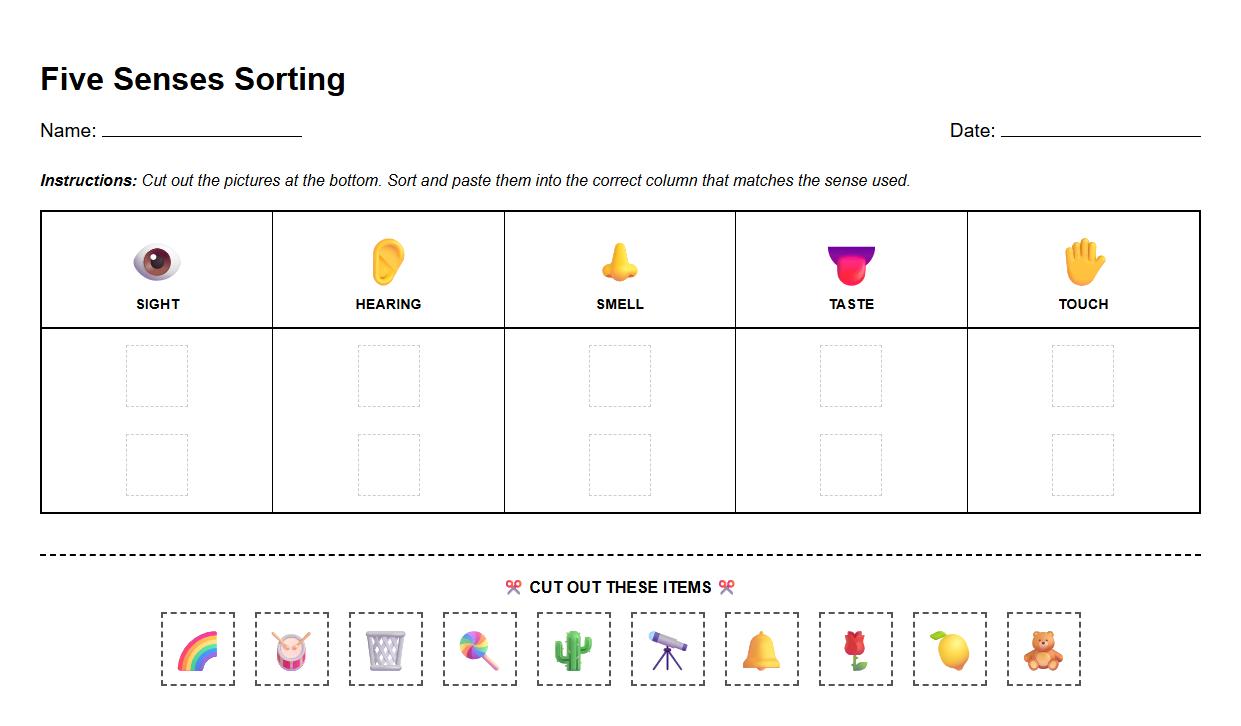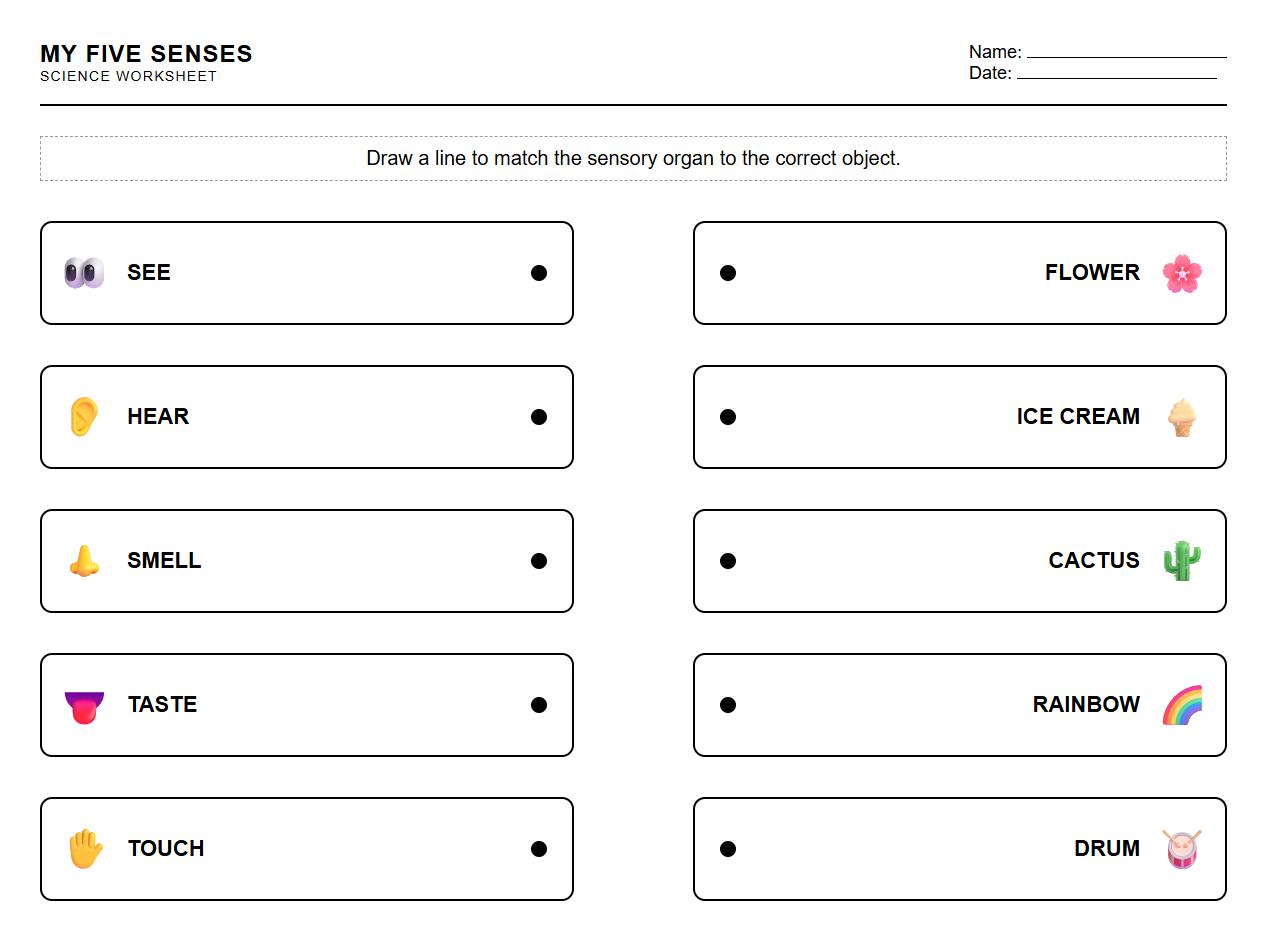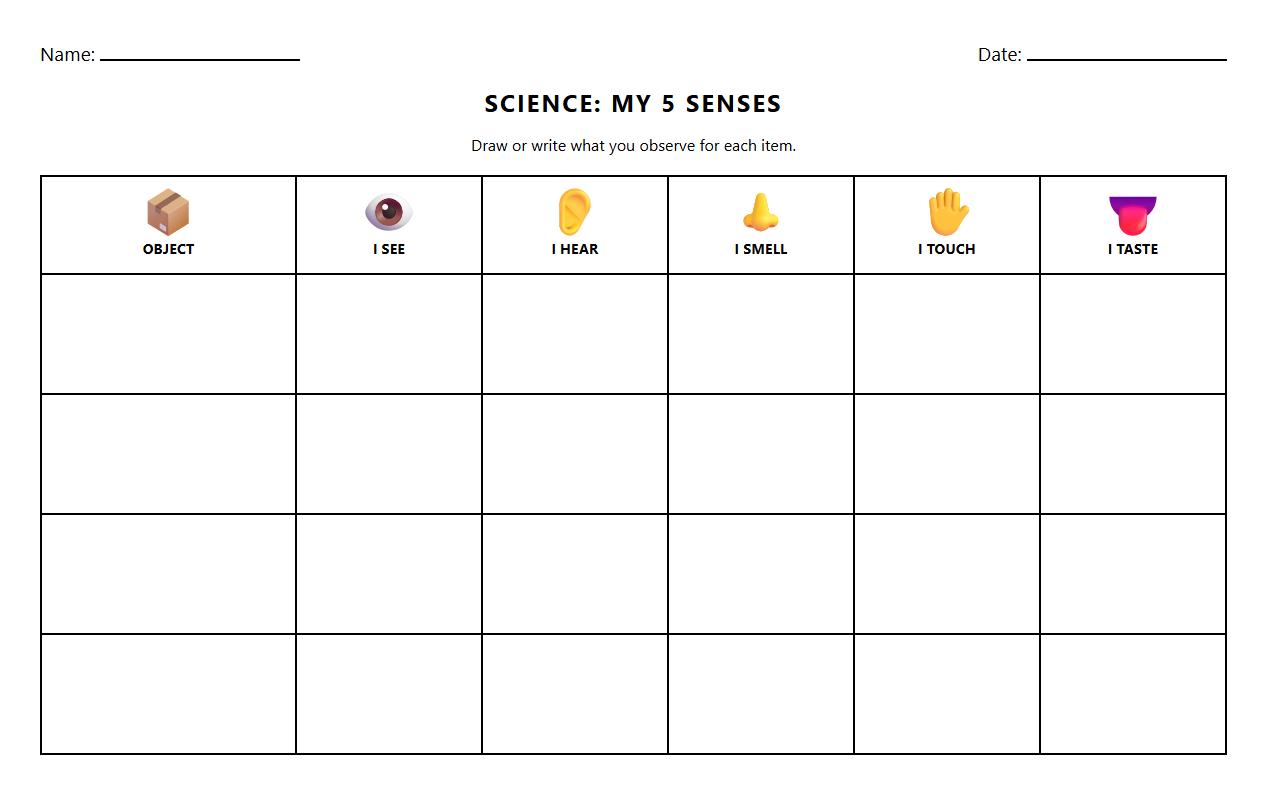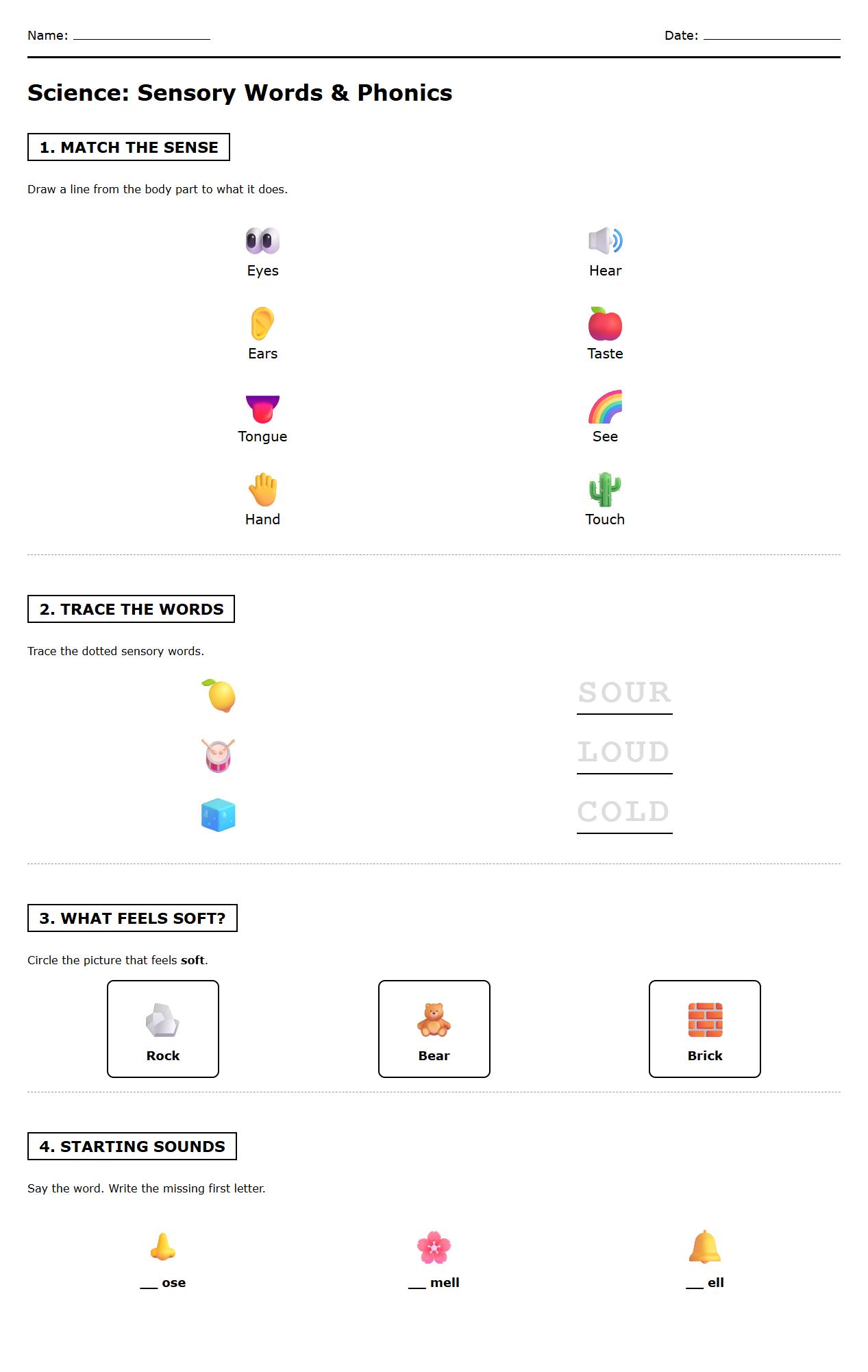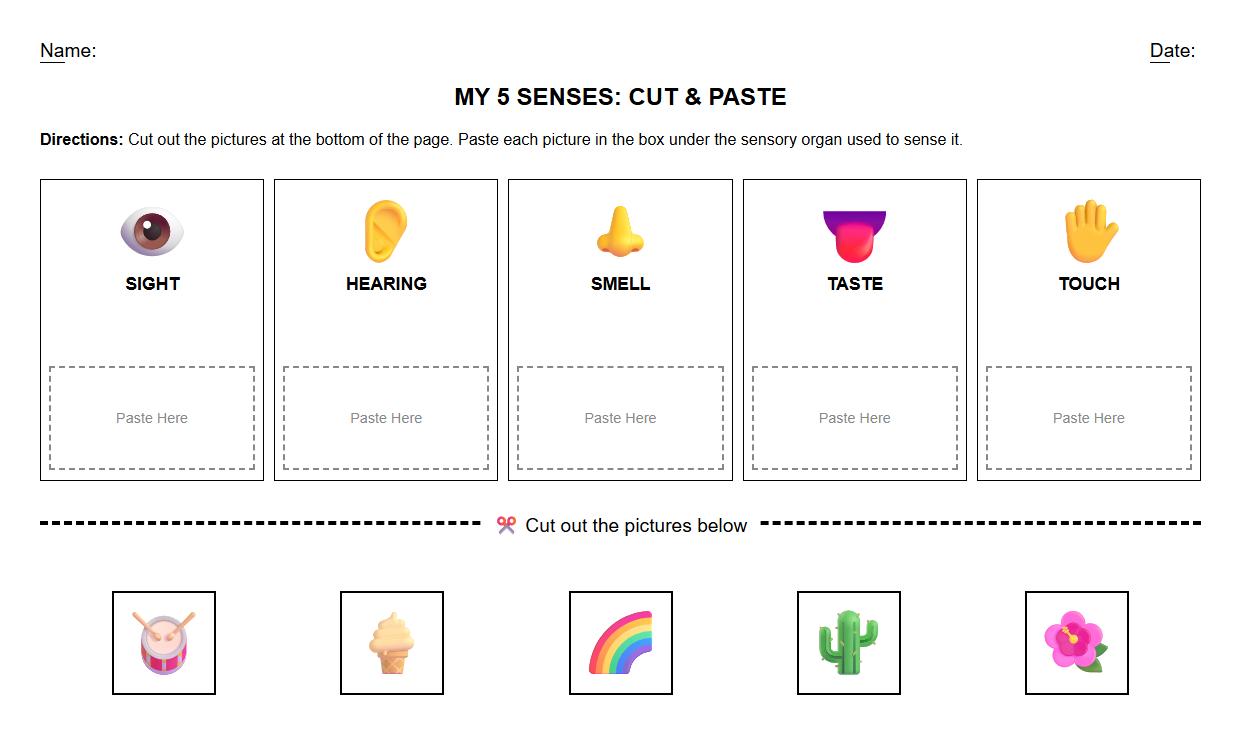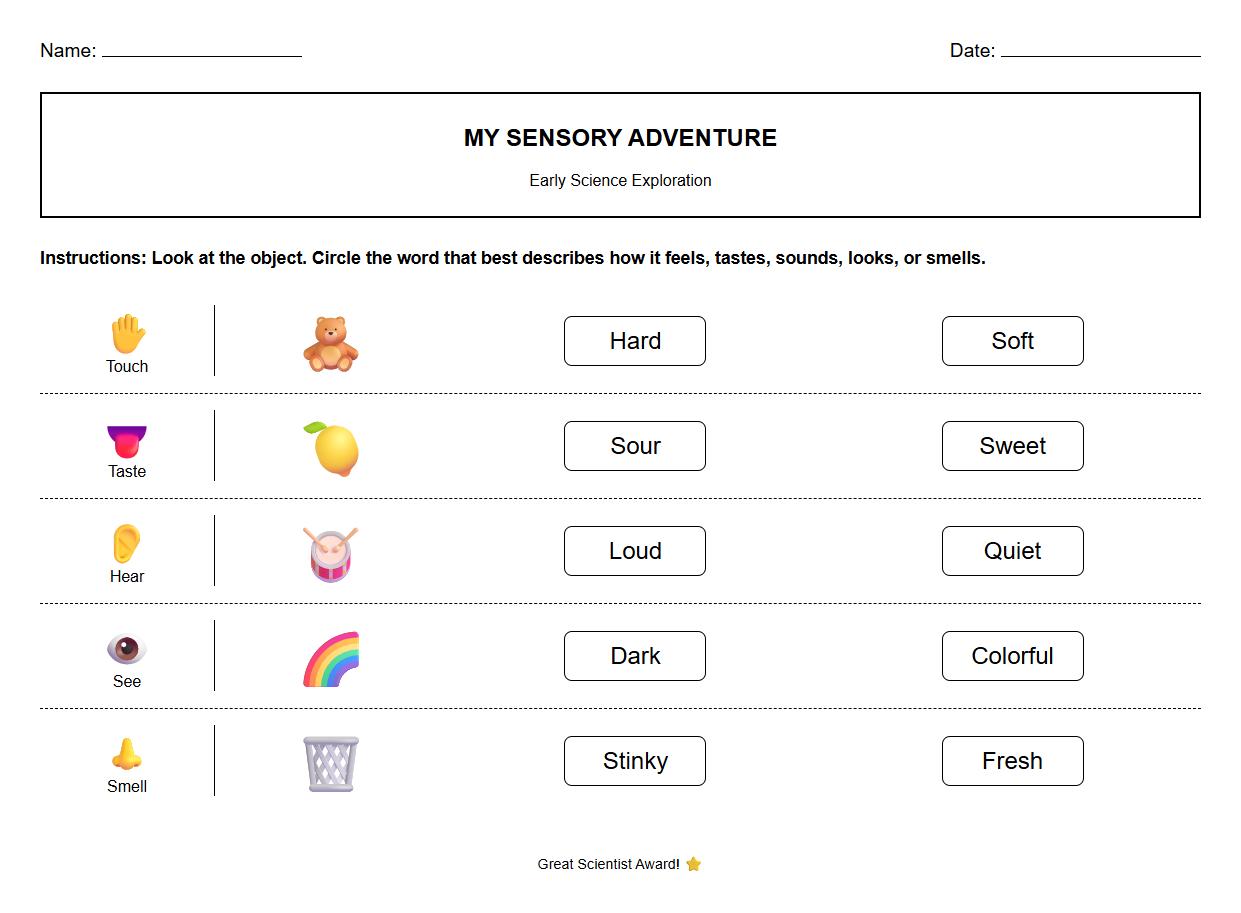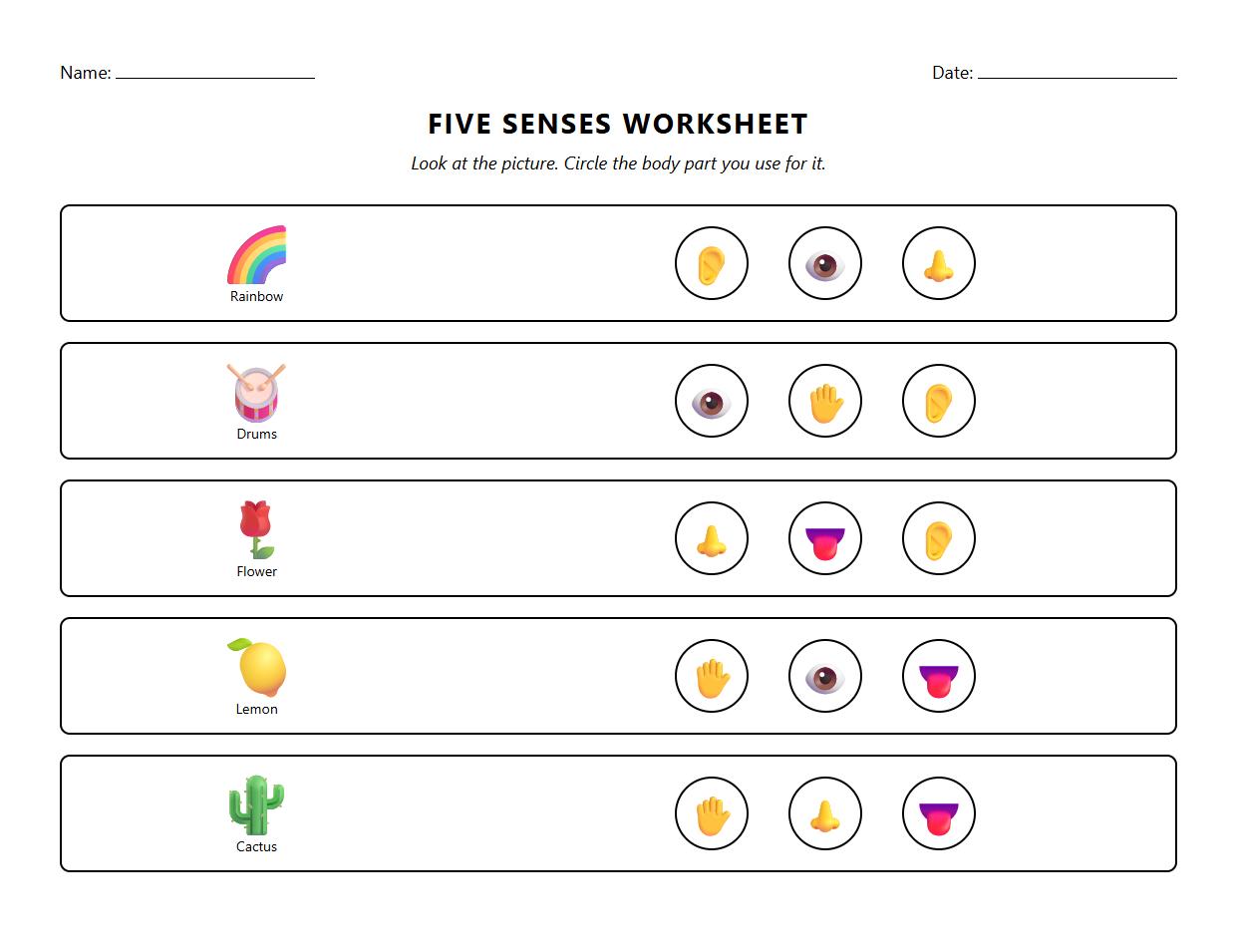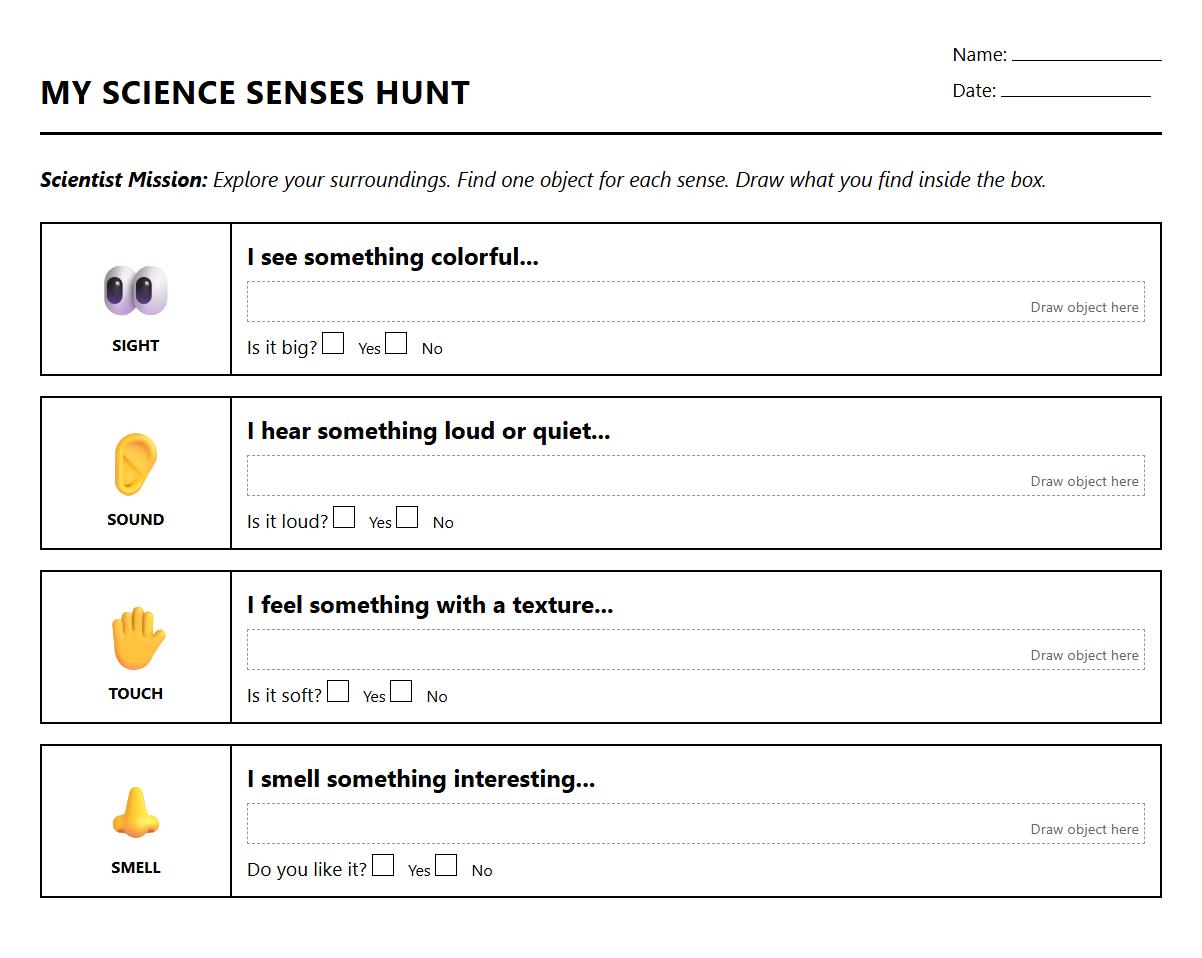
Explore the fascinating world of the five senses through engaging and hands-on activities designed for early learners. These interactive science worksheets help children identify and understand how sight, sound, touch, taste, and smell contribute to their everyday experiences. Discover a variety of fun and educational resources by checking out the available worksheets today.
The Five Senses That Help Us Explore the World
The five senses are sight, hearing, taste, smell, and touch. These senses help children understand and explore the world around them. Using all their senses allows kids to experience new things fully. This guide helps teachers and parents support sensory learning in young children.
Taste: Savoring Favorite Foods
Children use their sense of taste to enjoy their favorite foods. This sense helps them identify flavors such as sweet, sour, salty, and bitter. Encouraging tasting activities can build a child's curiosity about different foods. Always ensure foods are safe and suitable for the child's age.
Hearing in a Noisy Classroom
The ears help children focus and understand sounds, even in noisy classrooms. Good hearing supports learning by allowing kids to listen to instructions and songs. Teachers and parents can create quiet moments to improve concentration. Using ear-friendly strategies enhances auditory development.
Smelling a Flower Garden
When children walk past a flower garden, their sense of smell helps them notice different fragrances. Smelling flowers can stimulate memory and creativity. It's important to encourage kids to describe scents to develop language skills. Smell also plays a role in recognizing environments.
Touch: Feeling Objects Around Us
The skin allows children to touch and feel objects, helping to recognize textures like soft or hard. Touch supports motor skills and emotional connection through sensory exploration. Encourage tactile play with varied materials to enhance sensory learning. Touch provides vital information about the environment.
Looking at the Playground
Children use their eyes to explore and learn about the colors, shapes, and activities in the playground. Visual senses help develop spatial awareness and observation skills. Parents and teachers can guide children in describing what they see to boost vocabulary. Sight is fundamental to discovering new places.
Hearing Helps Learn New Songs
The sense of hearing is crucial for learning songs, rhythms, and language patterns. Music and sound activities engage auditory processing and memory. Encourage singing along and listening carefully to enhance learning. Hearing supports communication and enjoyment of sound.
Noticing Soft or Hard Textures
Touching objects allows children to distinguish between soft and hard textures. This sensory input builds fine motor skills and knowledge about material properties. Sensory play with different textures fosters curiosity and cognitive growth. Describing tactile experiences enhances expressive language.
Using Sense to Determine Soup Temperature
The sense of touch helps children feel if their soup is hot or cold. Teaching kids to check temperature safely prevents burns and encourages independence. This sensory feedback is vital for daily life skills. Parents and teachers should supervise to ensure safety.
How the Five Senses Work Together Eating an Apple
Eating an apple uses all five senses: sight to see it, smell to enjoy its aroma, taste to savor the flavor, touch to feel its texture, and hearing when biting. This multi-sensory experience enhances learning and enjoyment. Encouraging children to notice each sense promotes mindful eating. Sensory integration supports overall development.


Sensory Vocabulary Worksheet for Developing the Five Senses in Kindergarten