Letter Sound Phonics Mazes for Early Readers

📅 May 1, 2025 👤 Nylen Smith

Letter Sound Phonics Mazes enhance early readers' ability to recognize and practice letter sounds through engaging, hands-on activities that build foundational decoding skills. These mazes promote phonemic awareness and keep young learners motivated by combining learning with fun maze challenges. Explore our collection of worksheets designed to support early reading development and phonics practice.

Initial Sound Recognition Phonics Mazes
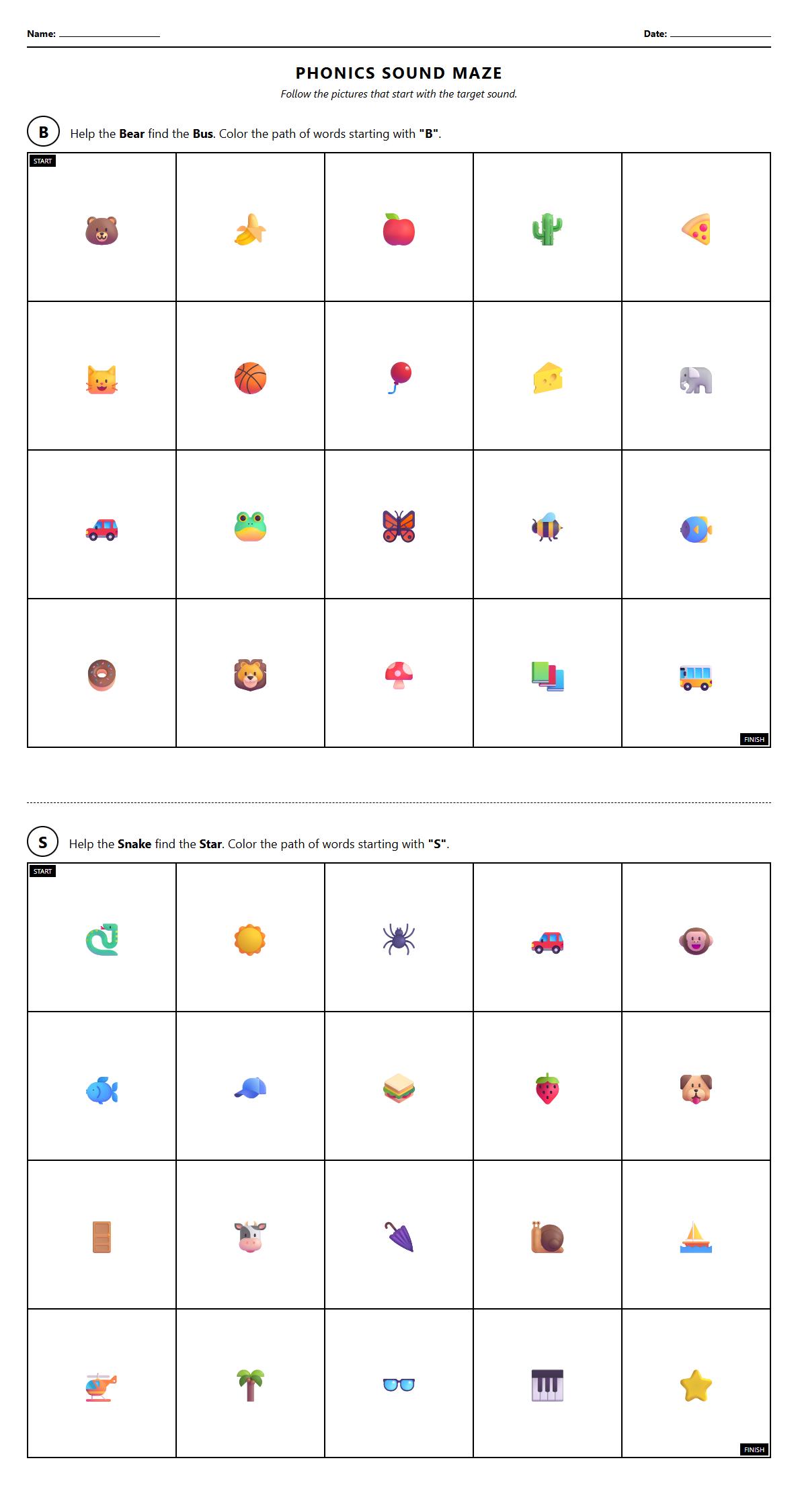
Initial Sound Recognition Phonics Mazes

Download PDF     Pin it

Letter and Picture Matching Phonics Maze
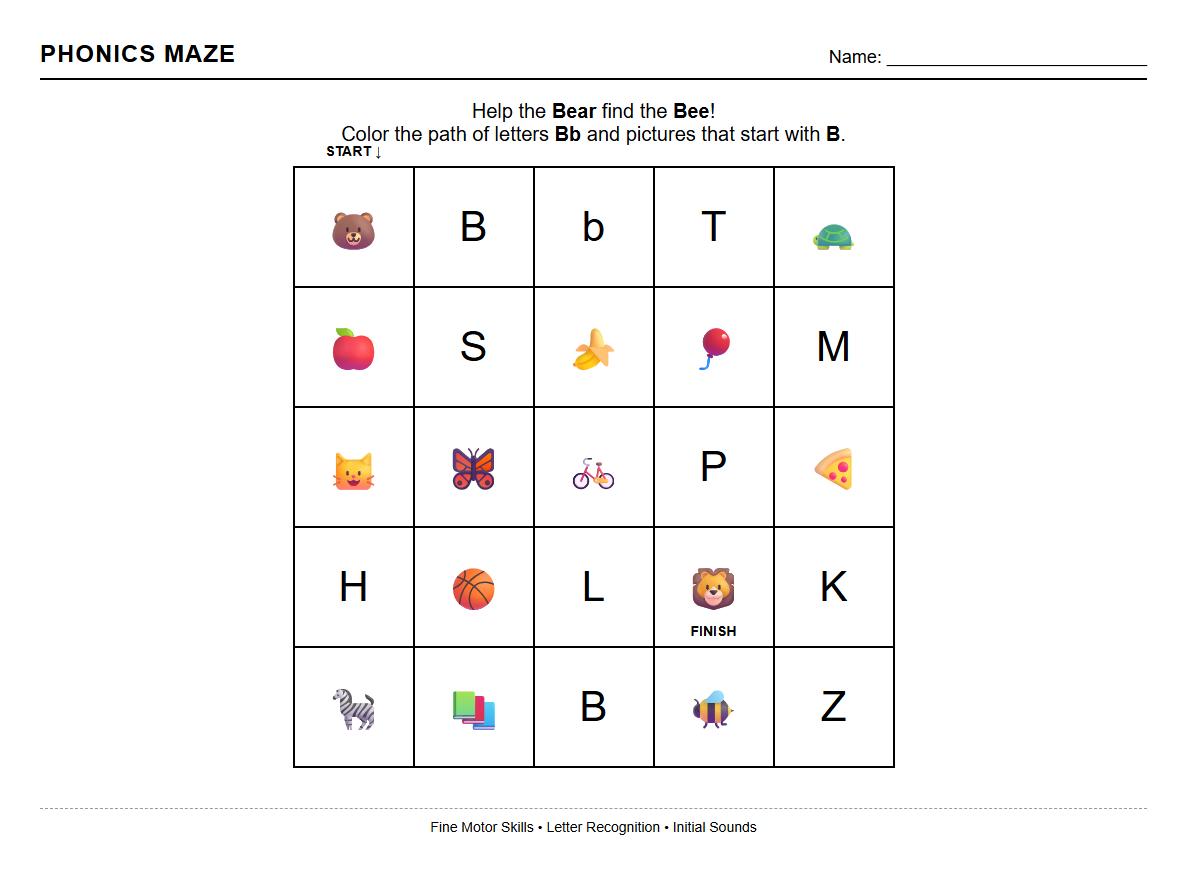
Letter and Picture Matching Phonics Maze

Download PDF     Pin it

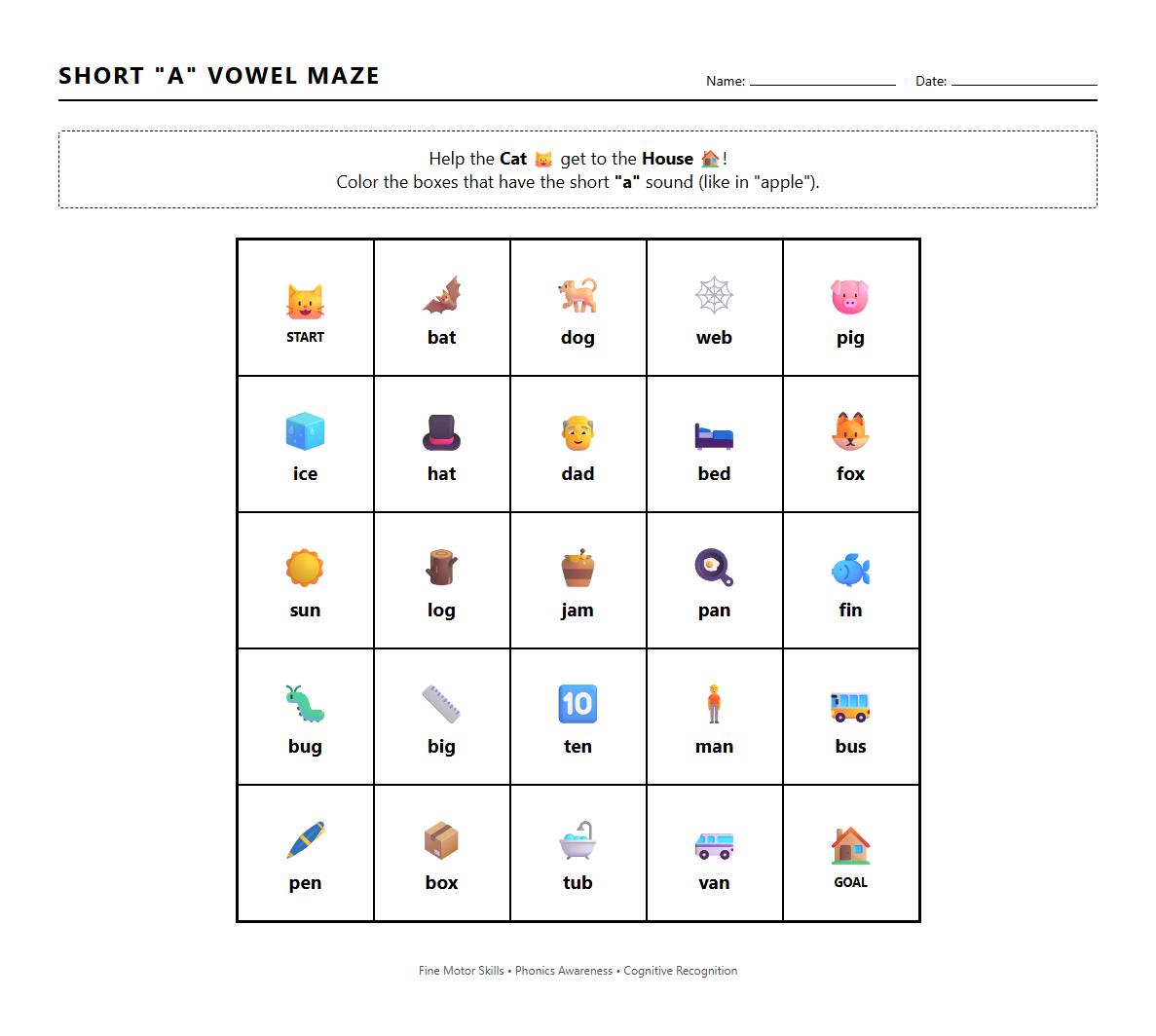
Short Vowel Sound Phonics Maze

Short Vowel Sound Phonics Maze
Download PDF     Pin it

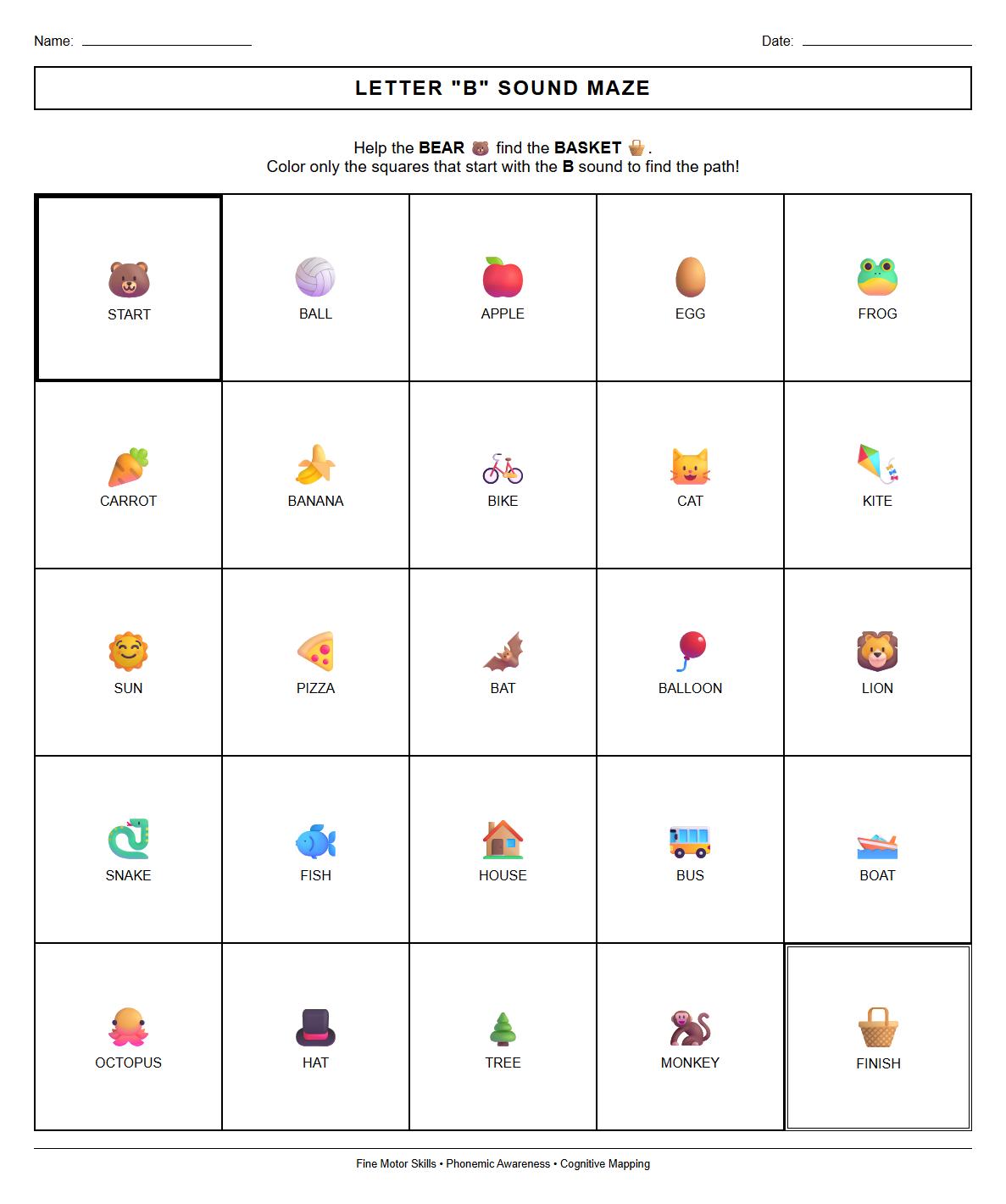
Consonant Sound Identification Maze

Consonant Sound Identification Maze
Download PDF     Pin it

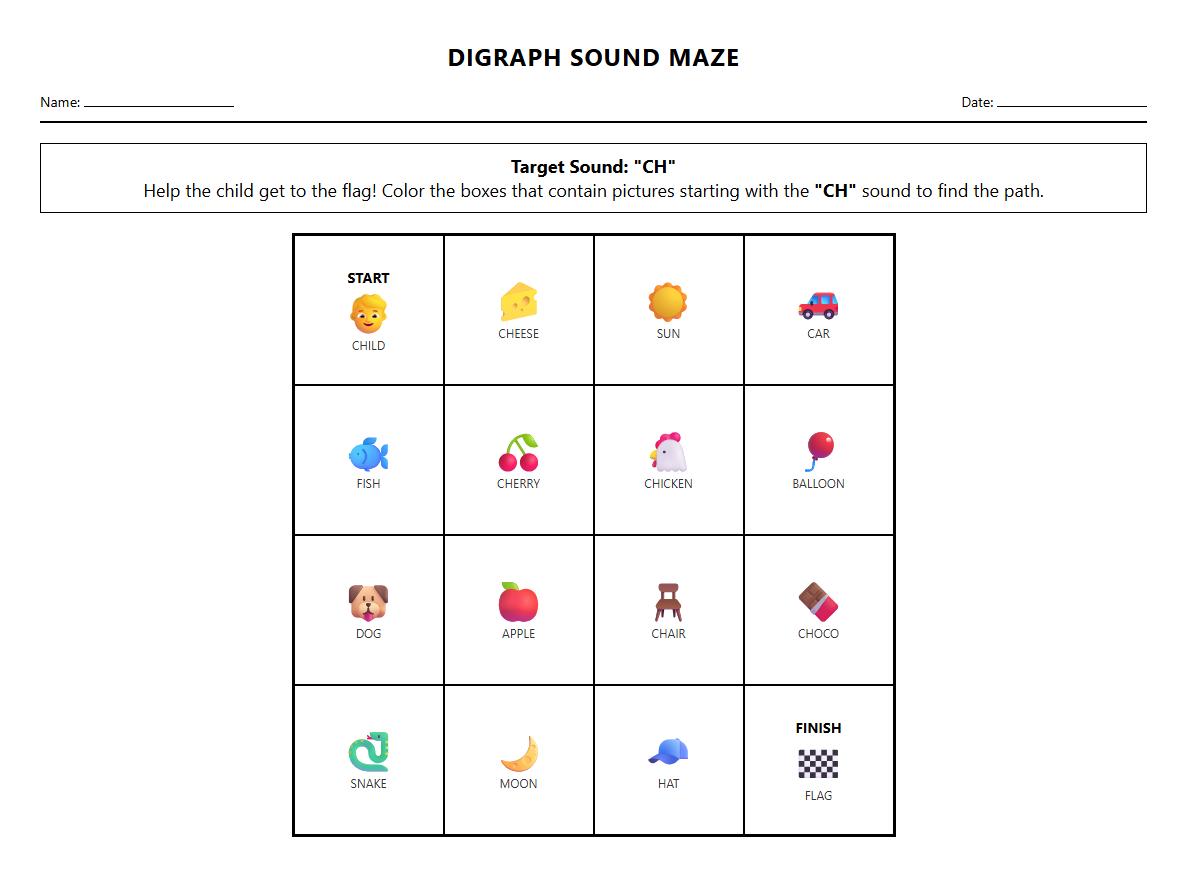
Digraph Sound Pathway Maze

Digraph Sound Pathway Maze

Download PDF     Pin it

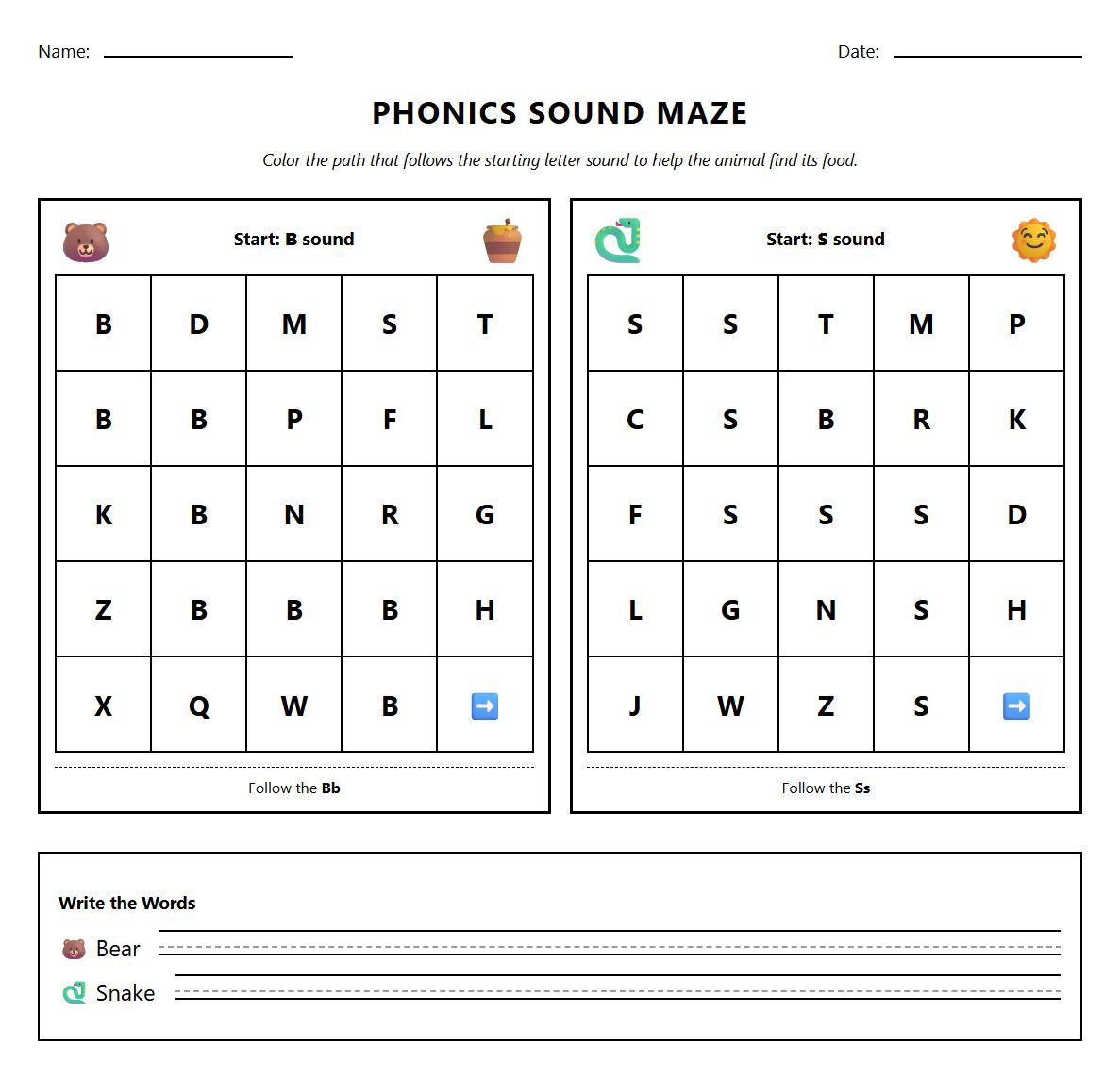
Blending Letter Sound Phonics Maze

Blending Letter Sound Phonics Maze
Download PDF     Pin it

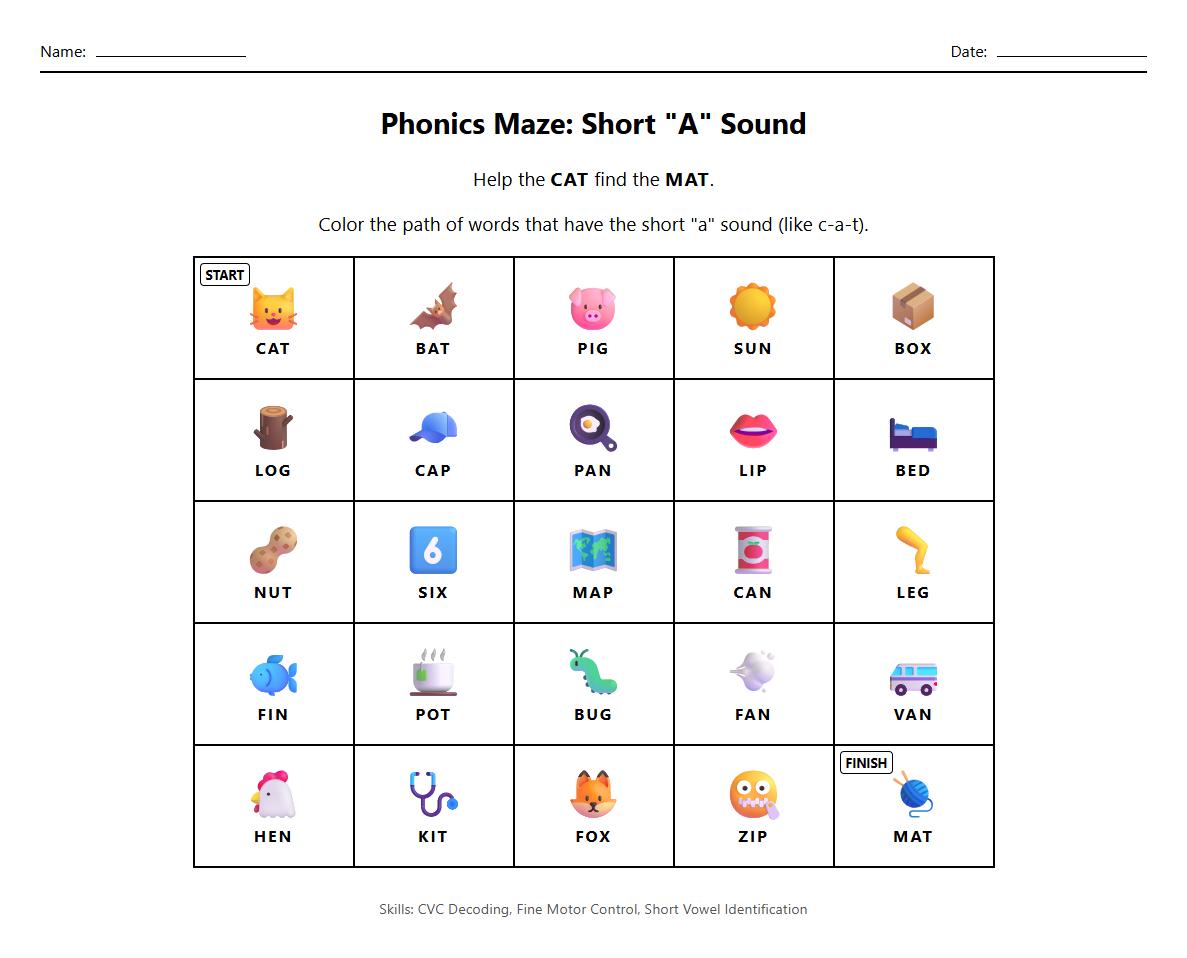
CVC Word Sound Phonics Maze

CVC Word Sound Phonics Maze
Download PDF     Pin it

Uppercase and Lowercase Letter Sound Maze
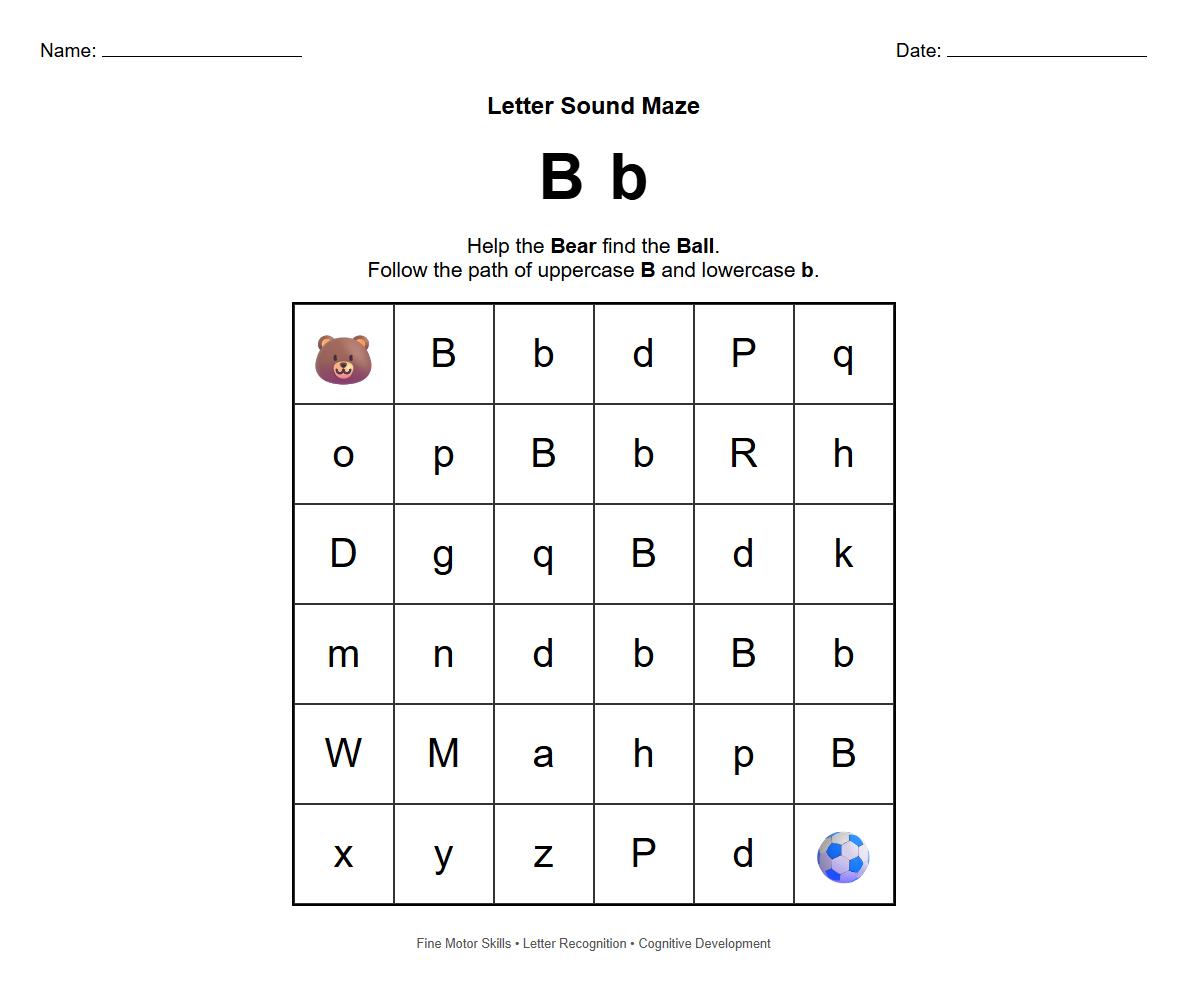
Uppercase and Lowercase Letter Sound Maze

Download PDF     Pin it

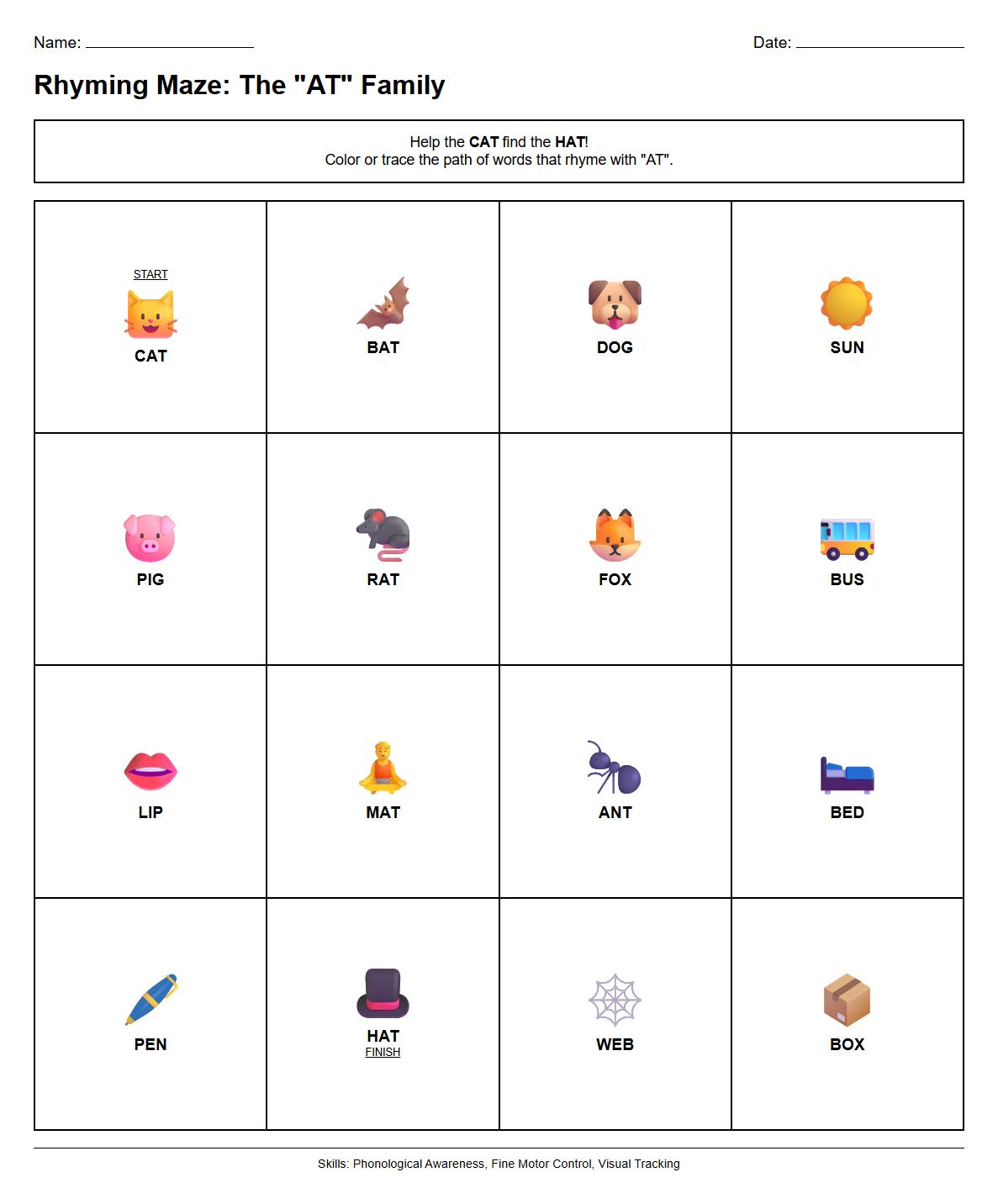
Rhyming Sound Phonics Maze

Rhyming Sound Phonics Maze

Download PDF     Pin it

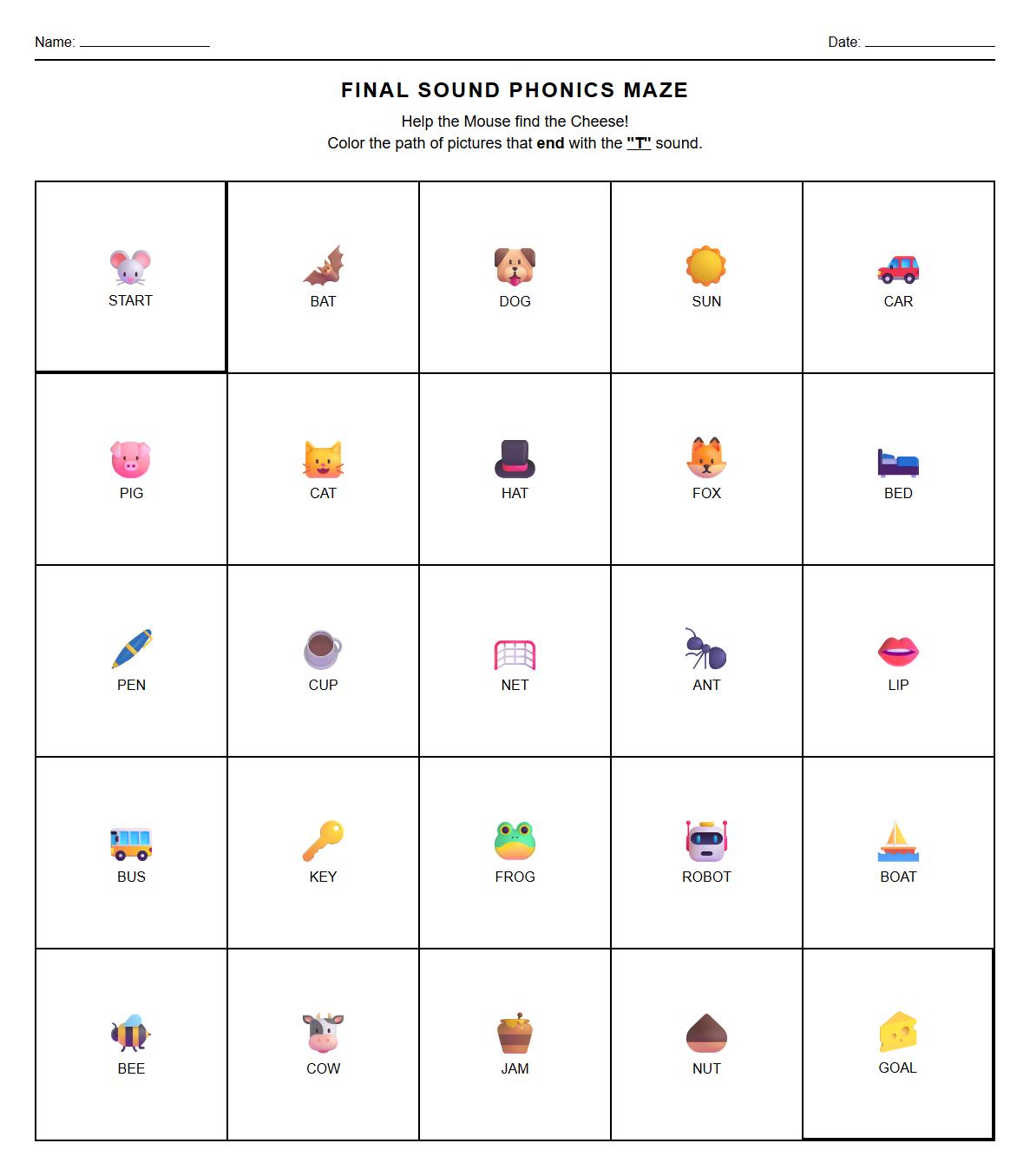
Final Sound Detection Phonics Maze

Final Sound Detection Phonics Maze
Download PDF     Pin it

What Letter Sound Does This Maze Focus On?

This worksheet maze is designed to reinforce the target letter sound for young learners. Teachers and parents can use this activity to help children identify and recognize the specific sound at the beginning of words. The maze format makes learning interactive and engaging. It encourages auditory discrimination skills in a playful setting.

Can You Find the Path That Matches the Beginning Sound?

Children are encouraged to trace the path through the maze that corresponds to the beginning letter sound. This helps them practice phonemic awareness by matching sounds to pictures. Teachers and parents should prompt kids to say the sound aloud as they move through the maze. This auditory and visual connection solidifies learning.

Which Pictures Start with the Target Letter Sound?

Within the maze, some pictures begin with the target letter sound, while others do not. Identifying only those that start with the correct sound strengthens early reading skills. Adults should guide children to sort and name these images, reinforcing sound-letter correspondence. This focused practice builds confidence in letter sound recognition.

How Many Correct Letter Sounds Are in This Maze?

The number of pictures starting with the correct letter sound varies depending on the worksheet. Counting these images promotes numeracy skills alongside phonics. Teachers and parents can use this question to encourage careful observation and counting accuracy. It also allows children to verify their sound identification.

Are There Any Distractions or Tricky Sounds in the Maze?

Some pictures may feature tricky or similar sounds designed to challenge children's listening skills. These distractions help learners practice sound discrimination by distinguishing the target sound from others. Adult guidance is important to discuss and clarify these tricky sounds. This builds stronger auditory discrimination abilities for reading readiness.

Which Words in the Maze Rhyme with the Target Sound?

Finding words that rhyme with the target letter sound encourages phonological awareness. Rhyming strengthens children's understanding of sound patterns and word families. Teachers and parents can highlight these words and encourage kids to say them out loud. This activity enriches vocabulary and pronunciation skills.

Can You Say the Sound Each Picture Makes as You Go Through the Maze?

Saying the sound aloud for each picture helps children connect visual cues with phonemes. This verbal repetition boosts memory retention of letter sounds. Encouraging kids to articulate sounds as they progress supports active learning. It also fosters confidence in early language development.

Which Picture Does Not Belong in the Letter Sound Maze?

Identifying the picture that does not start with the target sound promotes critical thinking. Children learn to differentiate sounds and categorize words correctly. Asking this question encourages attentive listening and observation. It also sharpens decision-making and problem-solving skills in a fun way.

How Did You Know Which Way to Turn in the Maze?

Children use their knowledge of the target letter sound to choose the correct path. The maze format rewards correct sound identification with progress through the activity. Adults should ask children to explain their reasoning, reinforcing sound-letter connections. This reflection deepens phonics comprehension.

What Other Words Can You Think of That Start with This Letter Sound?

This open-ended question encourages children to apply their sound knowledge beyond the worksheet. Thinking of additional words starting with the target letter sound expands vocabulary. Teachers and parents can create playful conversations around these new words. This extension activity promotes creativity and language use in context.


More in Fine Motor and Cognitive Skills Category


About the author. Nylen Smith is a dedicated educator and cofounder of KWorksheet.com, a popular platform specializing in high-quality kindergarten worksheets and printable activities.

Disclaimer. The information provided in this document is for general informational purposes and/or document sample only and is not guaranteed to be factually right or complete. Please report to us via contact-us page if you find and error in this page, thanks.

Comments

No comment yet