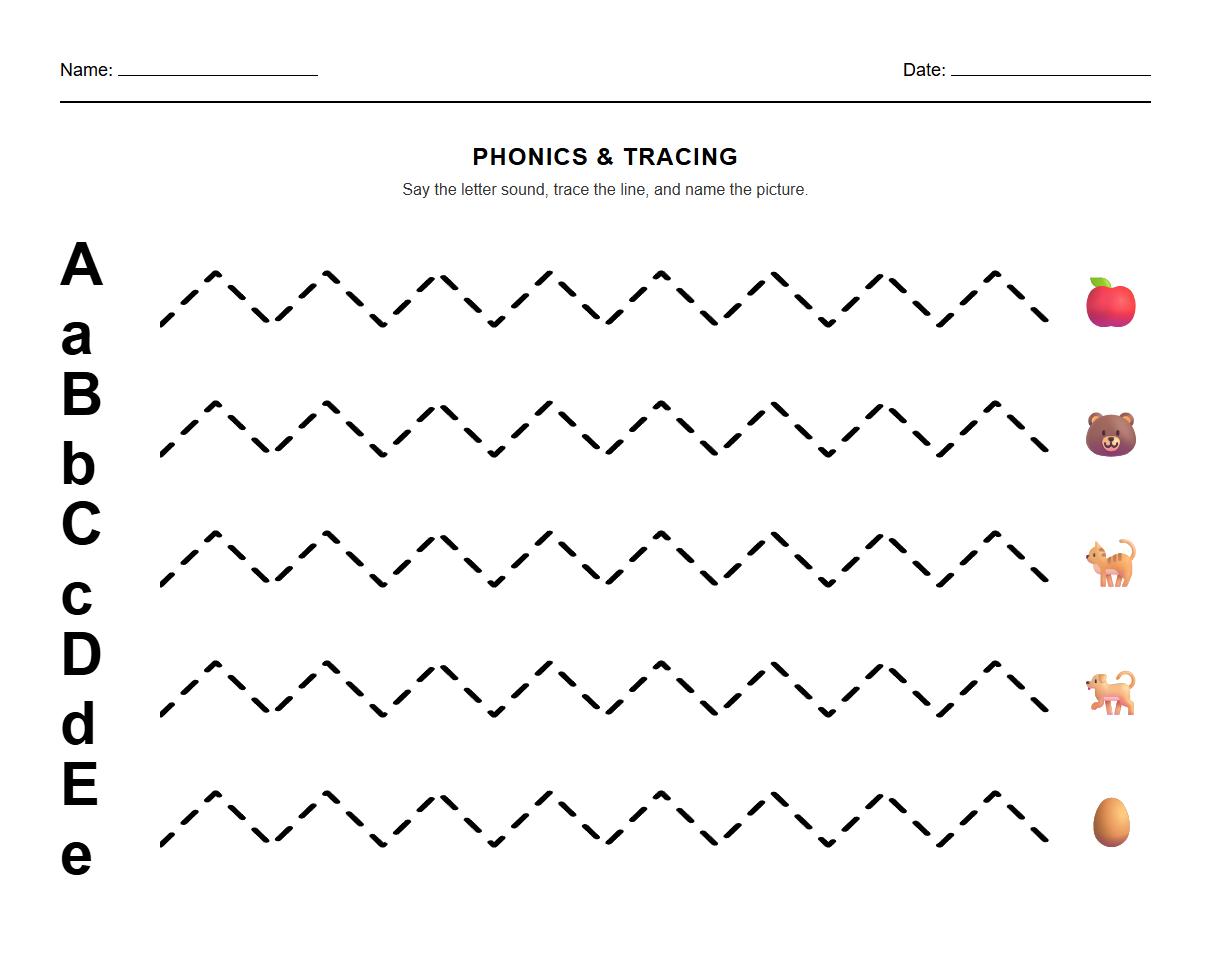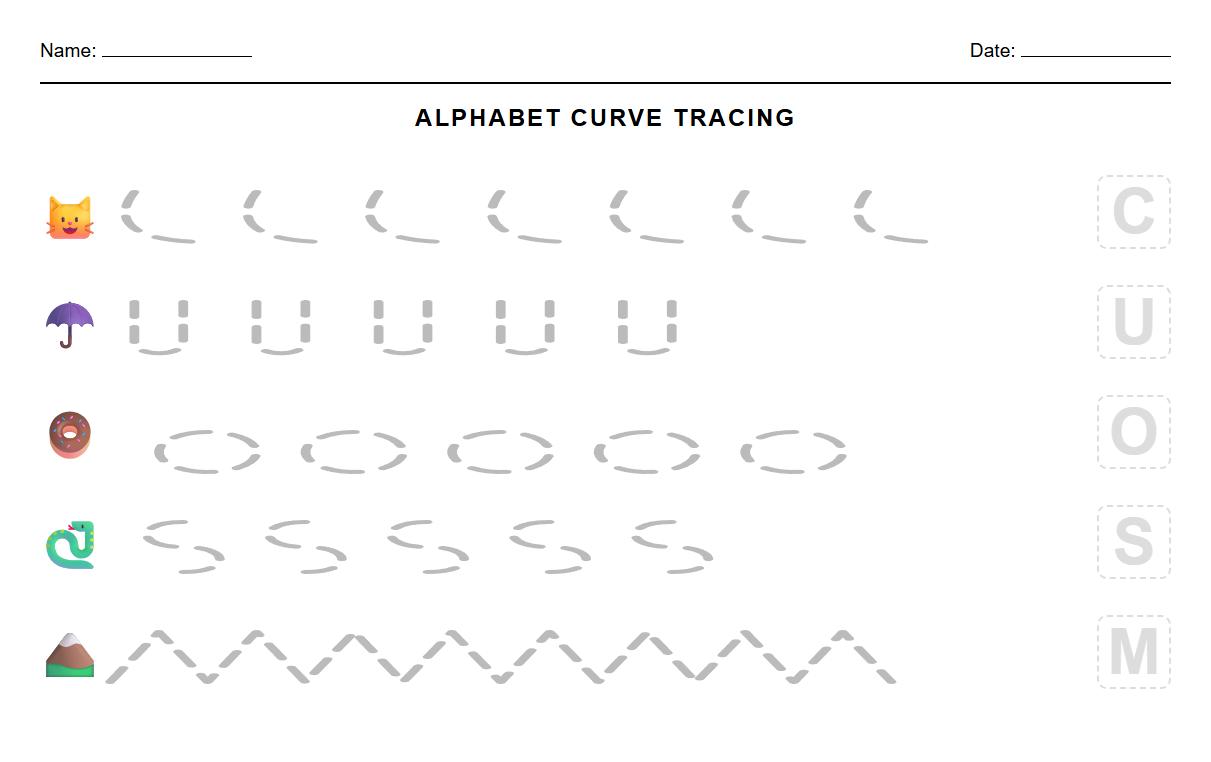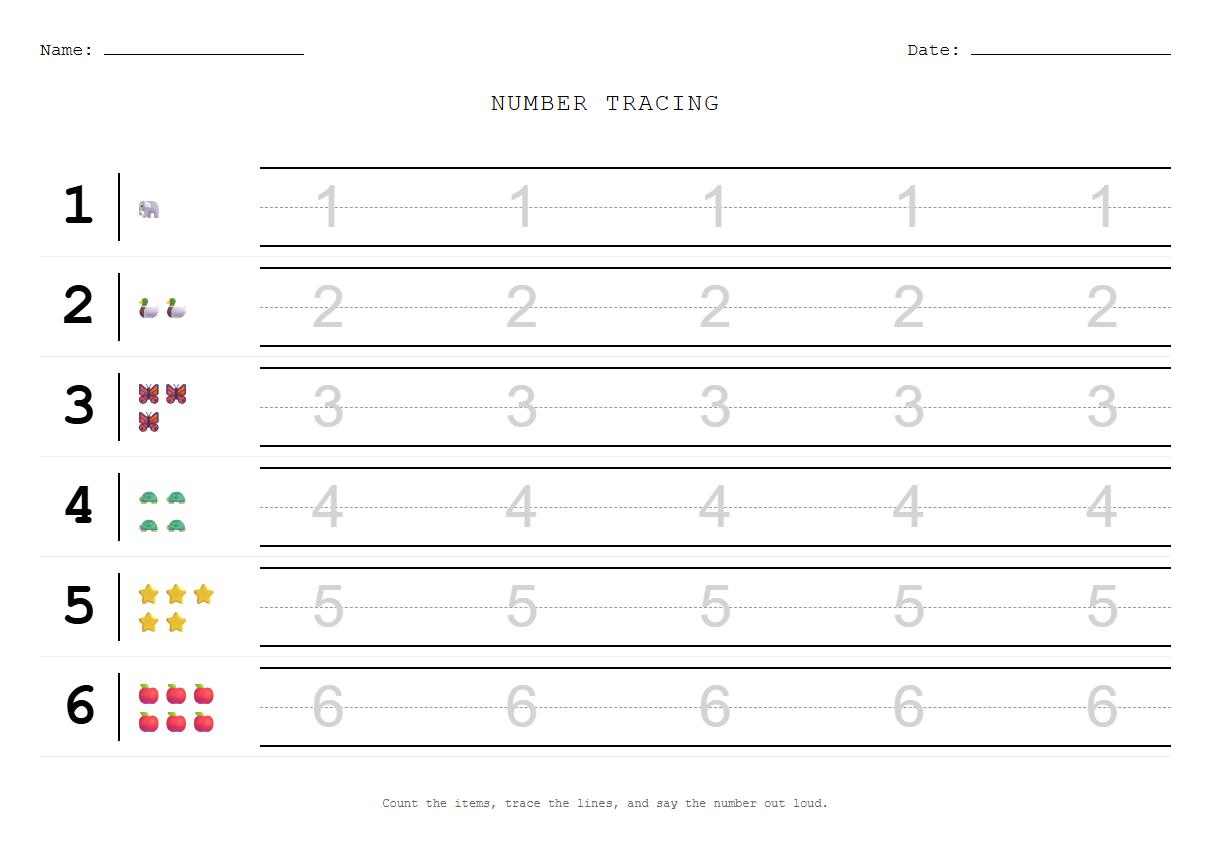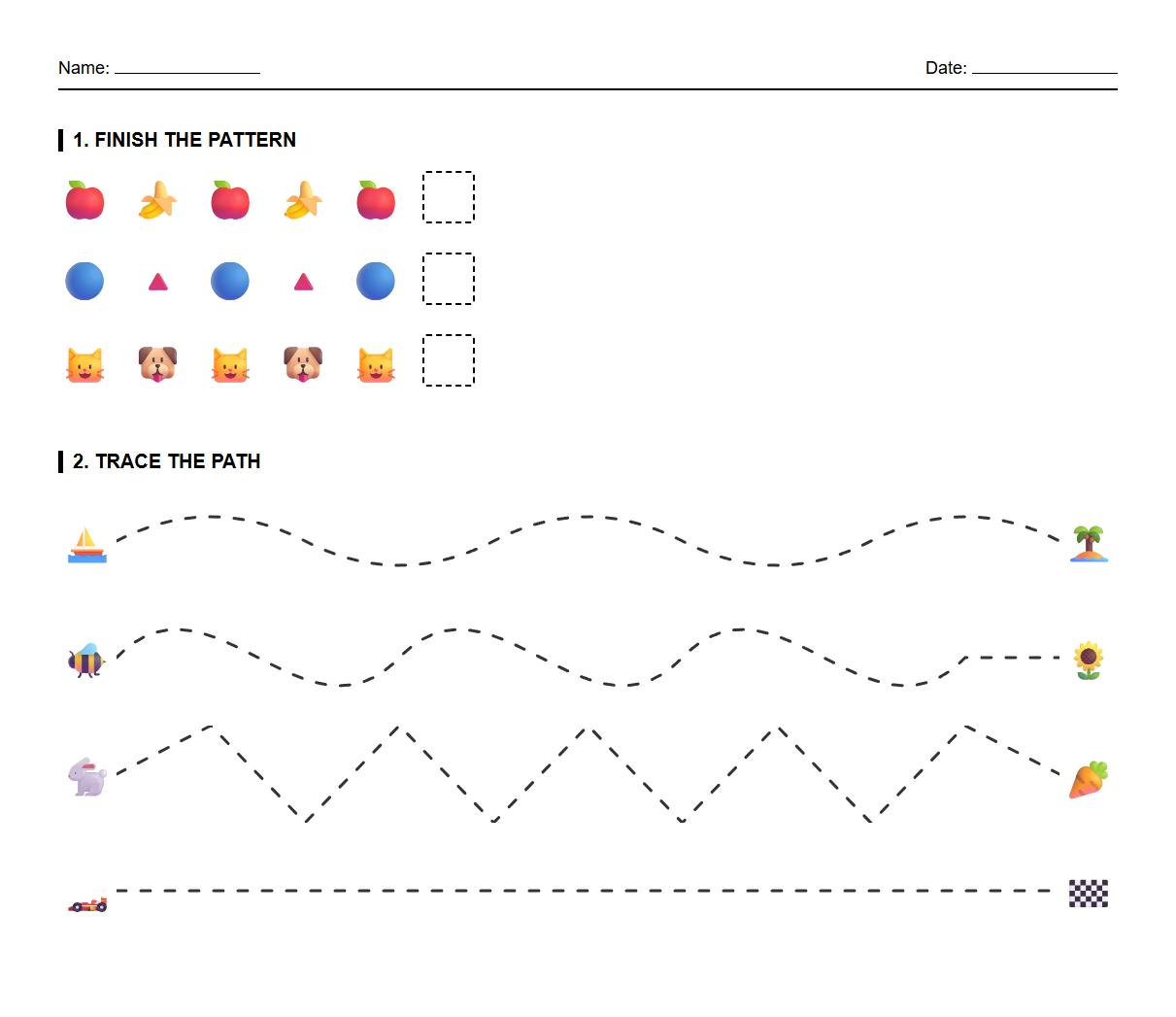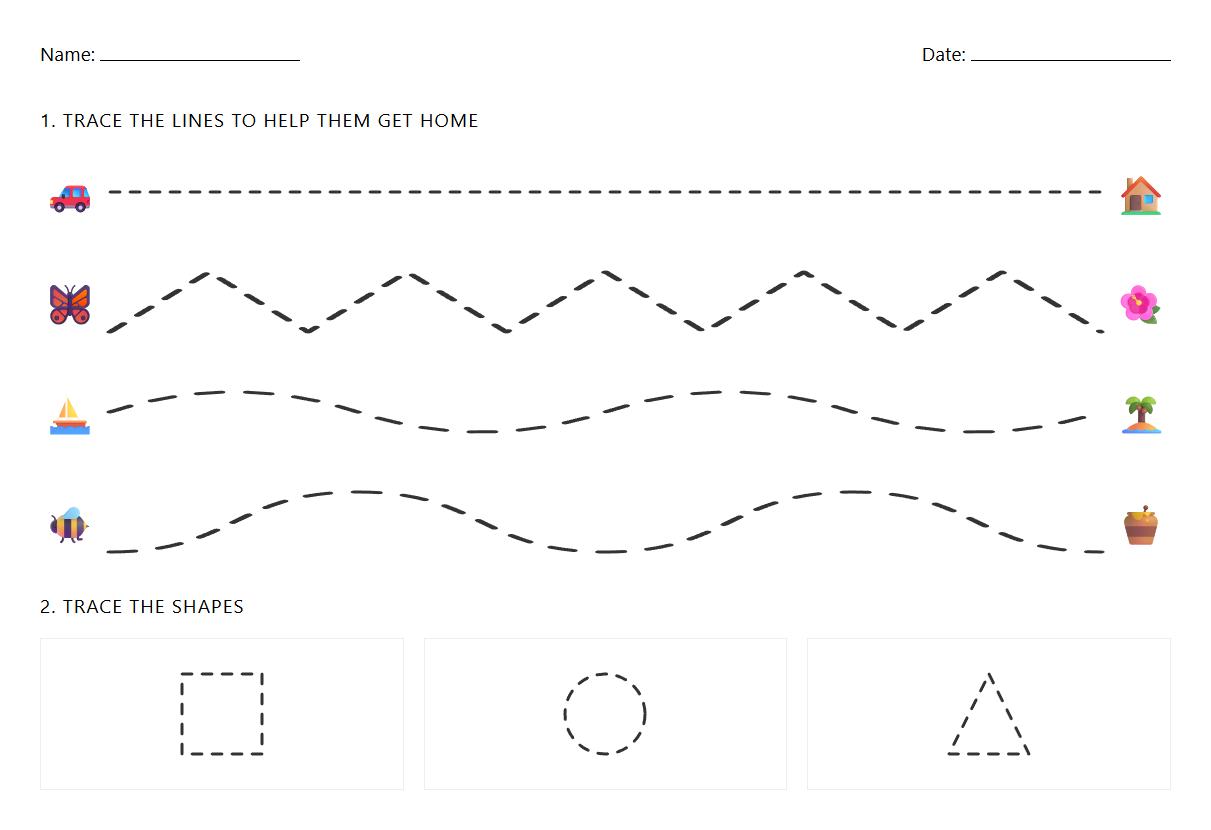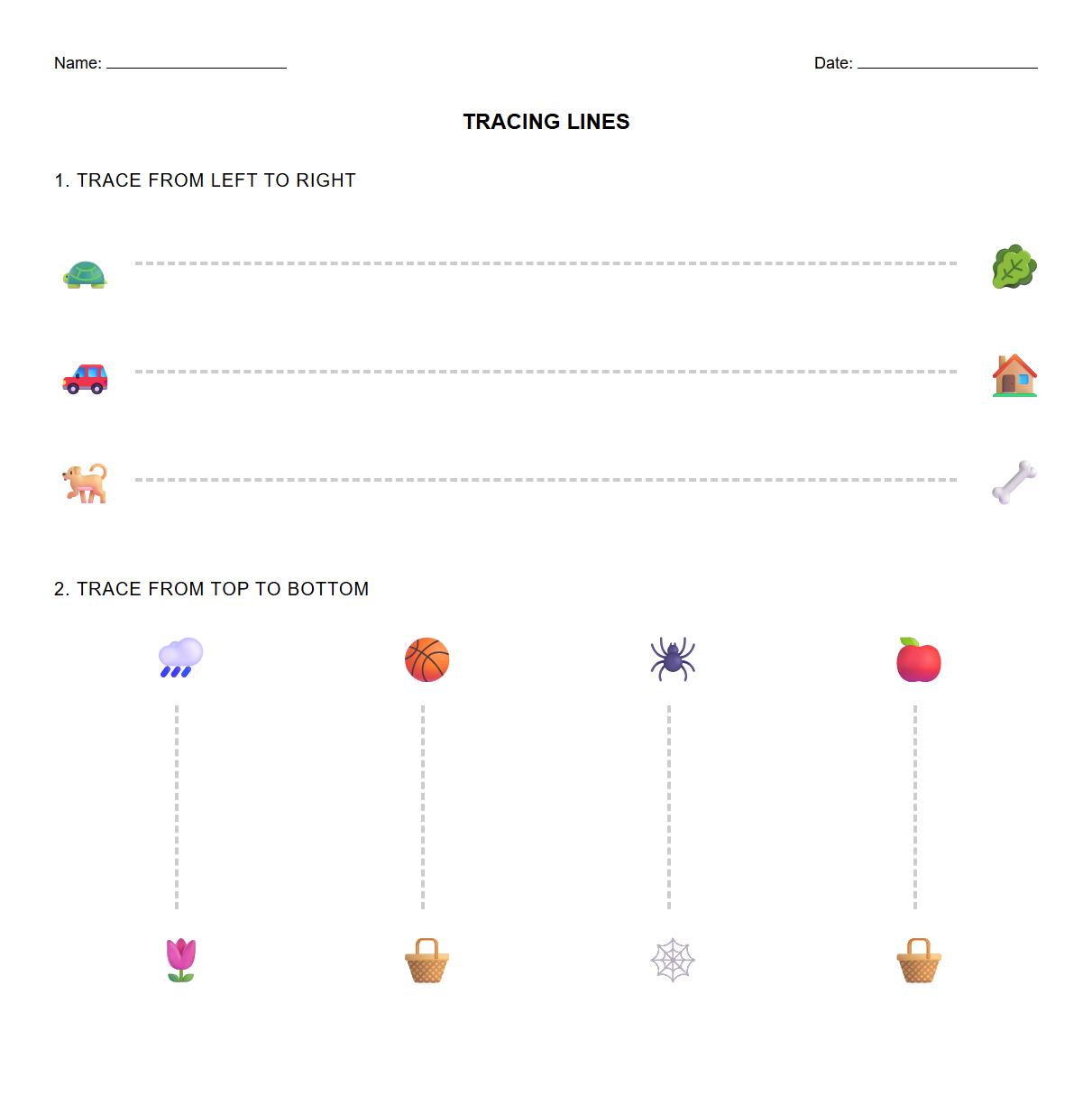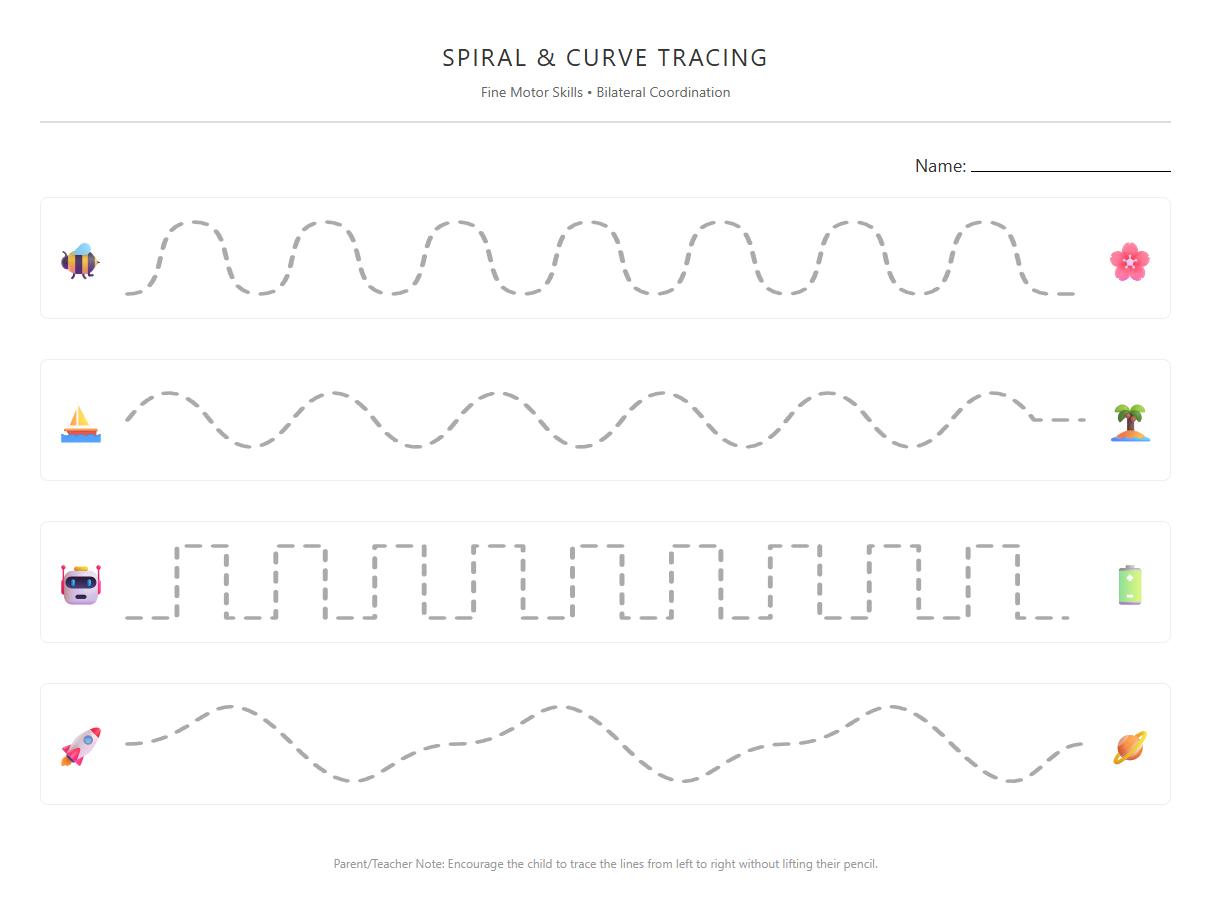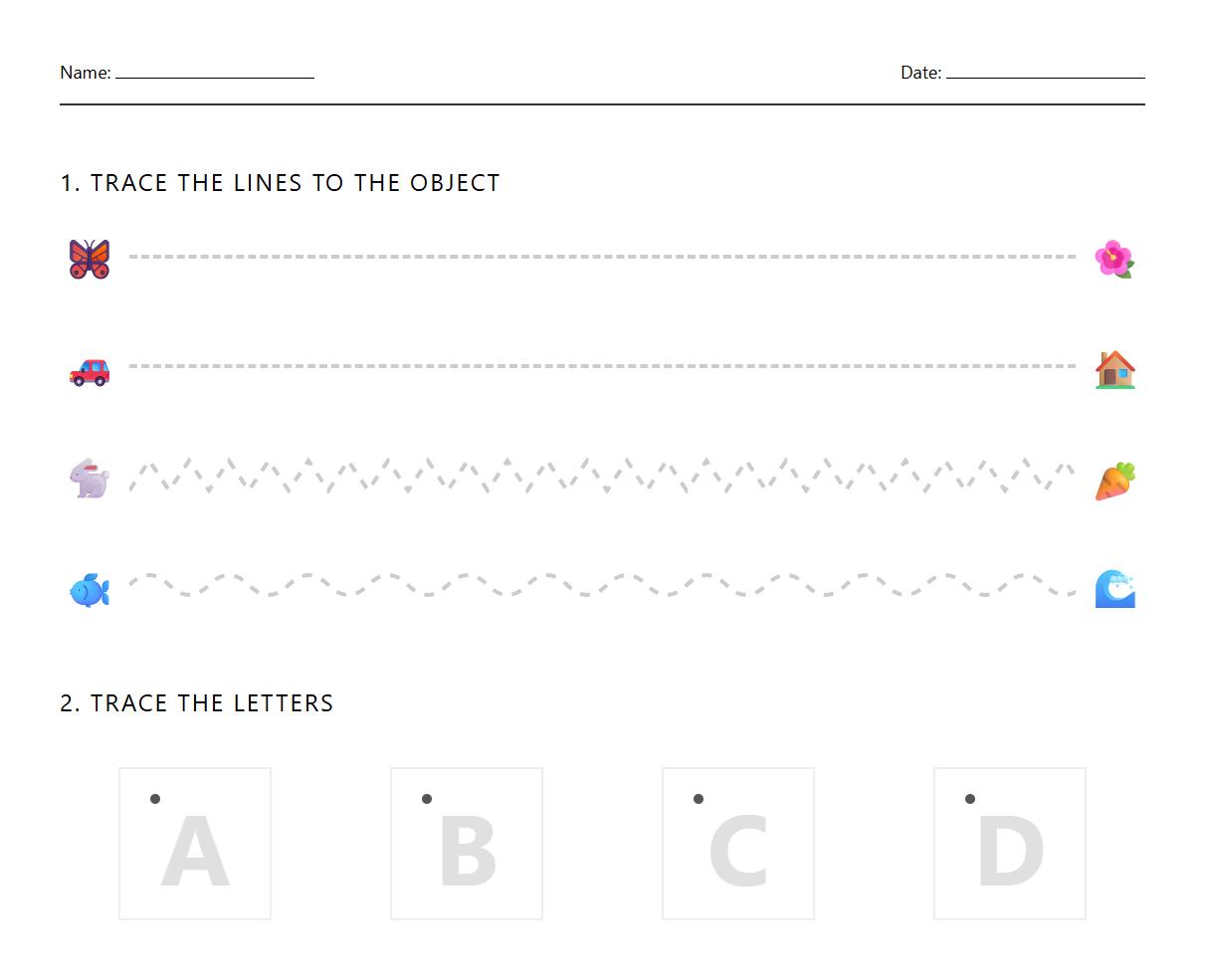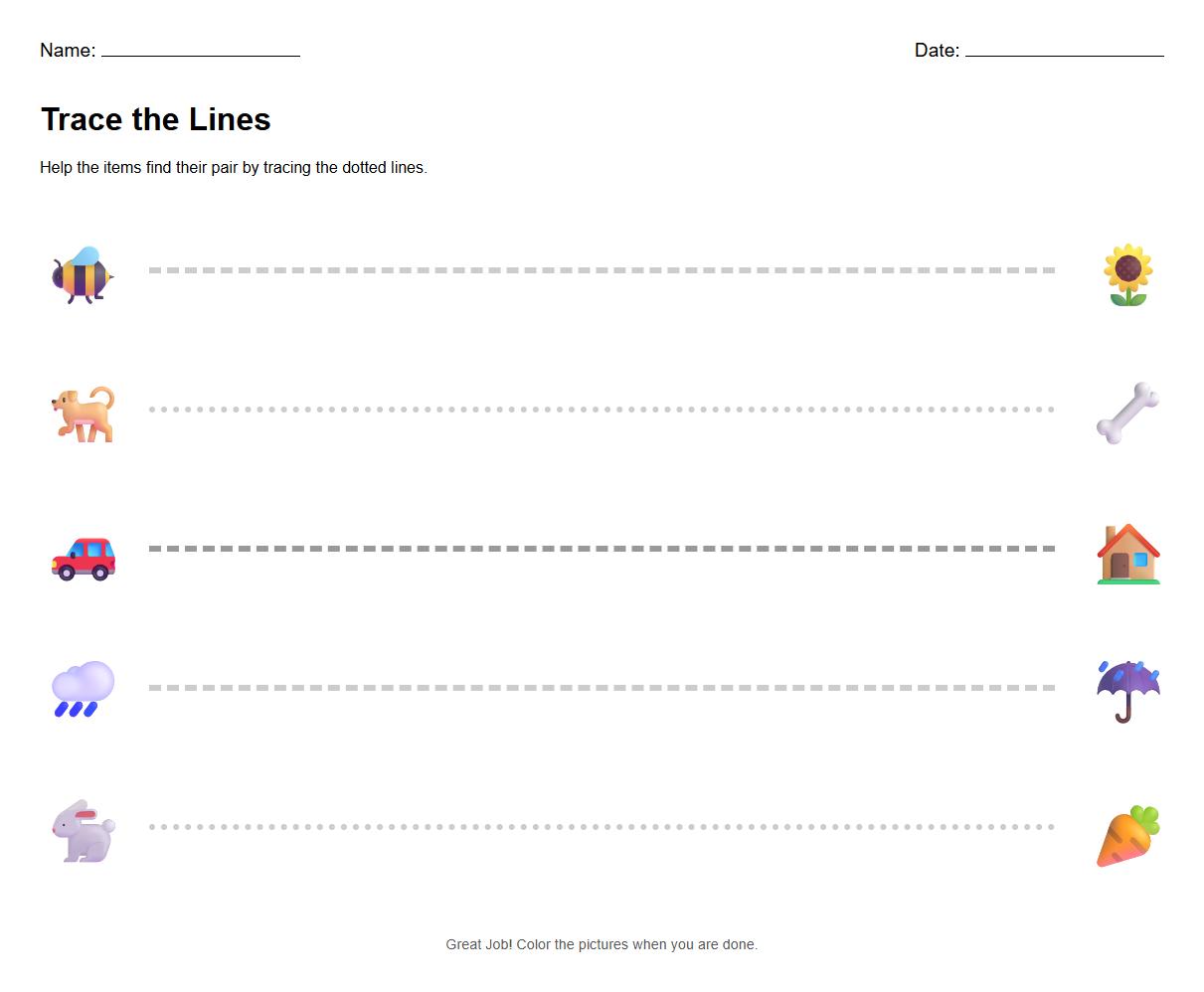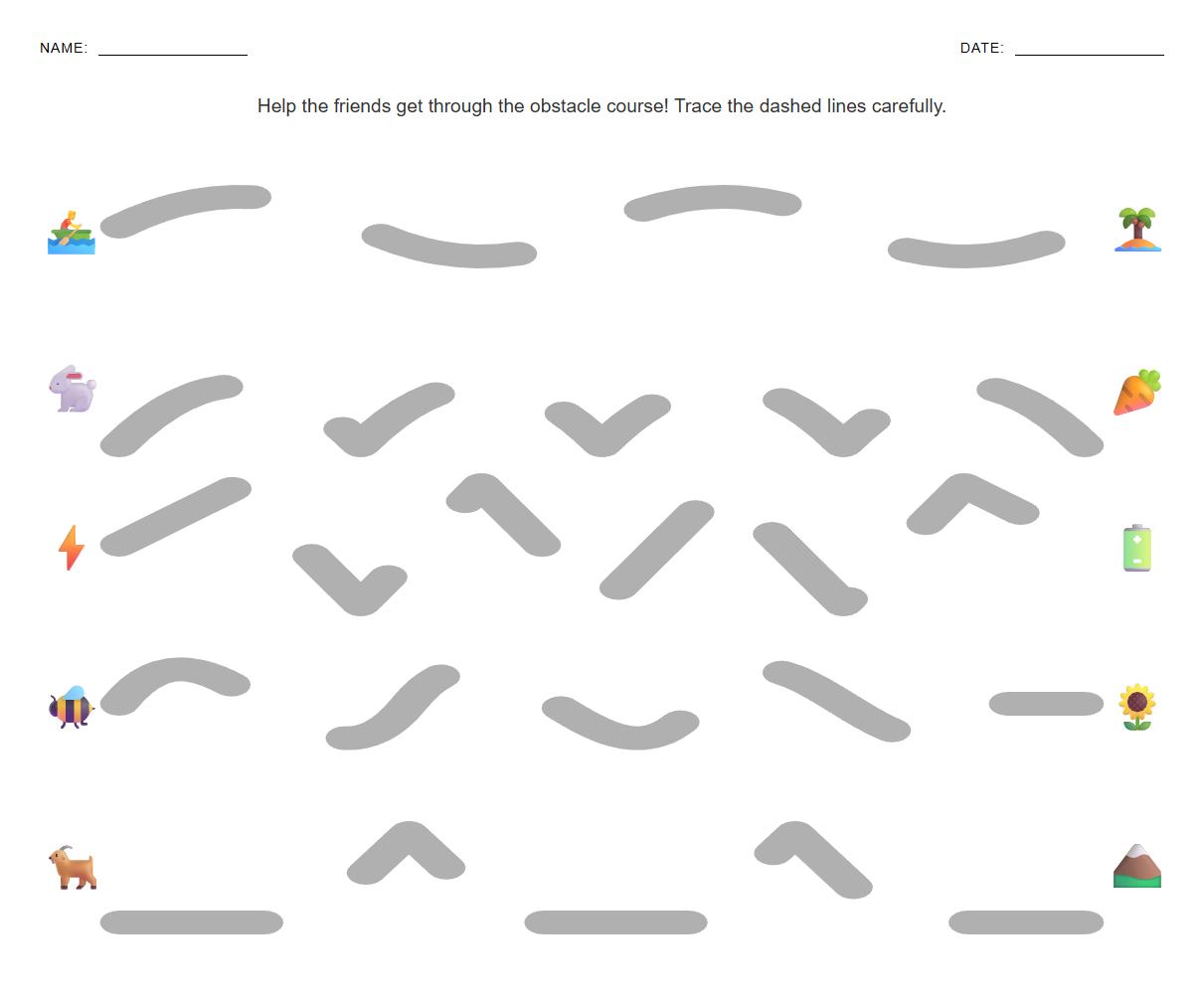
Line and curve tracing worksheets help kindergarteners enhance their fine motor skills by practicing controlled hand movements and improving hand-eye coordination. These activities strengthen the muscles needed for writing and encourage focus through repetitive patterns. Explore our collection of worksheets designed to support your child's motor development and early writing readiness.
How Does Line and Curve Tracing Help Develop Fine Motor Skills in Kindergarten Students?
Line and curve tracing activities enhance fine motor skills by strengthening hand muscles and improving coordination. These exercises encourage children to control pencil movements precisely, which is essential for later writing skills. Tracing also supports visual-motor integration as kids learn to follow paths with their eyes and hands simultaneously. Early practice builds confidence and prepares students for more complex tasks. Explore related fine motor skills activities.
What Are Some Common Shapes or Patterns Included in Tracing Worksheets for Early Learners?
Tracing worksheets often feature basic geometric shapes like circles, squares, triangles, and lines. Patterns may include zigzags, loops, waves, and spirals to challenge hand control. Simple icons like stars, hearts, and animals are also popular to keep children engaged. These shapes and patterns are foundational for developing spatial awareness and motor precision. See examples in shape learning worksheets.
How Often Should Children Practice Tracing Activities to Improve Hand-Eye Coordination?
Consistent practice is key, so children should engage in tracing exercises daily or several times a week. Short sessions of 10-15 minutes are effective without causing fatigue. Regular repetition reinforces neural pathways involved in hand-eye coordination. Teachers and parents should encourage steady progress rather than speed. Practice routines can be found in visual discrimination activities.
What Materials Are Best for Creating Effective Line and Curve Tracing Worksheets?
Effective worksheets use clear, bold lines that are easy for young children to see and follow. High-contrast colors like black on white or bright primary colors help maintain focus. Durable paper or laminated sheets allow for repeated use with dry-erase markers. Using visually appealing designs further motivates engagement. Try using resources such as alphabet recognition worksheets.
How Can Teachers Differentiate Tracing Worksheets to Suit Various Skill Levels?
Teachers can adjust tracing complexity by varying the size and thickness of lines. Beginners might start with broad, straight lines while advanced learners trace finer, more intricate patterns. Incorporating multi-step tracing tasks or combining shapes provides additional challenges. Offering choice and customizing content ensures all students remain appropriately challenged and supported. Find differentiated activities at shape and pattern matching worksheets.
What Signs Indicate a Child Is Improving Their Fine Motor Skills Through Tracing Exercises?
Improvement is observed when children show stronger pencil grip, better control, and less hand fatigue. They begin to trace shapes more accurately with reduced hesitation and fewer errors. Increased confidence and longer focus periods during tracing sessions also signal progress. These signs indicate readiness for more advanced writing tasks. Examples of progress can be monitored using phonics mazes activities.
How Can Parents Support Tracing Practice at Home for Their Kindergarteners?
Parents can create a supportive environment by providing regular opportunities for tracing with fun worksheets. Using everyday items like tracing letters in sand or shaping dough can reinforce skills. Encouragement and positive feedback build motivation and persistence. Keeping activities playful and stress-free helps maintain children's interest. Family-friendly activities are available at vocabulary building worksheets.
What Are Engaging Themes or Images to Include in Tracing Worksheets for Young Children?
Themes featuring animals, nature, and favorite storybook characters make tracing more appealing. Worksheets might include tracing paths shaped like rockets, dinosaurs, or flowers. Seasonal and holiday images add variety and excitement. Visual storytelling through themes boosts engagement while developing skills. Try out themed color code worksheets.
How Can Tracing Activities Be Combined with Other Classroom Lessons?
Tracing can integrate with subjects like literacy by tracing letters and words. Math lessons benefit from tracing numbers and patterns. Science topics can include tracing shapes found in nature or diagrams. Combining tracing with thematic content reinforces multiple skills simultaneously. Combine lessons with following directions phonics practice.
What Are the Main Challenges Children Face When Learning to Trace Lines and Curves?
Common challenges include difficulty controlling pencil pressure and maintaining steady hand movements. Young children might struggle with spatial awareness and staying within the lines. Fatigue or frustration may arise from repetitive practice without variation. Patience and tailored support help overcome these obstacles. Learn strategies with step-by-step following directions worksheets.


Phonics Based Line and Curve Tracing Worksheet for Early Learners