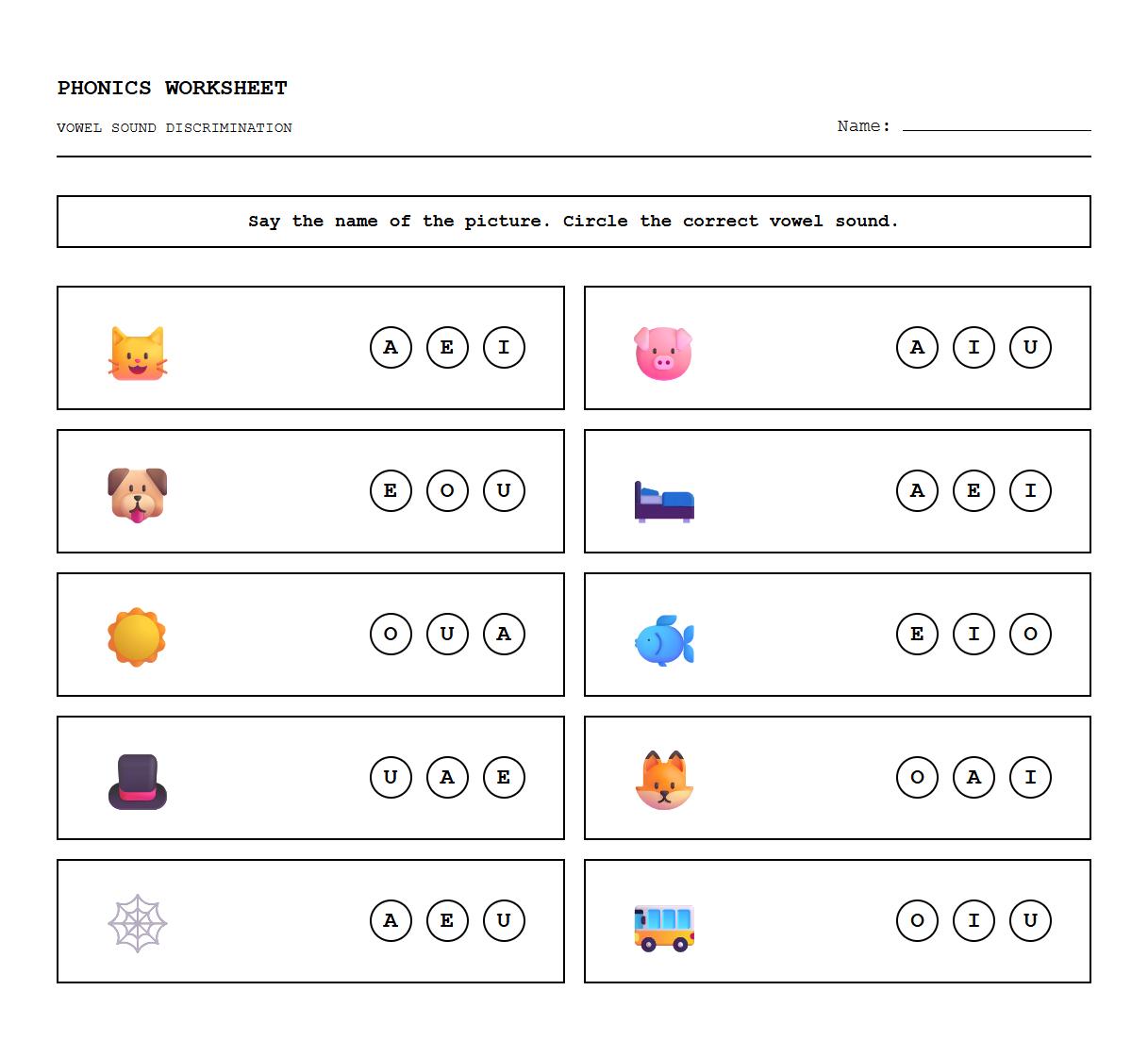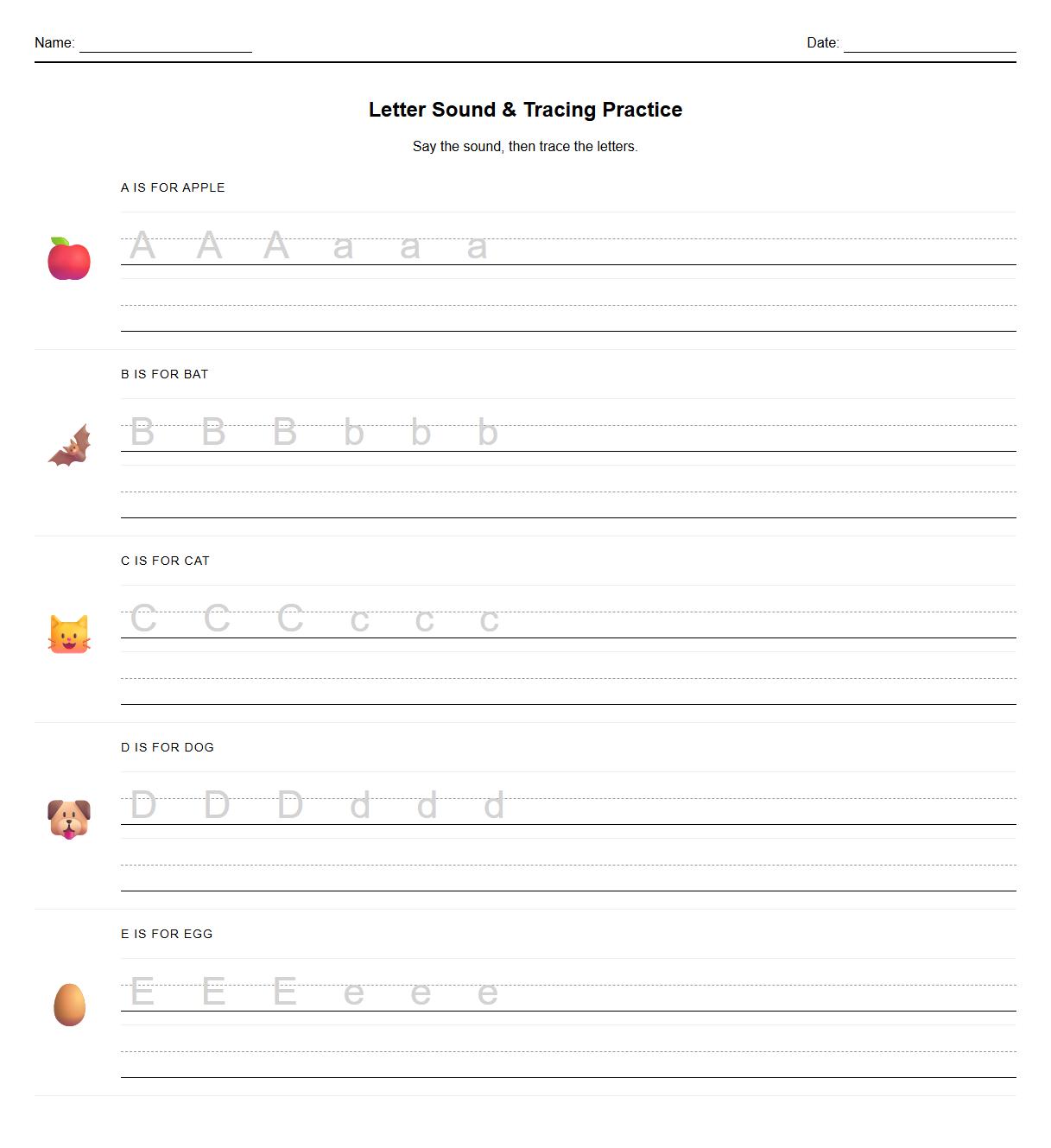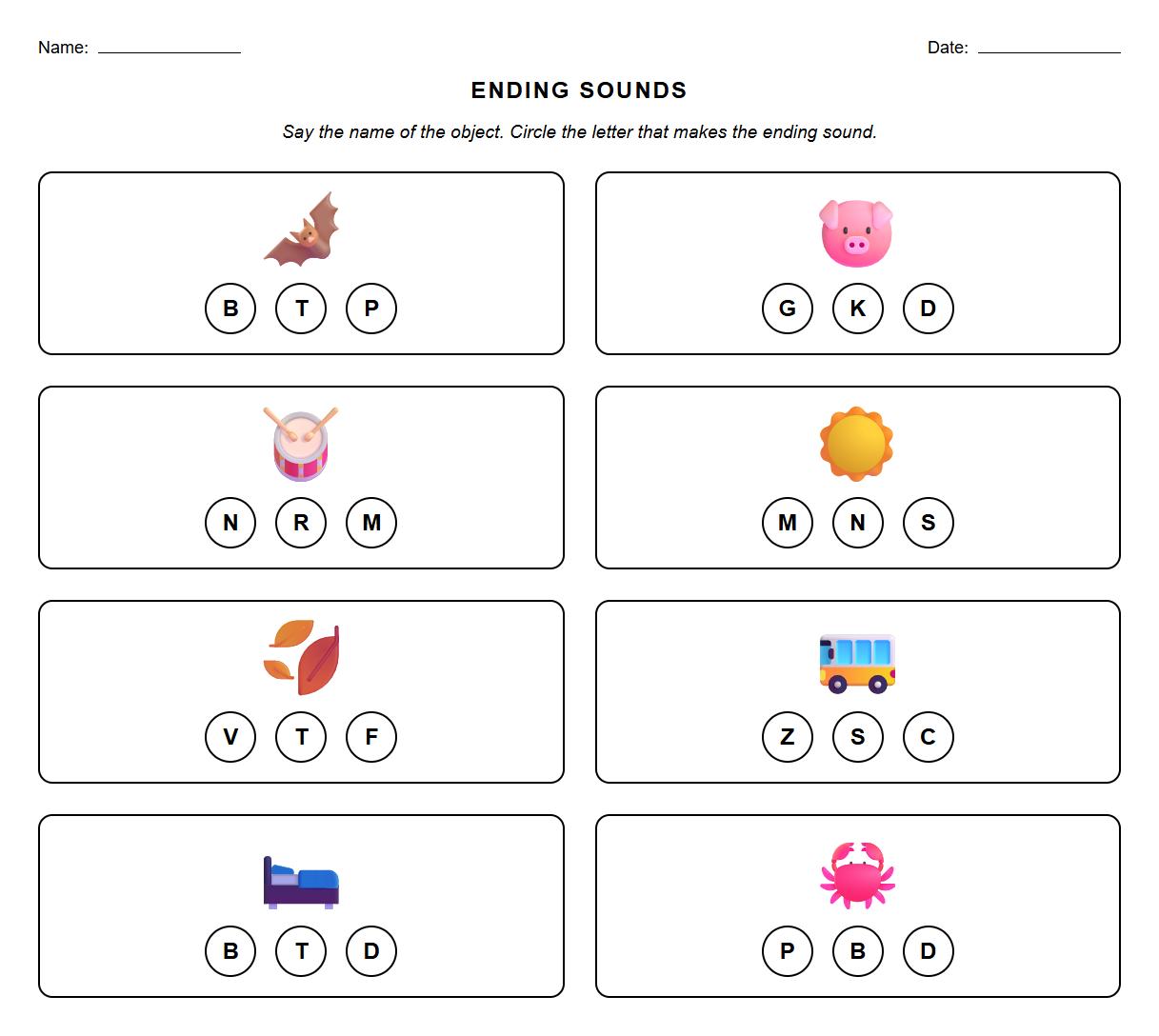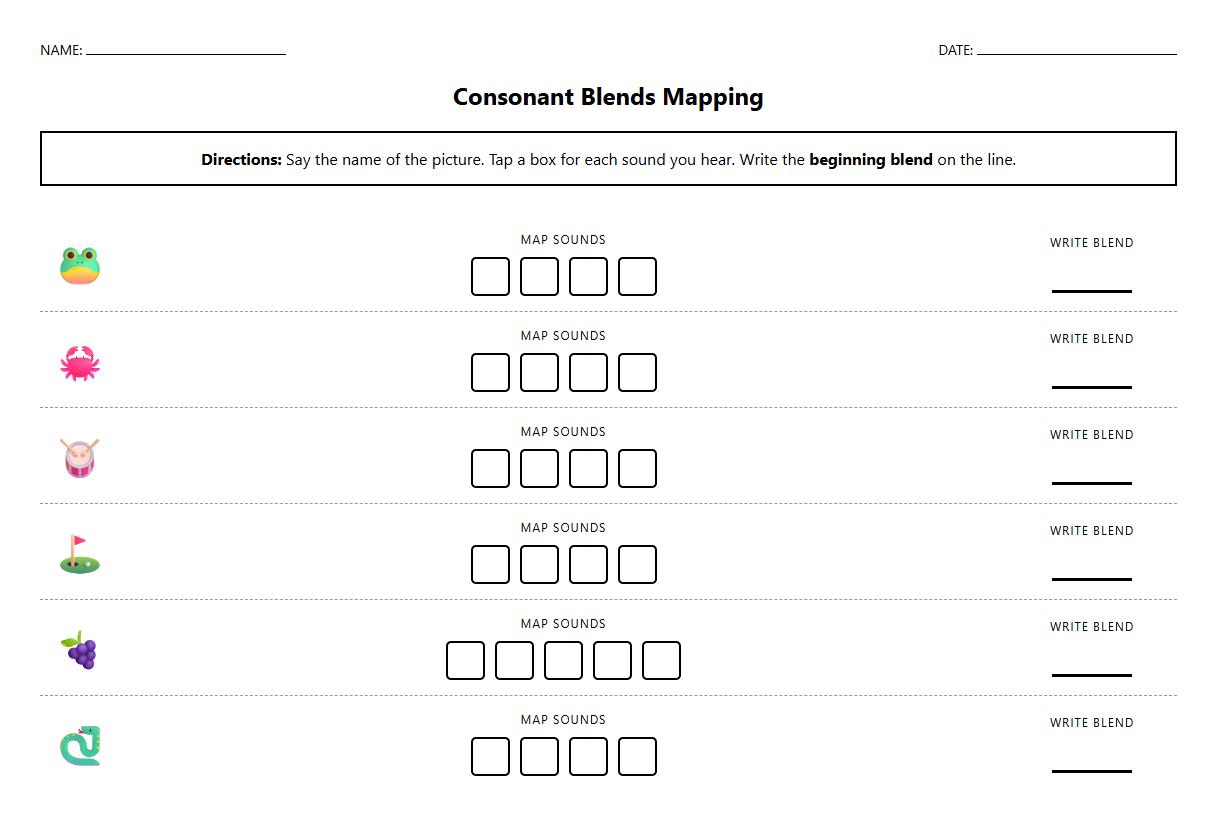
Letter Sound Association Worksheets reinforce early phonics skills by helping children link letters with their corresponding sounds through engaging, hands-on activities. These worksheets foster letter recognition and improve decoding abilities, building a strong foundation for reading fluency. Explore the diverse selection of Letter Sound Association Worksheets available to support your phonics practice sessions.
Understanding the Sound of Letter B
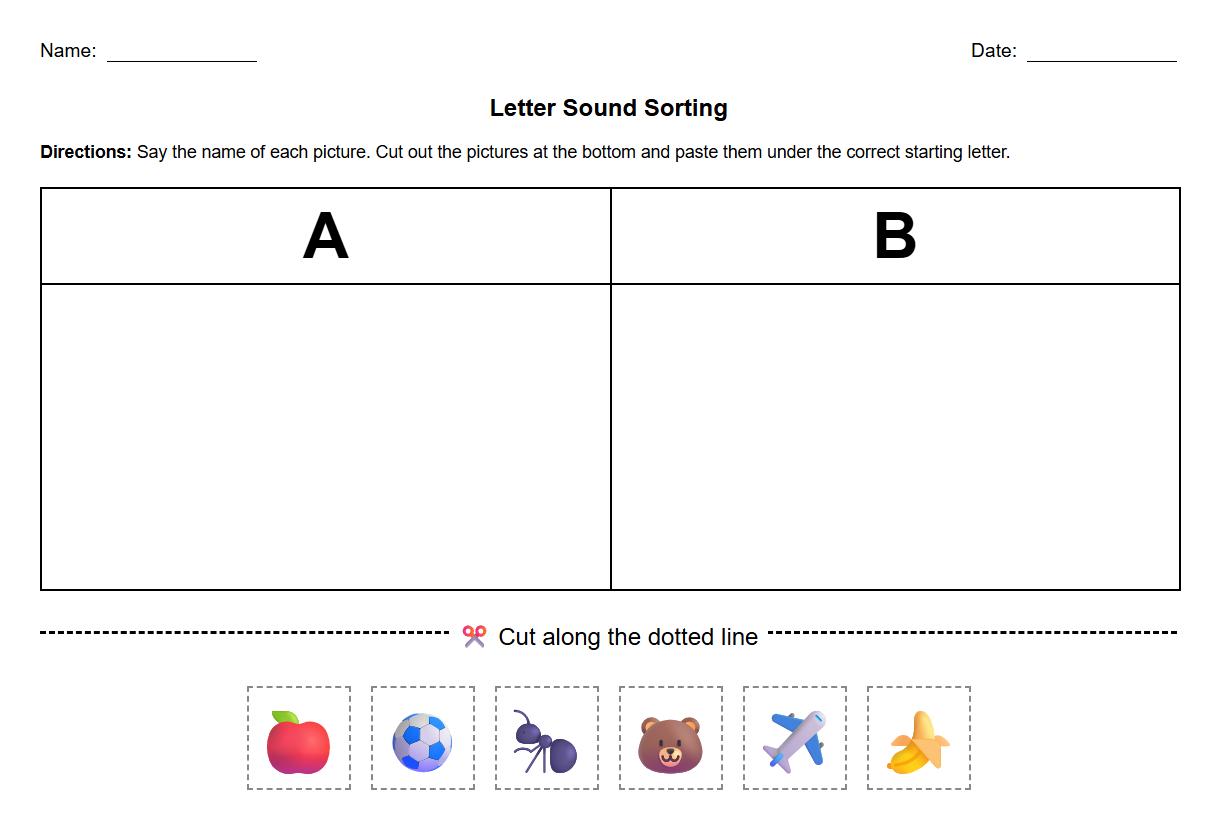
The letter B makes the /b/ sound, as heard in words like "ball" and "bat." When teaching children, emphasize the sound at the beginning of words to help them connect letters to their sounds. Repetition and practice with simple words can strengthen their phonemic awareness. Use familiar objects or pictures to illustrate the sound clearly. Explore more with an early literacy phonics worksheet.
Identifying Pictures with the T Sound
Ask children to circle all pictures that begin with the /t/ sound, such as "tiger," "tree," and "tub." This activity enhances their ability to recognize initial sounds in words. Encourage them to say the word out loud before making their choice. This practice supports early reading skills and sound-letter association. Try a foundational letter skills worksheet.
Starting Sound of the Letter S
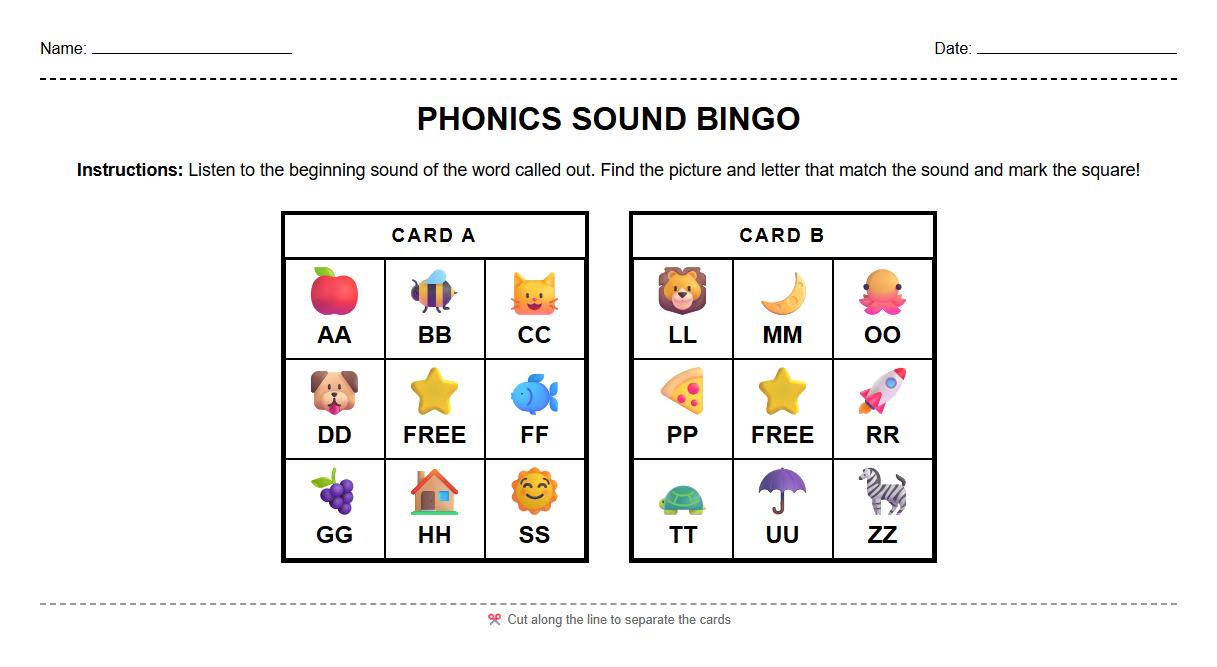
Help children identify which letter makes the /s/ sound at the start of "sun." The letter S represents this sound and is often associated with words like "snake" and "sock." Emphasizing the connection between sound and letter helps build foundational literacy. Using clear visual aids strengthens understanding. For more, view this digraphs and blends matching worksheet.
Matching Letters to Pictures
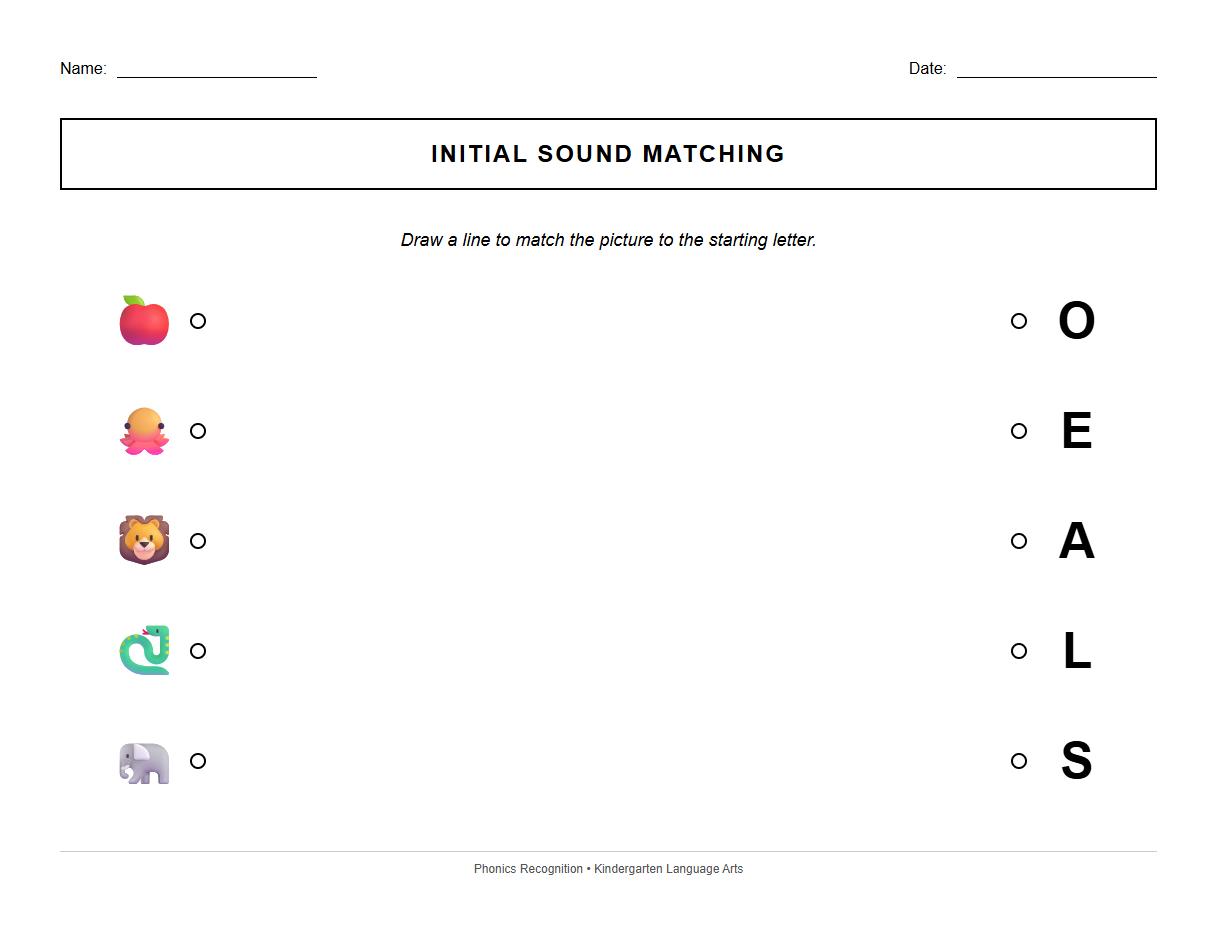
In this activity, children match each letter to the picture that starts with its corresponding sound. For example, matching the letter "C" with a picture of a cat. This interactive task develops letter-sound recognition and critical thinking. Ensure illustrations are clear and relatable for young learners. Practice with this matching words worksheet.
Completing Words by Filling in Missing Letters
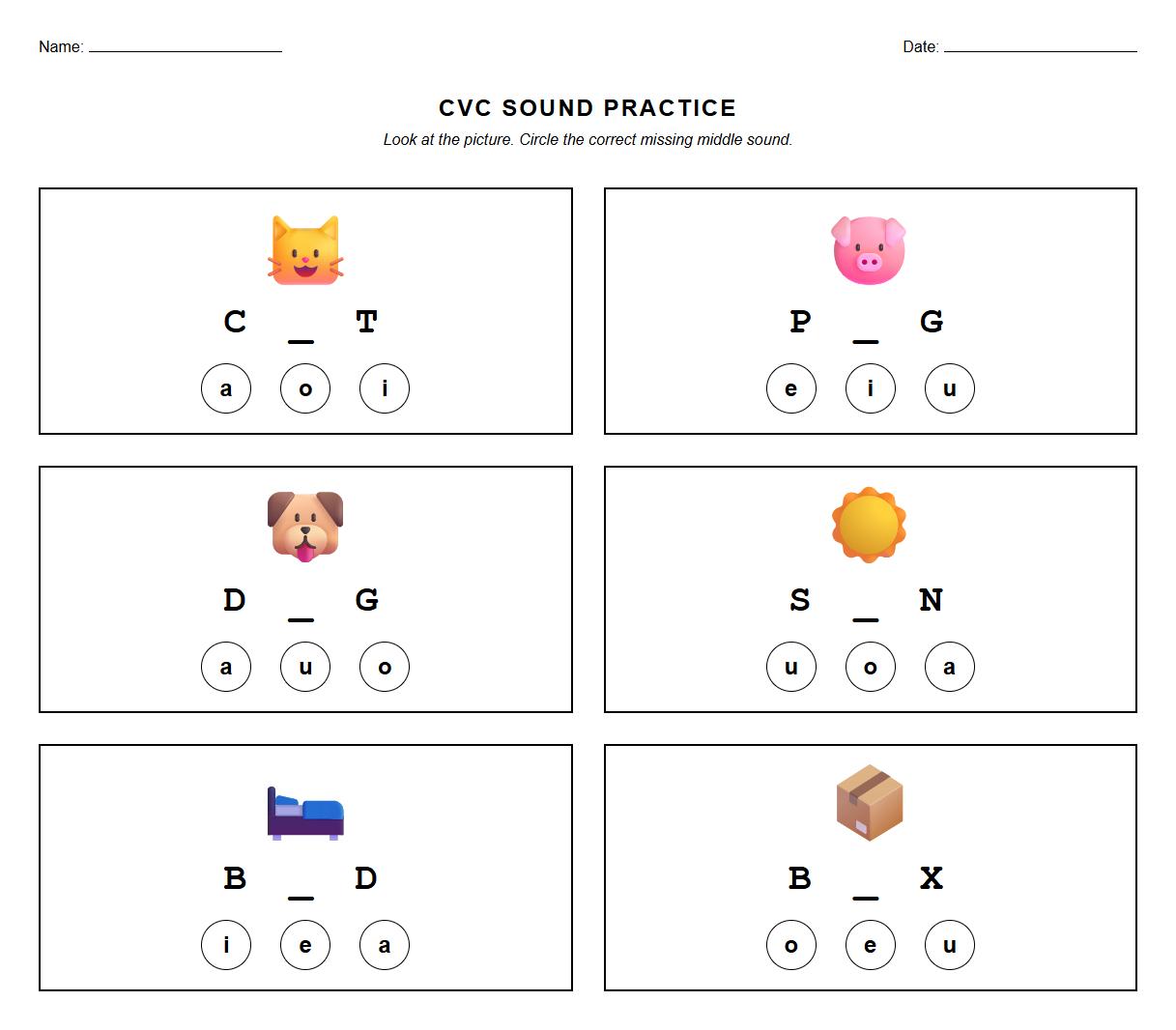
Encourage children to fill in the missing letter to complete simple words like "dog." This helps reinforce letter knowledge and spelling skills. Use words familiar to children to maintain engagement and confidence. Providing hints or examples can support successful completion. Check out an activity on structured sentence building for more inspiration.
Choosing the Word That Starts with M
Ask children to identify which word starts with the letter M among a selection of words. This sharpens their ability to differentiate initial sounds and letters. Use words like "moon," "man," and "mat" for easy recognition. Repeated practice improves letter sound association. For more practice, try this short and long vowel comparison worksheet.
Connecting Letters to Pictures With Lines
Children can draw a line from the letter "S" to the picture of a snake, linking letters to their sounds visually. This fine motor activity strengthens both letter recognition and hand-eye coordination. Make sure the letters and pictures are clearly visible and distinct. It's a fun way to integrate learning with drawing. See examples in this kindergarten phonics worksheet.
Naming Pictures and Writing Beginning Letters
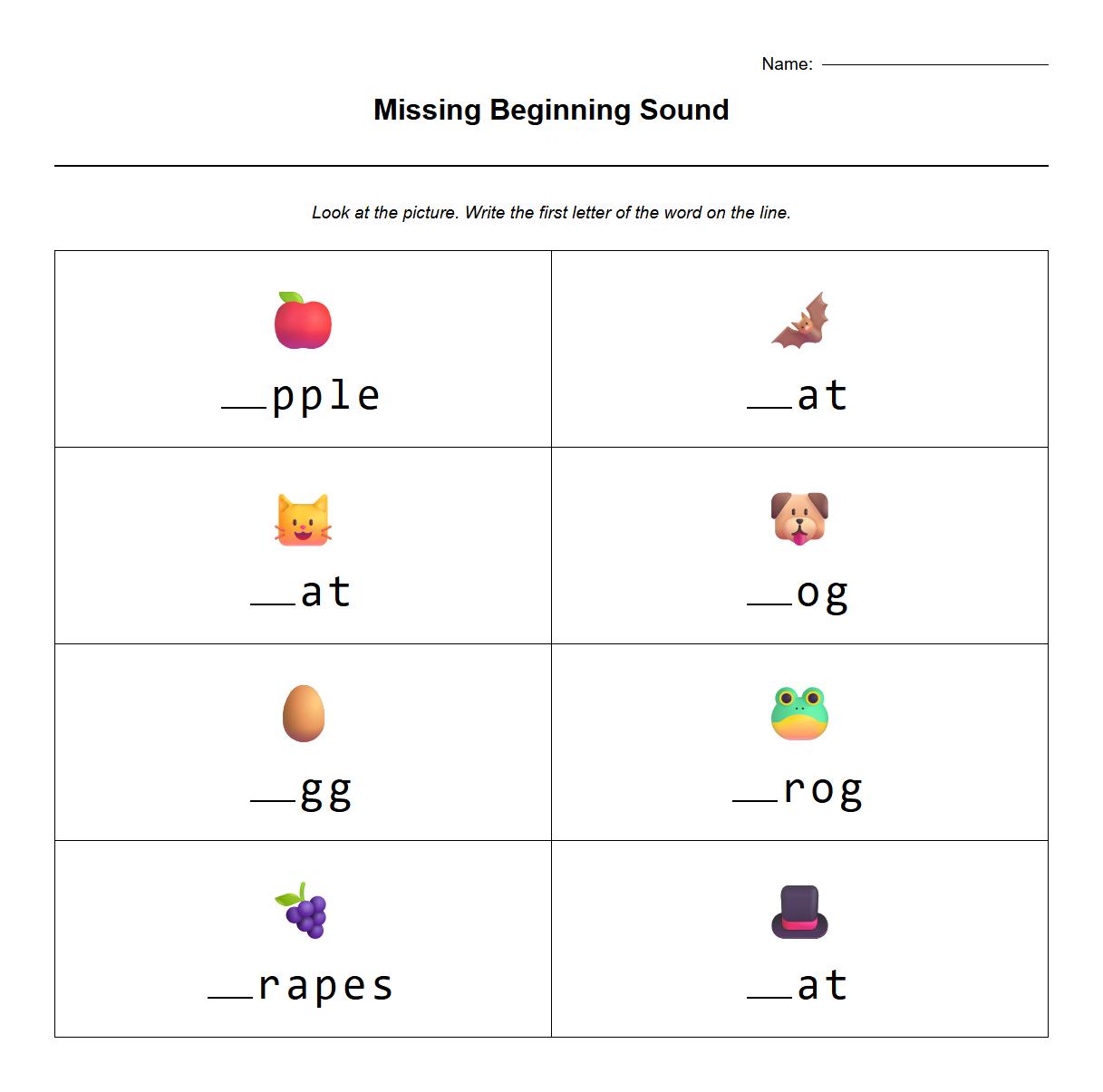
Encourage children to say the name of each picture and write the first letter of the word. This activity builds vocabulary and reinforces letter-sound connections. Using simple, familiar objects helps maintain interest. Writing practice also enhances fine motor skills alongside literacy. Enhance learning with interactive antonyms activities.
Coloring Objects That Start With P Sound
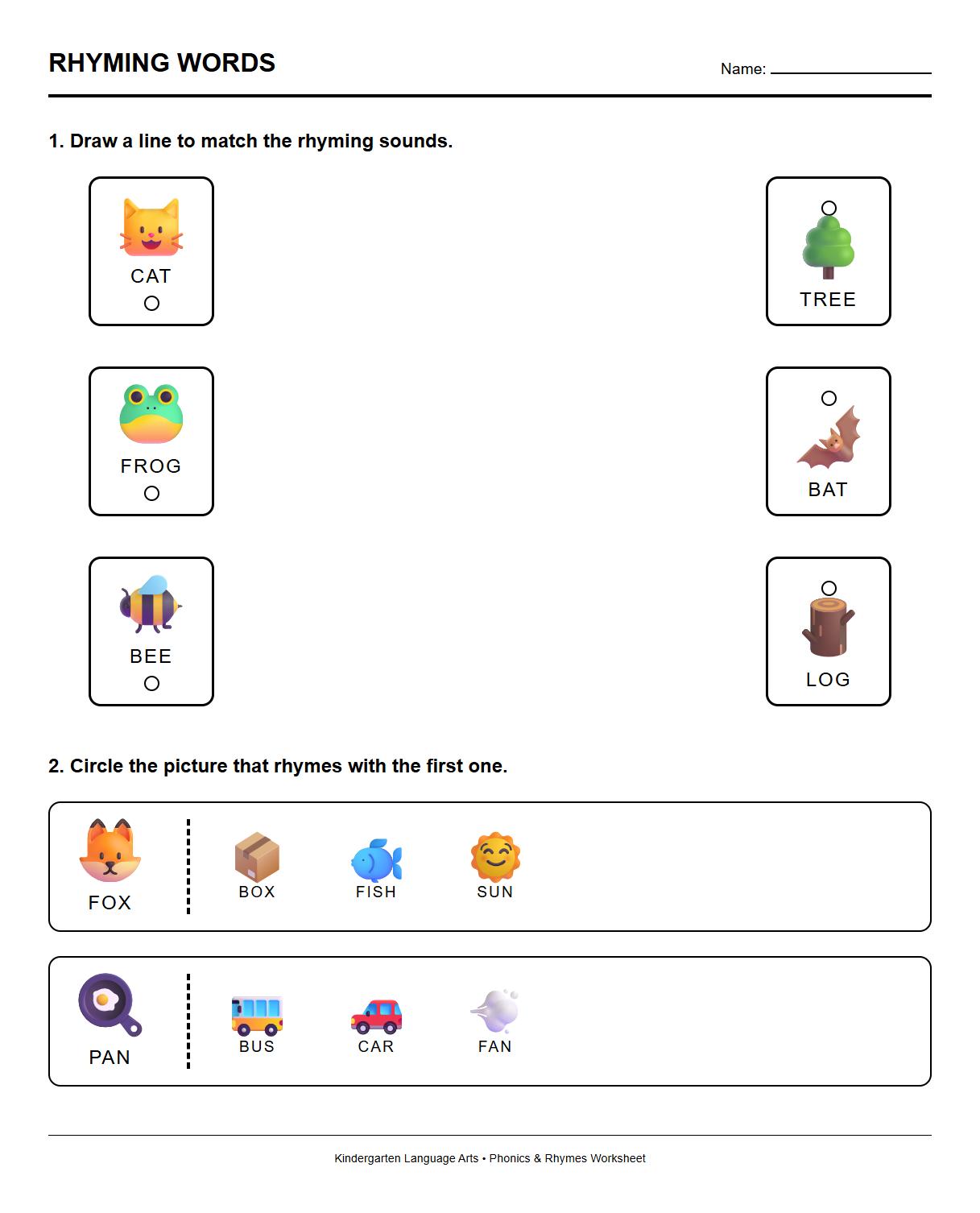
Invite children to color the objects that begin with the /p/ sound, such as "pen," "pig," or "pen." This task combines creative expression with phonics learning. It encourages children to listen for sounds and recognize related letters. Coloring makes the learning process enjoyable and memorable. Try these rhyming words worksheets for more fun.
Recognizing the First Letter Sound of Apple
Ask children, "What sound does the first letter of apple make?" The answer is /a/, represented by the letter A. Teaching this helps children connect spoken sounds with written letters. Use real apples or pictures to make the lesson tangible and engaging. Start practicing with interactive long vowel phonics worksheets.


Kindergarten Phonics Worksheets for Improving Sound Discrimination