Kindergarten students develop foundational data interpretation skills by using tally marks and picture graphs. These exercises enhance counting, sorting, and visual representation abilities essential for early math proficiency. Explore our collection of engaging worksheets to support your child's learning journey in tally marks and picture graph skills.
Using Tally Marks to Count Classroom Objects
To use tally marks for counting, first identify the objects in the classroom you want to count. Draw a vertical line for each object. Group tally marks in sets of five for easier reading and total counting. This method helps young learners visualize and organize numbers effectively.
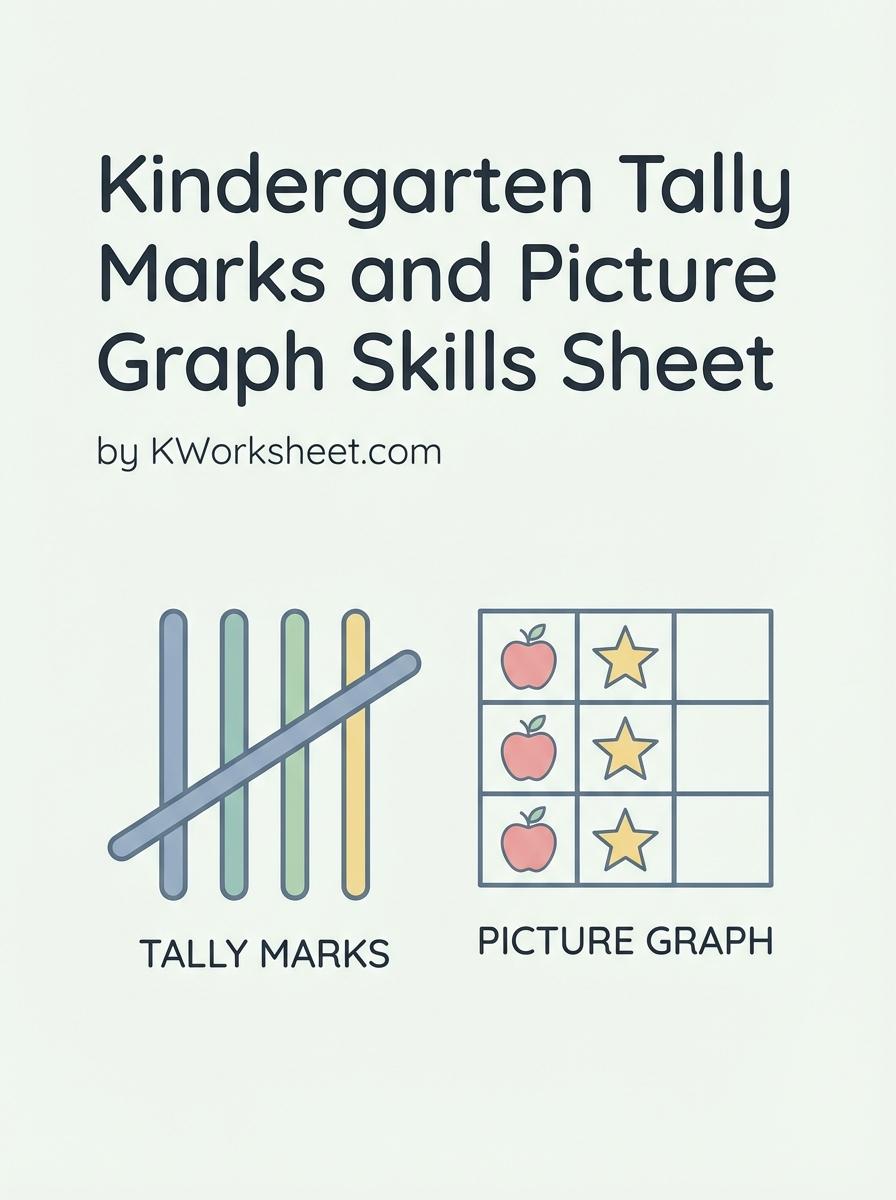
Appearance of Five Tally Marks Grouped Together
Five tally marks are shown as four vertical lines with a diagonal line crossing through them. This group of five simplifies counting larger quantities at a glance. Teachers can use this visual to help children quickly recognize numbers in groups. It builds foundational skills in number sense and counting.
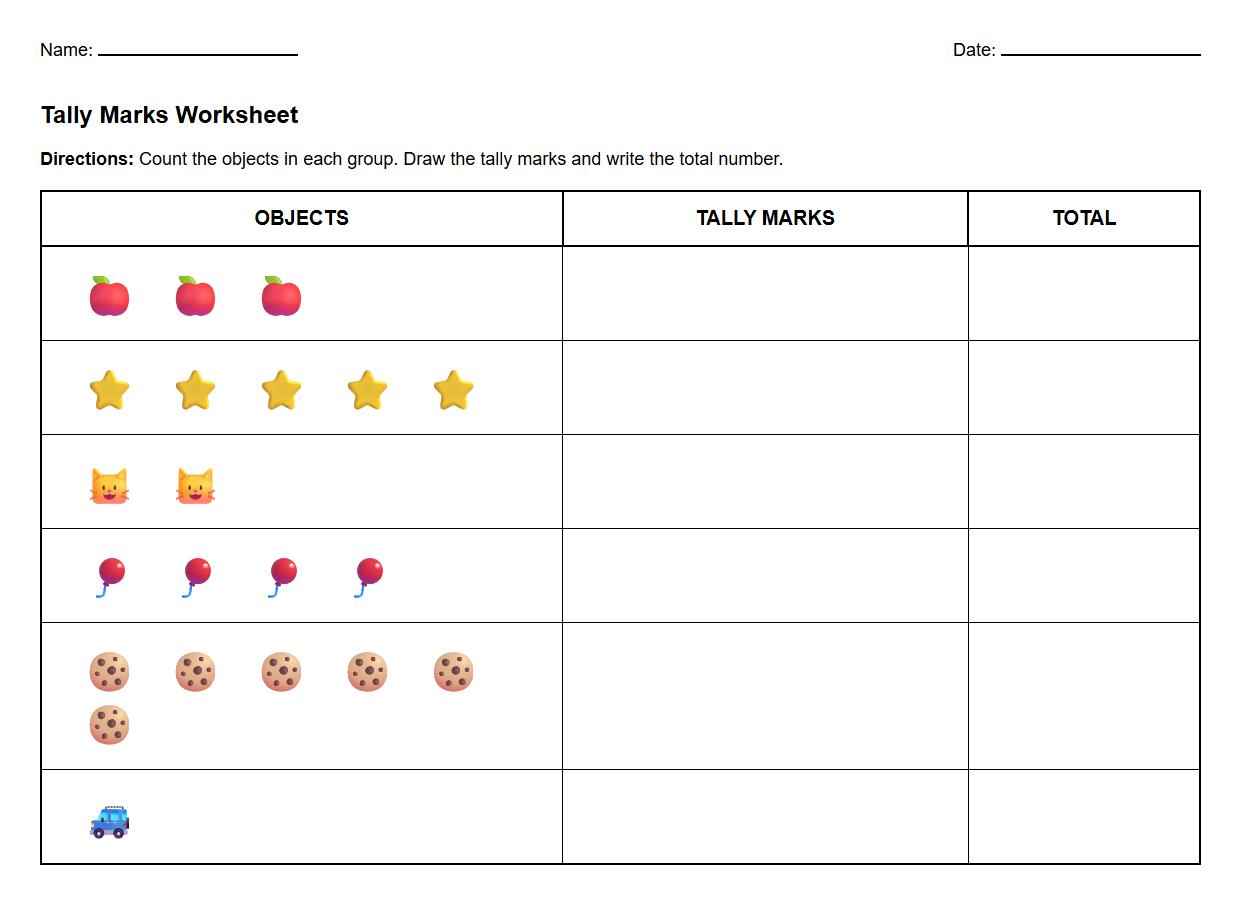
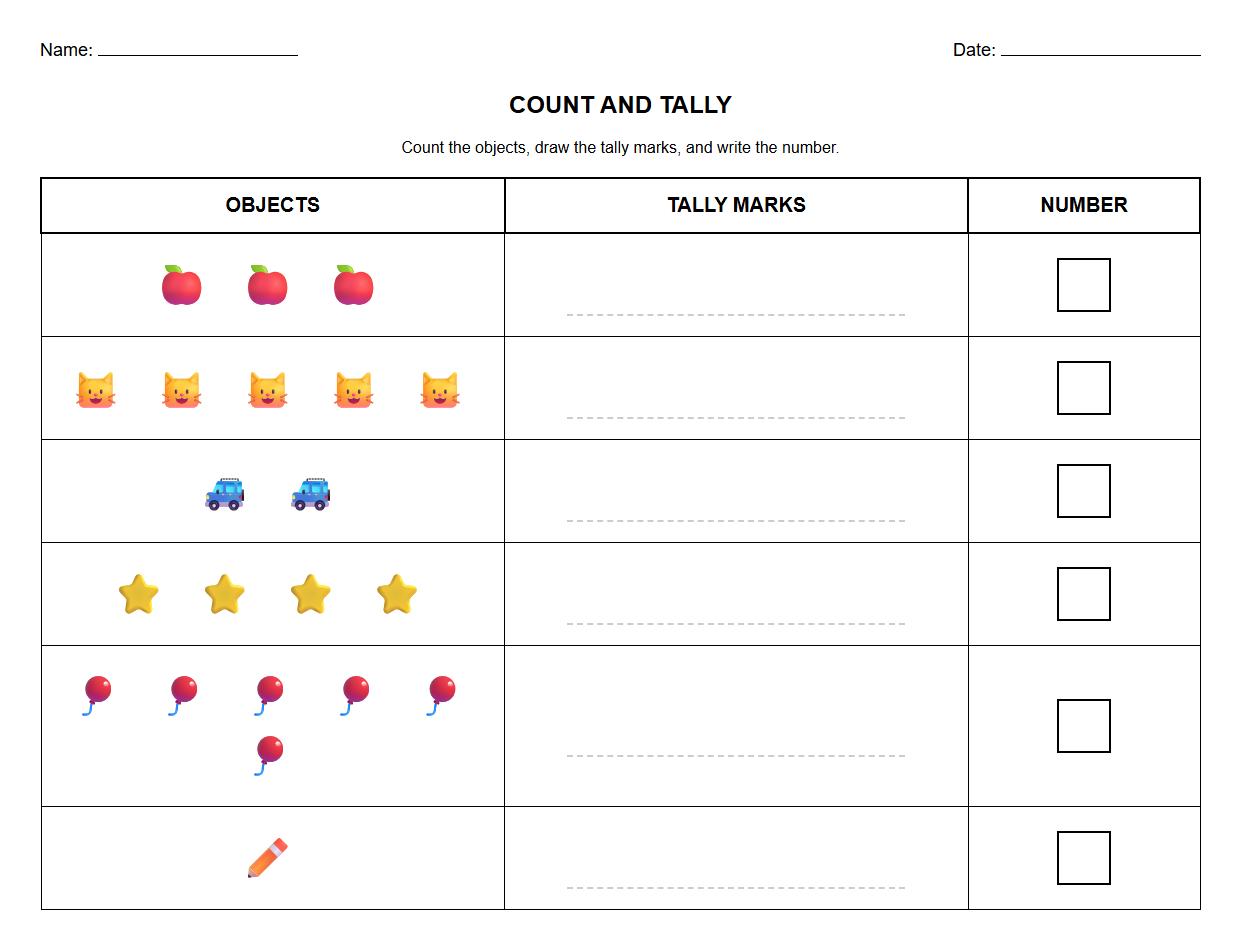
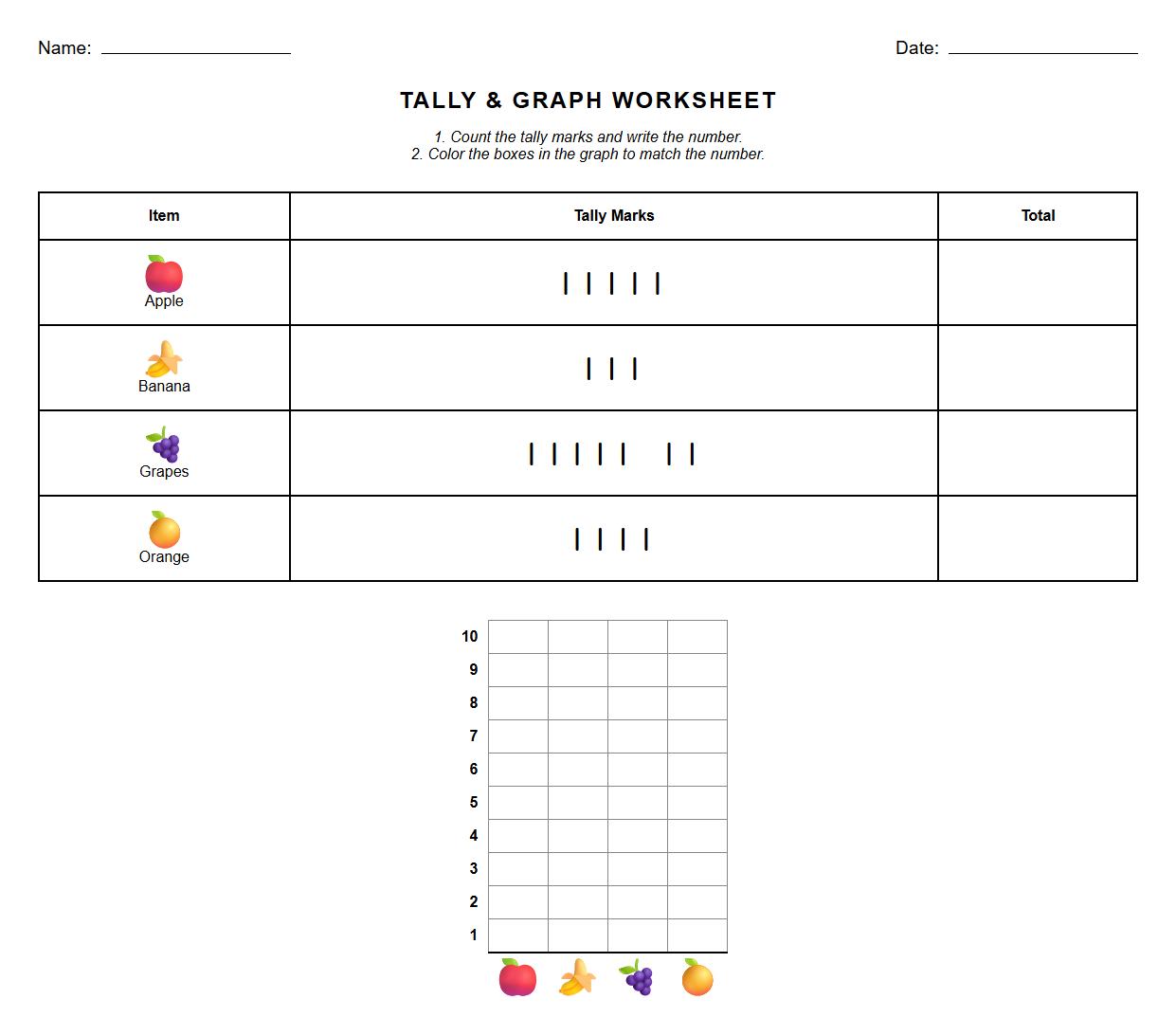
Representing Number of Apples with Tally Marks
To represent apples using tally marks, draw one vertical line for each apple. Every fifth apple should be marked with a diagonal line crossing four tallies. This makes the total number easy to count by fives. It's an engaging way for children to connect numbers with real objects and practice counting and quantity.
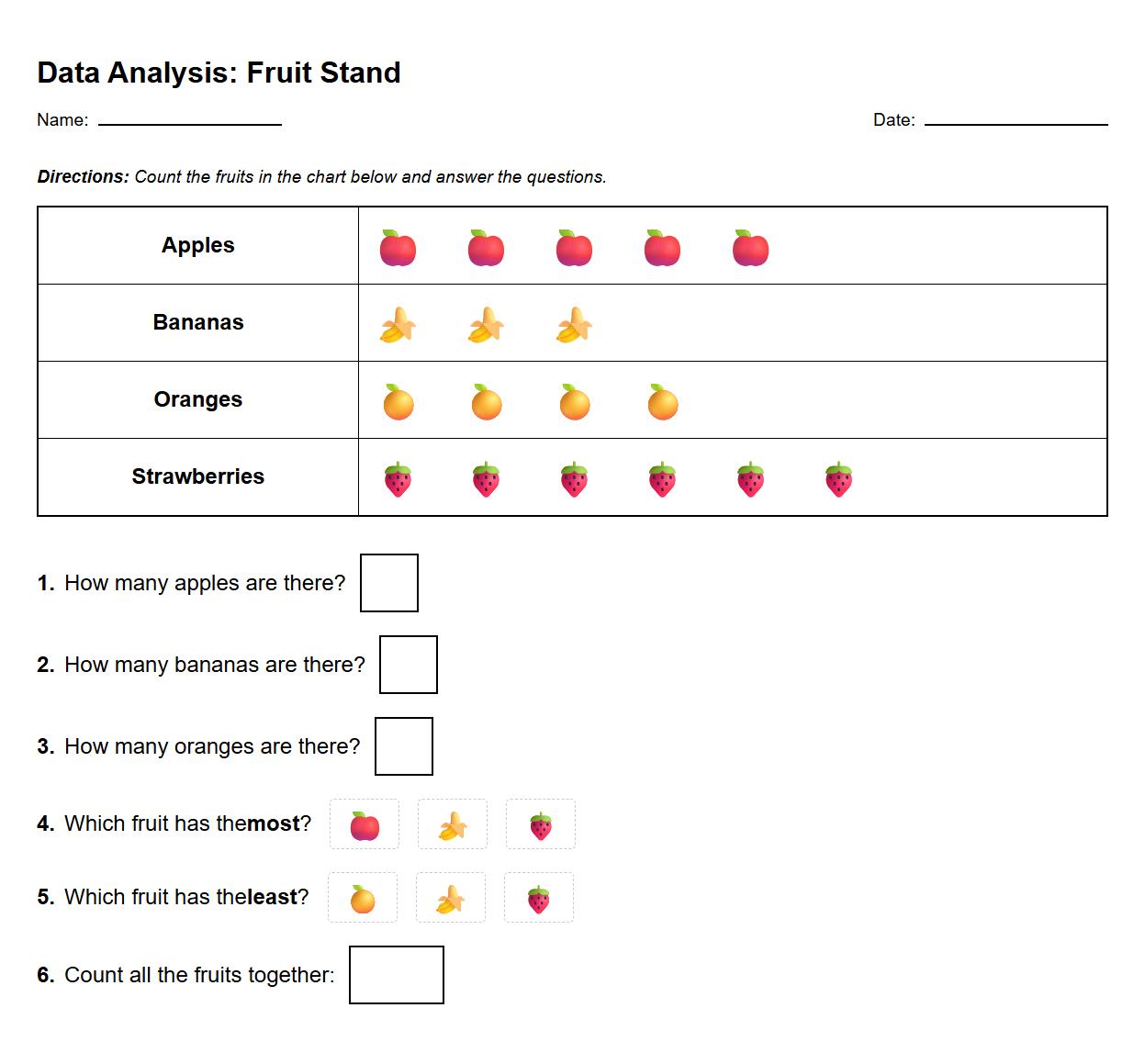
Identifying the Picture with the Most Votes in a Graph
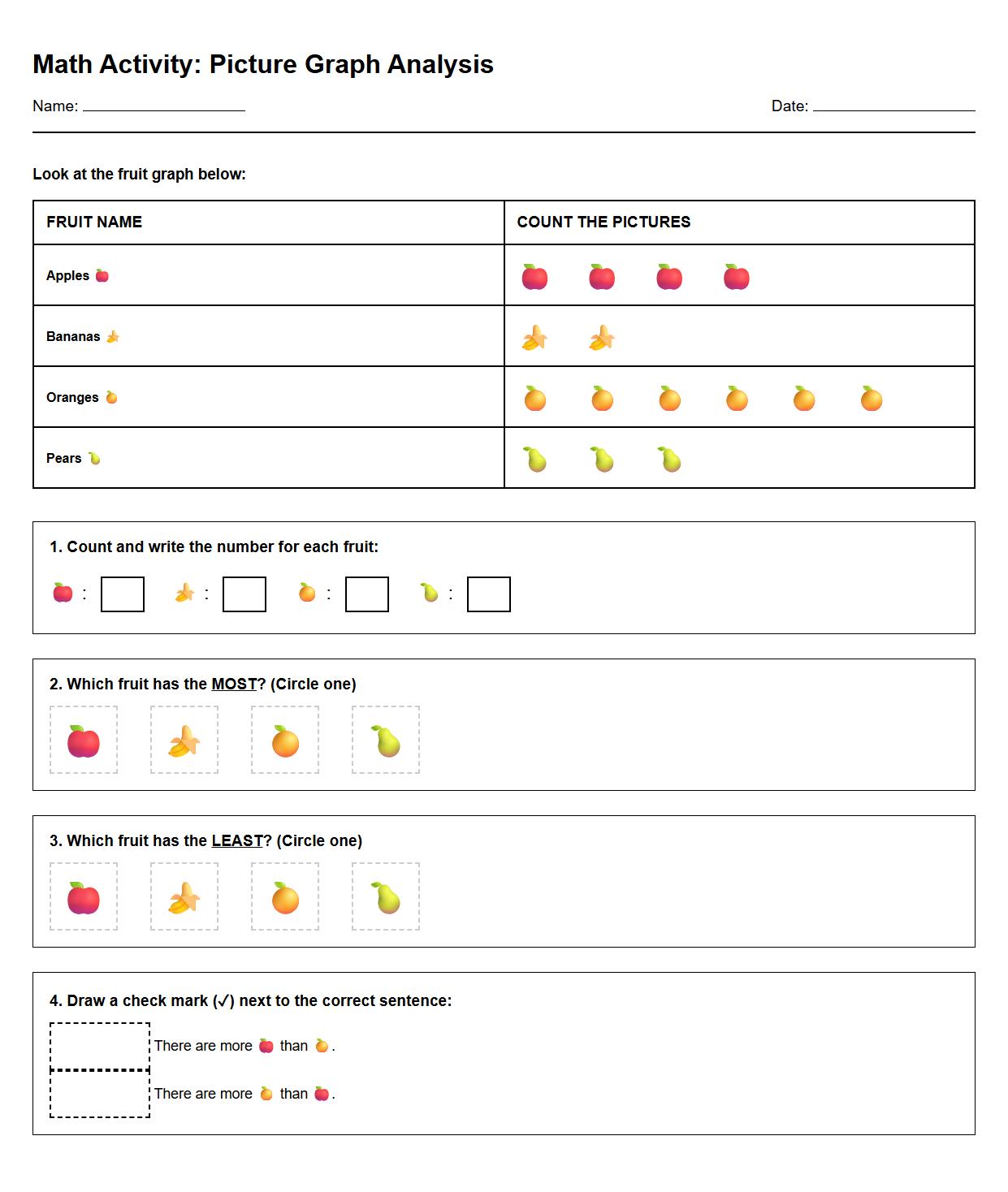
Look at the picture graph carefully and find the image with the longest row of symbols or marks. The picture with the most marks represents the highest number of votes. This visual cue assists children in understanding popularity and comparison. Encourage them to count and confirm the totals.
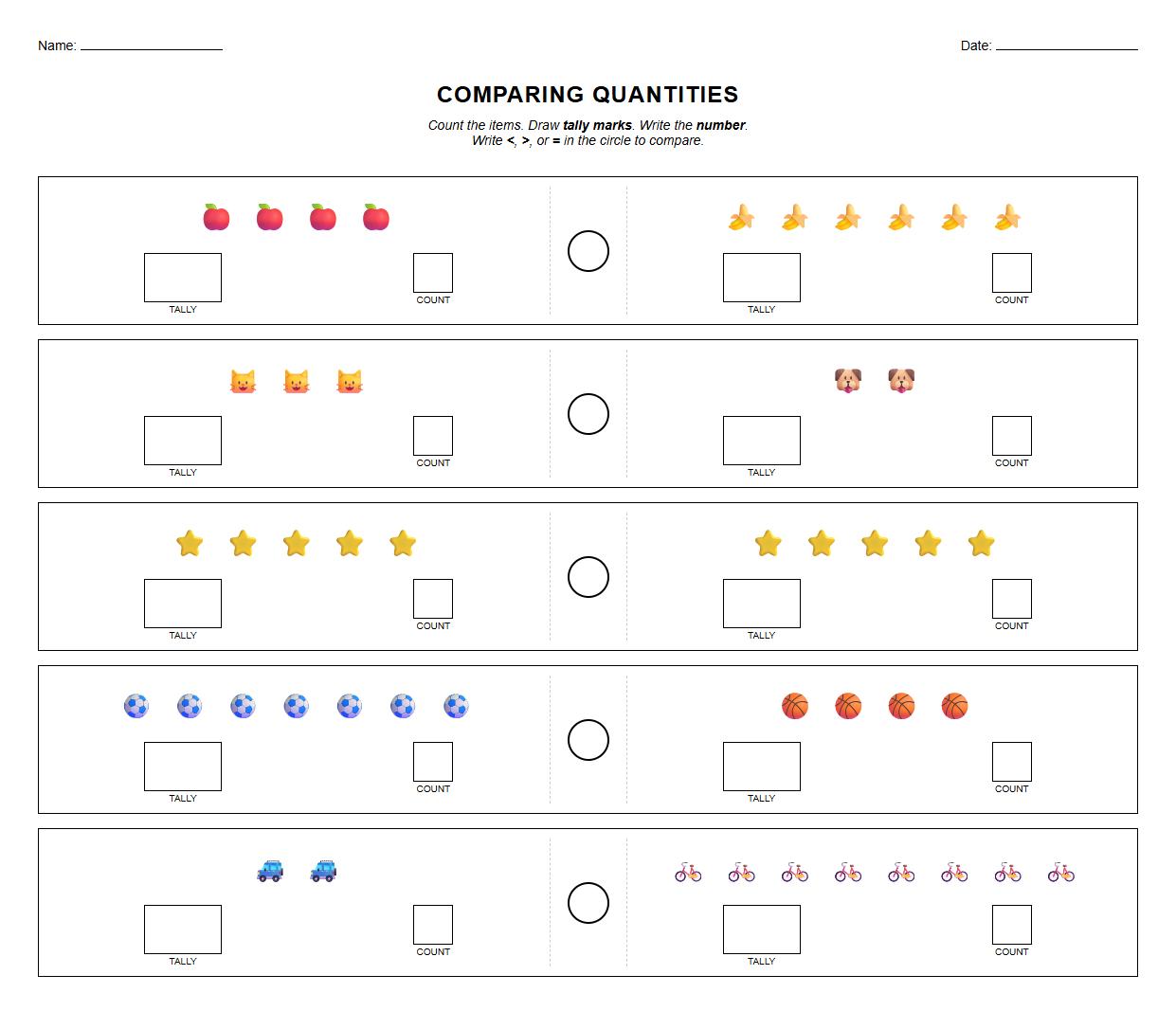
Comparing Two Categories Using a Picture Graph
To compare two categories, observe the number of pictures or symbols each category has. The category with more symbols has more items or votes. Highlight the difference by subtracting the smaller count from the larger one. This approach helps kindergarteners grasp comparison and quantity concepts.
Drawing Tally Marks for Seven Students Who Like Blue
Start by drawing one tally mark for each student. For seven students, draw one group of five tally marks first, then add two individual tallies. This total shows seven clearly and accurately. Using tally marks helps children organize their counting systematically using structured counting.
Identifying the Item with the Least Amount in a Picture Graph
Scan the picture graph to find the image with the shortest row of pictures or symbols. This represents the least amount in the graph. Discussing this helps children understand how to identify minimum values visually. It supports early math skills in comparison and data interpretation.
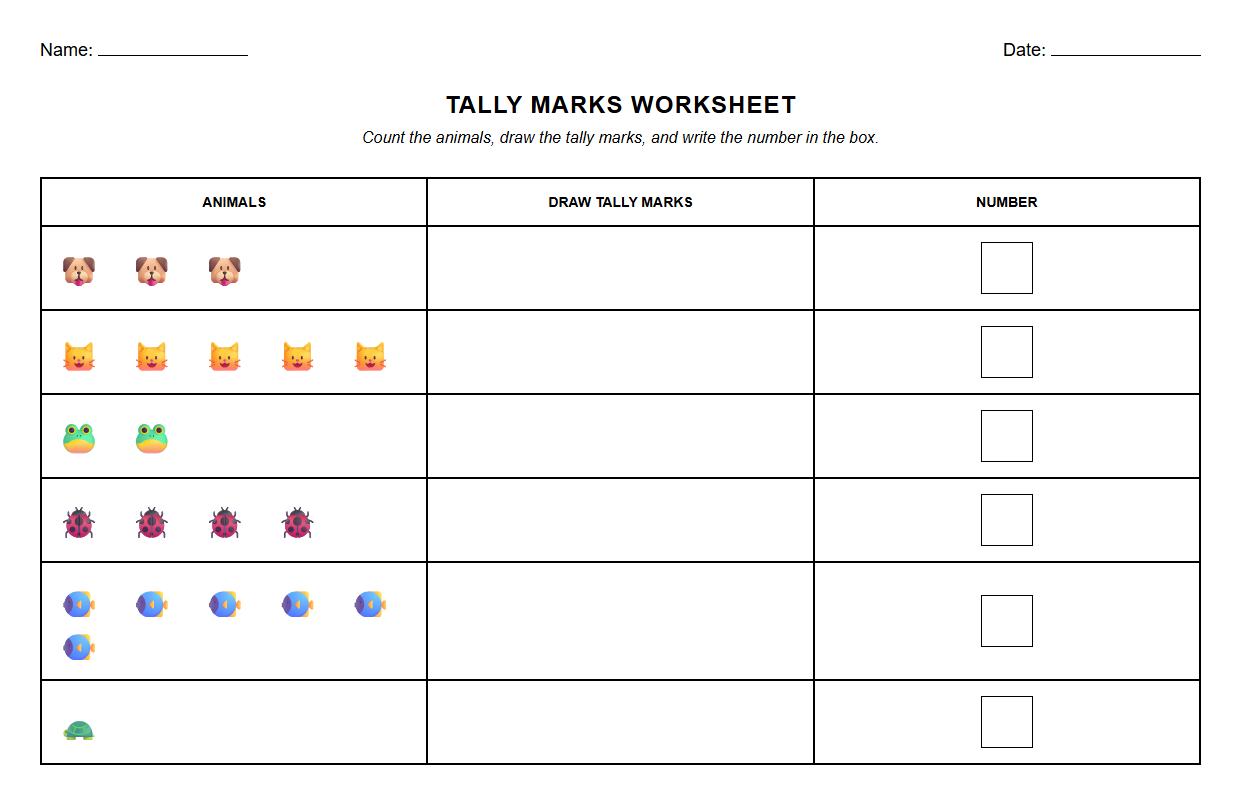
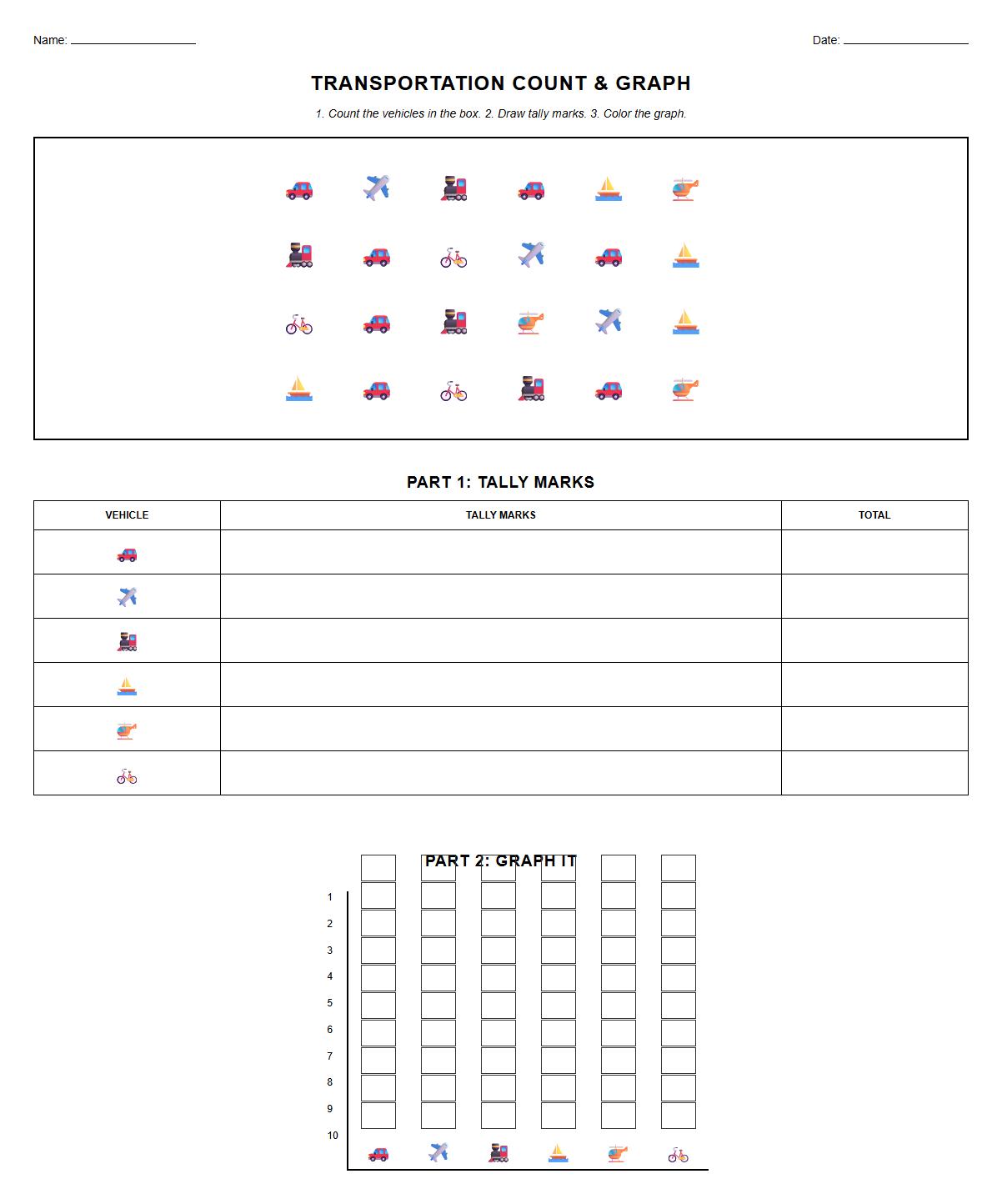
Using Tally Marks to Find the Total Number of Animals
Count each animal by drawing one tally mark per animal seen. Group the tallies in fives to make counting large numbers easier. Add all tally groups together to find the total number of animals. This technique enhances counting accuracy and data recording with tally marks.
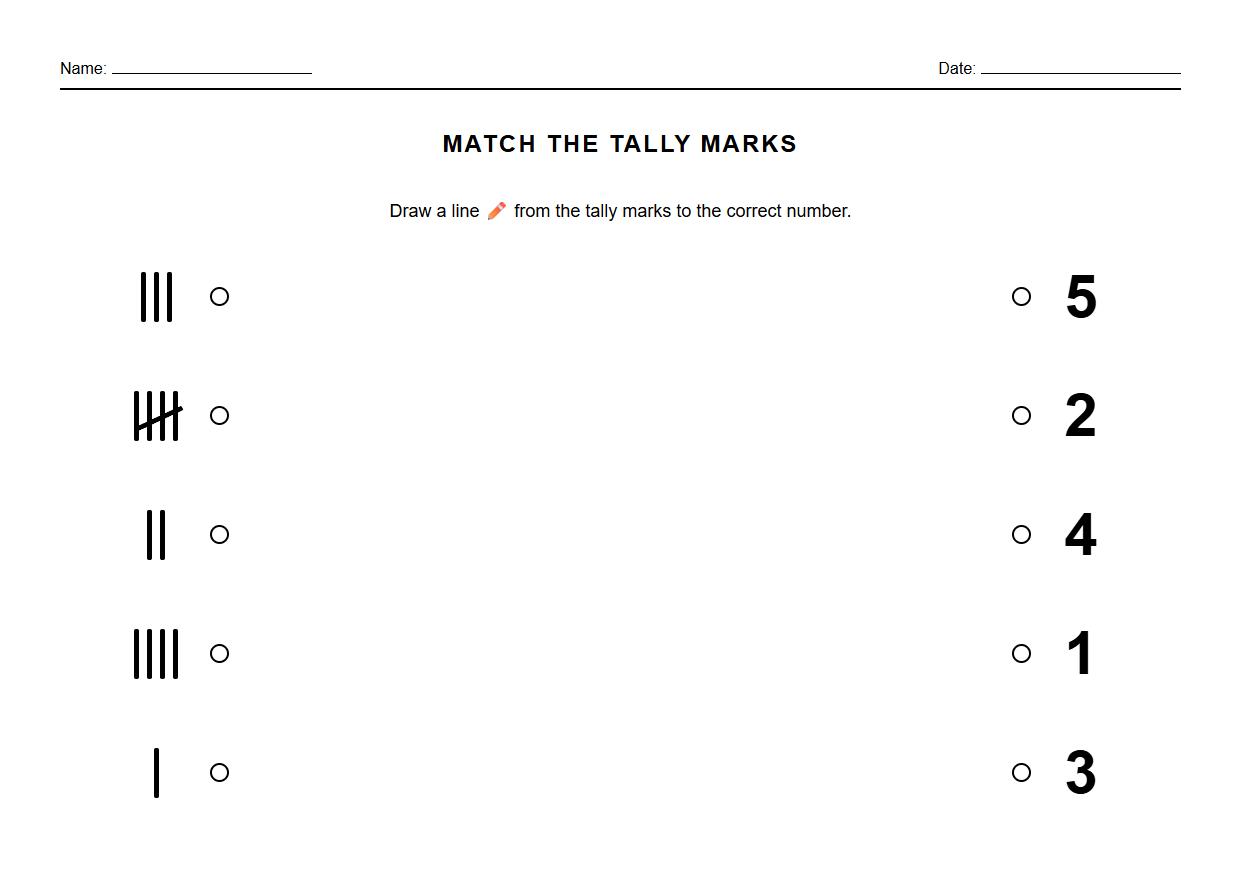
Matching Tally Marks to the Correct Number
Review the tally marks carefully, counting each mark in groups of five. Match these counts to the corresponding number written or shown. This activity reinforces number recognition and counting skills. It also helps children connect pictorial data with numeric values.
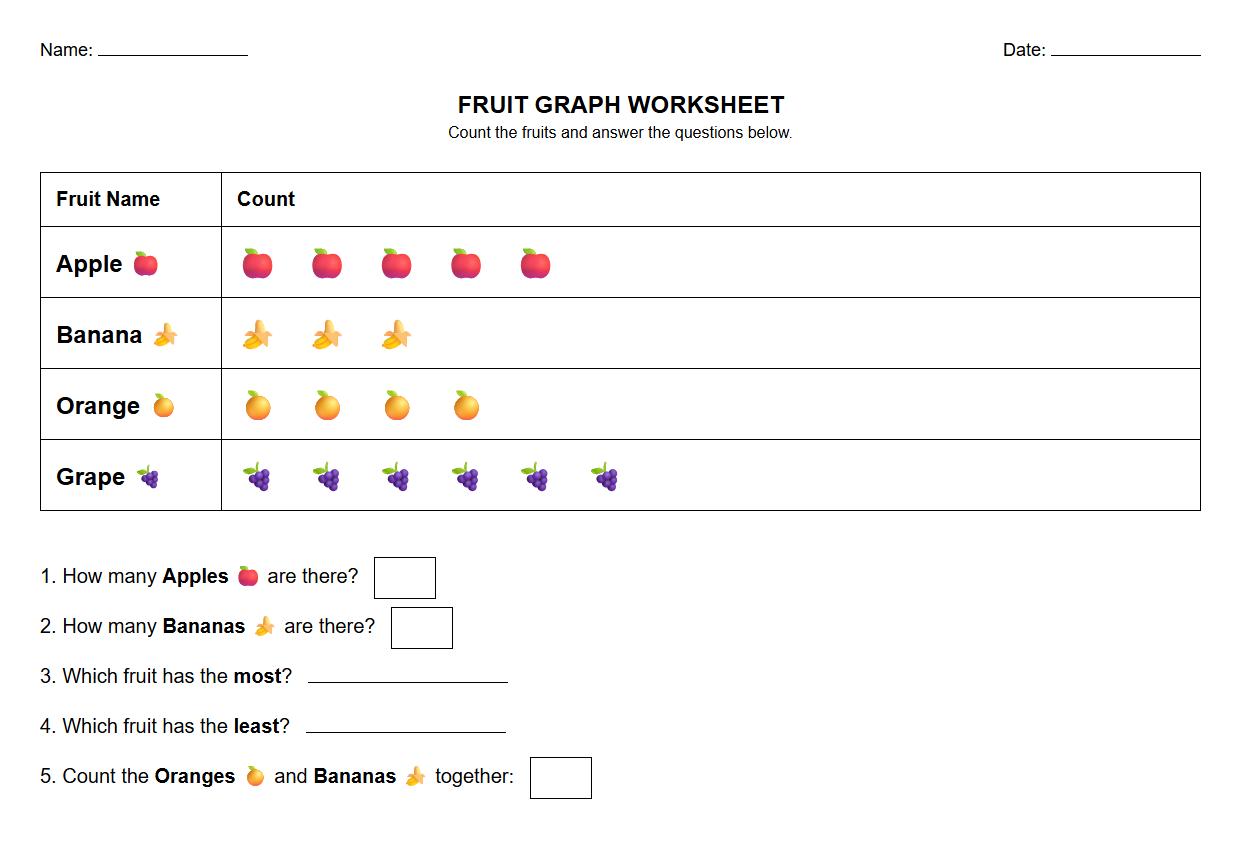
What the Picture Graph Reveals About Students' Favorite Fruits
The picture graph displays different fruits with symbols representing the number of votes each received. The fruit with the highest number of symbols is the most popular favorite among students. This visual provides insight into preferences and data interpretation. It's a fun way to combine learning with real-world examples.


Sorting, Counting, and Graphing Worksheet for Kindergarten