Math Skill Development Worksheets for Counting and Quantities

📅 Jun 6, 2025 👤 Nylen Smith

These Math Skill Development Worksheets focus on enhancing counting abilities and understanding quantities through engaging exercises. Designed to build numerical fluency, they help learners recognize numbers, count objects accurately, and compare quantities effectively. Explore the available worksheets to support and strengthen math skills in a fun and interactive way.

Counting Objects Phonics Matching Worksheet
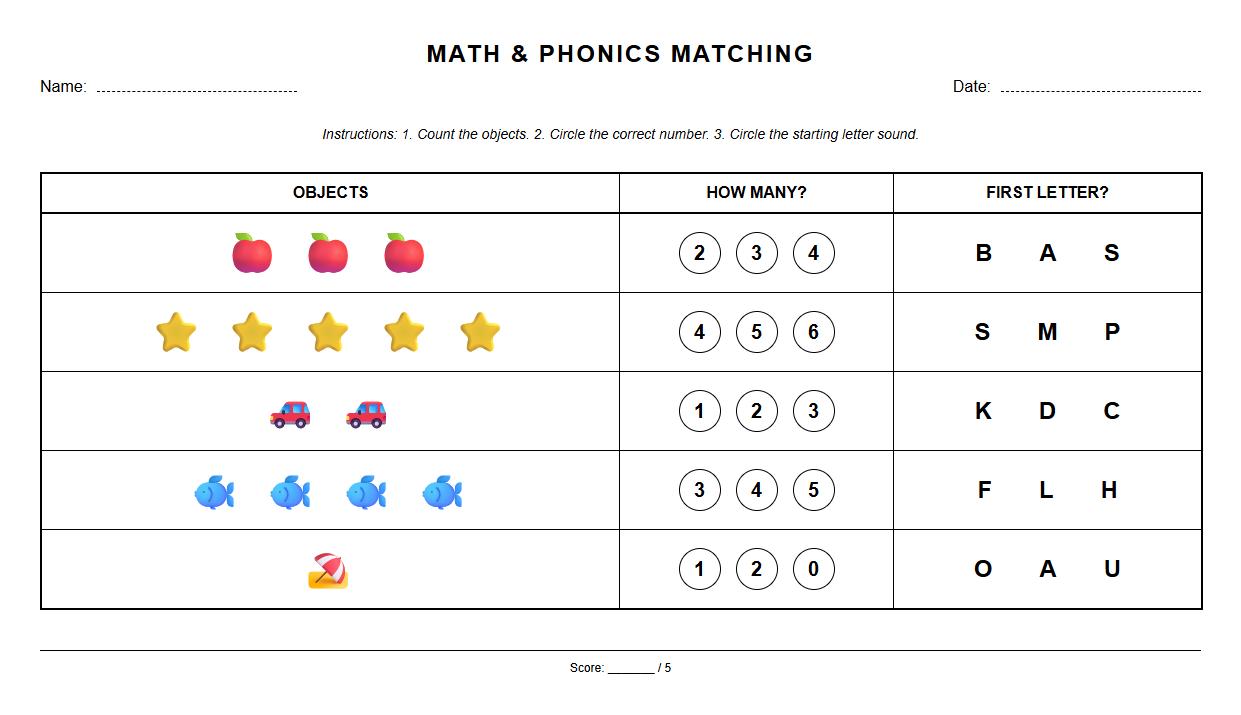
Counting Objects Phonics Matching Worksheet

Download PDF     Pin it

Number Recognition and Quantity Association Worksheet
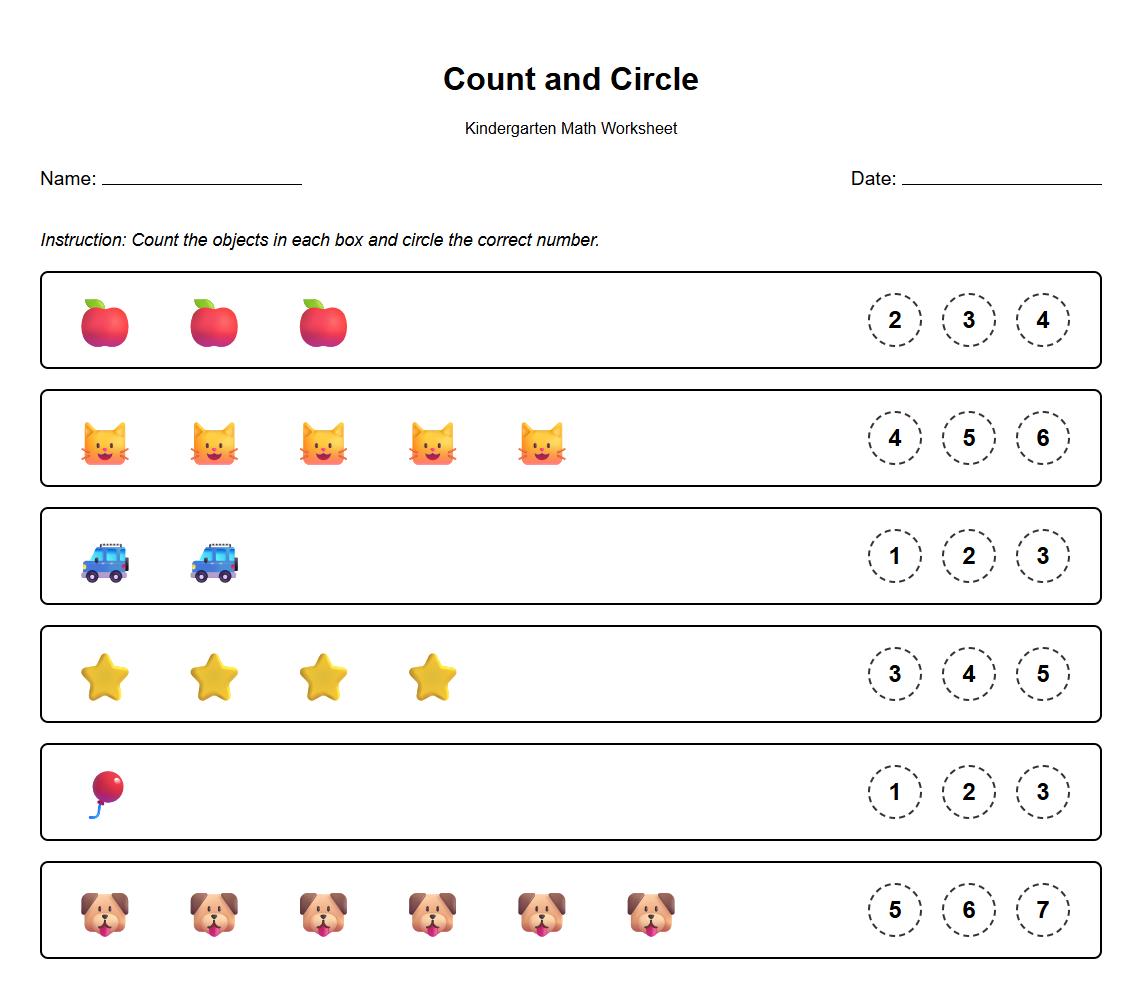
Number Recognition and Quantity Association Worksheet

Download PDF     Pin it

Counting with Ten Frames Activity Sheet
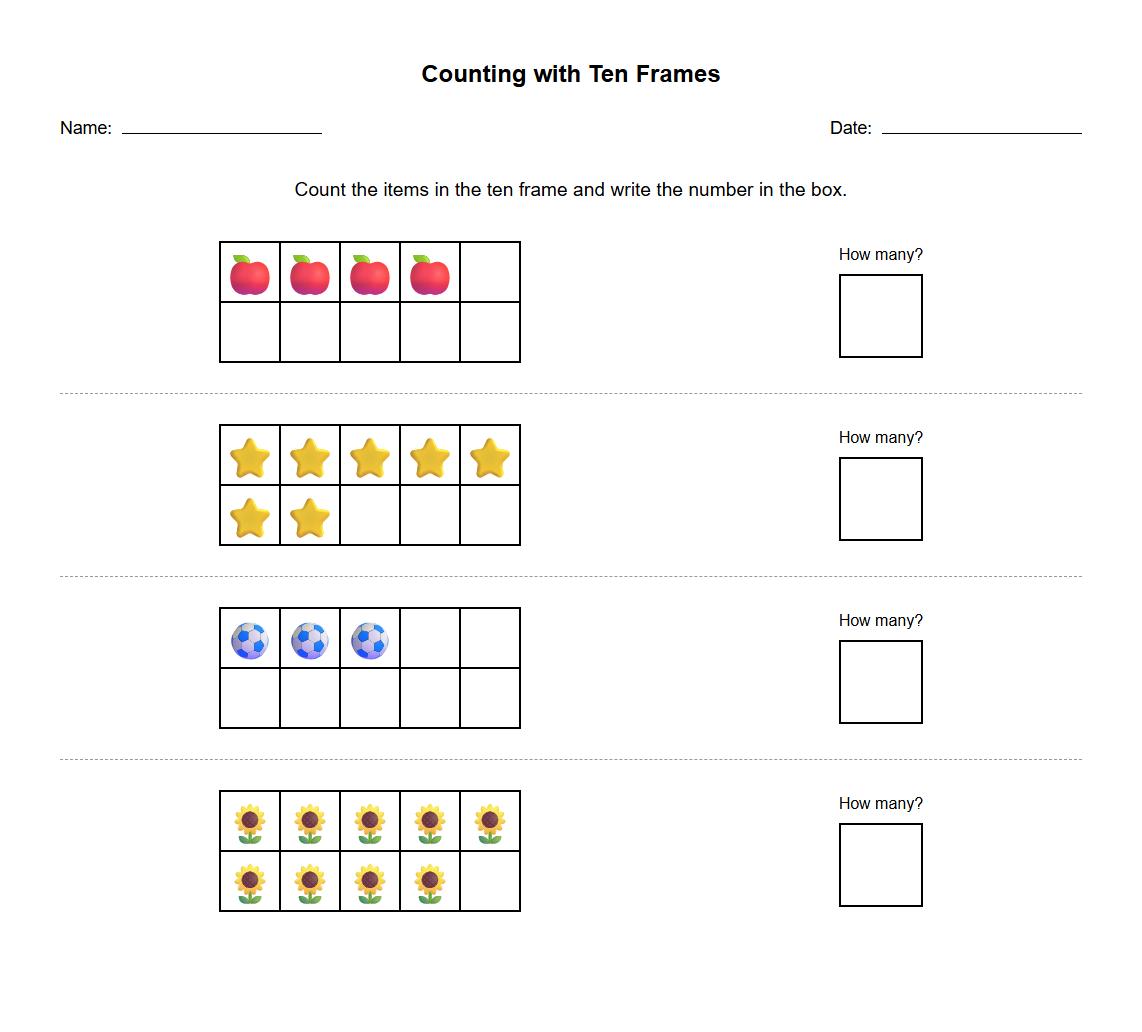
Counting with Ten Frames Activity Sheet

Download PDF     Pin it

Skip Counting Patterns Worksheet

Skip Counting Patterns Worksheet
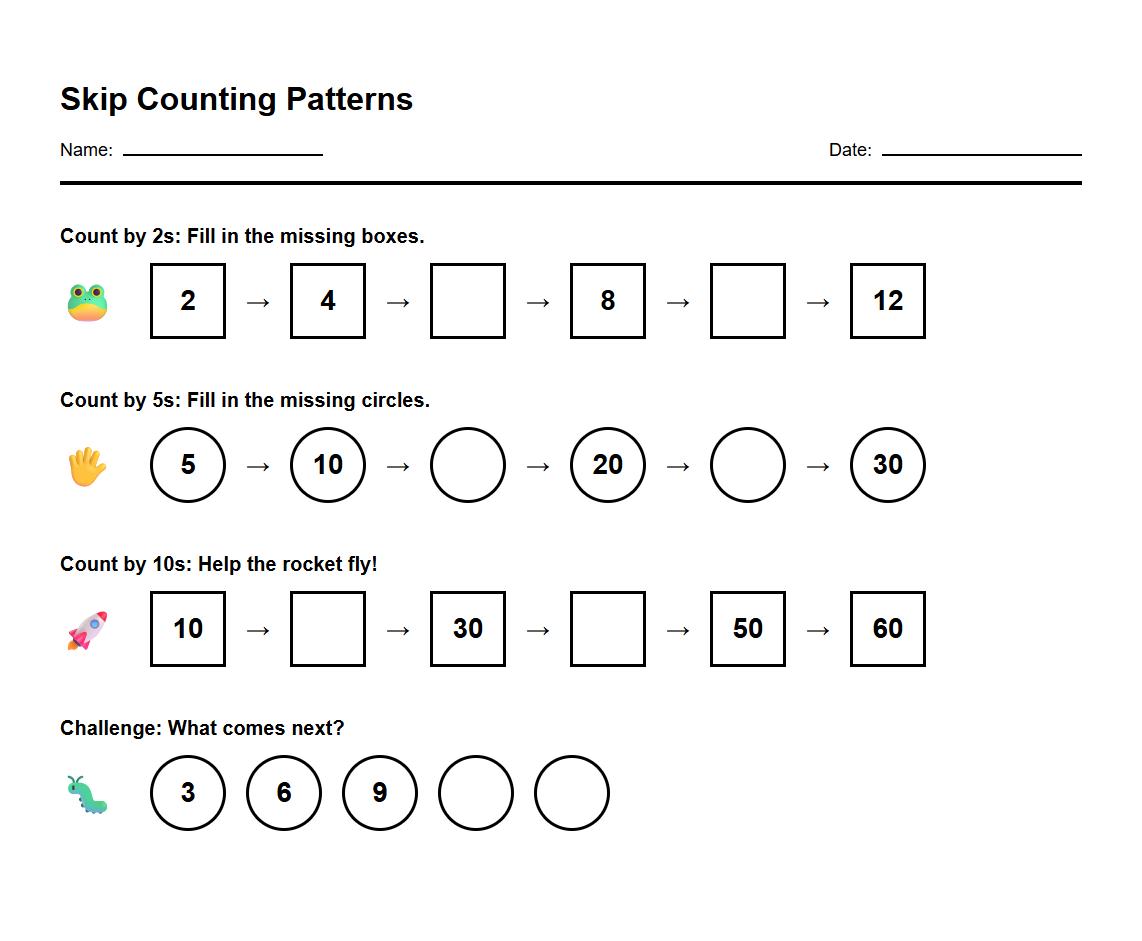
Download PDF     Pin it

Tally Marks and Quantity Worksheet

Tally Marks and Quantity Worksheet
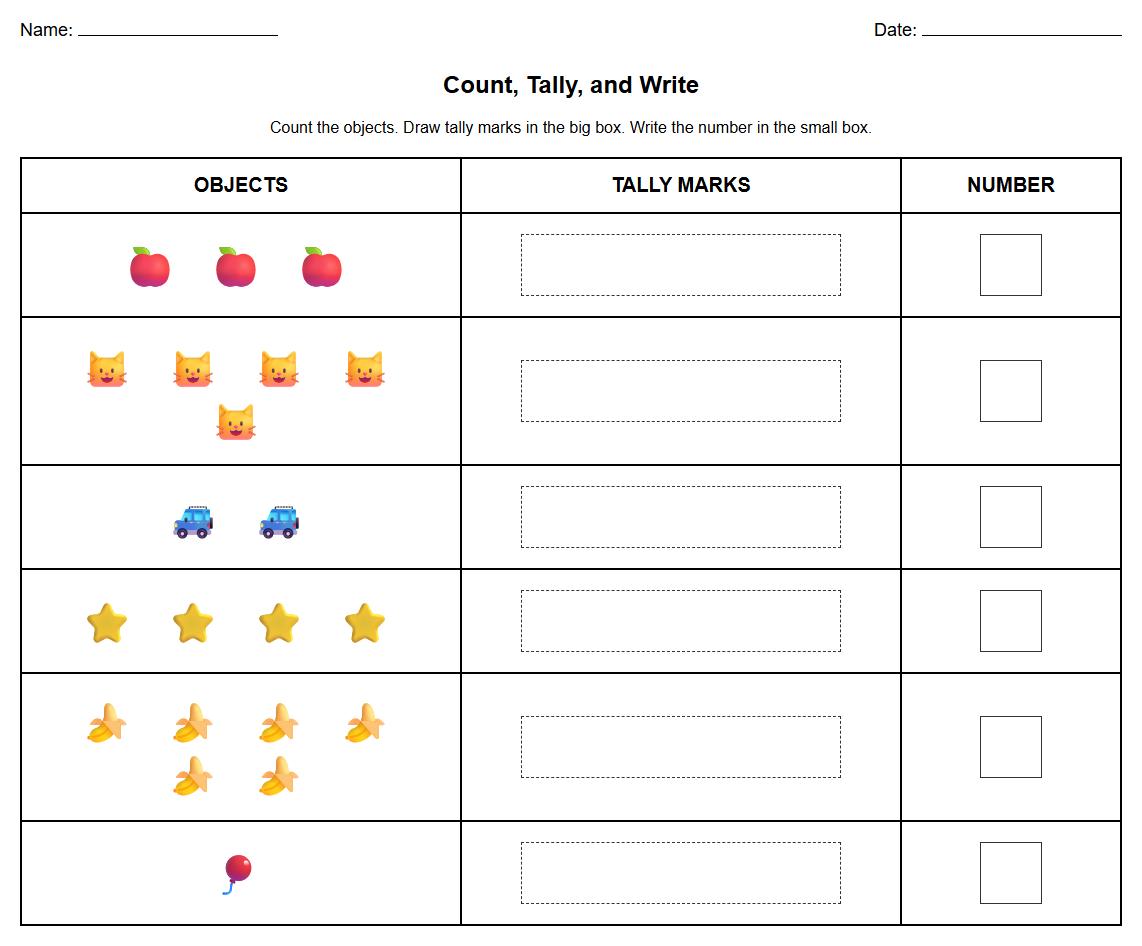
Download PDF     Pin it

Counting Sequencing Worksheet

Counting Sequencing Worksheet
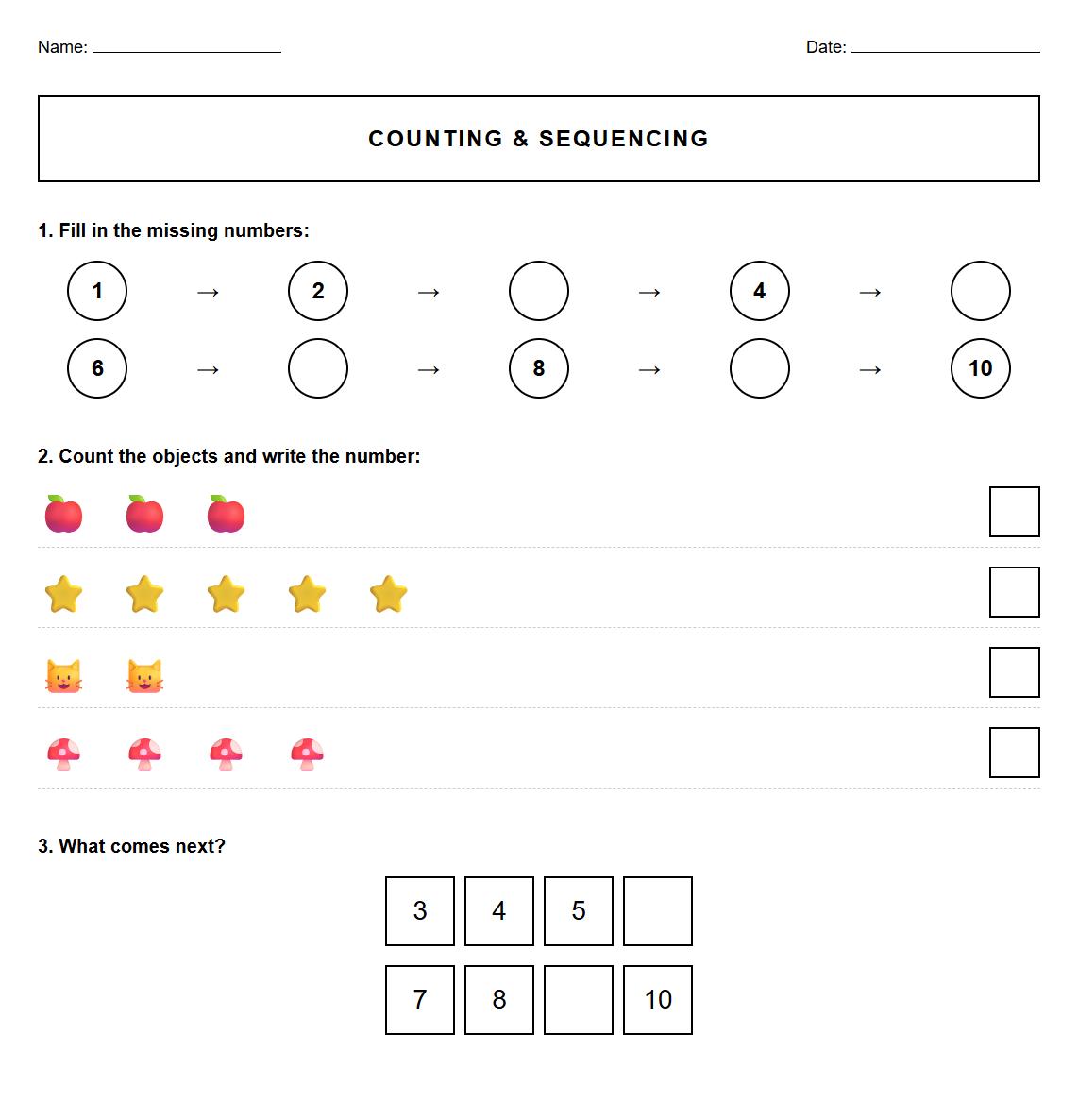
Download PDF     Pin it

Counting Sets with Visual Representation Worksheet
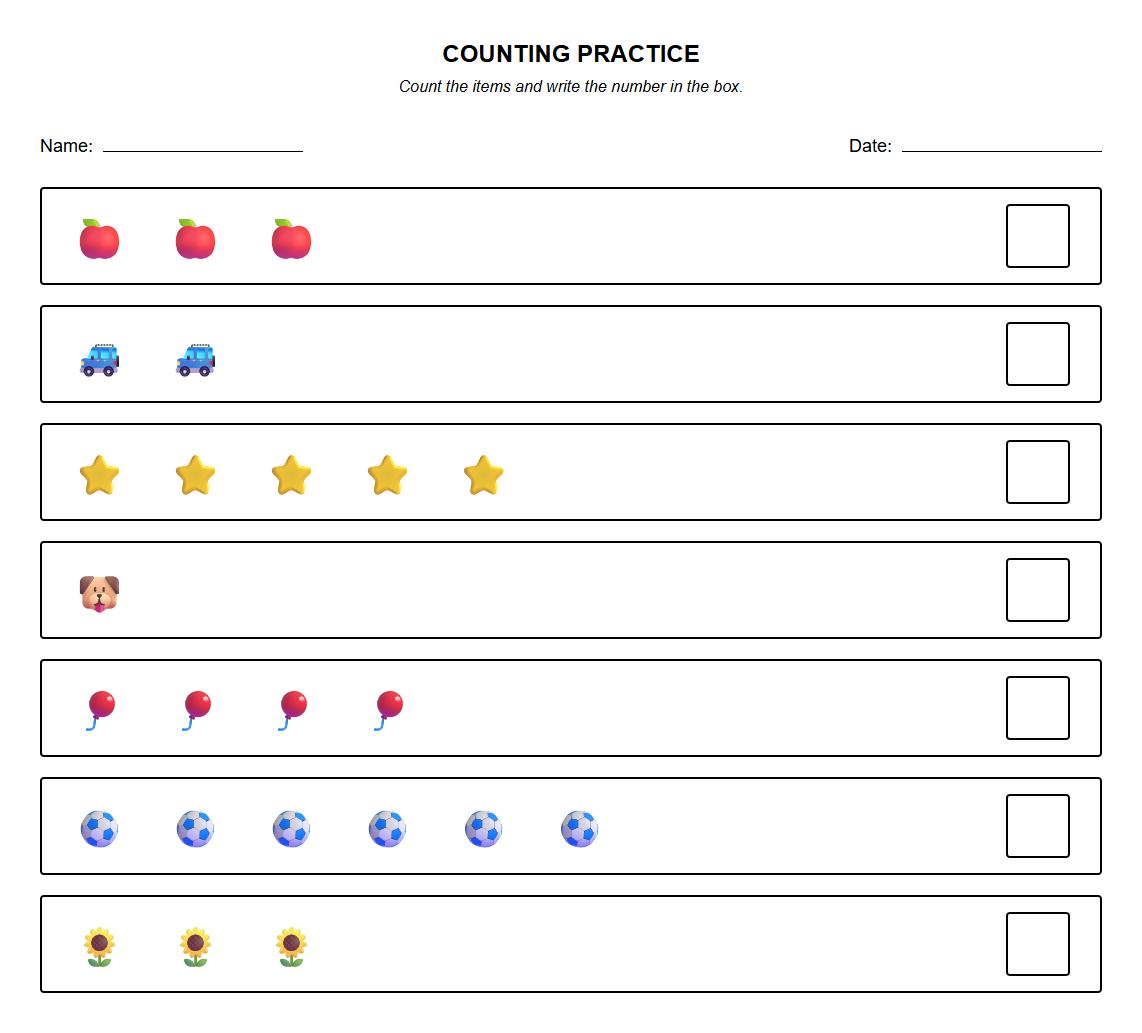
Counting Sets with Visual Representation Worksheet

Download PDF     Pin it

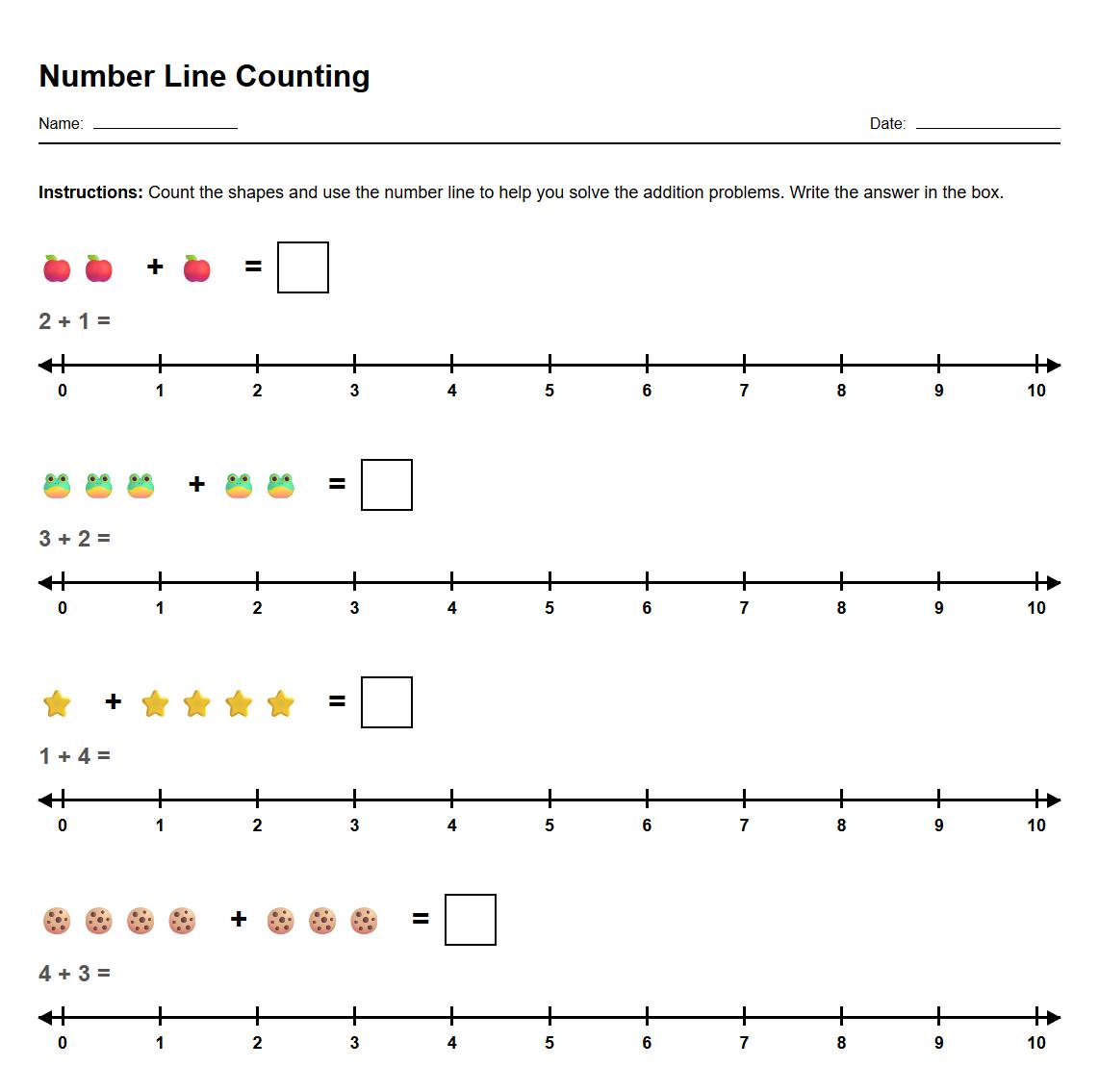
Number Line Counting Worksheet

Number Line Counting Worksheet
Download PDF     Pin it

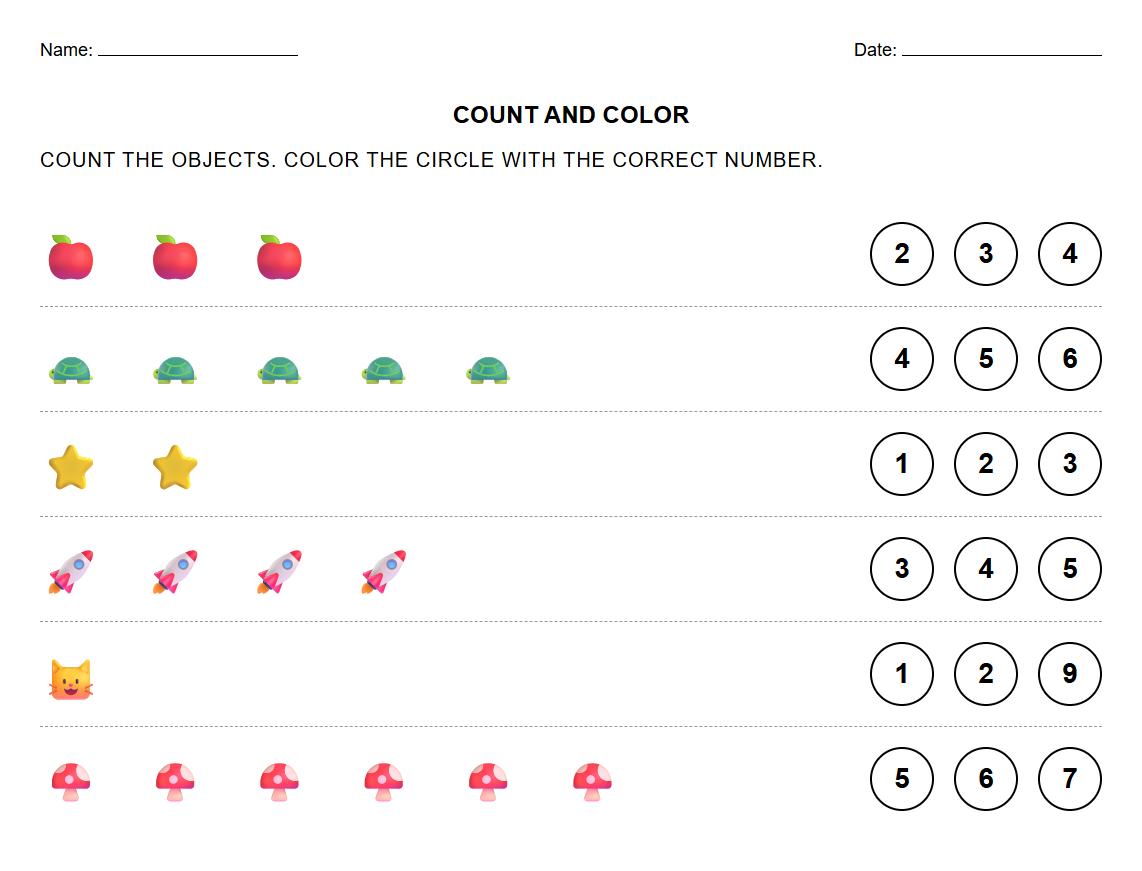
Count and Color Quantity Worksheet

Count and Color Quantity Worksheet
Download PDF     Pin it

Matching Numbers to Quantities Visual Worksheet
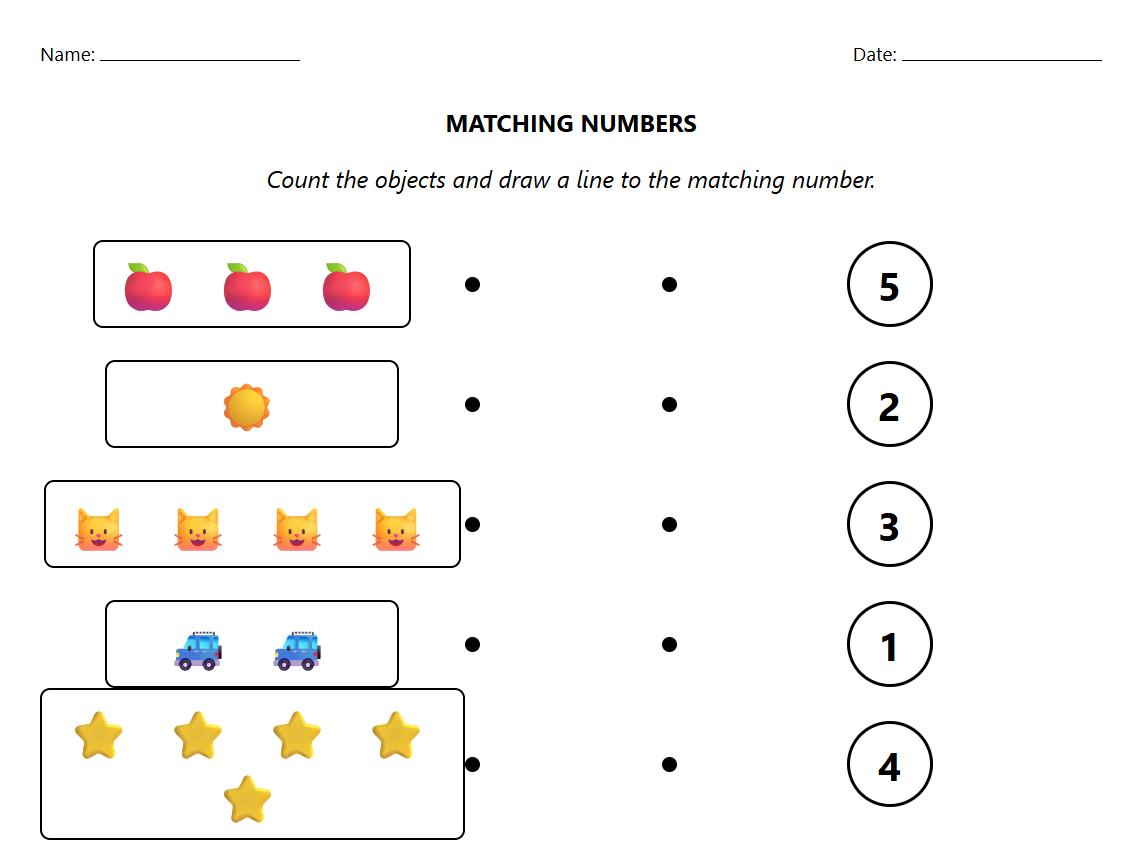
Matching Numbers to Quantities Visual Worksheet

Download PDF     Pin it

Counting Objects in the Classroom

Encourage children to identify five objects in the classroom they can count, such as chairs, books, or pencils. This activity helps develop their observational and counting skills. Teachers and parents can guide kids to recognize numbers in everyday surroundings. It also fosters curiosity and engagement with their environment. Try a kindergarten graphing worksheet to enhance this skill further.

Understanding Fingers and Numbers

Ask children how many fingers they have on both hands to reinforce counting to ten. This simple question connects numbers to their own bodies, making learning tangible. It also supports fine motor awareness and number recognition. Parents and teachers can use this as a daily warm-up exercise, similar to the activities in measuring and sorting worksheets.

Matching Numbers with Groups of Dots

Use a worksheet where kids match a number to the correct group of dots. This builds their understanding of number representation and quantity. It sharpens visual discrimination as they compare groups. Such matching games enhance early math skills effectively, just like the matching heavy and light objects worksheet.

Counting Colored Blocks

Ask children to count how many red blocks are in a picture. This activity links color recognition with counting practice. It encourages attention to detail and promotes language development through descriptive words. Parents and teachers can vary colors to maintain interest, following similar ideas in the US coin recognition worksheet.

Comparing Groups

Guide children to determine which group has more apples by comparing sets. This introduces concepts of quantity comparison and vocabulary such as "more" and "less." It develops critical thinking and decision-making skills. Using real or illustrated objects makes the task engaging, similar to using a picture graph skills sheet.

Clapping and Counting

Challenge children to count how many times they can clap their hands before you say stop. This activity combines physical movement with counting, aiding memory and rhythm. It is a fun way to practice number sequences. Teachers and parents can turn it into an interactive game with resources like the skip counting worksheet.

Number Sequence Practice

Ask children to point to the number that comes after three on the number line. This helps them understand order and sequence in numbers. It improves number recognition and prepares them for more complex math concepts. Visual aids like number line worksheets are helpful tools.

Drawing Shapes to Count

Encourage kids to draw four circles on their worksheet to reinforce counting and shape recognition. This creative activity blends art with math learning. It supports fine motor skills and number recall. Parents and teachers can praise their drawings to boost confidence, inspired by the big and small identification worksheet.

Counting Boys and Girls

Have children count how many boys and girls are present in the class to practice grouping and tallying. This social counting exercise promotes inclusion and awareness of peers. It also enhances categorization skills. Teachers can use this to start conversations about group differences, similar to a bar graph activity worksheet.

Identifying Smallest and Biggest Groups

Ask children to show the smallest and biggest groups from several sets of objects. This helps them understand size comparison and quantity differences. It develops logical thinking and vocabulary related to size. Visual grouping activities make learning interactive and effective, just like the phonics and coin naming worksheet collection.


More in Mathematics Category


About the author. Nylen Smith is a dedicated educator and cofounder of KWorksheet.com, a popular platform specializing in high-quality kindergarten worksheets and printable activities.

Disclaimer. The information provided in this document is for general informational purposes and/or document sample only and is not guaranteed to be factually right or complete. Please report to us via contact-us page if you find and error in this page, thanks.

Comments

No comment yet