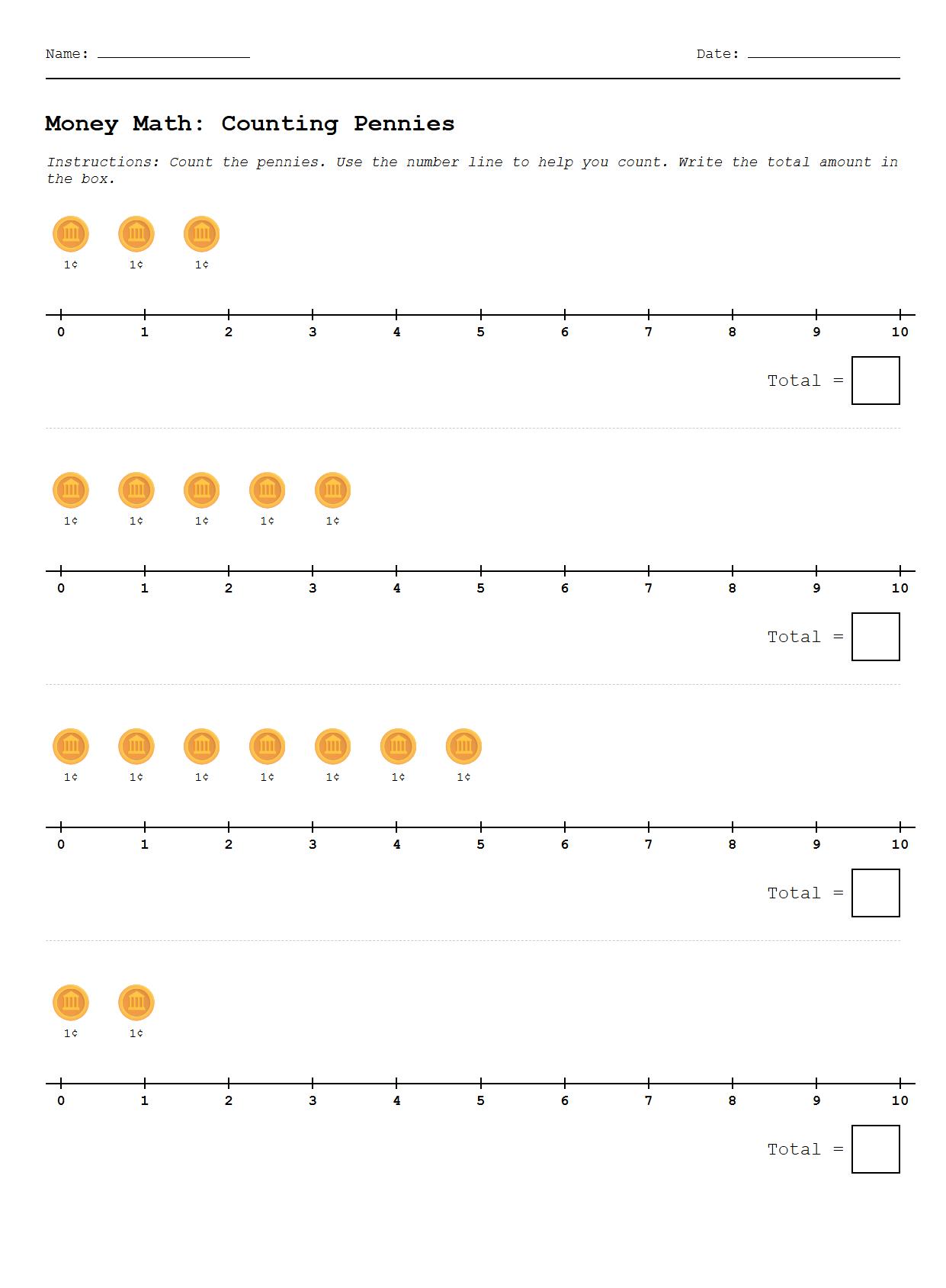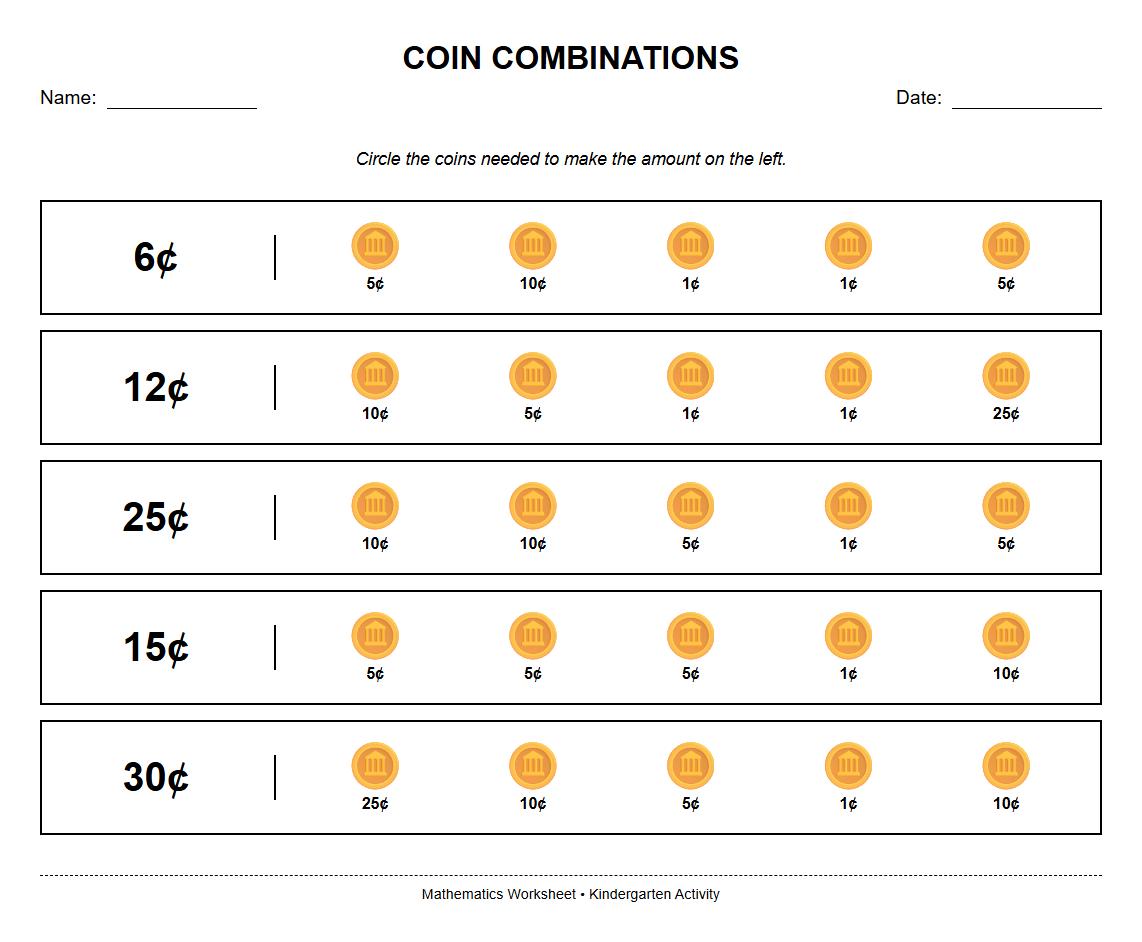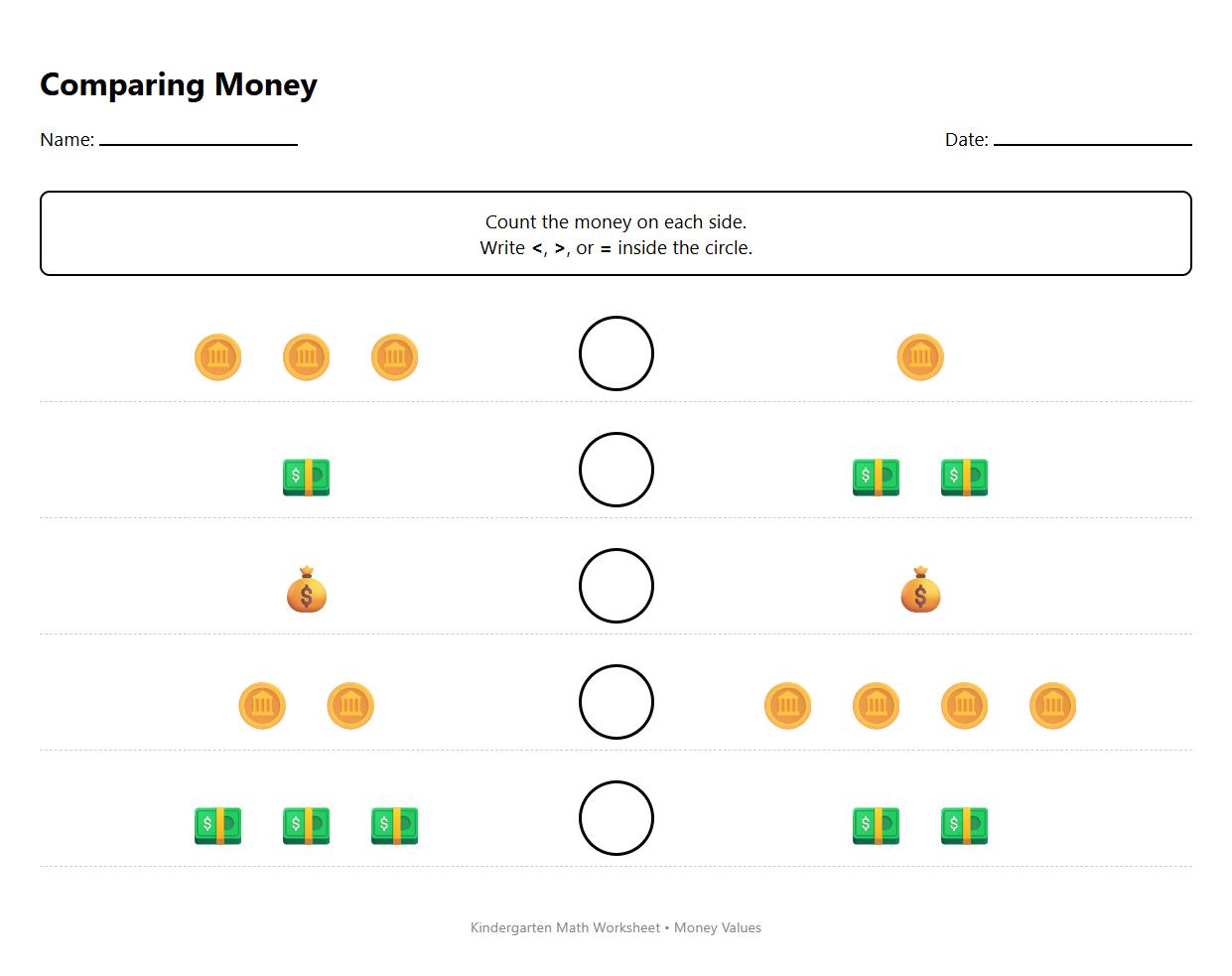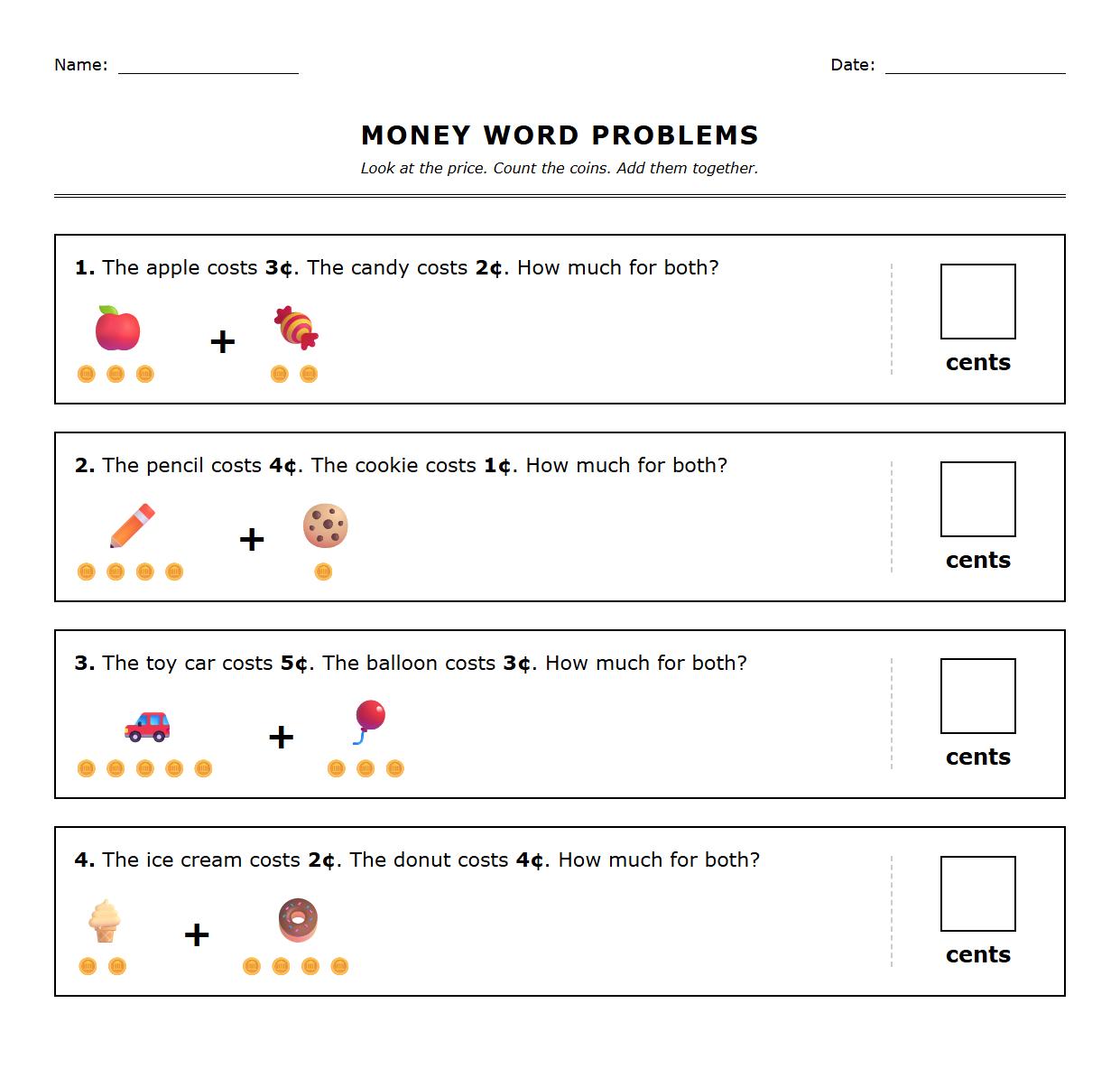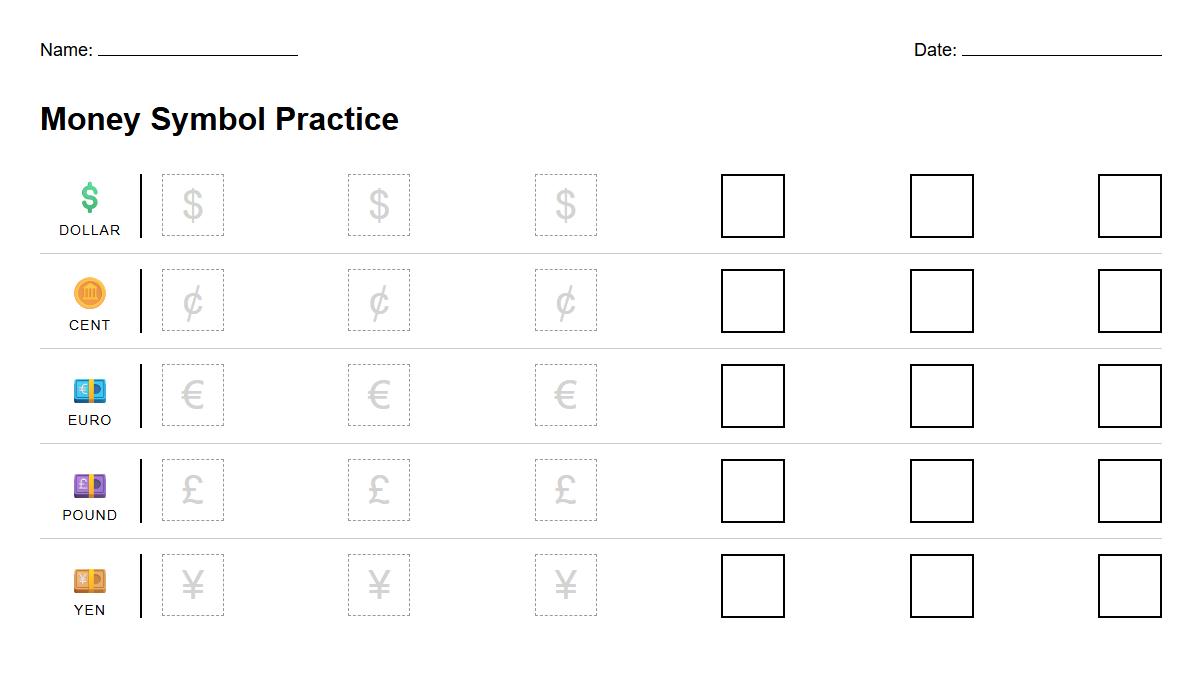
Young children develop essential math skills by practicing basic money and coin counting exercises that enhance their understanding of currency values and simple transactions. These worksheets offer engaging activities to help kids recognize coins, count money, and build confidence in everyday financial situations. Explore the variety of available worksheets to support your child's learning journey.
Name and Value of This Coin
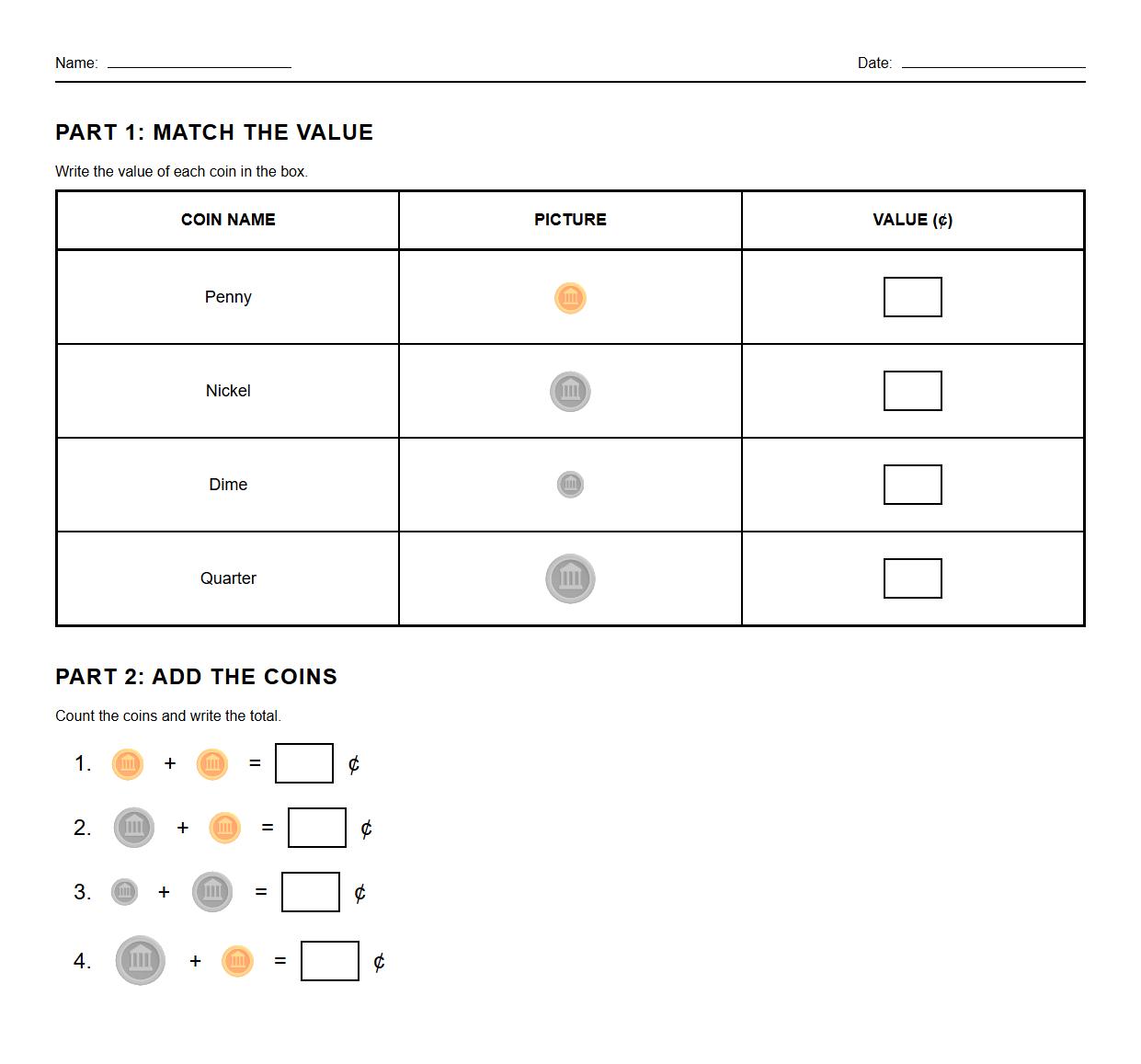
Teach children to recognize the name and value of each coin. For example, a penny is worth one cent while a nickel is worth five cents. Use real or picture coins to help them identify and remember these details. This foundation builds their understanding of money.
How Many Pennies Make One Nickel?
Explain that five pennies are equal in value to one nickel. This concept helps children understand coin values and simple addition. Use counting activities with pennies and nickels to solidify their learning. It's a great way to introduce equivalence in money.
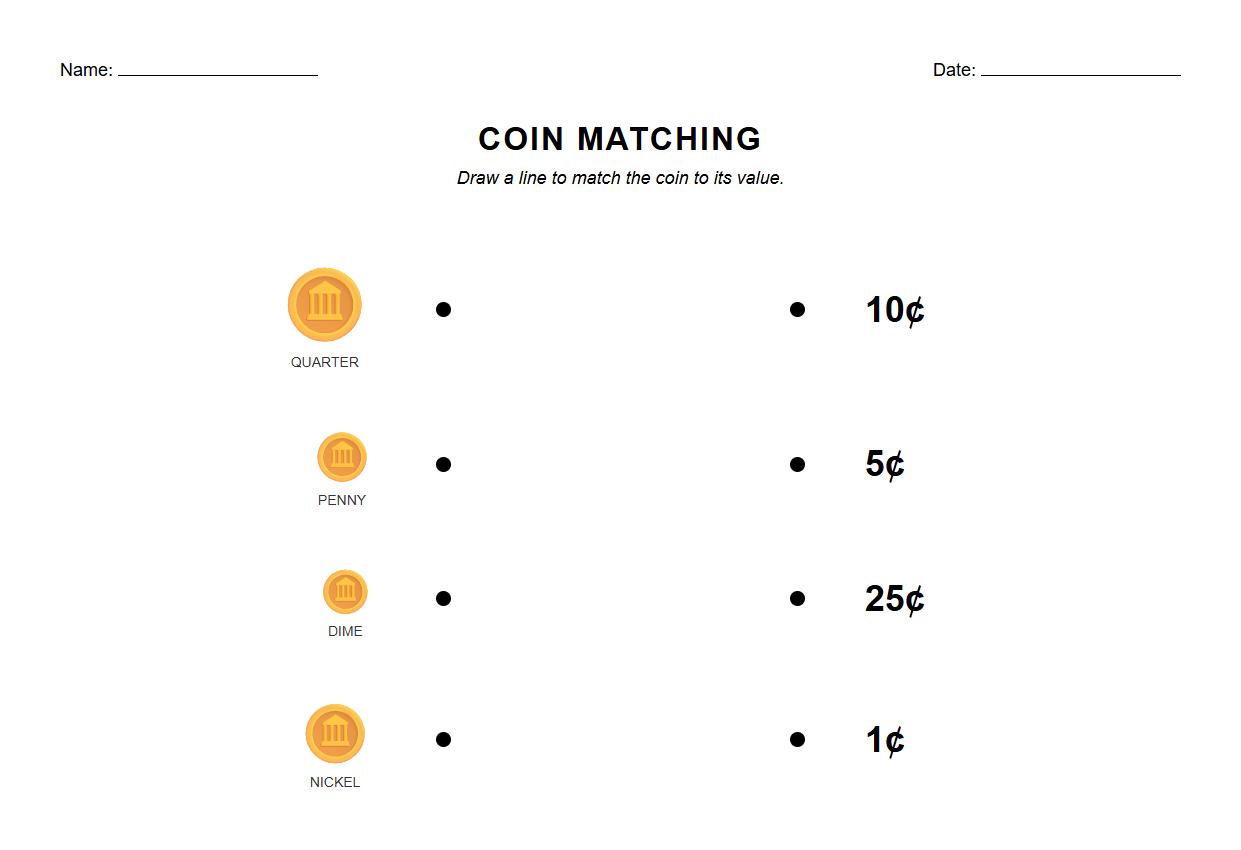
Match These Coins with Their Values
The task asks children to match coins to their correct values, reinforcing recognition and value association. Provide images of coins and numbers representing their worth. This improves visual discrimination and numerical understanding. Matching games are effective for memory retention.
Which Coin Is Worth More, a Dime or a Penny?
Guide children to compare the values of a dime (ten cents) and a penny (one cent). This builds their ability to compare quantities and make judgments. Use simple questions like this to encourage critical thinking about money. It strengthens their financial literacy.
How Many Quarters Do You Need to Make One Dollar?
Explain that it takes four quarters to make one dollar. This introduces the concept of grouping coins to form a higher value. Use coin collections or drawings to visualize this relationship. Children learn to connect parts to a whole in money terms.
If You Have Two Nickels, How Much Money Do You Have?
Teach children to calculate the total value of coins, like two nickels equaling ten cents. This enhances basic addition skills using money. Encourage counting together to build confidence. It also solidifies understanding of coin values in everyday scenarios.
Circle the Coins That Show Ten Cents
This activity asks children to identify and circle coins worth ten cents. It targets coin recognition and value association skills. Use clear images of dimes and other coins to avoid confusion. This practice sharpens their observation and decision-making with money.
Draw Three Different Coins to Make Fifteen Cents
Ask children to use their knowledge to draw any combination of coins totaling fifteen cents. This encourages creativity and application of addition concepts. Examples include a dime and five pennies or three nickels. It reinforces coin values and problem-solving skills.
Which Group of Coins Is Worth More?
Present two groups of coins and have children determine which has a higher value. This comparison task strengthens counting and valuation skills. Encourage discussion to justify their choice. It fosters analytical thinking about money.
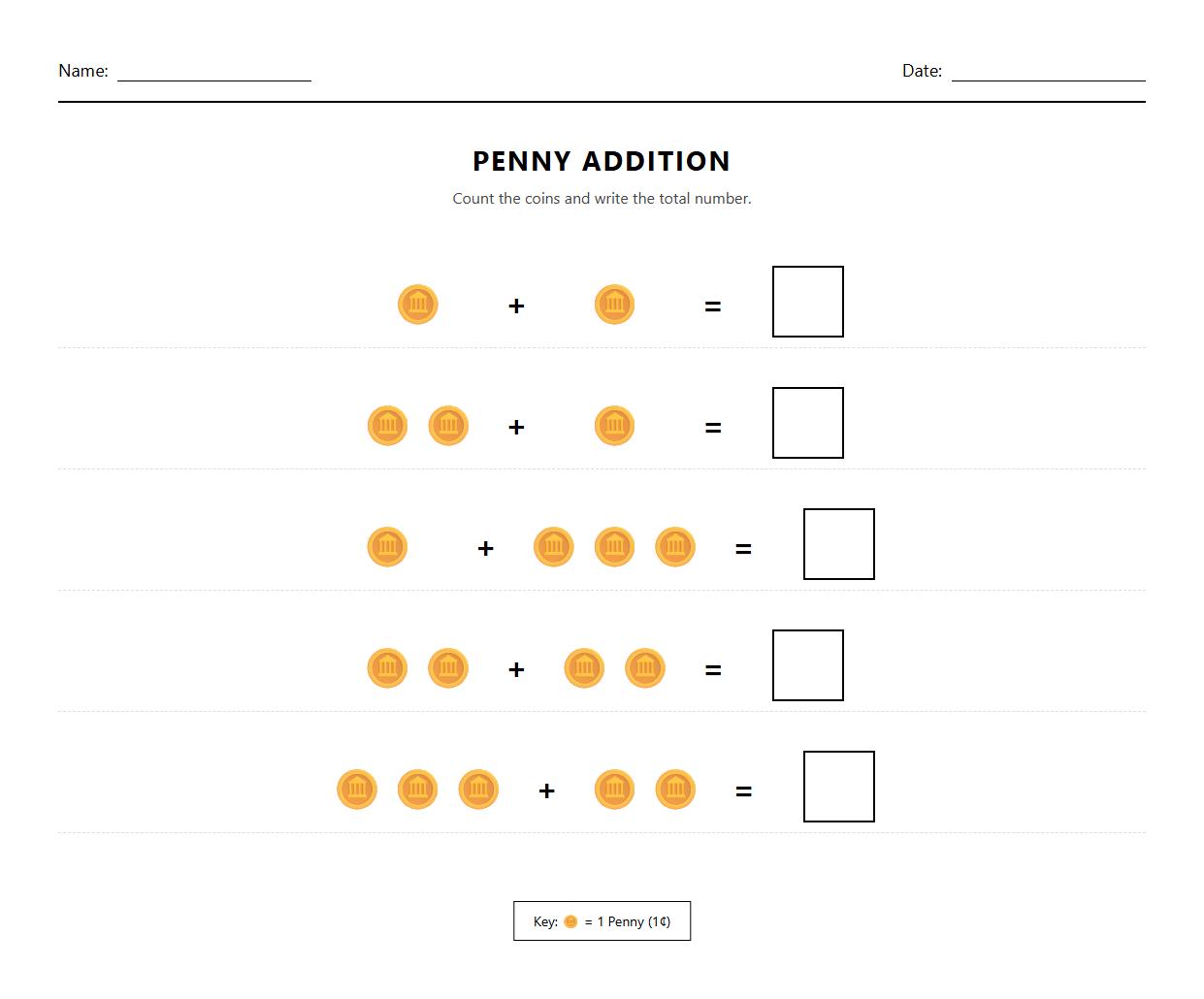
Count and Write the Total Value of These Coins
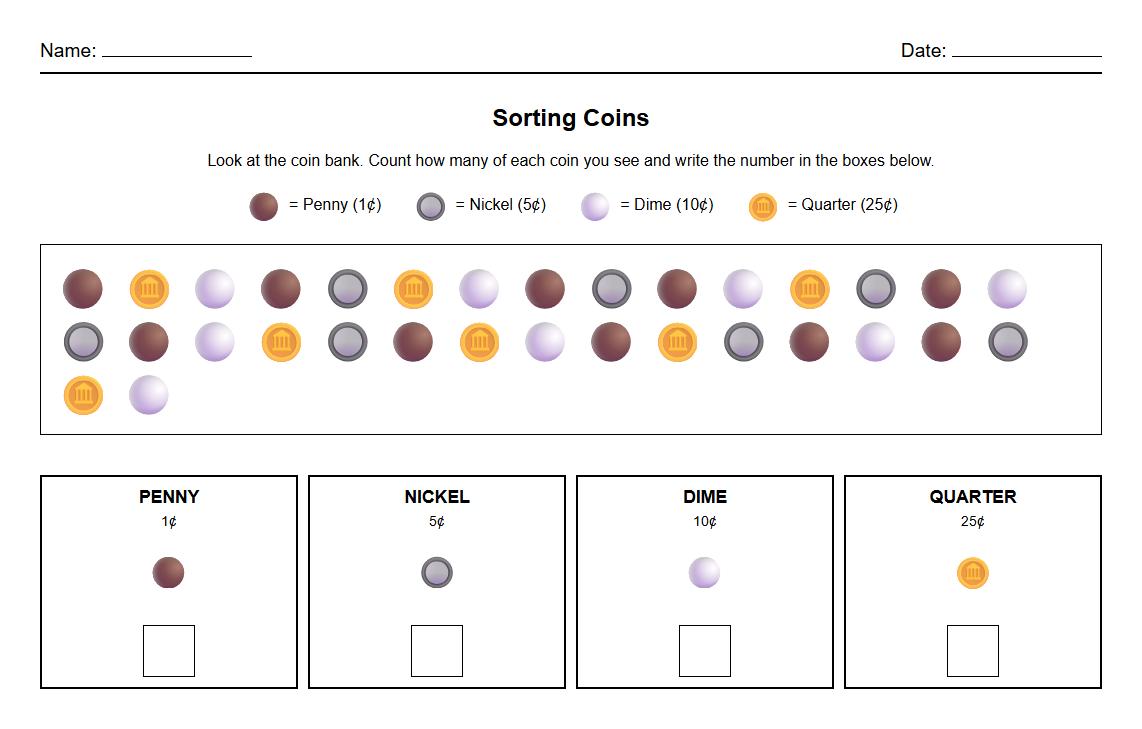
Children practice adding up the coins and writing the total amount. This integrates counting, addition, and writing skills. Use varied coin combinations to challenge and engage them. Accurate total calculation is vital to understanding money management.


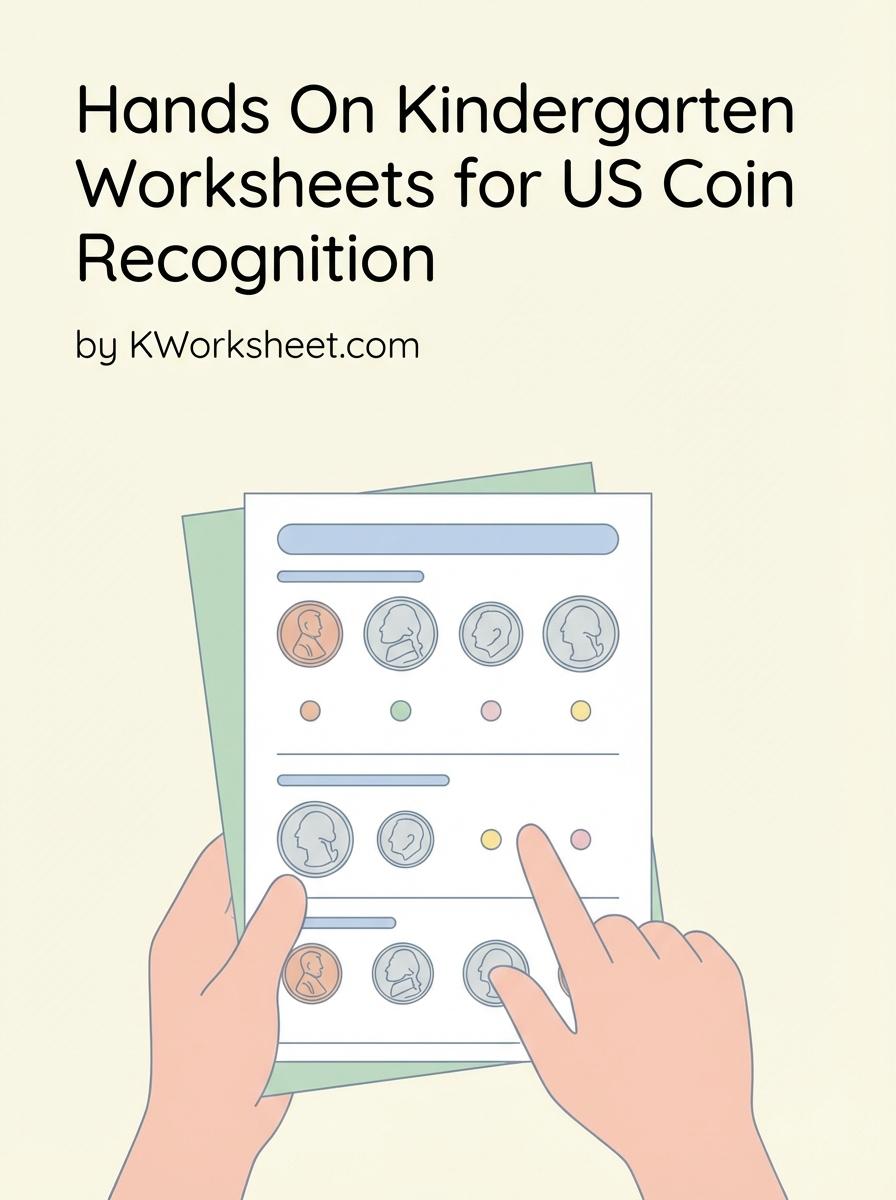
Hands On Kindergarten Worksheets for US Coin Recognition