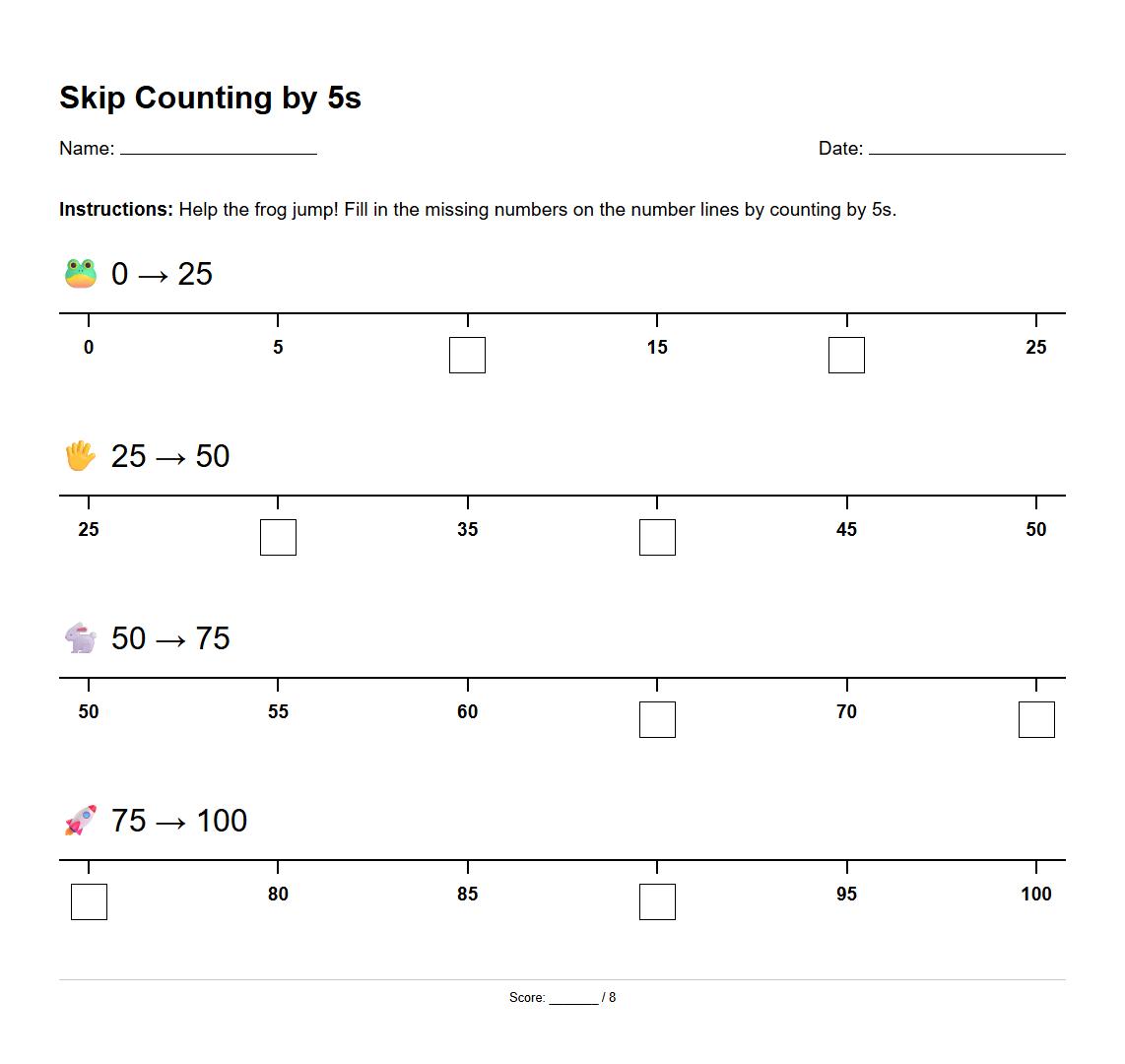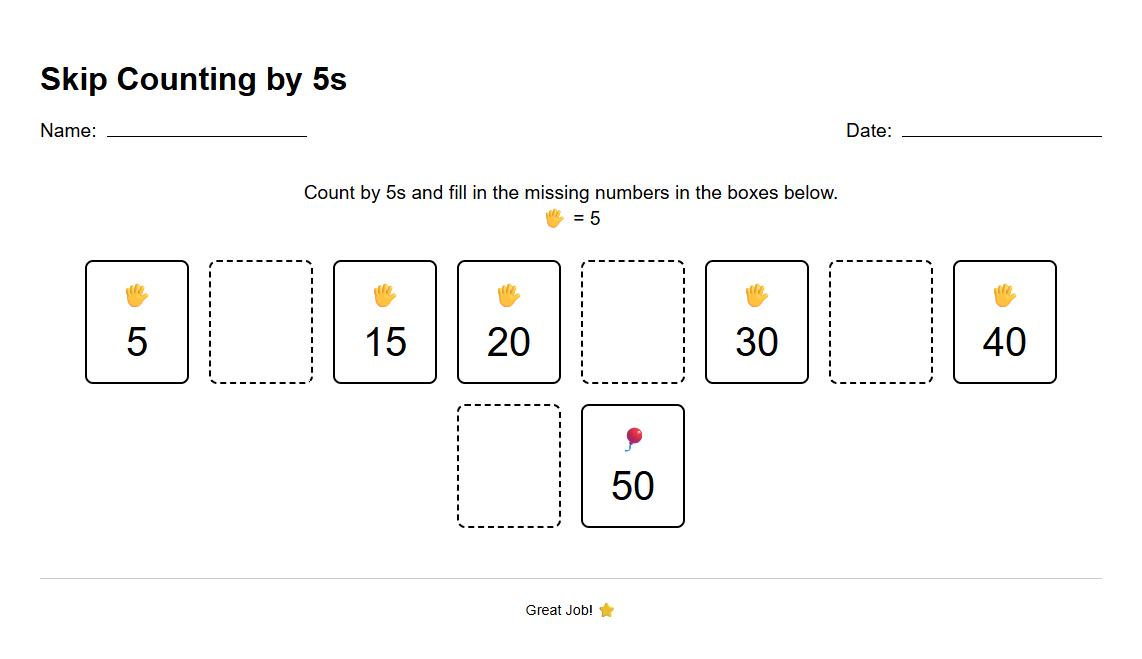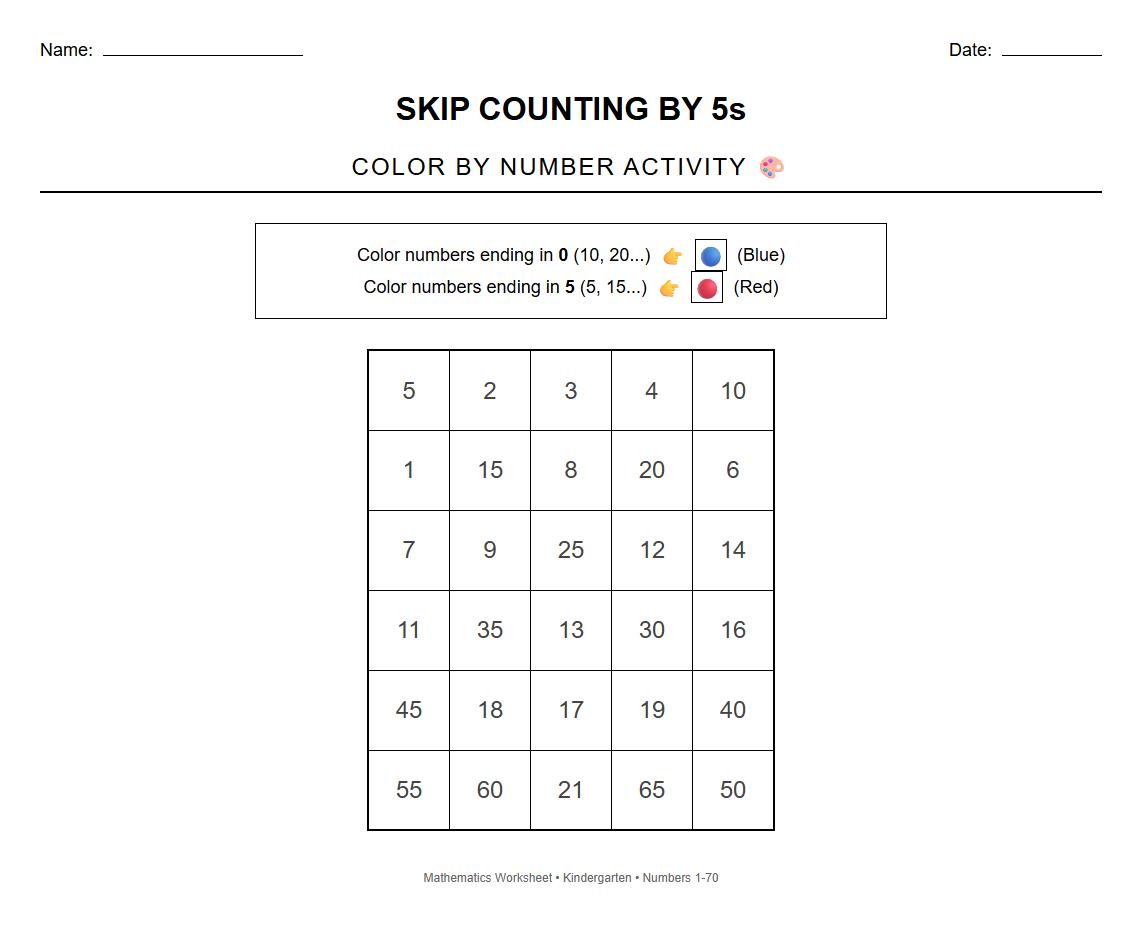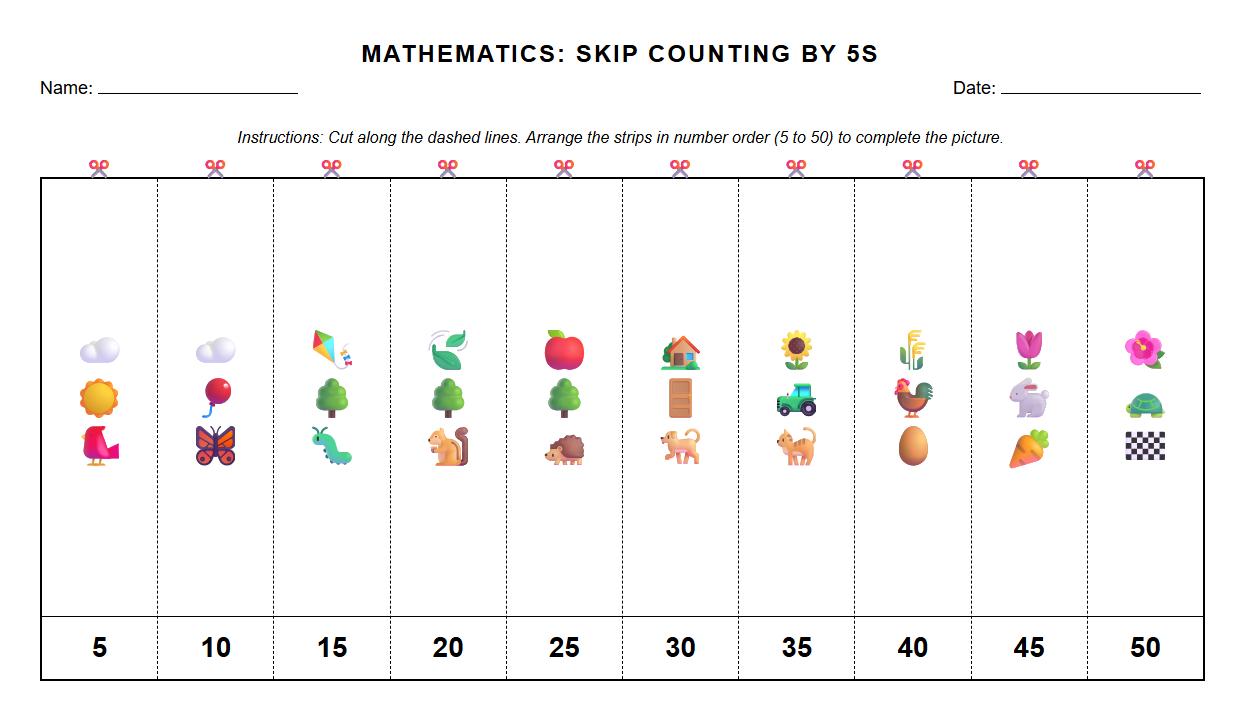
Skip counting by 5s builds early math skills such as pattern recognition, addition, and multiplication in kindergarten learners. These activities enhance number sense and prepare children for more complex arithmetic concepts. Explore the available worksheets to support your child's numeracy development through engaging skip counting exercises.
What Number Comes After 5 When Skip Counting by Fives?
When skip counting by fives, the number that comes after 5 is 10. This pattern adds five each time, making counting faster and fun. Encourage children to practice this to strengthen their understanding of number sequences. Using visual aids can help make this concept easier to grasp.
Circle the Missing Numbers in This Skip Counting by Fives Sequence
Identify the missing numbers in a skip counting by fives sequence by looking for the pattern of adding 5. Missing numbers can be circled to reinforce number recognition. This activity helps children focus on the sequence and improves their attention to detail. It's a simple way to build skip counting skills.
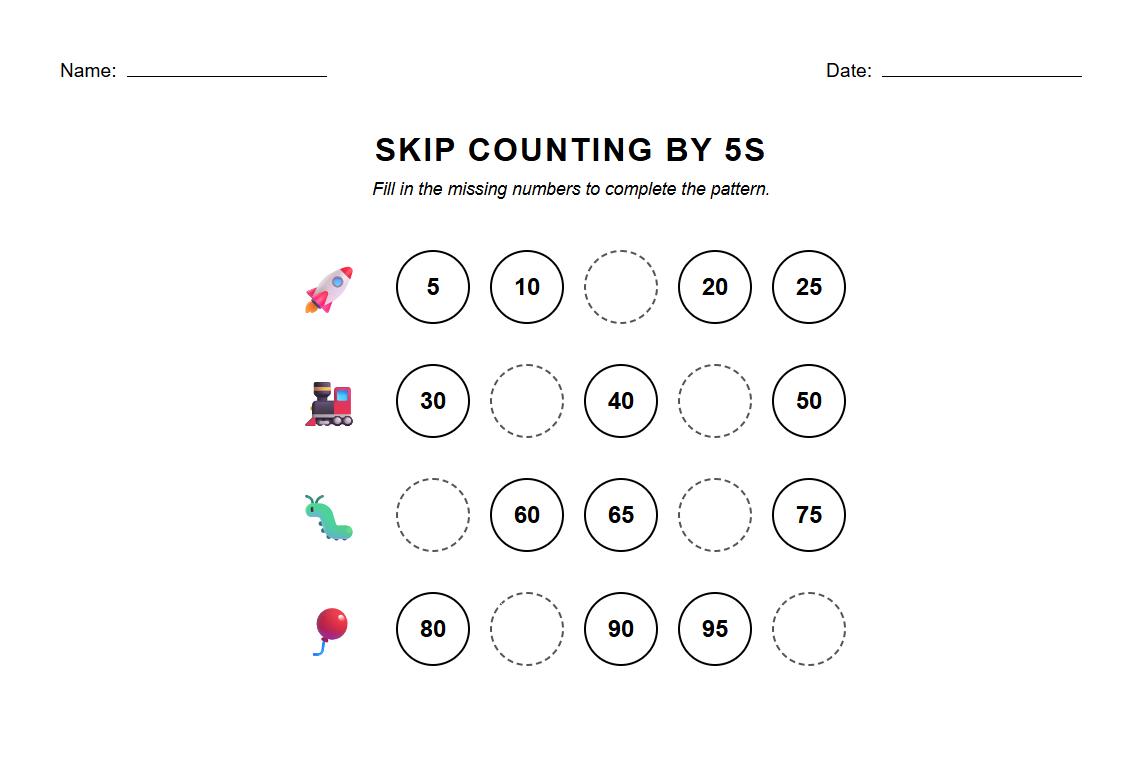
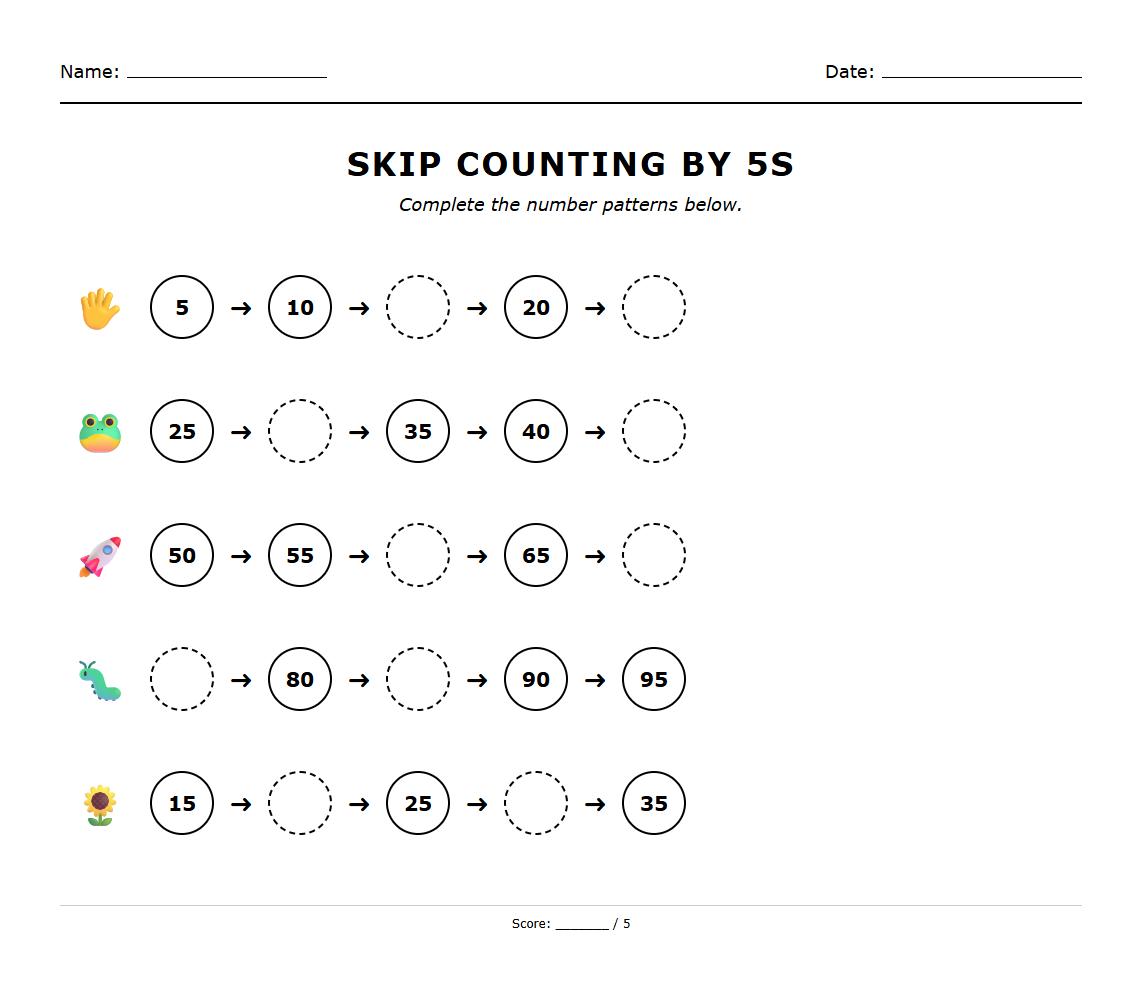
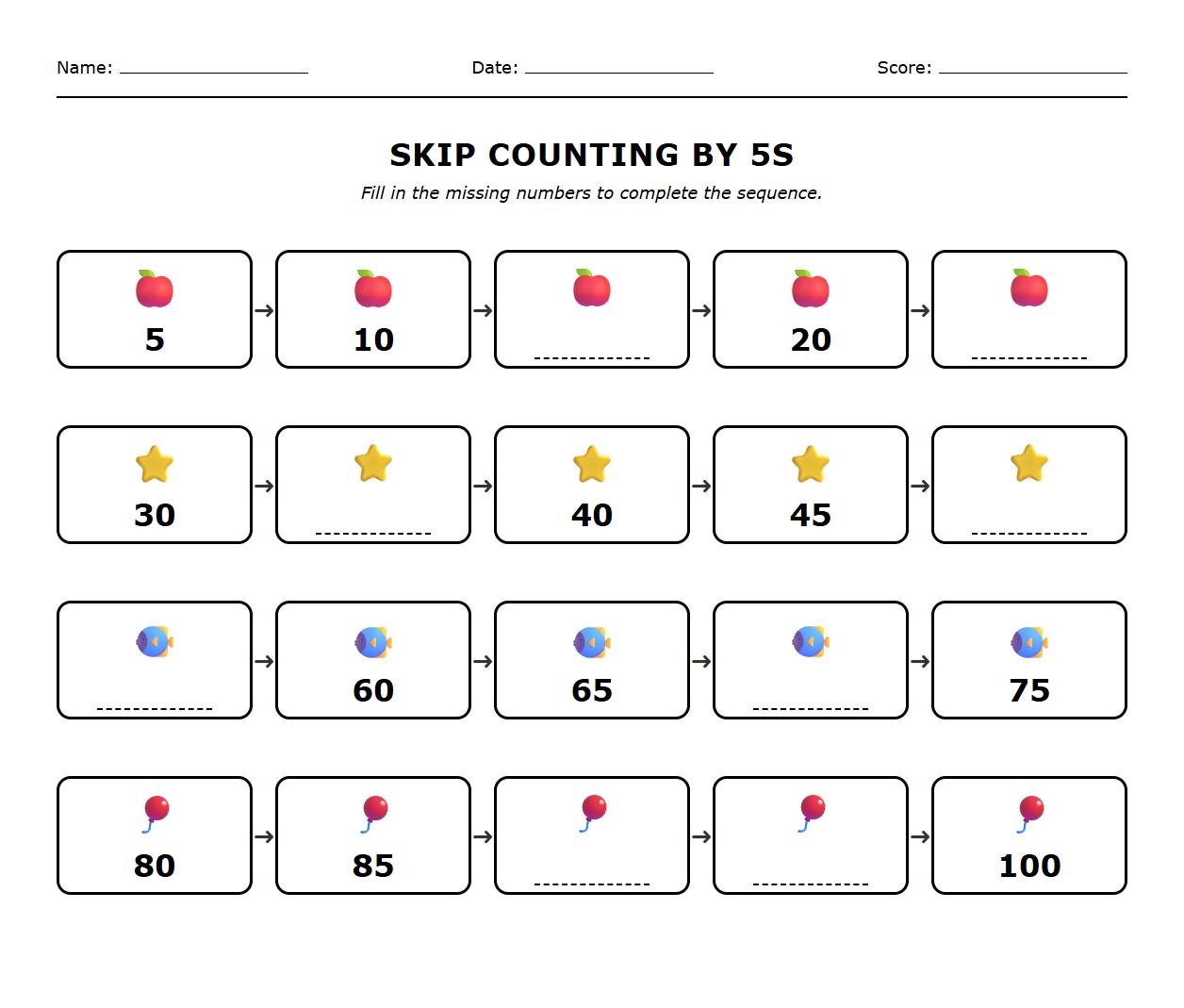
Fill in the Blanks: 5 10 ___ 20 ___
Help children complete the sequence by filling in the missing numbers: 15 and 25. These numbers follow the pattern of adding five each step. Filling in blanks develops both sequencing and critical thinking skills. Repetition of this exercise strengthens skip counting fluency.
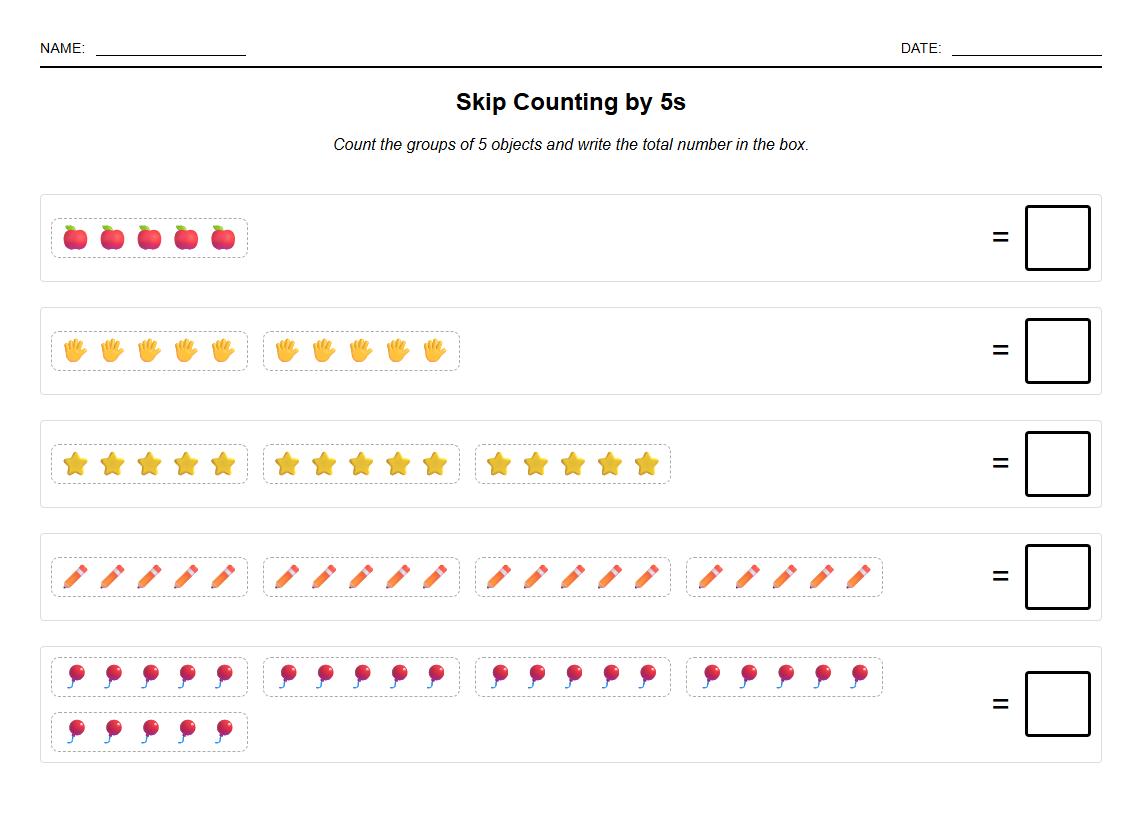
How Many Groups of Five Are There Between Zero and Fifty?
Between zero and fifty, there are exactly 10 groups of five. Counting these groups helps children understand multiplication and division concepts. Visual grouping exercises make this idea tangible and easy to understand. It's an important foundational skill for early math learning.
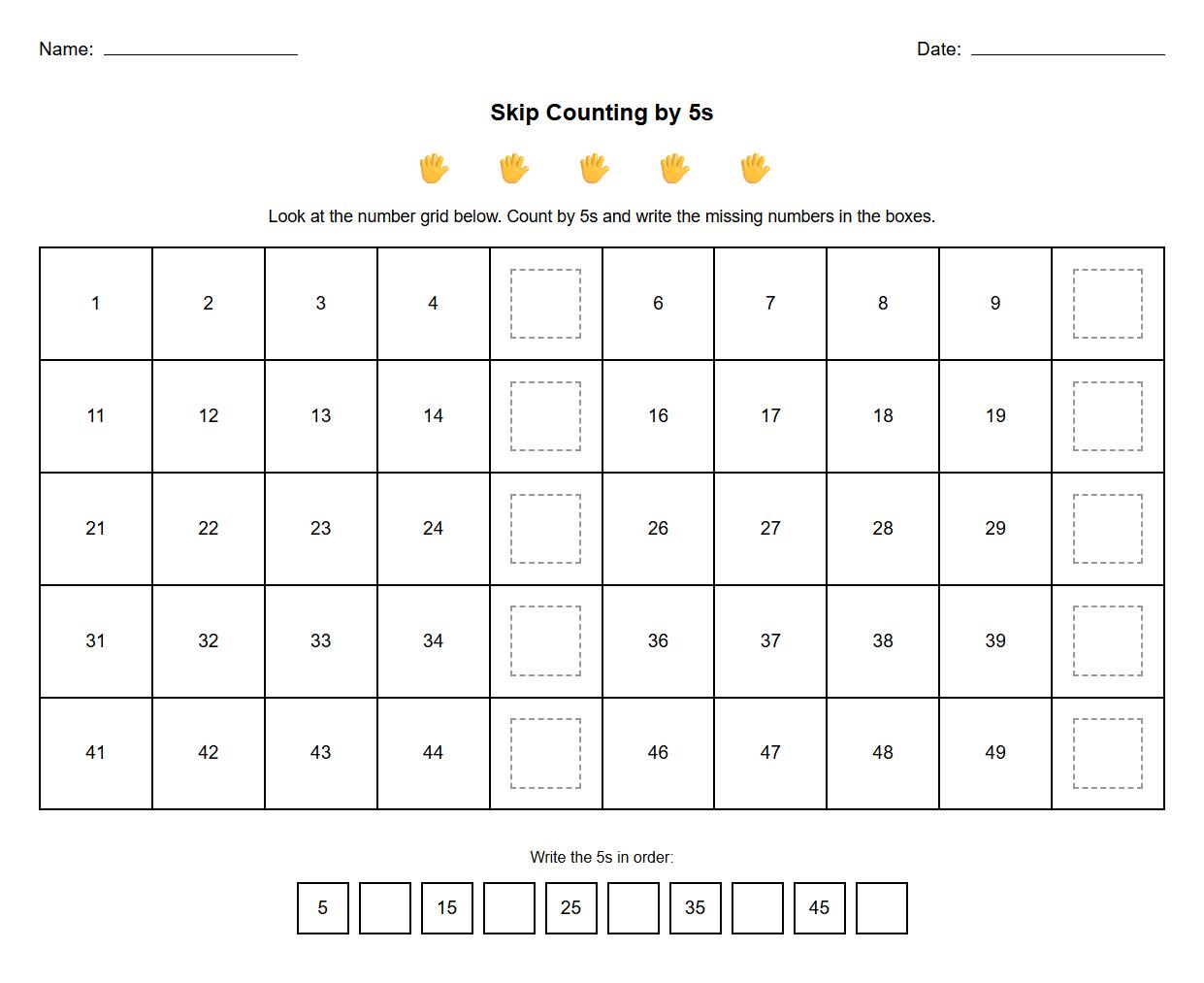
Write the Numbers You Say When You Count by Fives up to Fifty
Encourage children to write down the sequence: 5, 10, 15, 20, 25, 30, 35, 40, 45, 50. Writing reinforces memory and helps connect verbal counting with number recognition. This practice improves both writing skills and numerical understanding. It is essential for mastering skip counting.
Draw and Color Hands to Show Skip Counting by Fives
Using hand drawings, children can visualize skip counting by counting fingers in groups of five. Coloring these groups develops fine motor skills and makes learning interactive. This hands-on approach enhances retention of skip counting concepts. It's a creative way to connect math with everyday objects.
Which Number Is Missing if You Skip Count by Fives from Ten to Forty?
In the sequence from ten to forty by fives, the number 25 is often missing. Identifying missing numbers improves pattern recognition and analytical skills. This activity encourages careful observation and helps children understand continuous sequences. It supports their confidence in counting.
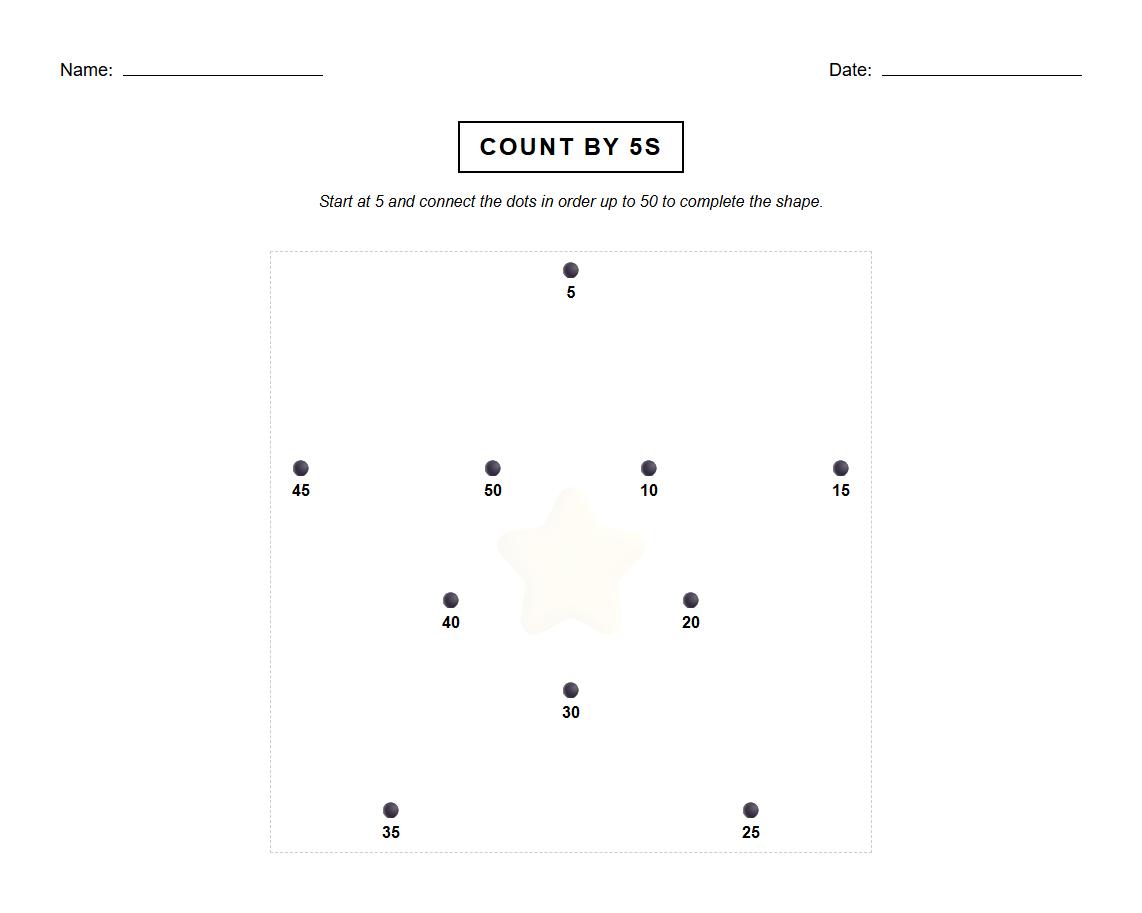
Can You Match the Dots to the Correct Skip Counting by Fives Number?
Matching dots to their corresponding skip counting numbers solidifies the link between quantity and numeral. This exercise enhances number sense and fine motor coordination. Children learn to connect visual quantities with abstract numbers. It is effective for concrete understanding of skip counting.
What Is the Next Number if You Start at Fifteen and Skip Count by Fives?
The next number after fifteen in skip counting by fives is 20. This sequential step helps children predict and continue number patterns confidently. Practicing this helps in recognizing number relationships and increases numerical fluency. It is key to mastering skip counting sequences.
Trace and Write the Numbers When You Skip Count by Fives
Tracing and writing skip counting numbers like 5, 10, 15, 20 reinforces both handwriting and counting skills. This repetitive practice aids memorization and fine motor development. It helps children internalize the counting rhythm and number formation. This activity is essential for early numeracy proficiency.


Multiples Recognition Skip Counting by 10s Worksheet for Kids