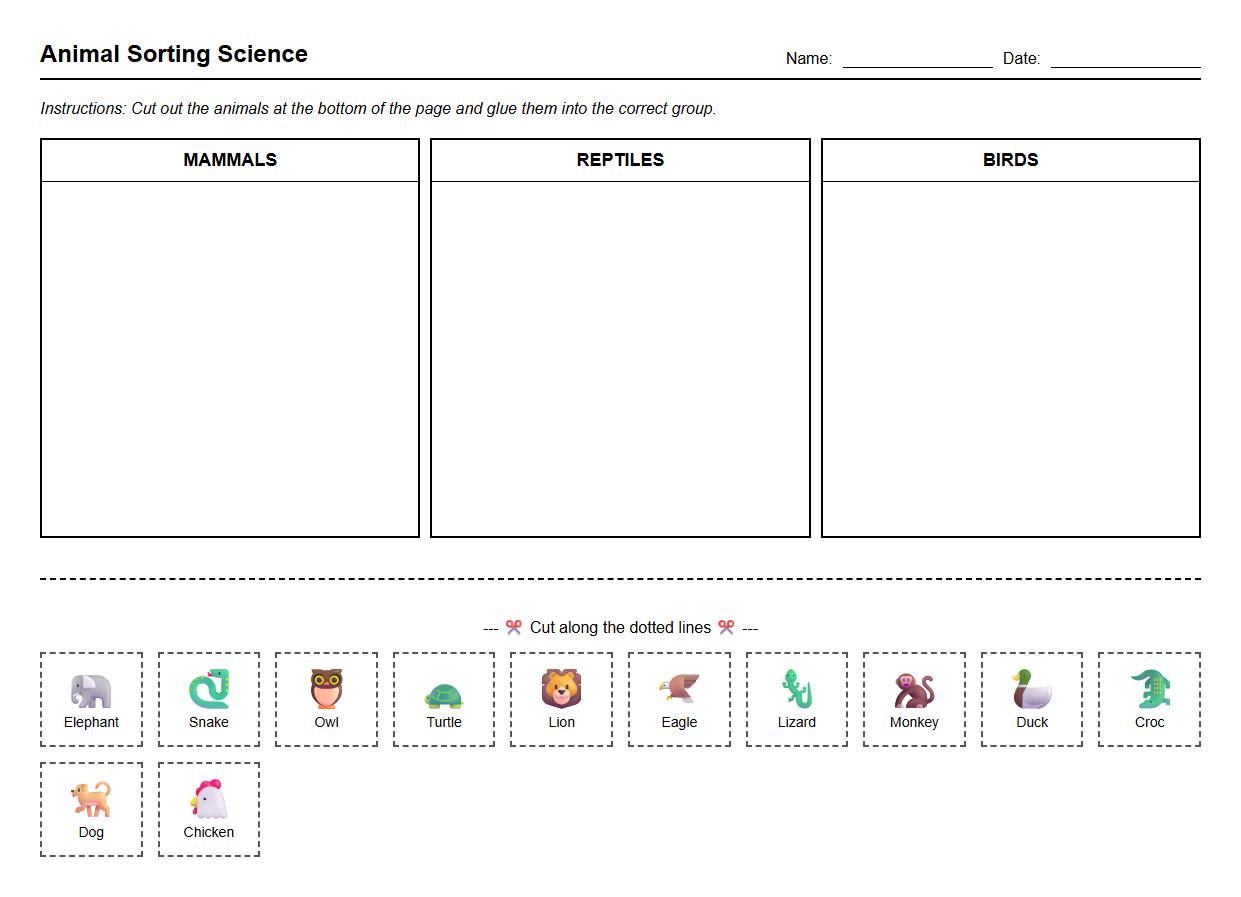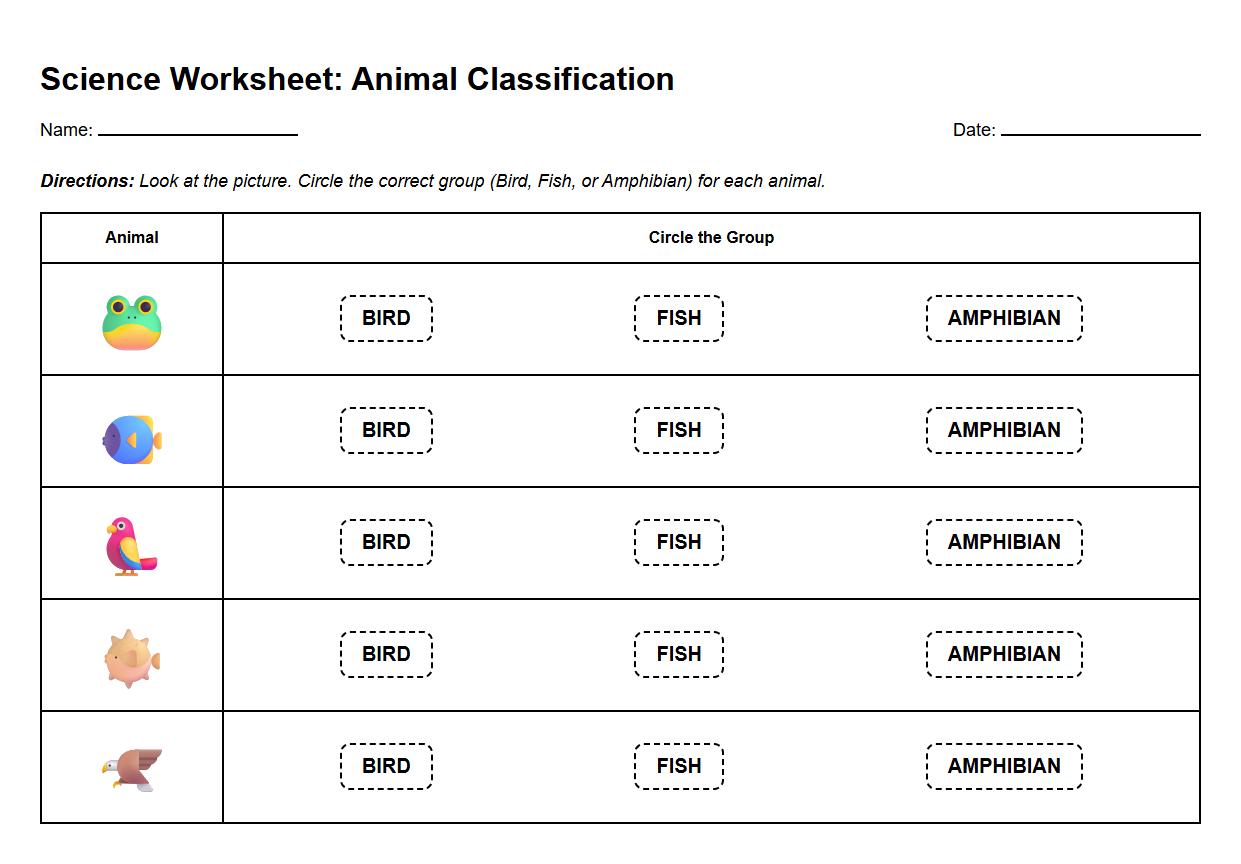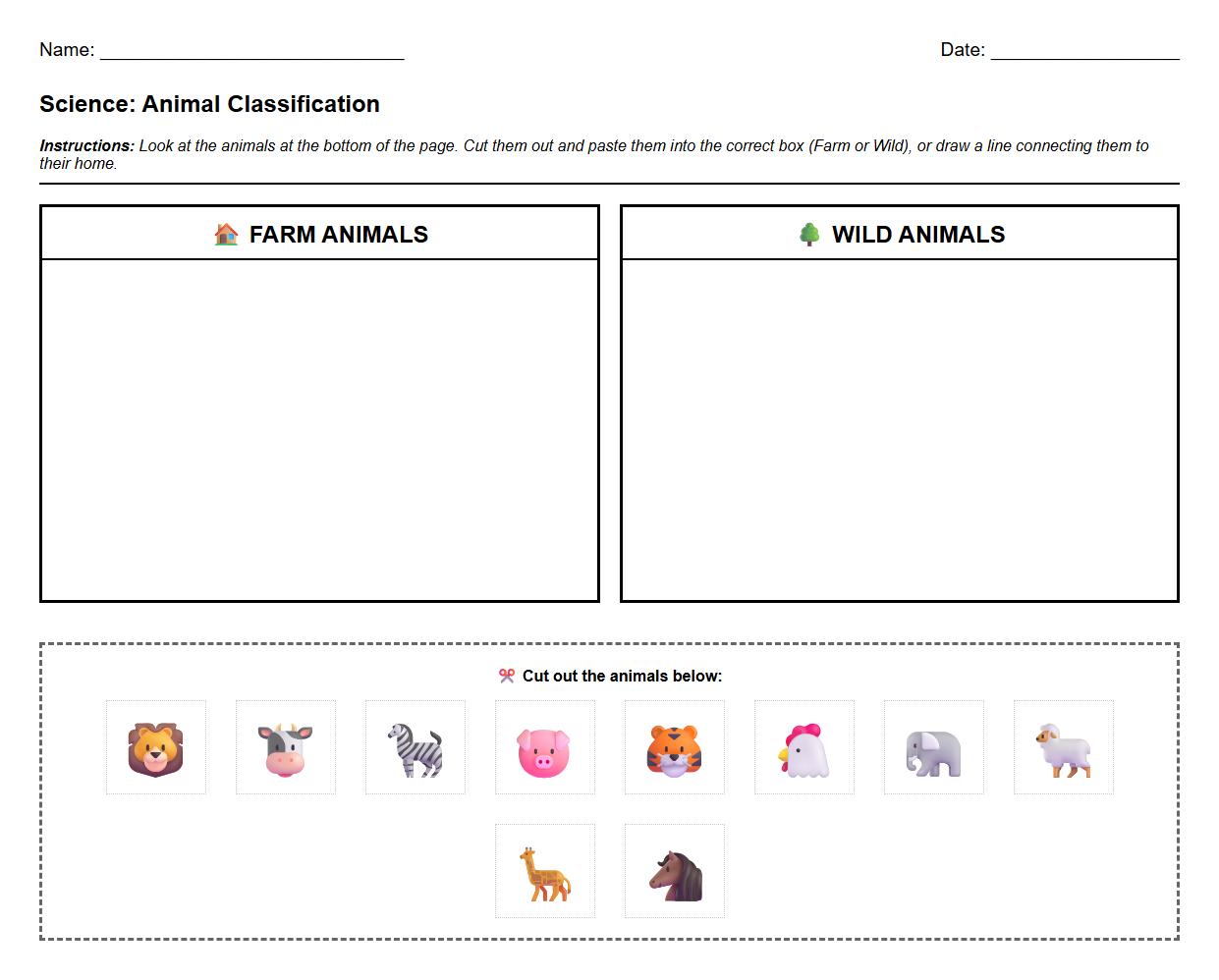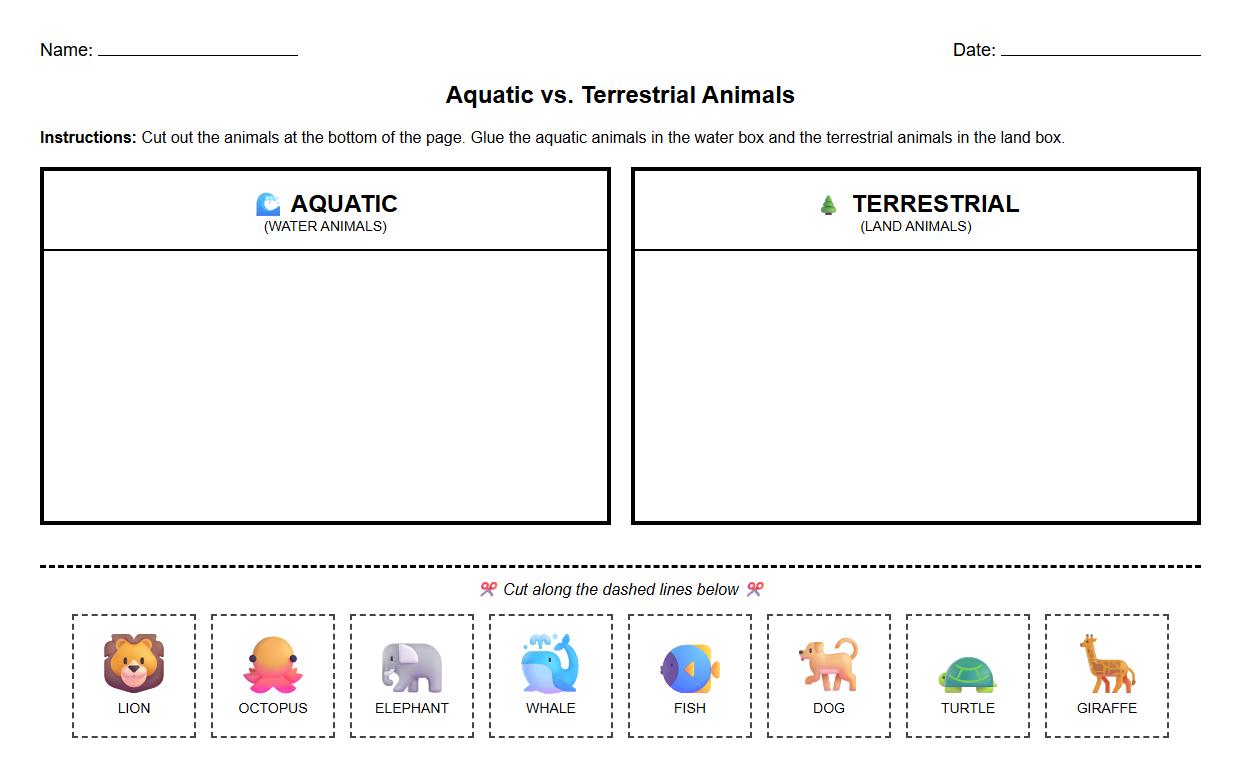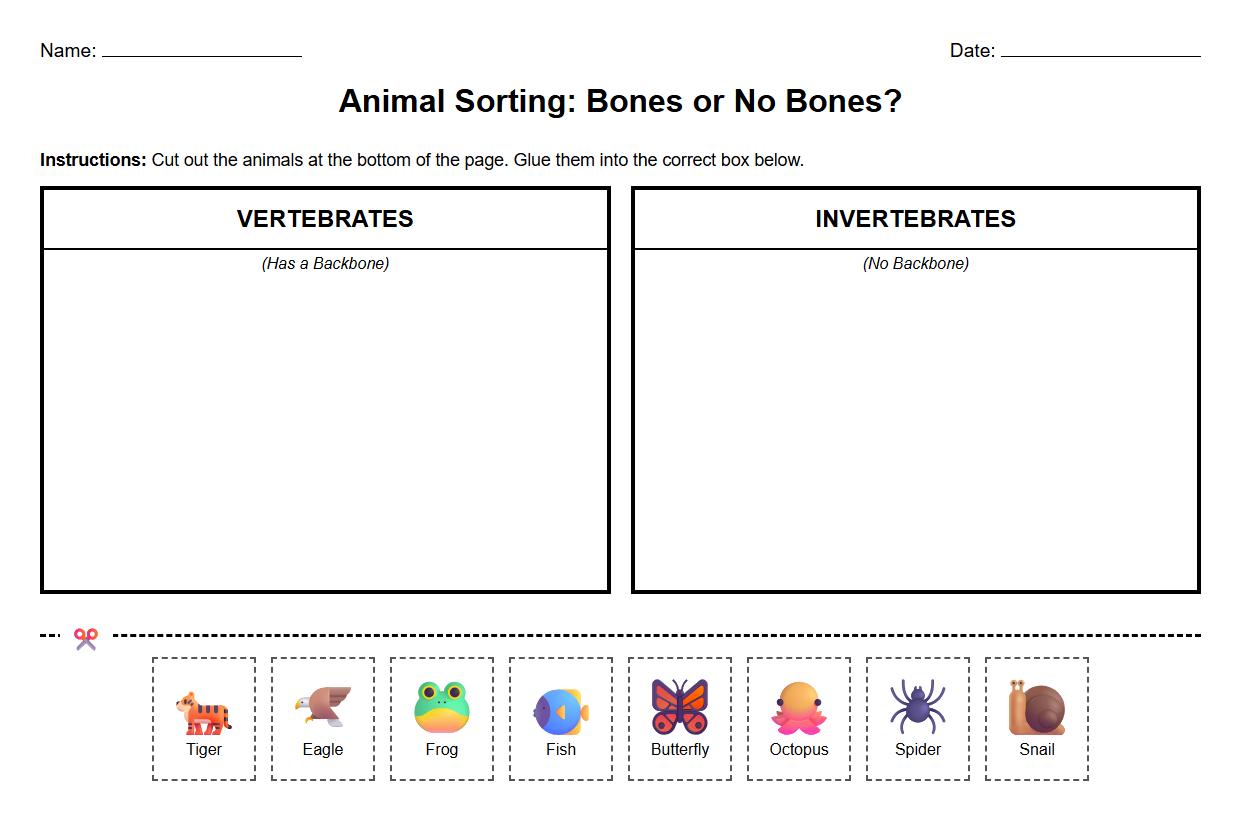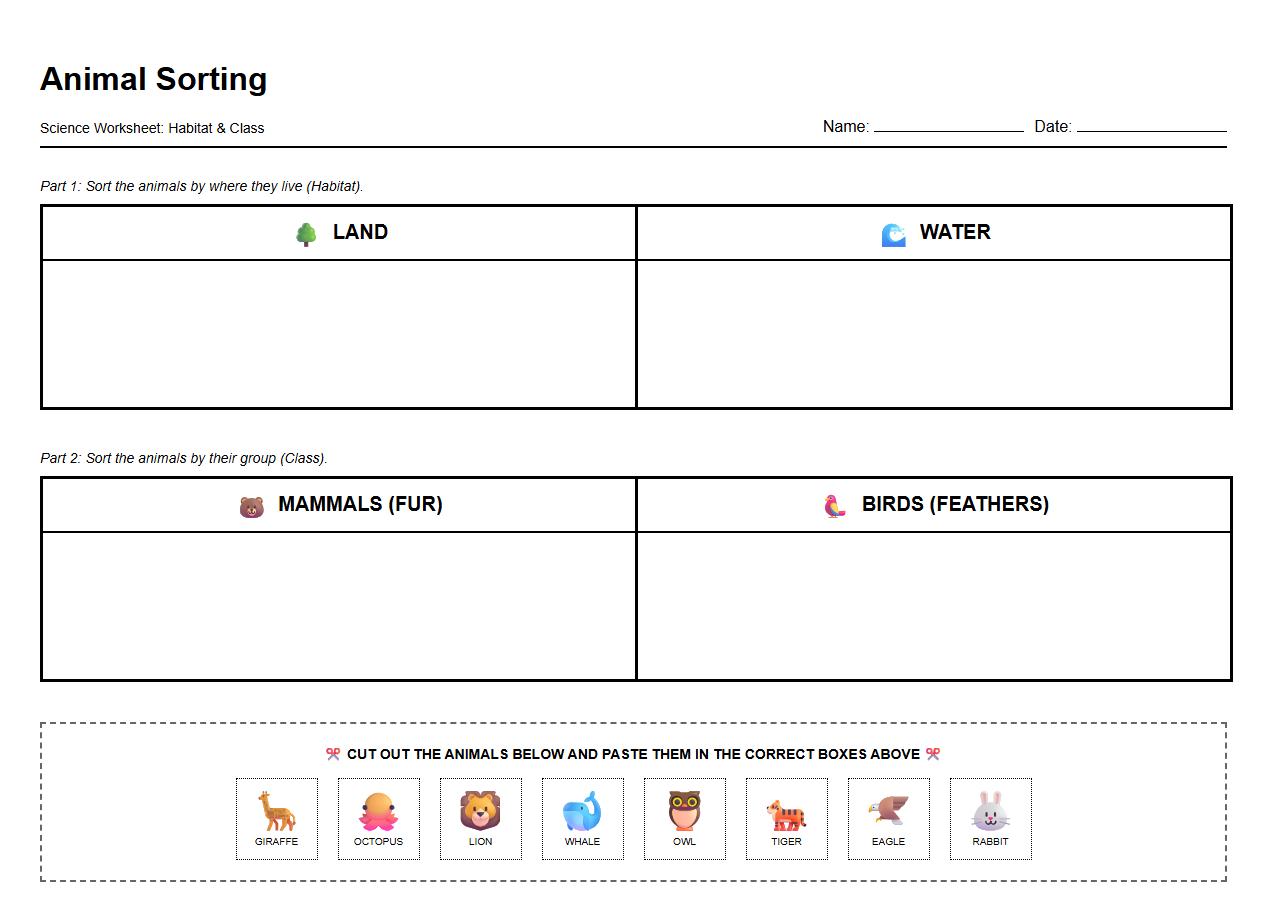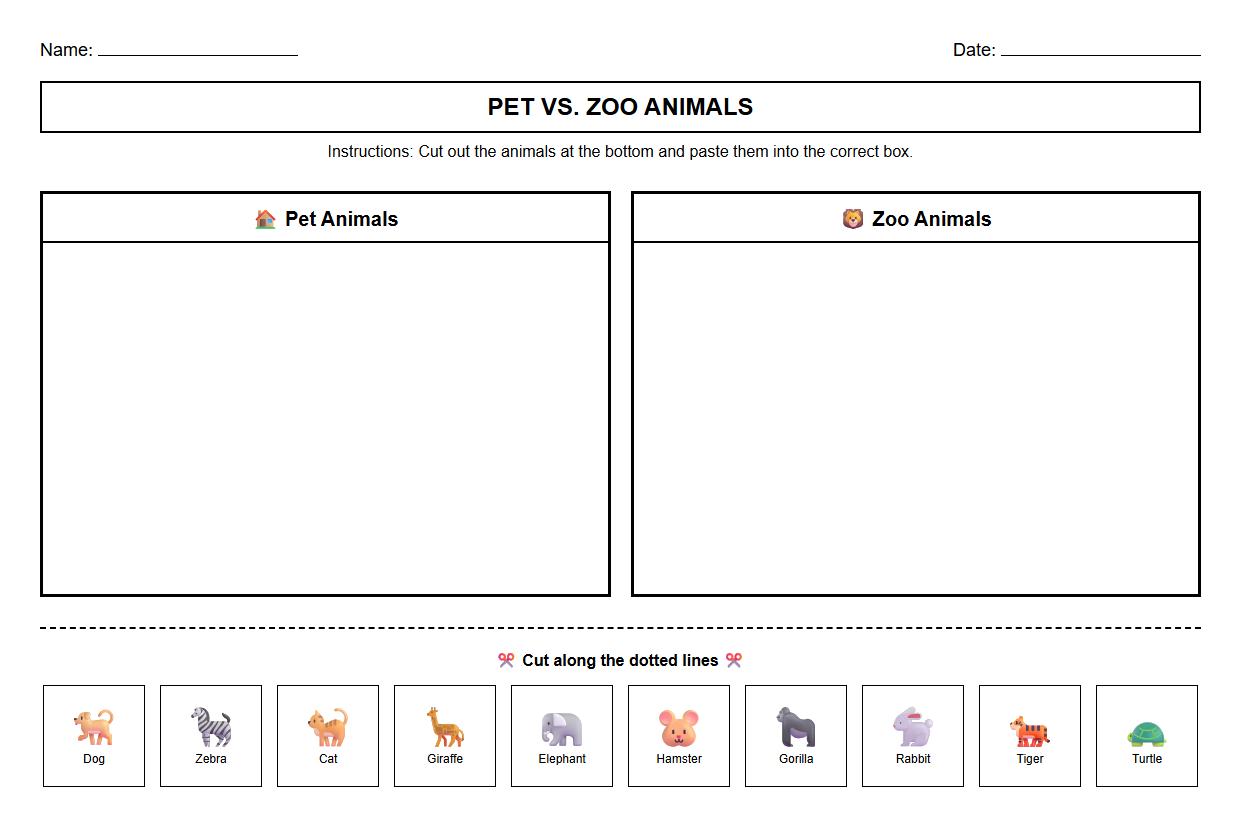
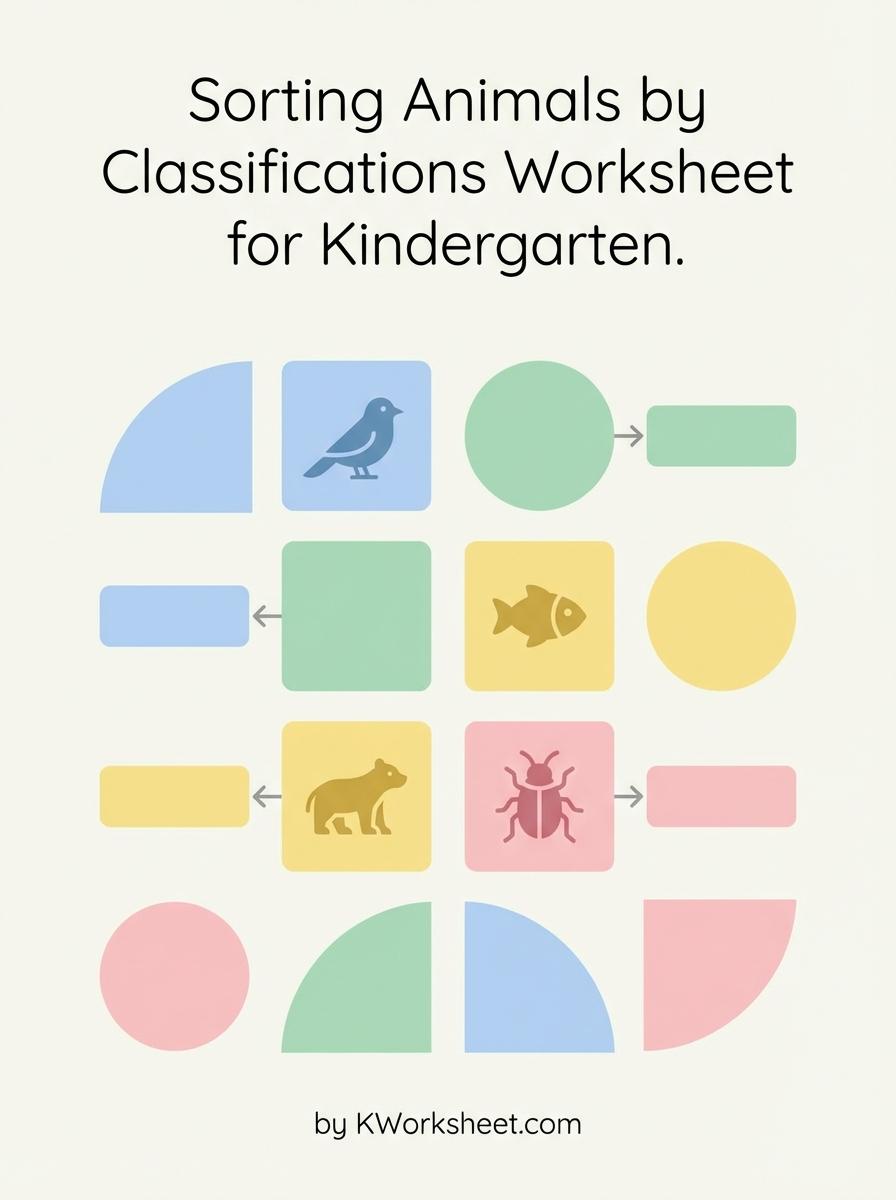
Sorting animals by classifications helps kindergarten students develop critical thinking and observation skills by grouping animals based on shared characteristics like habitat, diet, and physical traits. This engaging activity enhances their understanding of biodiversity and encourages curiosity about the natural world. Explore our variety of Sorting Animals by Classifications worksheets to support your child's learning journey.
Which Animals Are Mammals?
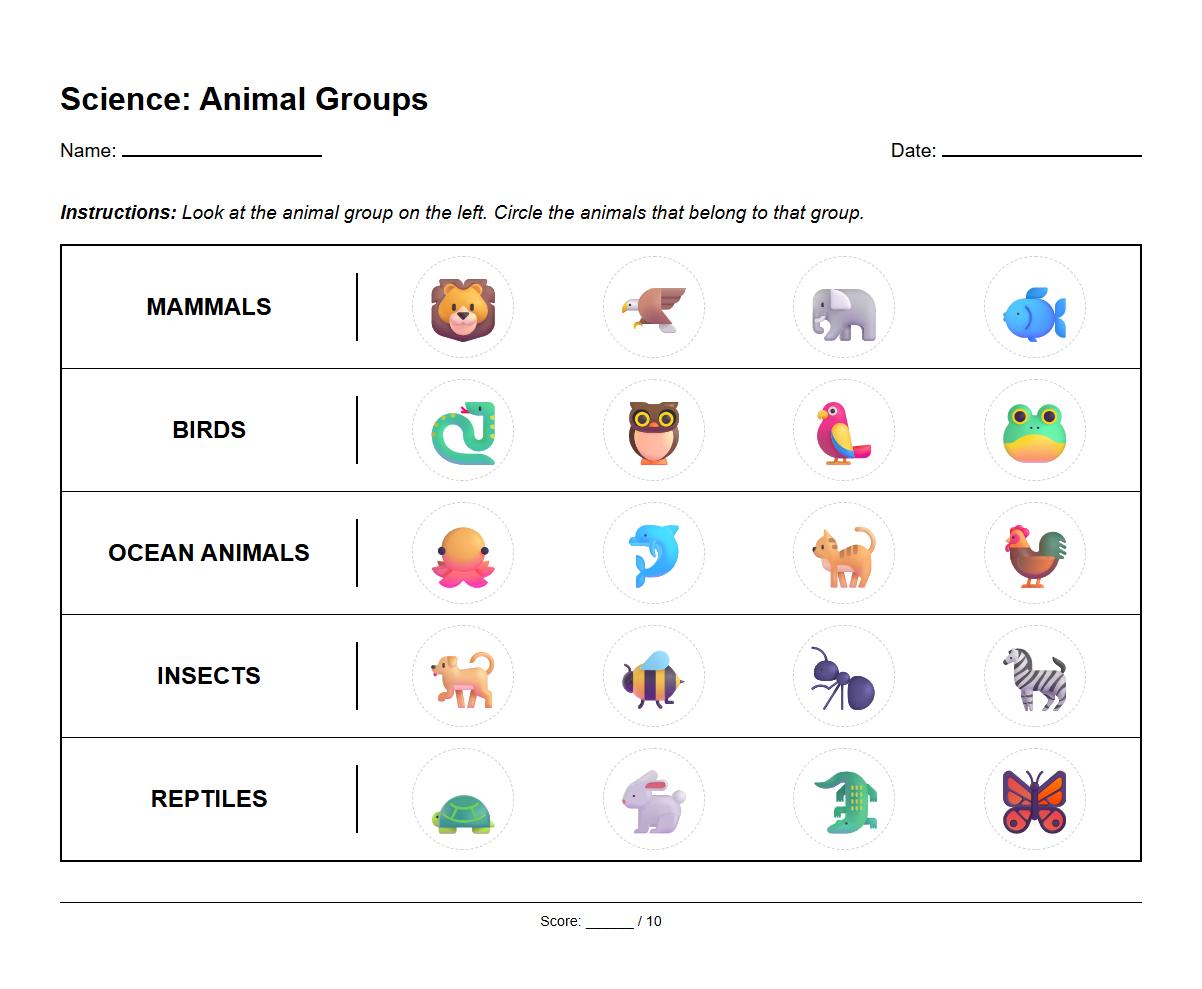
Mammals are animals that usually have fur or hair and feed their babies with milk. Common examples include dogs, cats, and elephants. They are warm-blooded and breathe air through lungs. Teachers and parents can use this worksheet to identify mammals and learn about their special traits.
Which Animals Have Feathers?
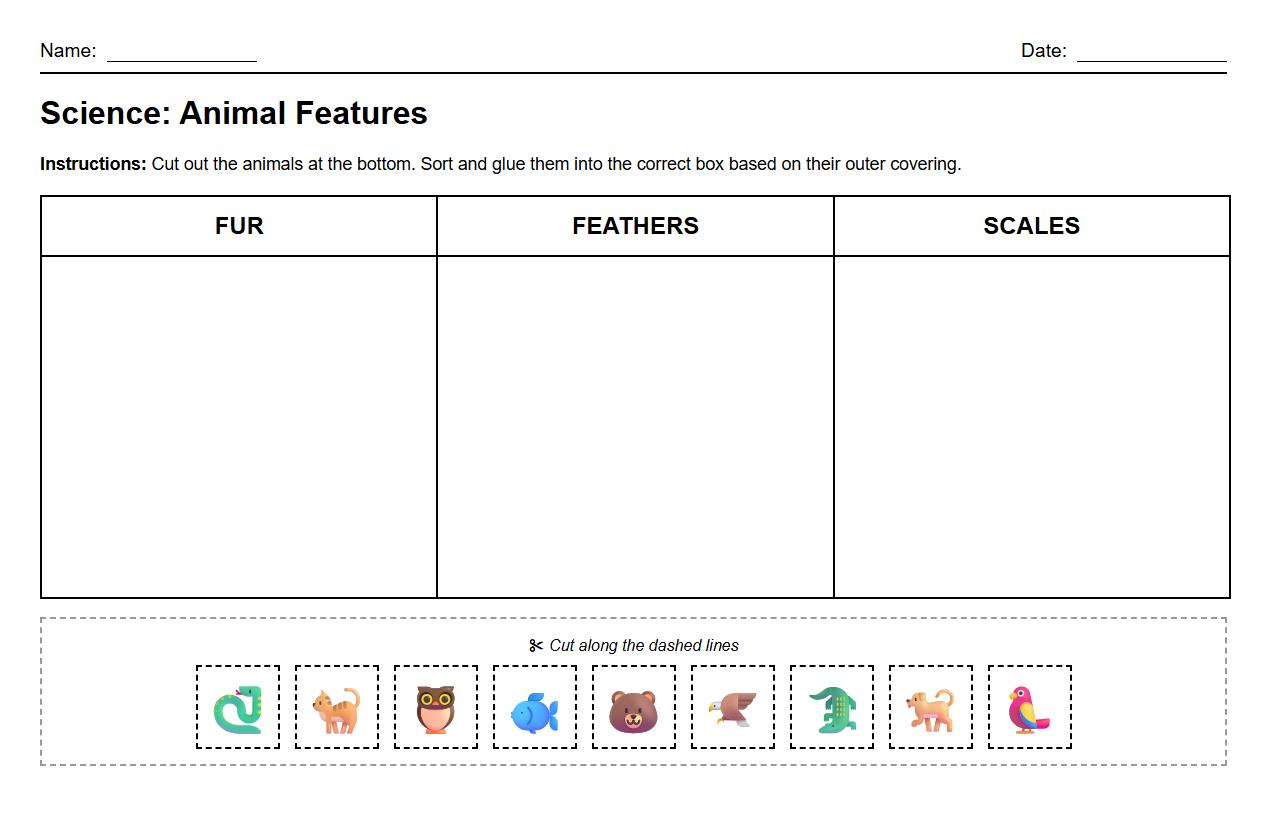
Feathers are unique to birds and help them fly, stay warm, and attract mates. Examples include sparrows, eagles, and parrots. Recognizing birds by their feathers can be a fun activity for children. This worksheet will help kids explore the colorful world of feathered creatures.
Can You Find the Animals That Live in Water?
Water-dwelling animals breathe underwater or at the surface and are adapted for aquatic life. Fish, dolphins, and turtles are examples of animals that live in water. This worksheet encourages children to spot animals in seas, rivers, and lakes. Learning about aquatic life fosters curiosity about different habitats.
Which Animals Lay Eggs?
Egg-laying animals reproduce by laying eggs instead of giving birth to live young. Birds, reptiles, amphibians, and some mammals like the platypus lay eggs. This guide helps children identify egg layers and understand their life cycles. It promotes critical thinking about animal reproduction.
Which Animals Have Fur?
Fur is a coat of hair that keeps many mammals warm and protected. Animals like rabbits, bears, and squirrels have fur. Parents and teachers can use this worksheet to teach children how fur helps animals survive in cold climates. It also aids in recognizing mammal characteristics.
Which Animals Can Fly?
Flying animals use wings to move through the air, including most birds and some insects like butterflies. Bats are mammals that can fly too. This worksheet offers a fun way for kids to learn about flight adaptations and animal diversity. Fly-friendly animals inspire imagination and observation skills.
Which Animals Crawl?
Crawling animals move close to the ground using their legs or bodies, such as snakes, worms, and some insects. Crawling is a common movement for animals without wings or strong legs. This worksheet helps children explore different modes of movement. Understanding crawling animals deepens knowledge of animal behavior.
Which Animals Have Scales?
Scales are small, hard plates covering the skin of fish and reptiles like lizards and snakes. Scales protect the body and sometimes help with movement. This guide teaches children how to spot animals with scales and their special features. It broadens awareness of animal skin types diverse in nature.
Which Animals Live on Land?
Land animals include mammals, birds, reptiles, and insects that live primarily on solid ground. Examples are lions, ants, and turtles. This worksheet assists children in identifying animals adapted to terrestrial environments. It fosters appreciation of land habitats and animal survival strategies.
Which Animals Have Four Legs?
Animals with four legs are known as quadrupeds and include many mammals, reptiles, and amphibians. Dogs, frogs, and lizards are typical four-legged animals. The worksheet encourages children to categorize animals by the number of legs and observe movement patterns. It helps build early classification skills in young learners.


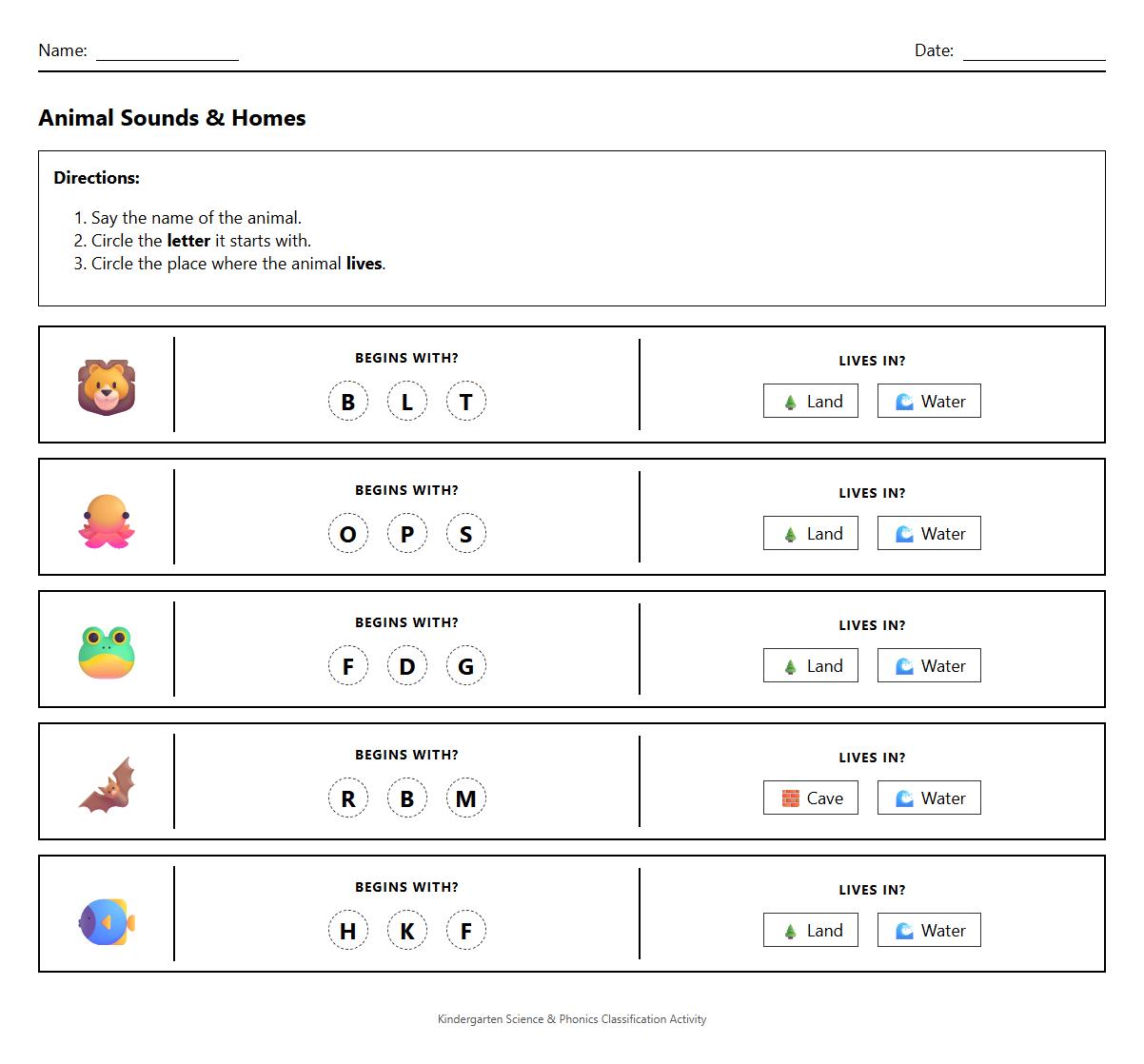
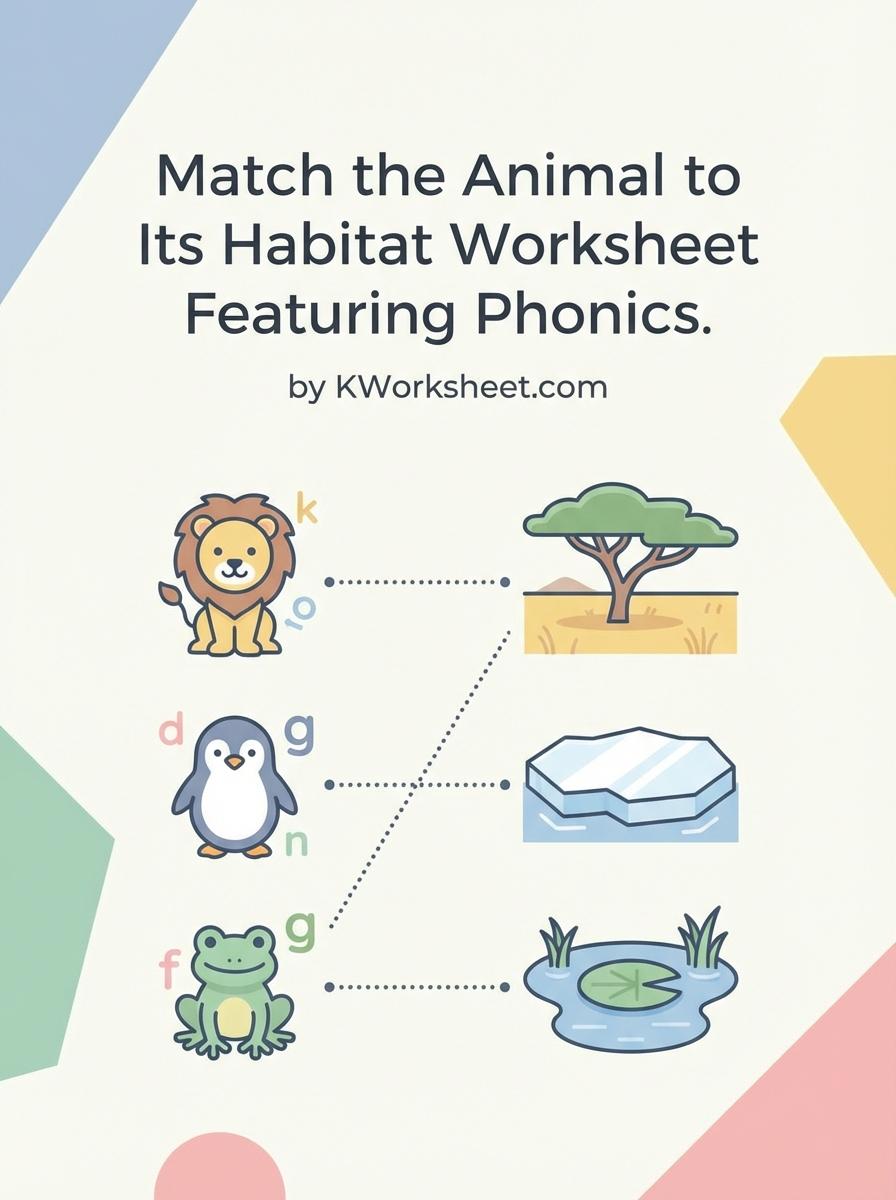
Match the Animal to Its Habitat Worksheet Featuring Phonics