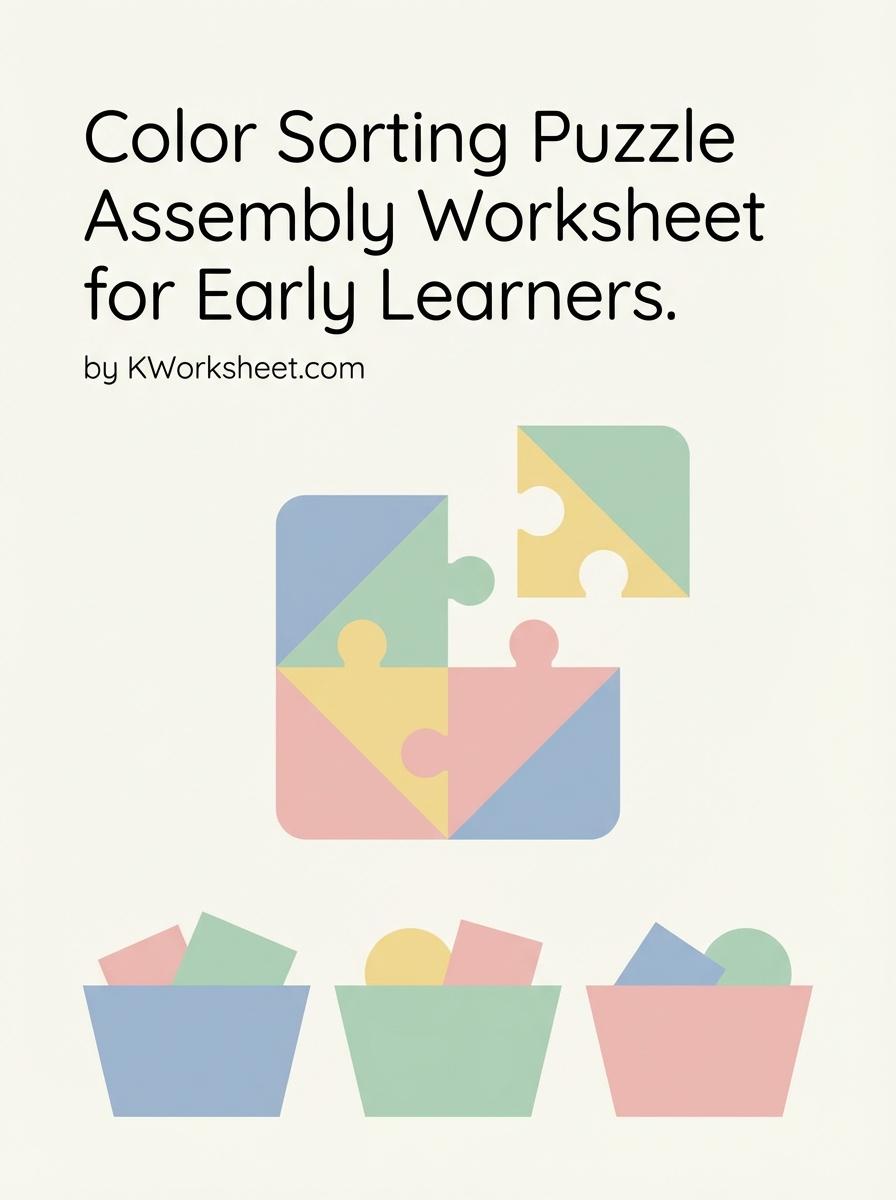
Color Sorting Puzzle Assembly Worksheet for Early Learners

📅 Feb 21, 2025 👤 Nylen Smith

Color Sorting Puzzle Assembly Worksheet helps early learners develop critical skills such as color recognition, hand-eye coordination, and problem-solving. This engaging activity encourages children to identify and sort pieces by color, fostering cognitive development through playful learning. Explore the available worksheets to provide fun and educational experiences for young minds.

Phonics Color Sorting Worksheet with Letter Recognition
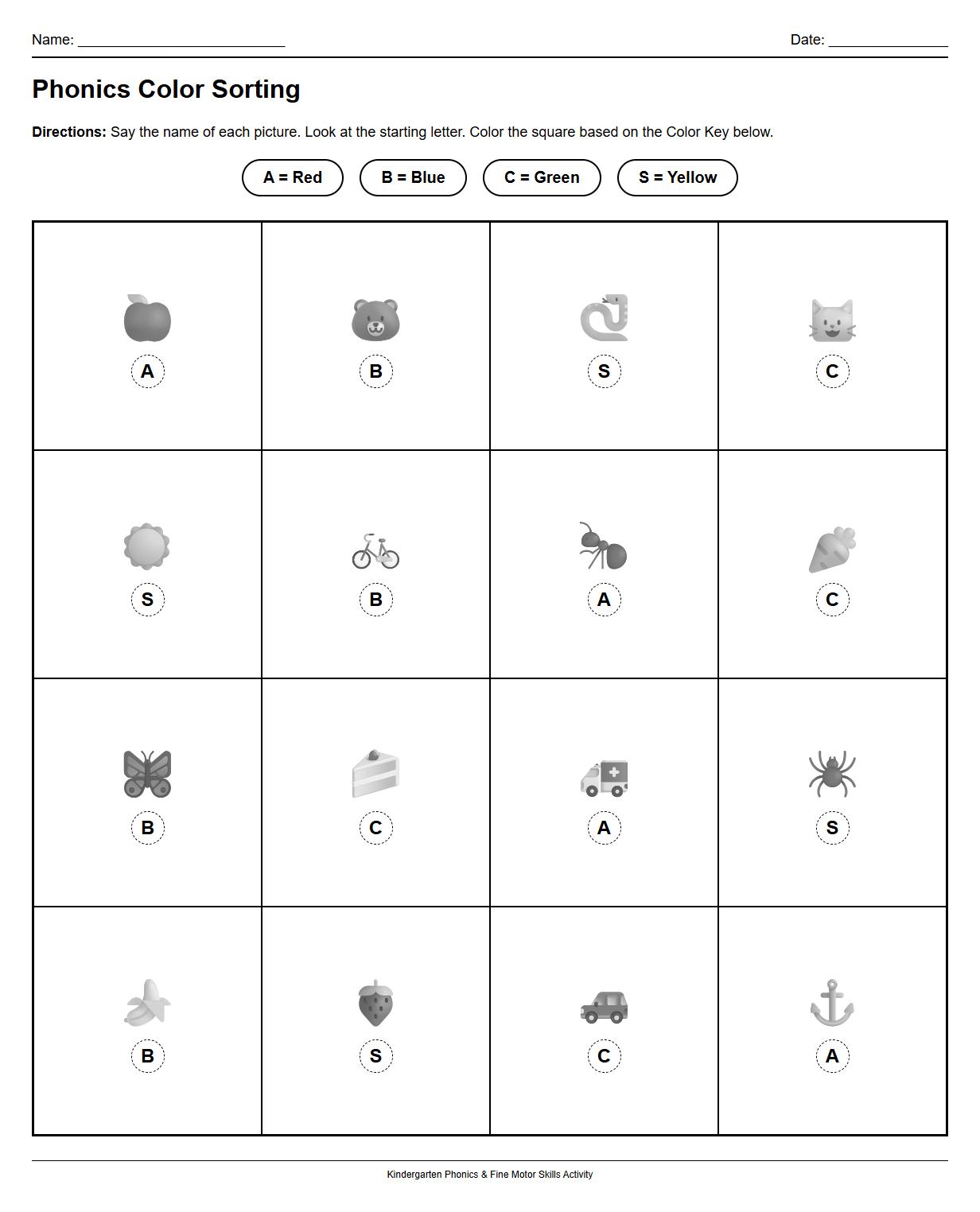
Phonics Color Sorting Worksheet with Letter Recognition

Download PDF     Pin it

Color and Shape Puzzle Matching Activity Sheet
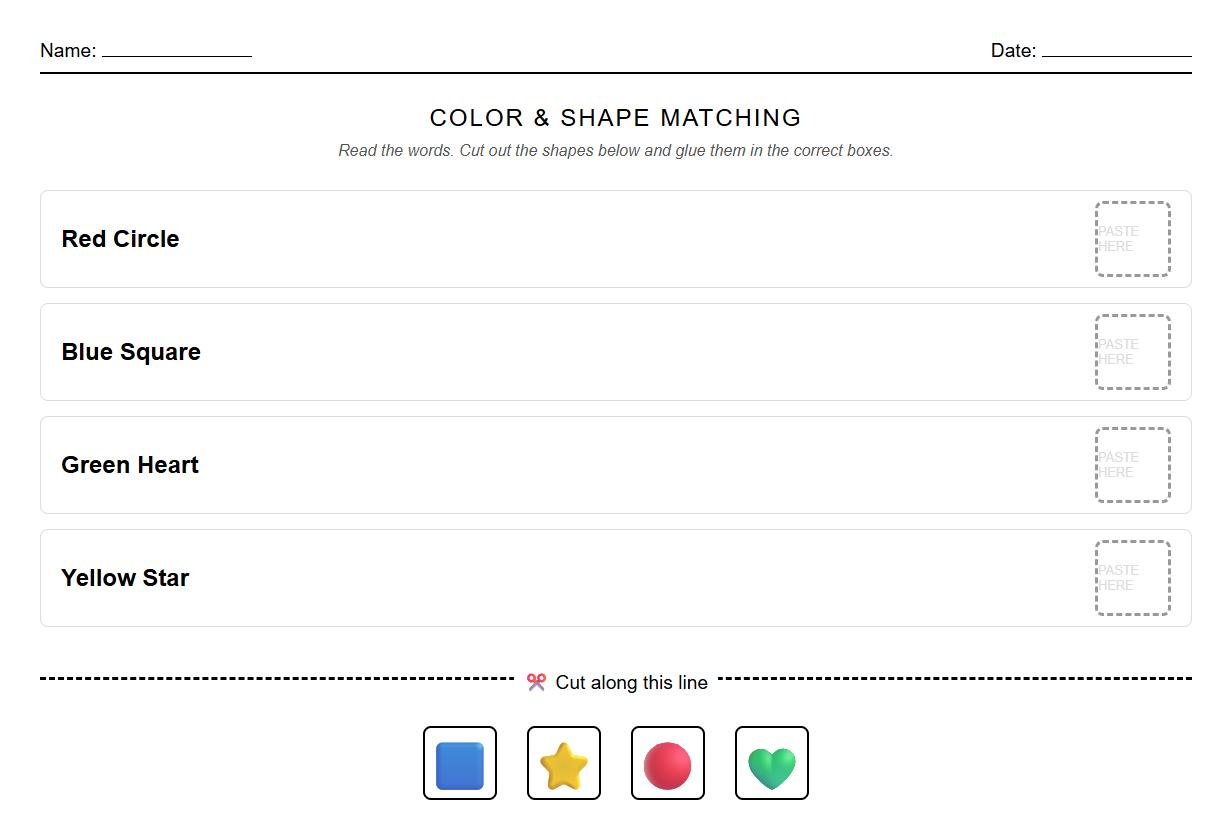
Color and Shape Puzzle Matching Activity Sheet

Download PDF     Pin it

Sight Words Color Categorization Worksheet
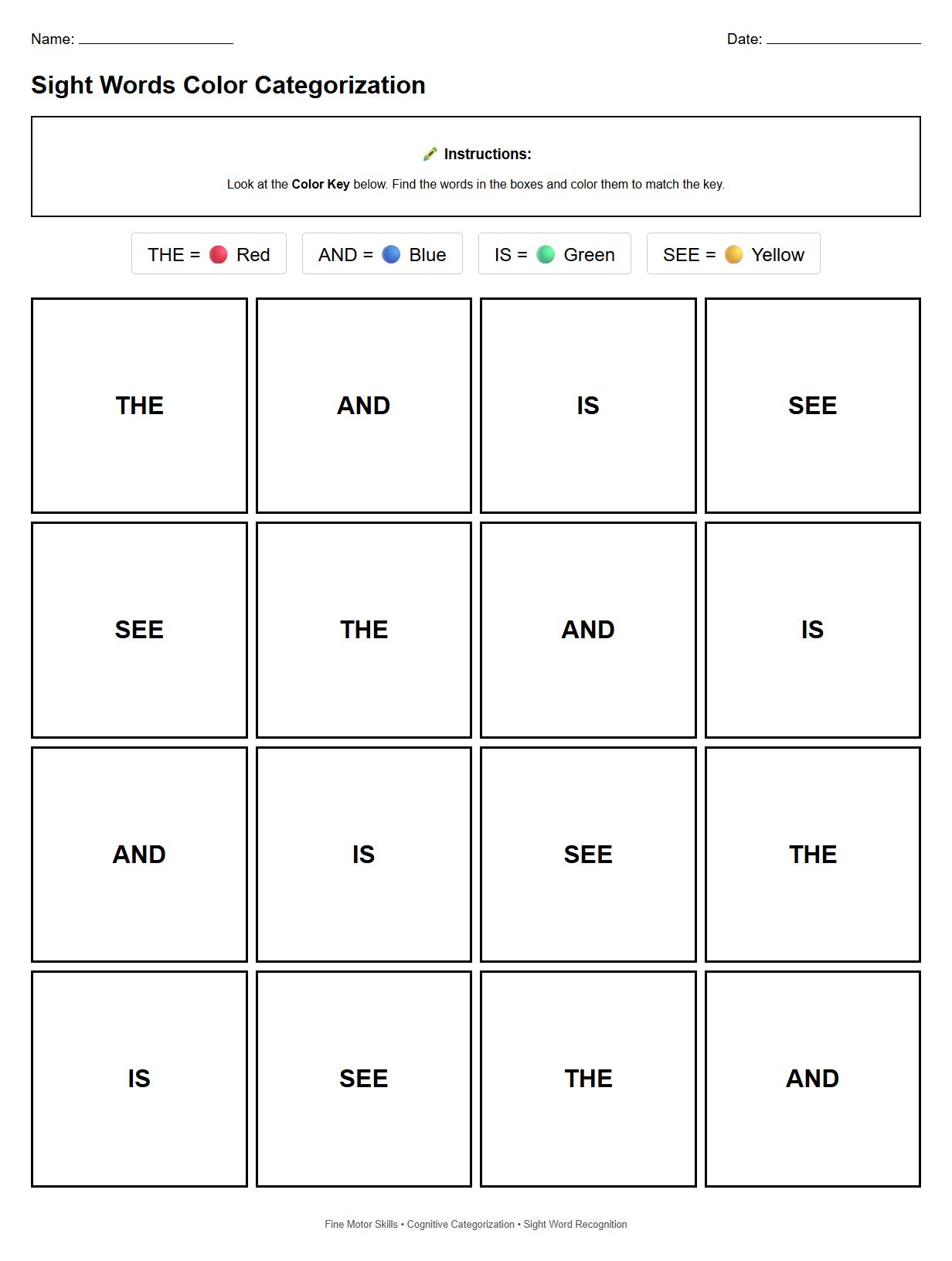
Sight Words Color Categorization Worksheet

Download PDF     Pin it

Pattern Sequencing with Color Tiles Worksheet
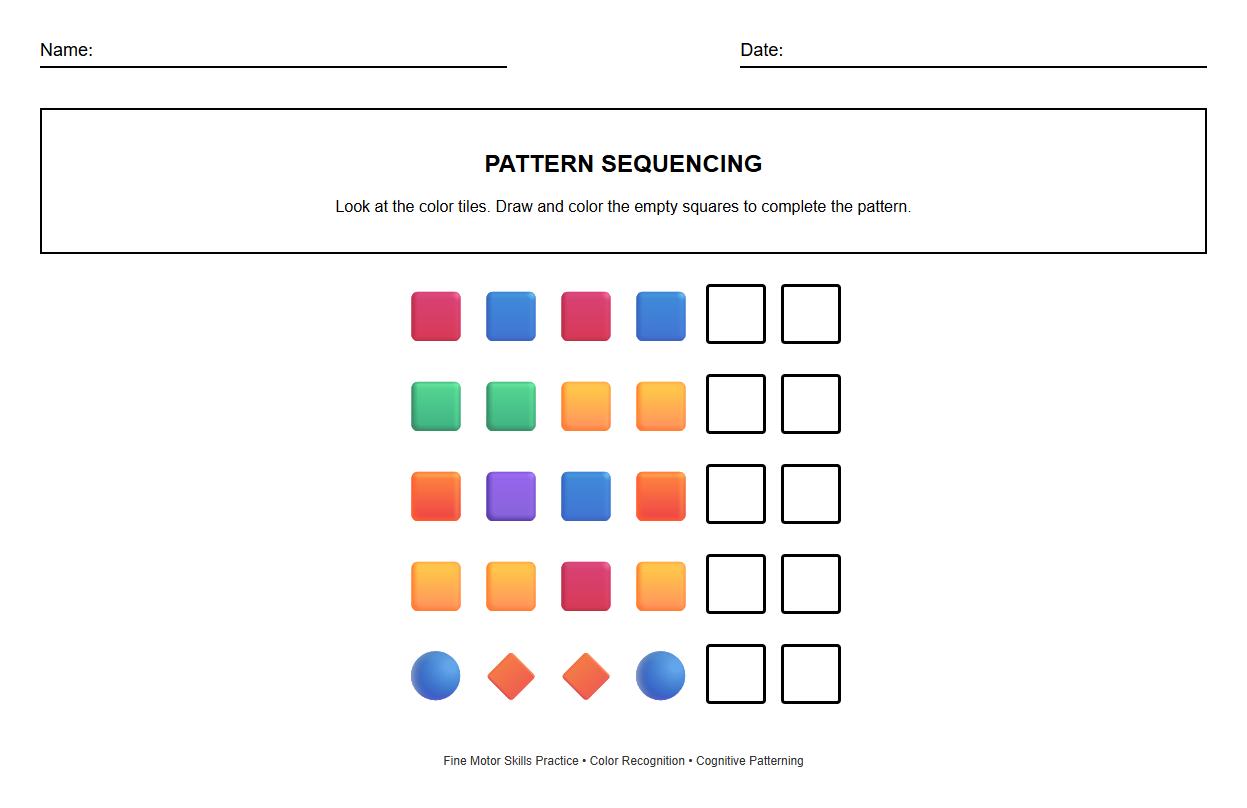
Pattern Sequencing with Color Tiles Worksheet

Download PDF     Pin it

Color Family Sorting and Naming Worksheet
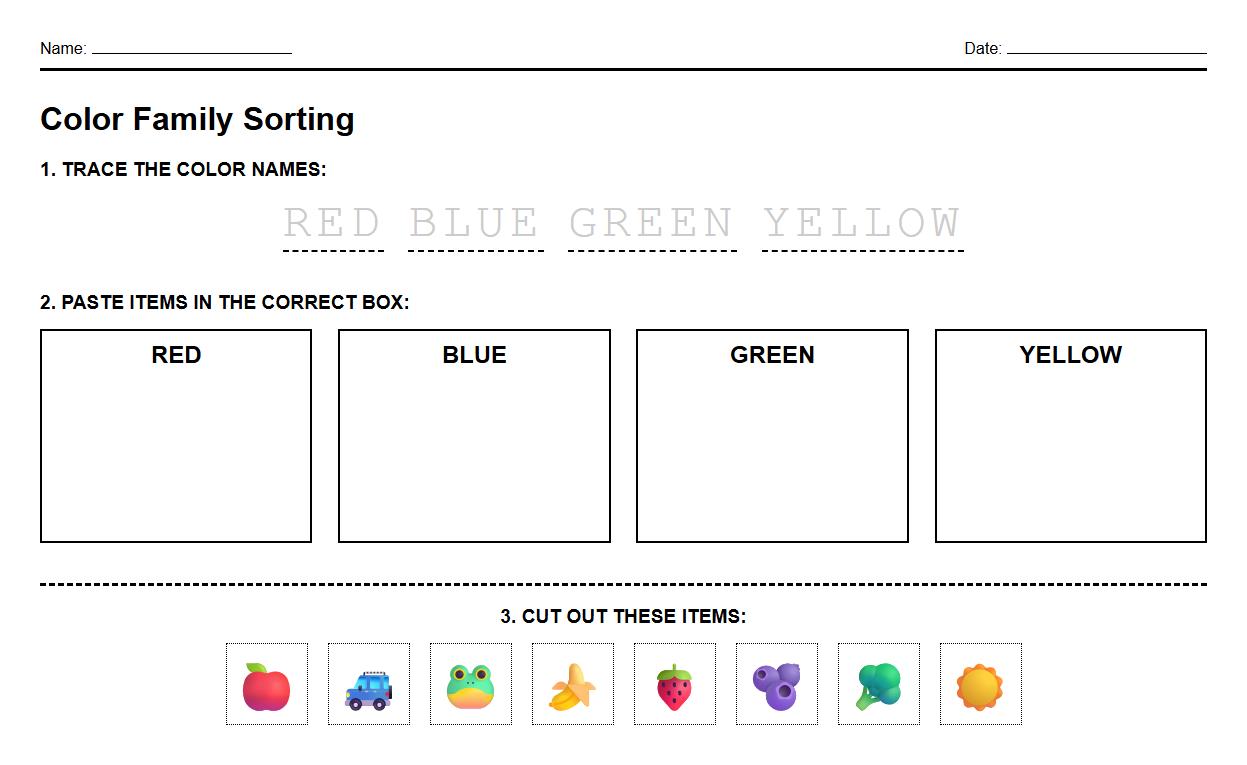
Color Family Sorting and Naming Worksheet

Download PDF     Pin it

Color Code Logic Puzzle for Critical Thinking
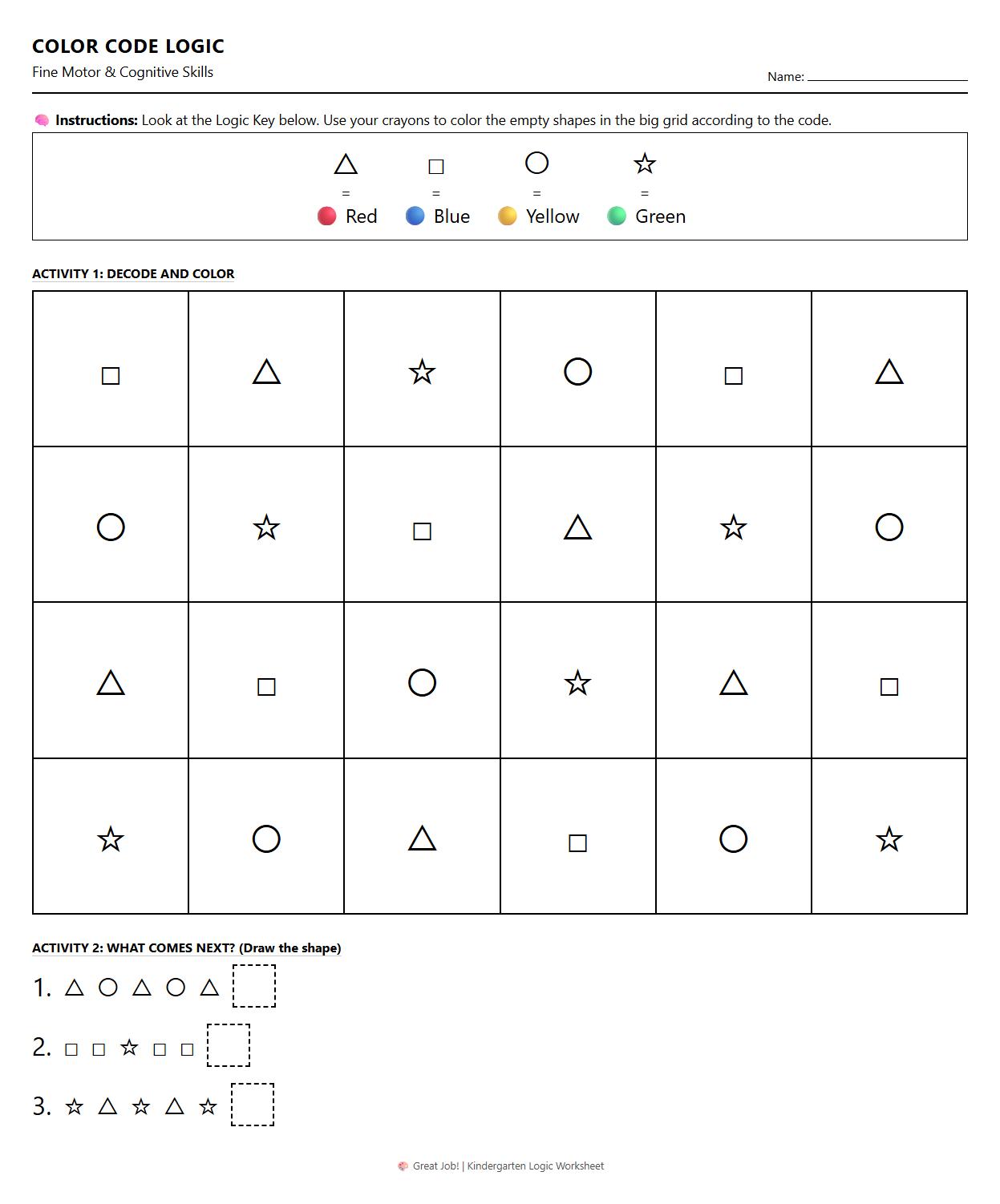
Color Code Logic Puzzle for Critical Thinking

Download PDF     Pin it

Fine Motor Skills Color Piece Assembly Worksheet
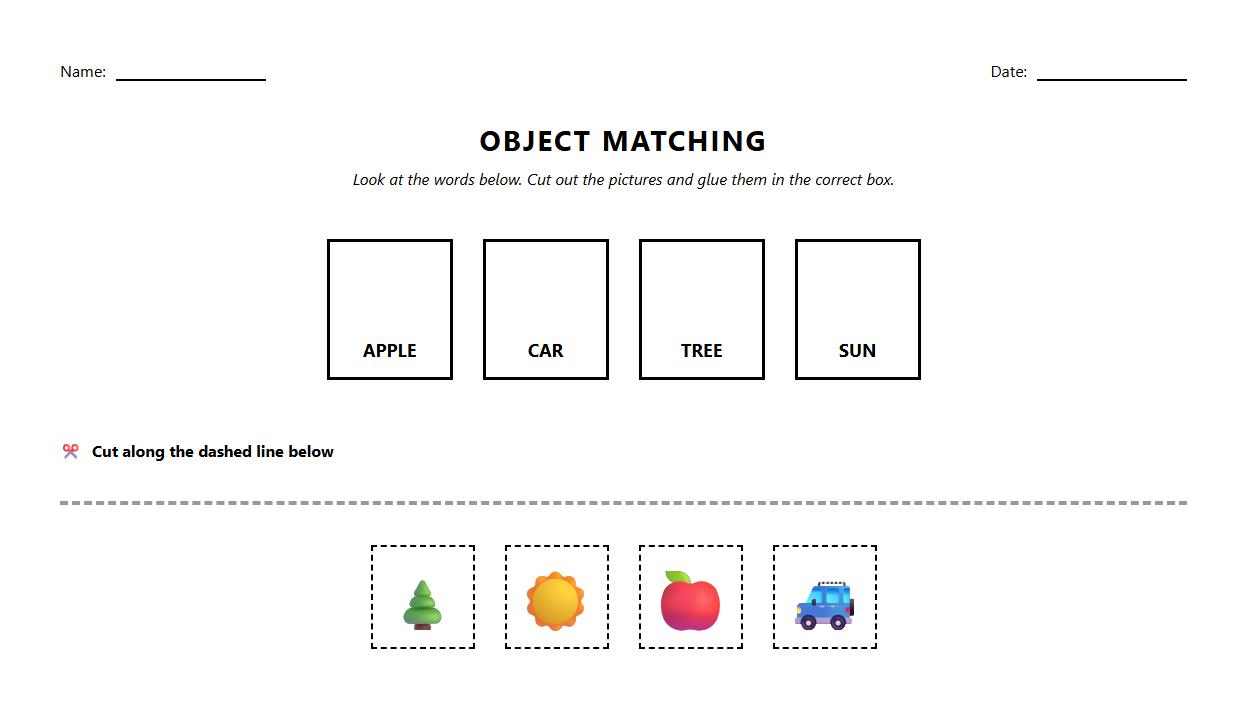
Fine Motor Skills Color Piece Assembly Worksheet

Download PDF     Pin it

Numeracy Color Sorting Puzzle with Counting Practice
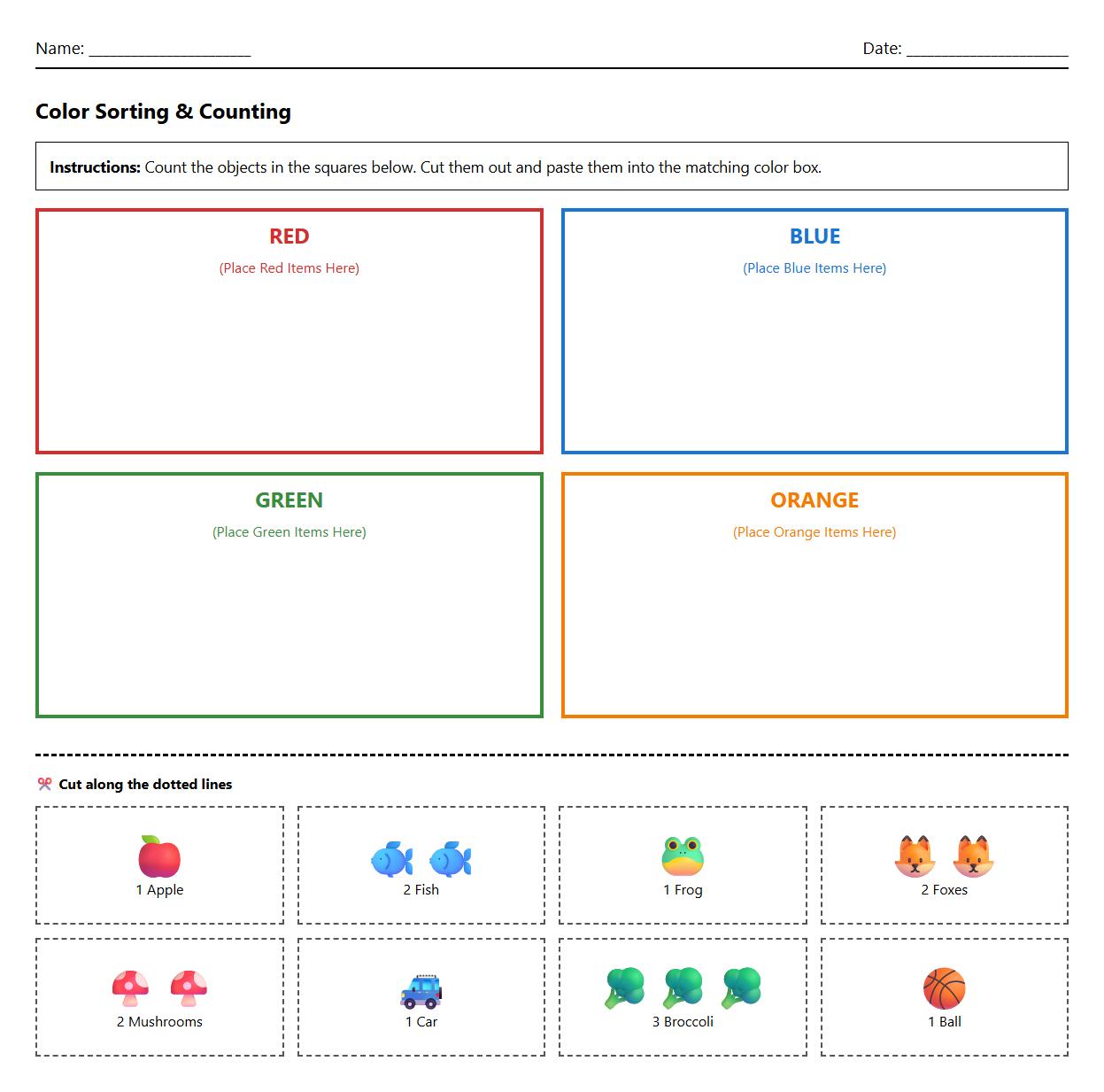
Numeracy Color Sorting Puzzle with Counting Practice

Download PDF     Pin it

Visual Discrimination Color Sorting Worksheet
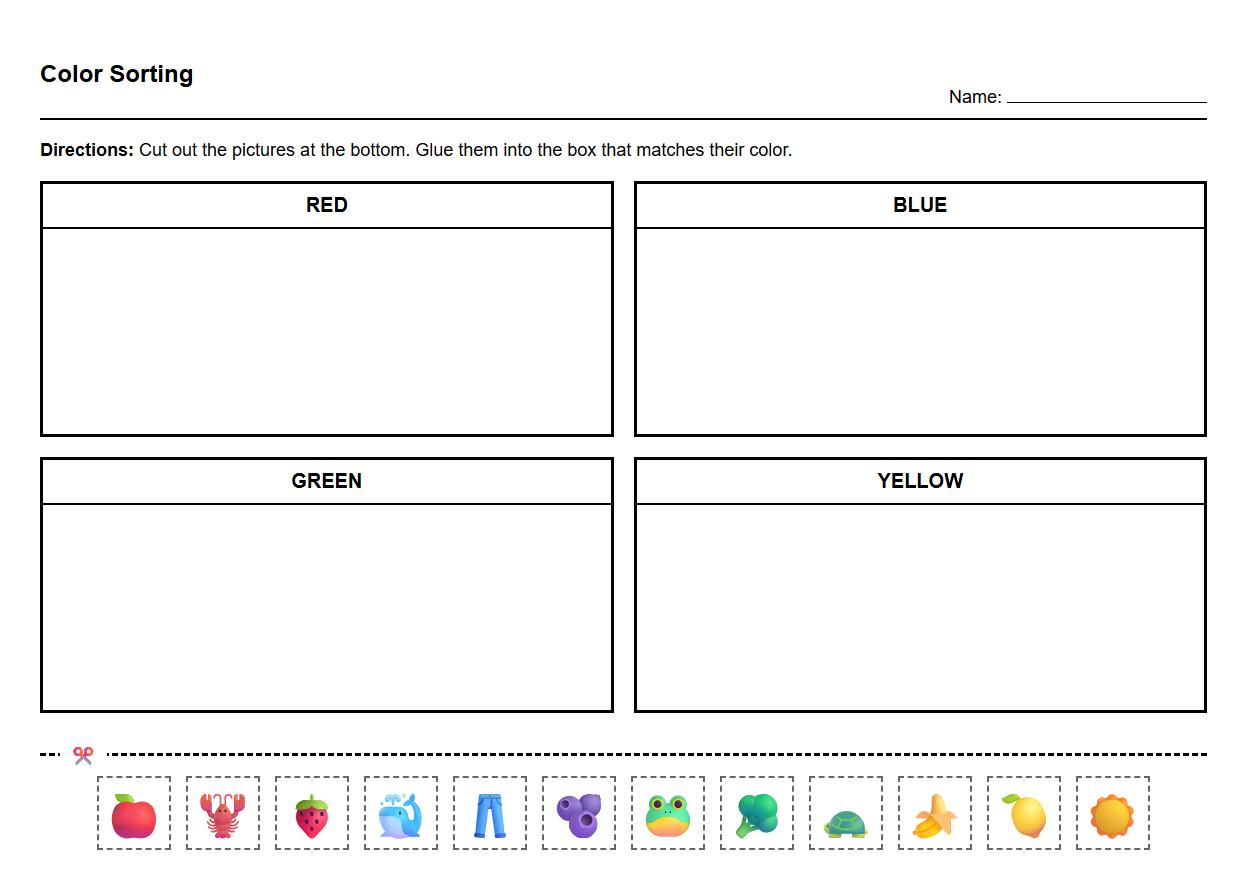
Visual Discrimination Color Sorting Worksheet

Download PDF     Pin it

Color Word Tracing and Puzzle Arrangement Worksheet
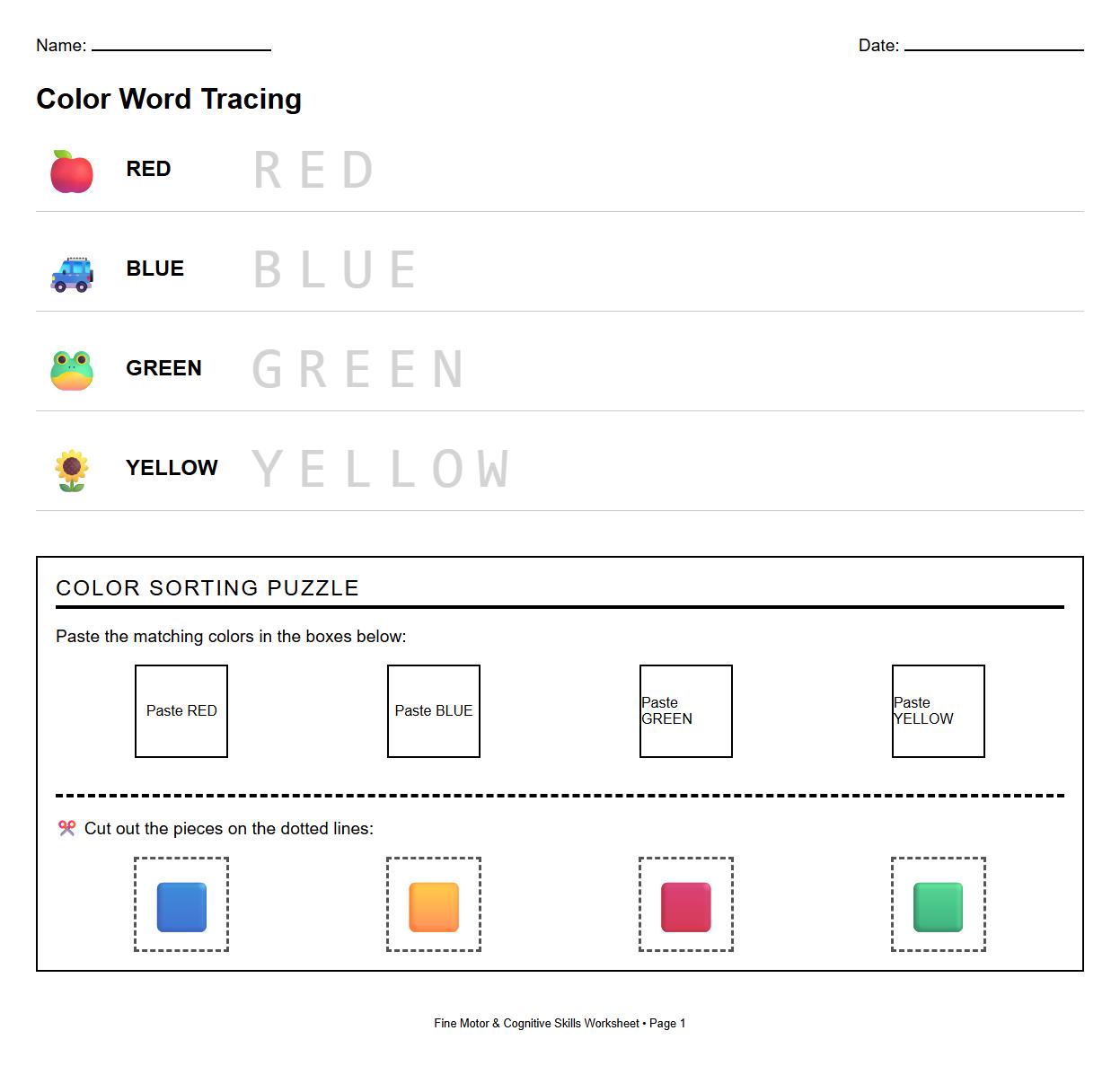
Color Word Tracing and Puzzle Arrangement Worksheet

Download PDF     Pin it

Primary Colors Included in the Sorting Puzzle Worksheet

This worksheet features the three primary colors: red, blue, and yellow. These colors form the foundation for teaching children about color mixing and recognition. Using these bright and distinct colors helps young learners easily differentiate one color from another. Incorporating primary colors is essential for early childhood color education.

How the Worksheet Helps Children Identify Different Colors

The worksheet offers a visual sorting puzzle that encourages children to match colors by placing pieces in the correct slots. It promotes color recognition through repetitive practice and hands-on engagement. The use of distinct color sections guides students to clearly identify and name each color. This active involvement aids memory retention and understanding of color concepts.

Ease of Instructions for Young Learners

The instructions are written in simple, clear language with step-by-step guidance suitable for kindergarteners. Visual aids and examples accompany the directions to ensure comprehension. This approach makes it easy even for young children to follow the activity with minimal assistance. Clear instructions boost confidence and independence during the activity.

Shapes Used in the Color Sorting Activity

The worksheet includes common geometric shapes such as circles, squares, and triangles for color sorting. These shapes help combine lessons on both colors and shapes simultaneously. Using familiar shapes keeps the task manageable and engaging for young children. It also introduces basic geometry vocabulary during color learning.

Encouragement of Teamwork or Independent Play

This activity is designed to support both independent play and cooperative learning. Children can complete the puzzle alone to build focus and fine motor skills or work together to encourage teamwork and communication. Group play may involve discussing color choices and sharing puzzle pieces. The flexibility of the worksheet fosters social and cognitive growth.

Support for Fine Motor Skill Development

The puzzle pieces require children to grasp, move, and fit pieces correctly, enhancing their fine motor skills. Manipulating small pieces improves hand-eye coordination and dexterity. These motor skills are critical for writing and other classroom activities. The tactile nature of the worksheet makes learning interactive and kinesthetic.

Visual Cues Provided for Non-Readers

The worksheet includes color-coded shapes and images that serve as clear visual guides for young non-readers. Symbols and color blocks help children understand where each piece belongs without needing to read instructions. These cues facilitate independent work and reduce frustration. They ensure accessibility for early learners at different reading levels.

Checking Completed Puzzles for Accuracy

Teachers and parents can verify accuracy by matching the assembled puzzle to the worksheet's color and shape template. Correct completion means all pieces fit snugly within their respective color zones. This visual confirmation allows easy assessment without requiring verbal answers. It provides immediate feedback and helps guide further learning.

Additional Materials Needed for This Worksheet

Basic supplies such as colored pencils, scissors, and glue might be required depending on the worksheet's format. For puzzle versions, pre-cut pieces or laminated materials could enhance durability and ease of use. Providing a sorting tray or box helps keep pieces organized. These materials support a smooth and structured activity experience.

Creative Color Sorting Beyond Given Examples

The worksheet encourages exploring color sorting beyond the standard examples by allowing children to mix and match colors and shapes creatively. Open-ended sections invite learners to create their own patterns or color combinations. This flexibility nurtures artistic expression and critical thinking. Such creativity strengthens engagement and deepens understanding of color relationships.


More in Fine Motor and Cognitive Skills Category


About the author. Nylen Smith is a dedicated educator and cofounder of KWorksheet.com, a popular platform specializing in high-quality kindergarten worksheets and printable activities.

Disclaimer. The information provided in this document is for general informational purposes and/or document sample only and is not guaranteed to be factually right or complete. Please report to us via contact-us page if you find and error in this page, thanks.

Comments

No comment yet