CVC Word Phonics Mazes for Early Reading Fluency

📅 Jan 27, 2025 👤 Nylen Smith

CVC Word Phonics Mazes provide engaging activities to reinforce early reading fluency by focusing on consonant-vowel-consonant patterns. These mazes help young learners develop phonemic awareness and decoding skills through fun, interactive challenges. Explore the available worksheets to support your child's reading journey effectively.

CVC Word Phonics Maze with Short A Vowel Sounds
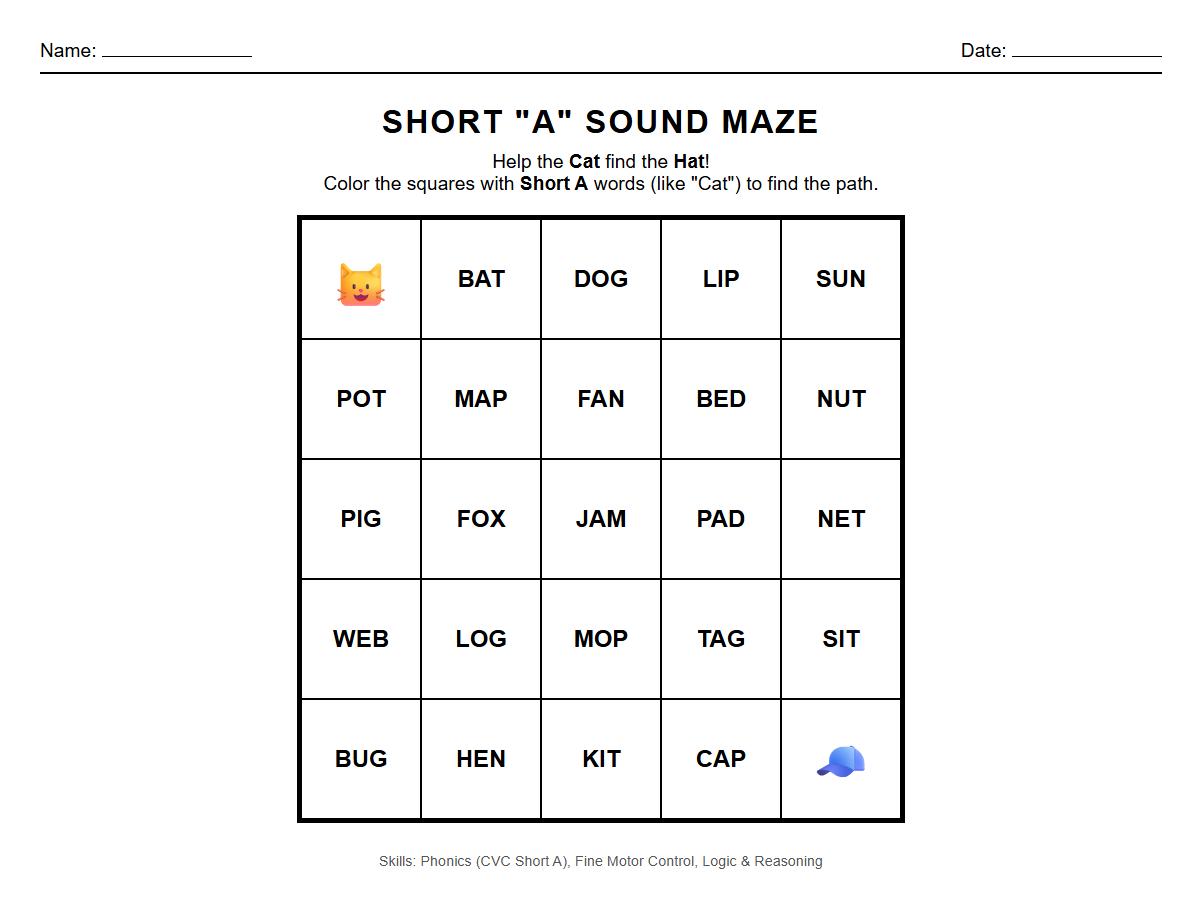
CVC Word Phonics Maze with Short A Vowel Sounds

Download PDF     Pin it

CVC Word Family Maze for Onset and Rime Practice
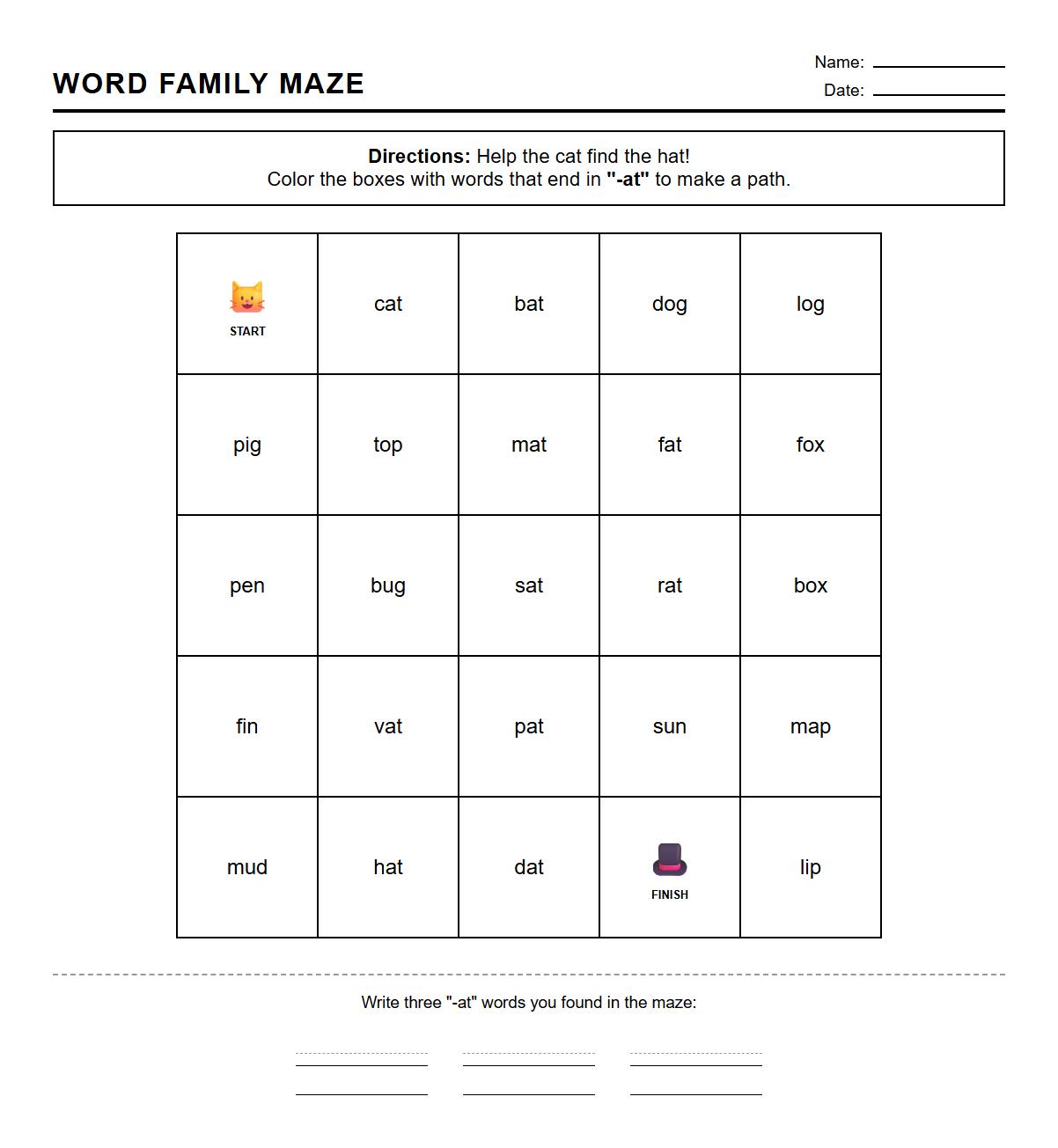
CVC Word Family Maze for Onset and Rime Practice

Download PDF     Pin it

CVC Word Maze with Blending Phonics Segments
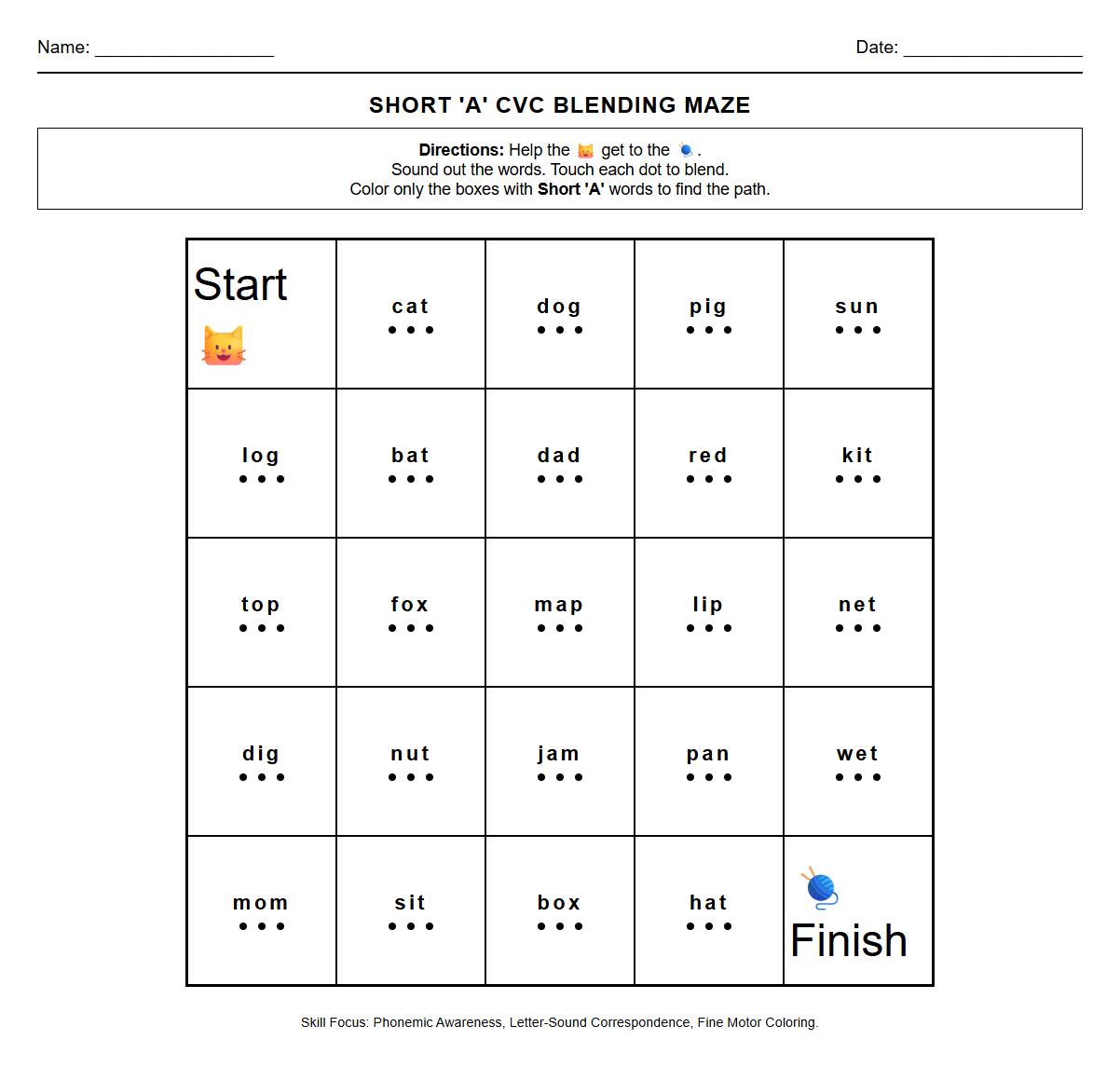
CVC Word Maze with Blending Phonics Segments

Download PDF     Pin it

CVC Phonics Maze for Rhyming Word Recognition
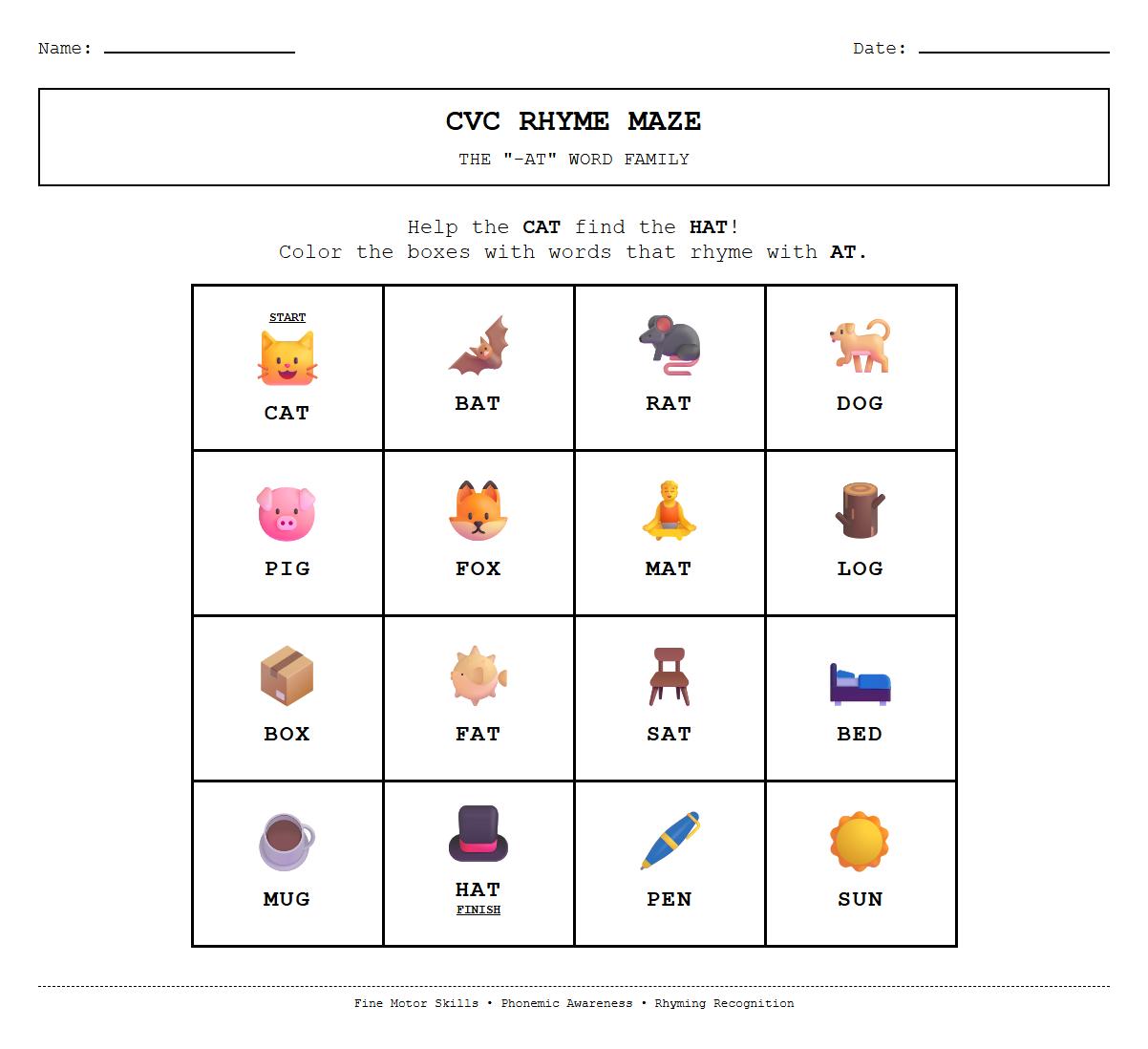
CVC Phonics Maze for Rhyming Word Recognition

Download PDF     Pin it

CVC Word Maze with Middle Vowel Discrimination
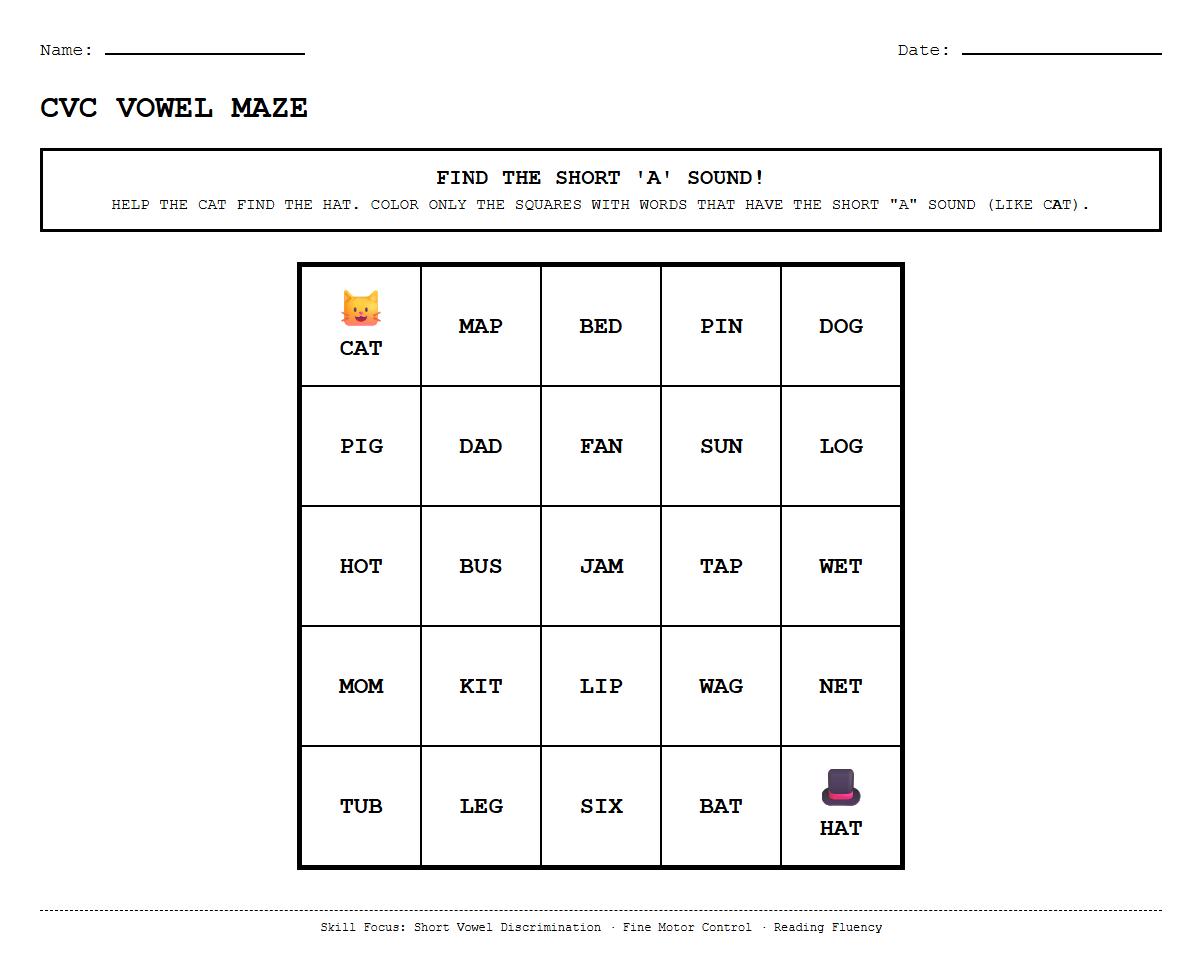
CVC Word Maze with Middle Vowel Discrimination

Download PDF     Pin it

Thematic CVC Word Maze for Spring and Summer
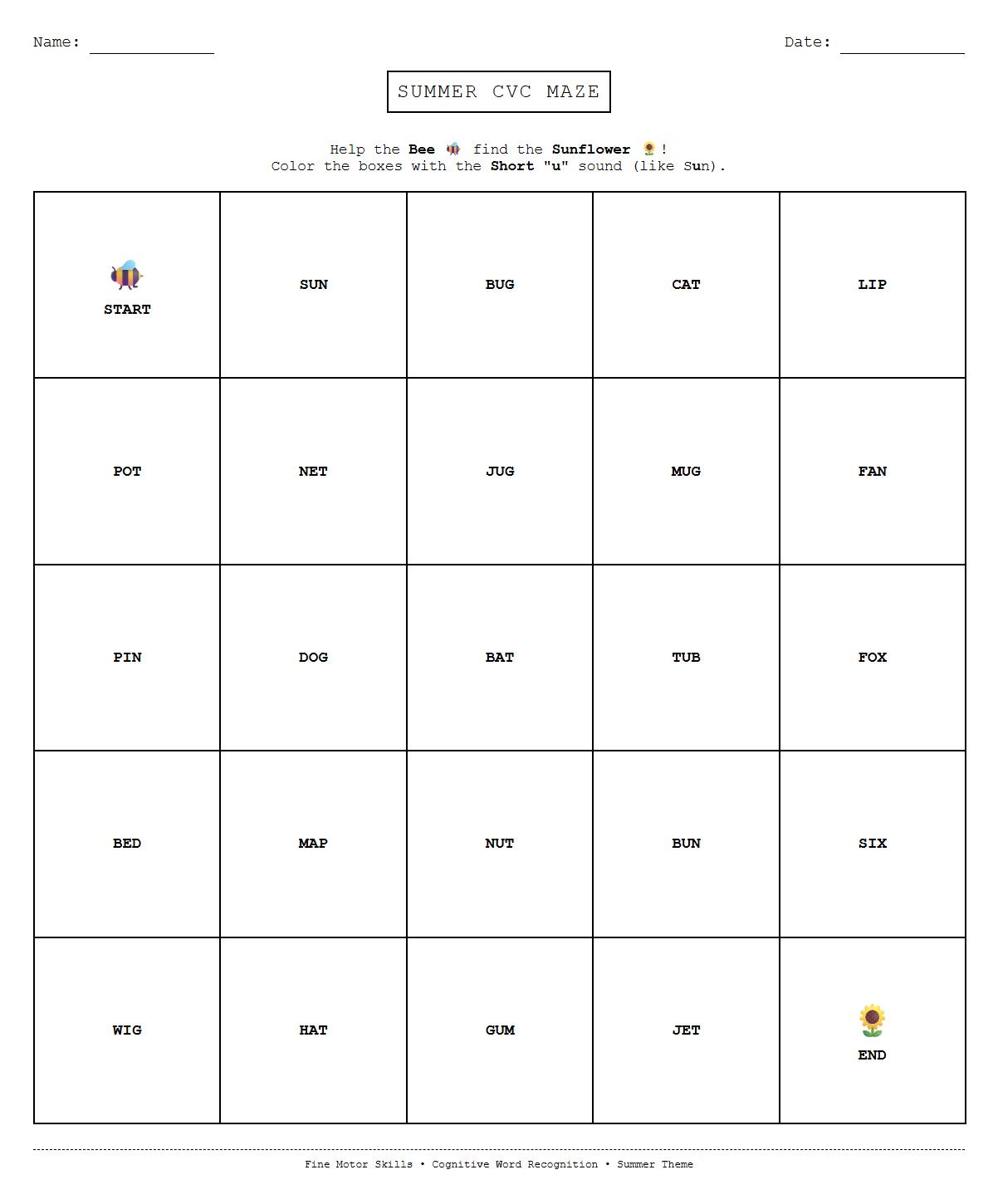
Thematic CVC Word Maze for Spring and Summer

Download PDF     Pin it

Picture to Word Matching CVC Maze with Phonics
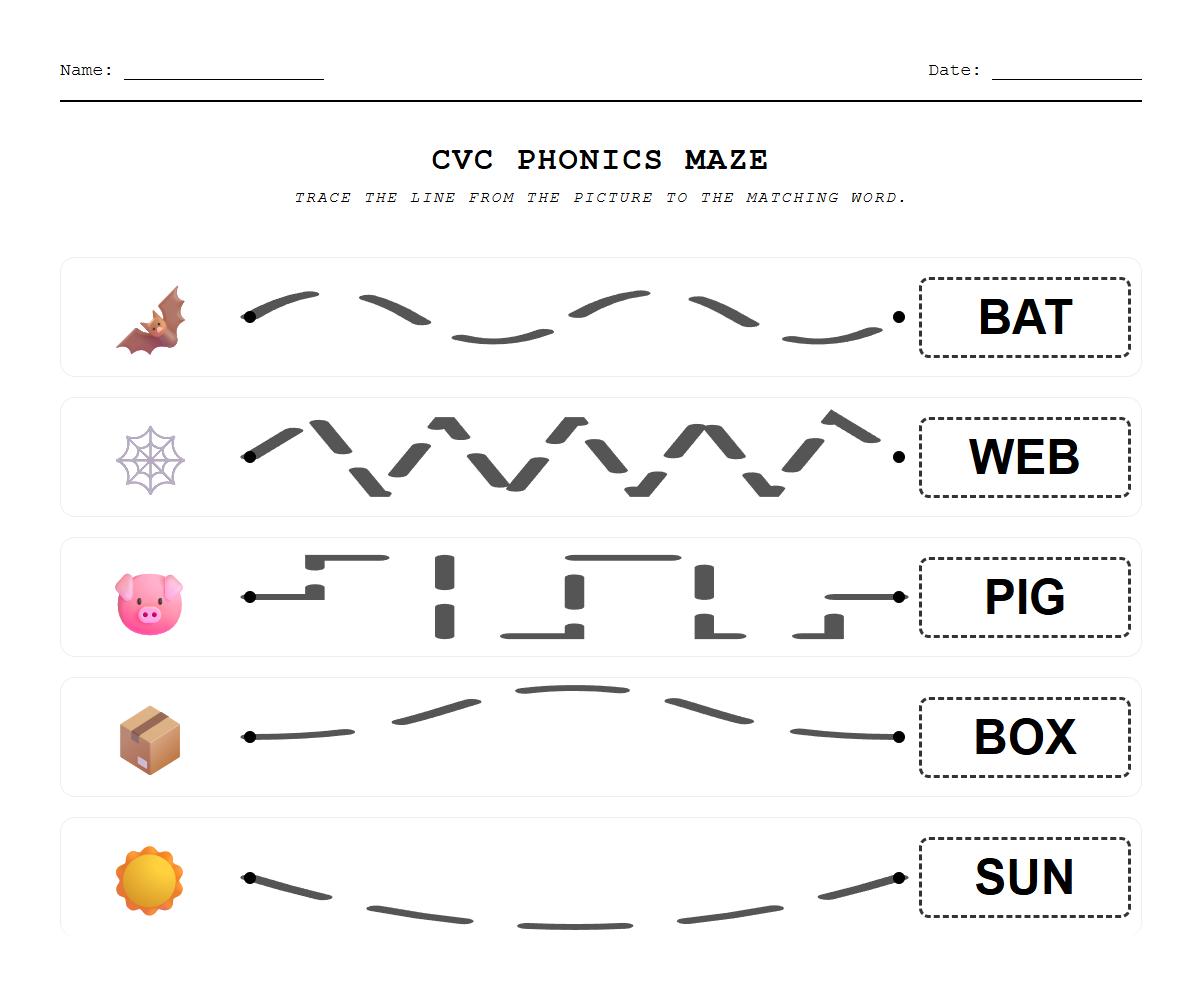
Picture to Word Matching CVC Maze with Phonics

Download PDF     Pin it

CVC Word Phonics Maze with Real and Nonsense Words
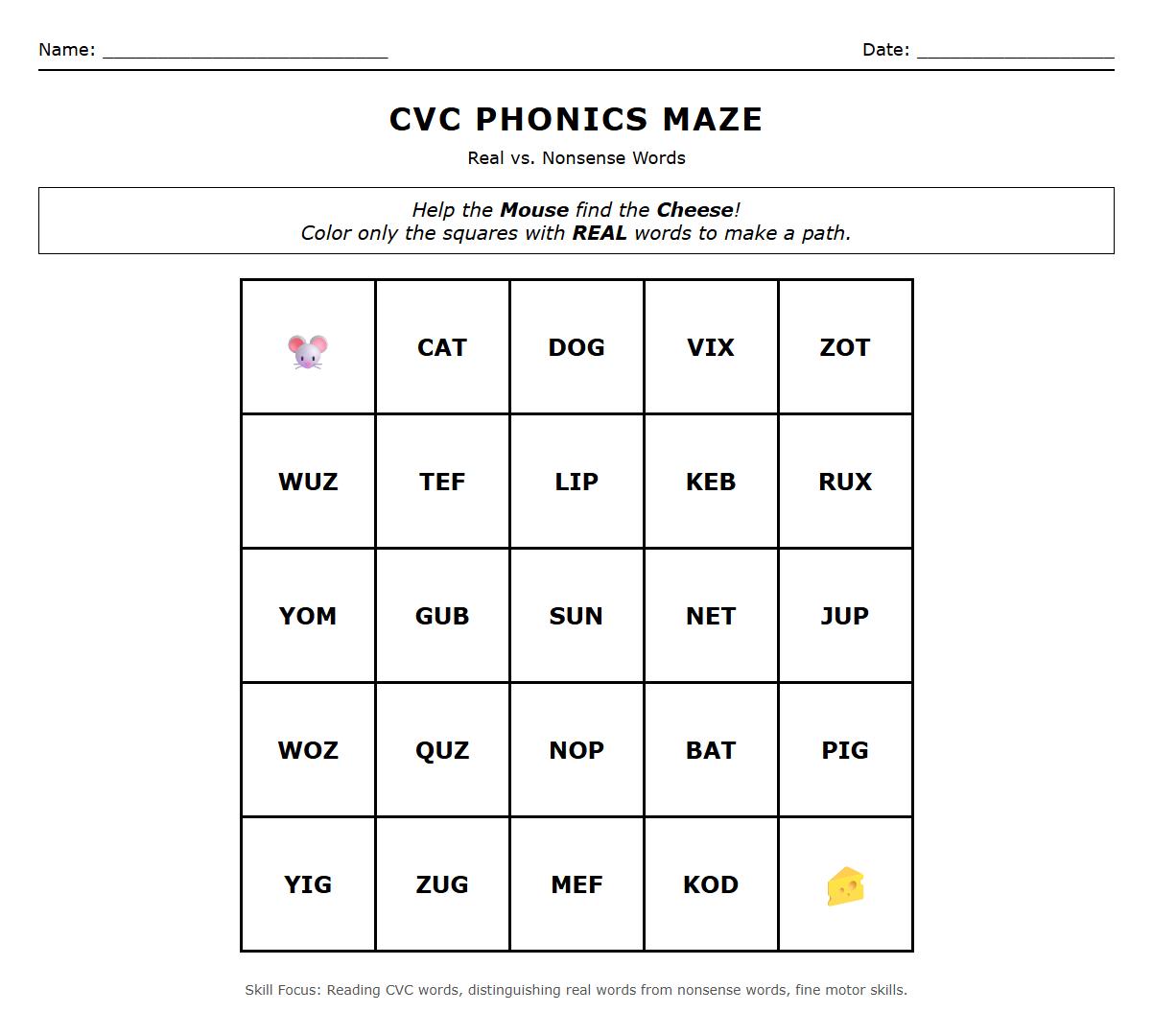
CVC Word Phonics Maze with Real and Nonsense Words

Download PDF     Pin it

CVC Word Initial Sound Maze for Phonemic Awareness
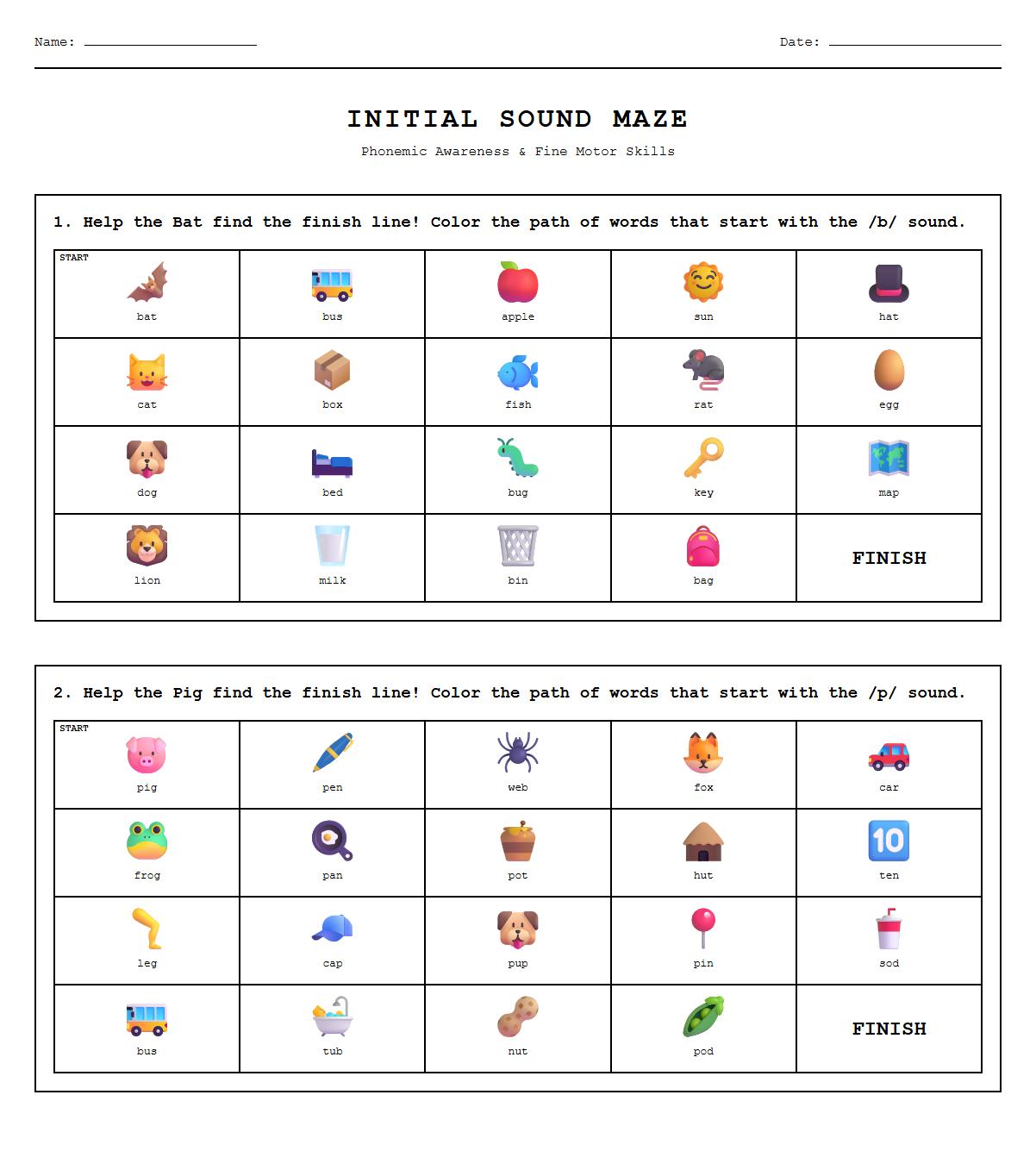
CVC Word Initial Sound Maze for Phonemic Awareness

Download PDF     Pin it

CVC Word Ending Sound Maze for Sound Isolation
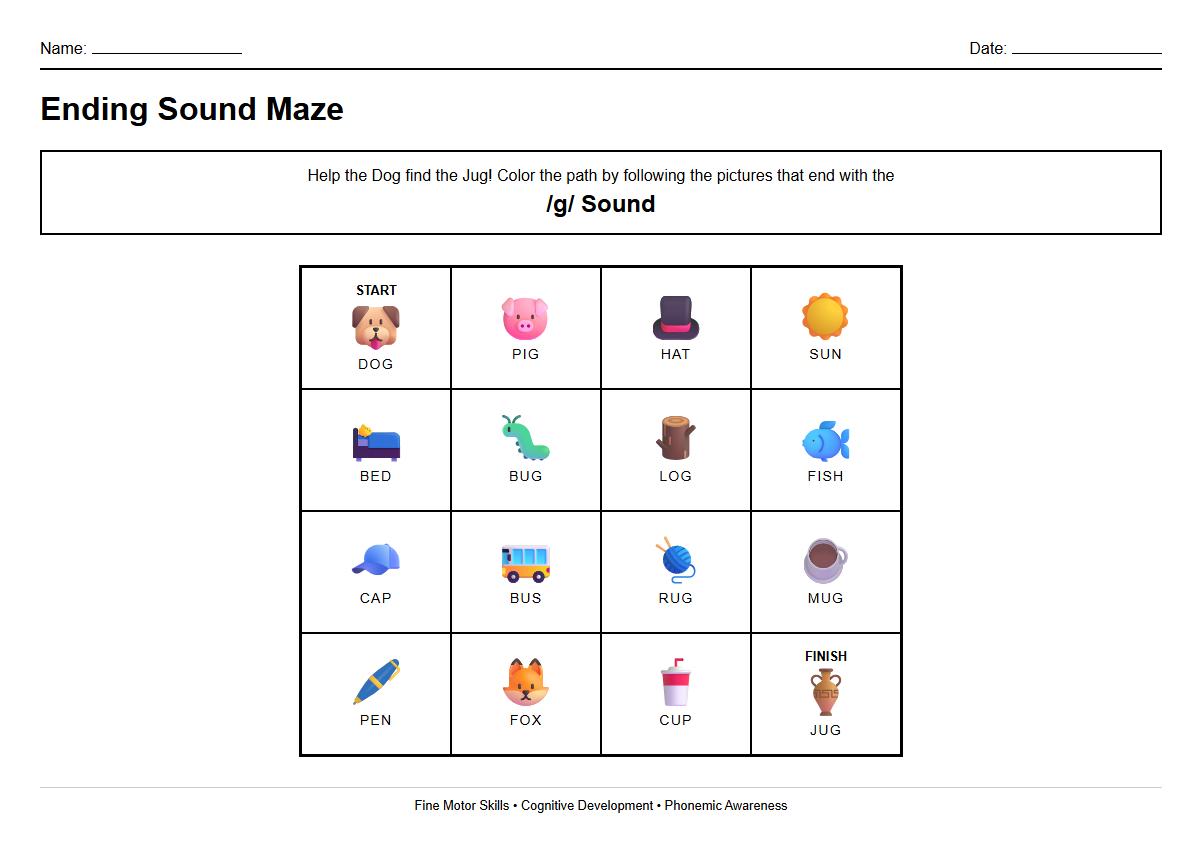
CVC Word Ending Sound Maze for Sound Isolation

Download PDF     Pin it

What are CVC words and why are they important for early readers?

CVC words are three-letter words consisting of a consonant, vowel, and consonant, such as "cat" or "dog." They serve as foundational building blocks for early reading because they help children understand basic phonetic patterns. Mastering CVC words allows young learners to decode unfamiliar words by blending sounds. This skill is crucial for developing confident and independent reading habits.

How can CVC word phonics mazes support kindergarten students' reading fluency?

CVC word phonics mazes engage students in a fun, interactive way to practice decoding and blending sounds. These mazes encourage repeated exposure to sound patterns, enhancing automaticity and fluency. By navigating through phonics paths, students strengthen their ability to recognize words quickly. This playful approach boosts motivation and reinforces essential reading skills.

What skills do children develop by completing CVC word mazes?

Completing CVC word mazes fosters critical skills like phonemic awareness, sound blending, and letter recognition. Children also improve their problem-solving abilities and fine motor skills by tracing paths. This activity enhances visual discrimination and memory retention of letter-sound relationships. Overall, it supports foundational literacy in an engaging, hands-on format.

How frequently should kindergarteners practice with CVC word mazes?

Kindergarteners benefit most from short, daily practice sessions of about 10 to 15 minutes using CVC word mazes. Consistent exposure helps reinforce letter-sound connections and boost confidence. Frequent practice maintains engagement and steadily improves decoding fluency. Integrating mazes regularly into literacy routines promotes steady, measurable progress.

What are examples of engaging CVC words to include in a phonics maze?

Engaging CVC words for phonics mazes include simple, familiar words like cat, bat, dog, hat, and sun. Including words with different vowel sounds (a, e, i, o, u) ensures a broad phonetic range. Incorporating words with easy-to-visualize meanings helps maintain interest and connection. These choices facilitate multisensory learning and word recognition.

How can teachers assess progress using CVC word phonics mazes?

Teachers can assess progress by monitoring completion accuracy and speed in CVC word mazes. Observing how easily students navigate phonics paths indicates their blending and decoding skills. Regularly recording scores or tracking errors provides insight into individual learning needs. This assessment guides targeted instruction and appropriate challenge levels.

What strategies help struggling readers navigate CVC word mazes successfully?

For struggling readers, breaking down words into individual sounds before starting the maze is effective. Using visual aids, like letter cards or sound charts, supports recognition. Allowing repeated practice with direct teacher guidance builds confidence and reduces frustration. Positive reinforcement and patience create a supportive learning environment.

How can CVC word mazes be differentiated for varied learning levels?

To differentiate, teachers can adjust maze complexity by varying word length or introducing blends and digraphs gradually. Providing simpler mazes with fewer choices benefits beginners, while challenging advanced students with longer paths stimulates growth. Incorporating visual cues or more open-ended mazes addresses diverse learner needs. Differentiation ensures all students remain engaged and supported.

What materials are needed to create effective CVC word phonics mazes?

Essential materials include printed maze worksheets with clear CVC words, pencils or crayons for tracing, and sound charts for reference. Laminated pages or dry-erase boards enable repeated use. Including colorful visuals enhances motivation and comprehension. A quiet space for focused practice maximizes effectiveness.

How can parents support CVC word fluency practice at home using mazes?

Parents can encourage daily practice by creating a fun, distraction-free area for maze activities. Sitting together to read words aloud and guiding children through mazes reinforces learning. Praise efforts and celebrate progress to build confidence. Supplementing home practice with varied CVC word games strengthens overall reading fluency.


More in Fine Motor and Cognitive Skills Category


About the author. Nylen Smith is a dedicated educator and cofounder of KWorksheet.com, a popular platform specializing in high-quality kindergarten worksheets and printable activities.

Disclaimer. The information provided in this document is for general informational purposes and/or document sample only and is not guaranteed to be factually right or complete. Please report to us via contact-us page if you find and error in this page, thanks.

Comments

No comment yet