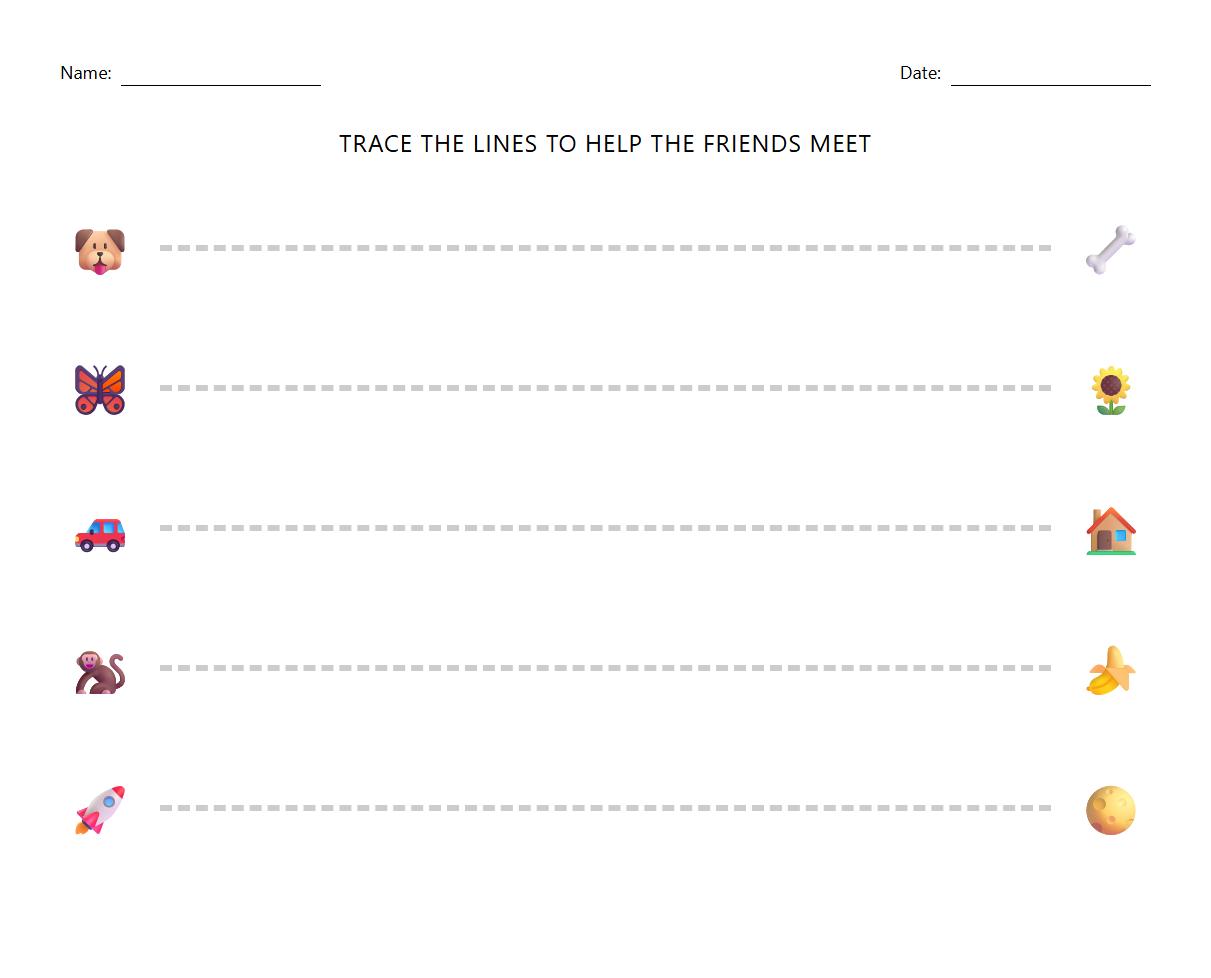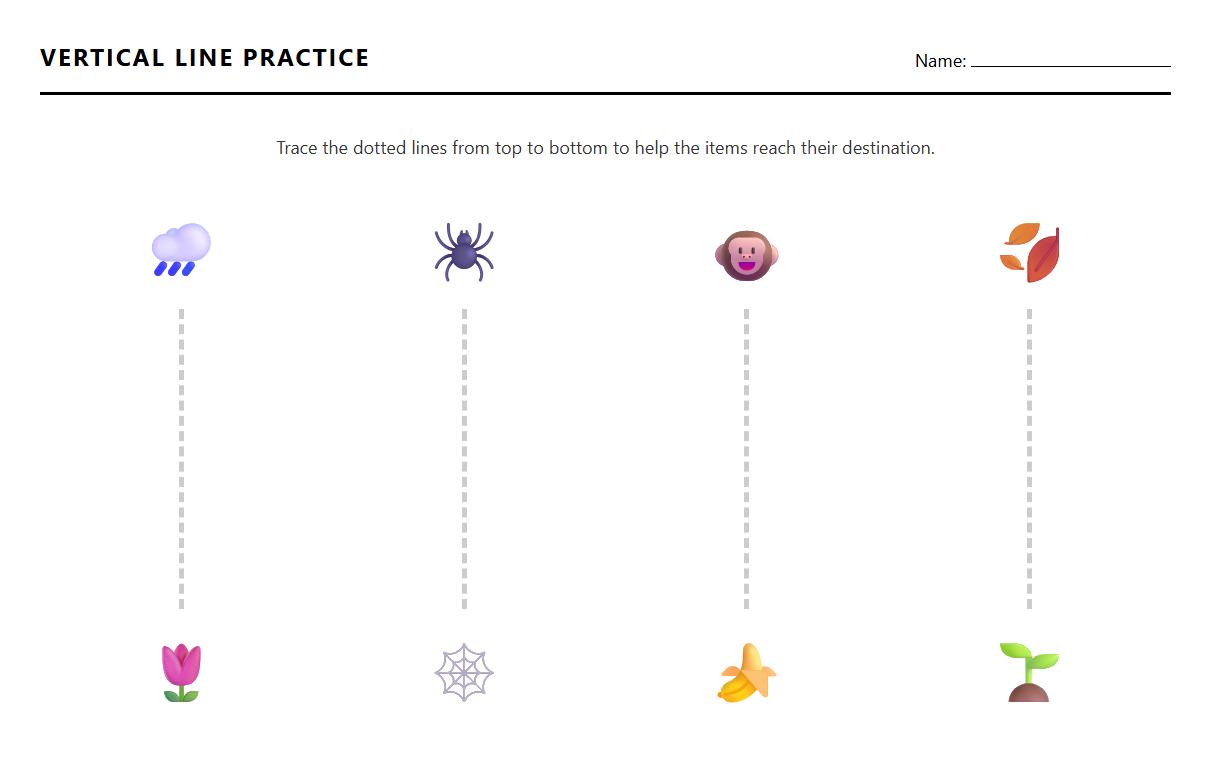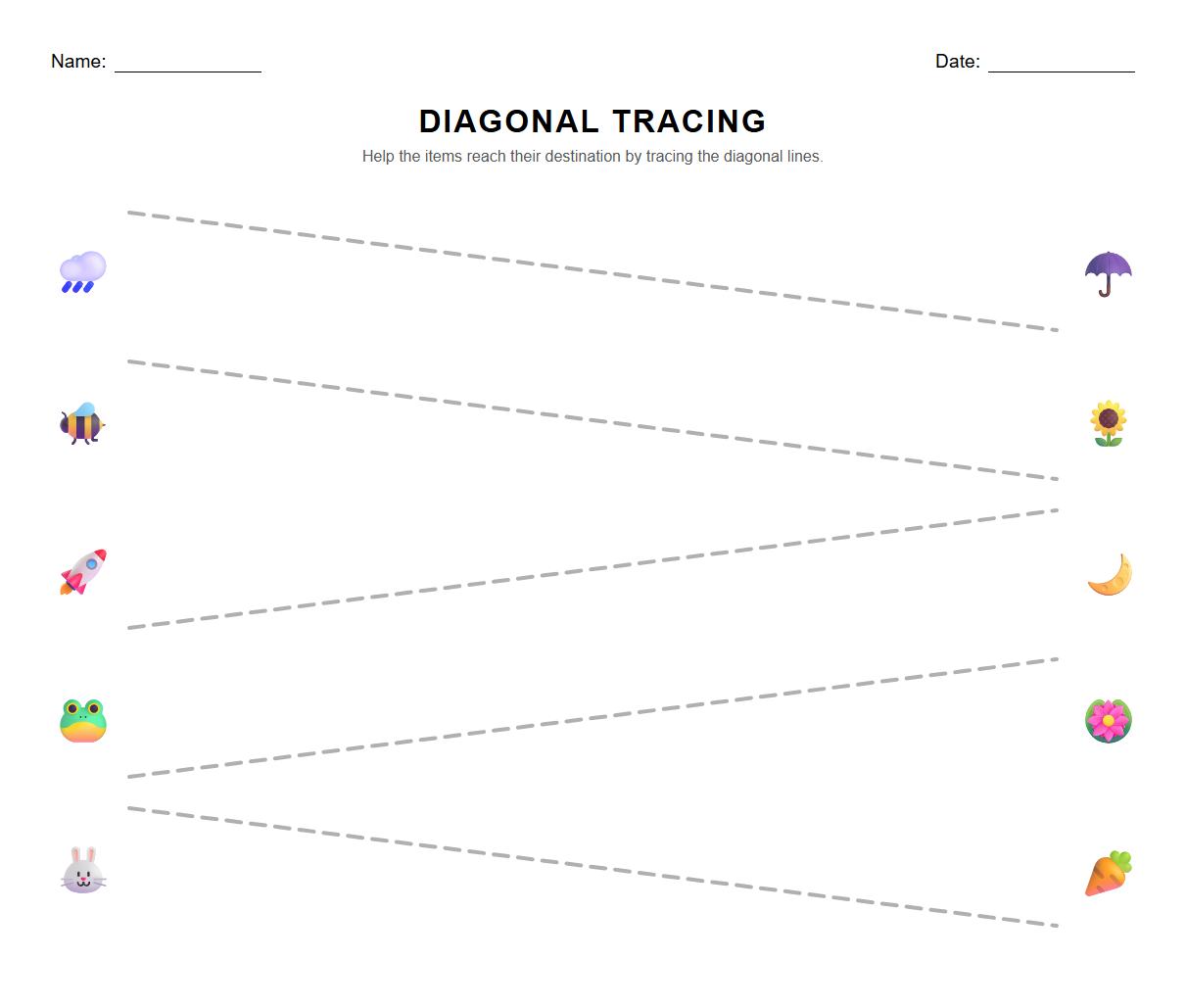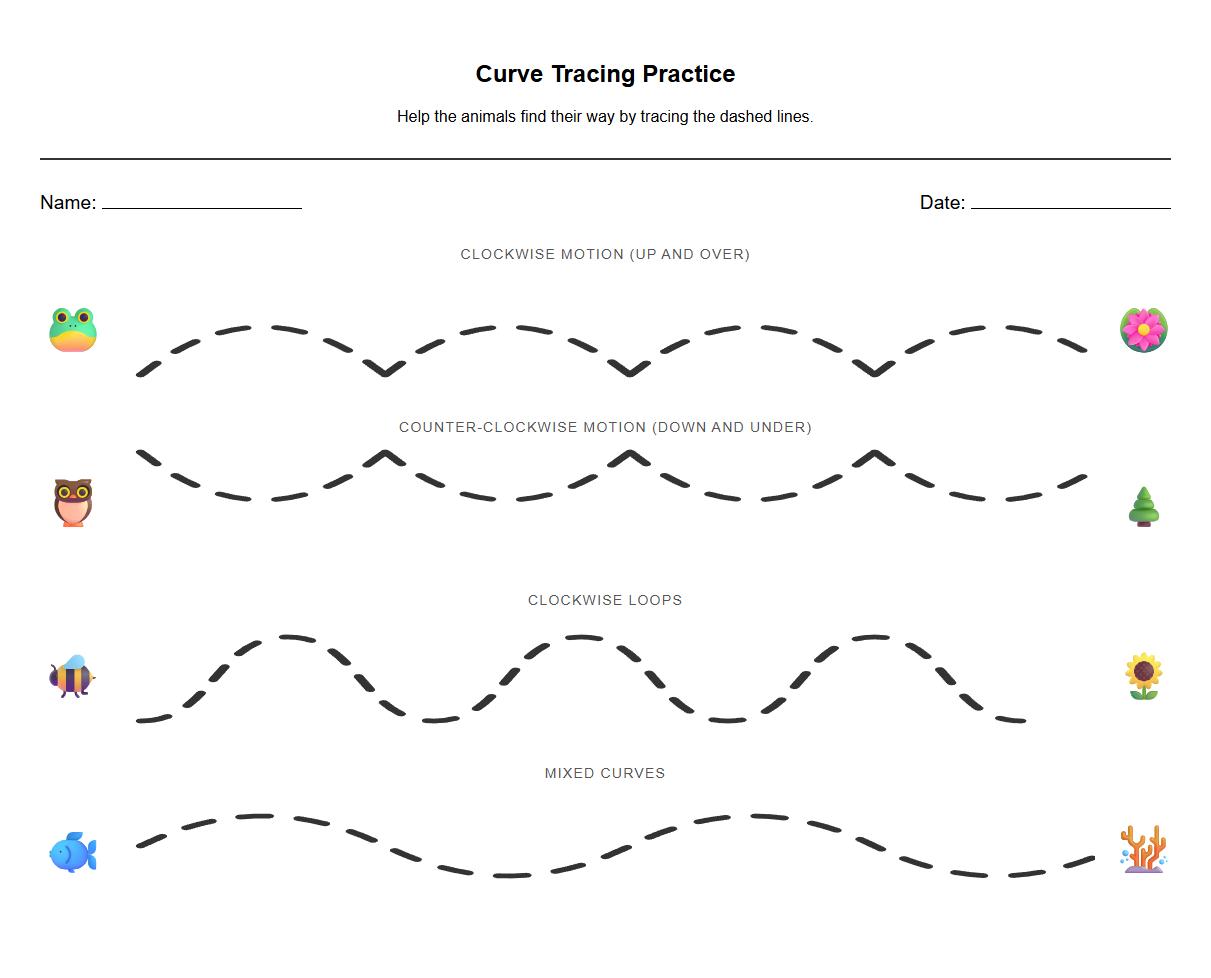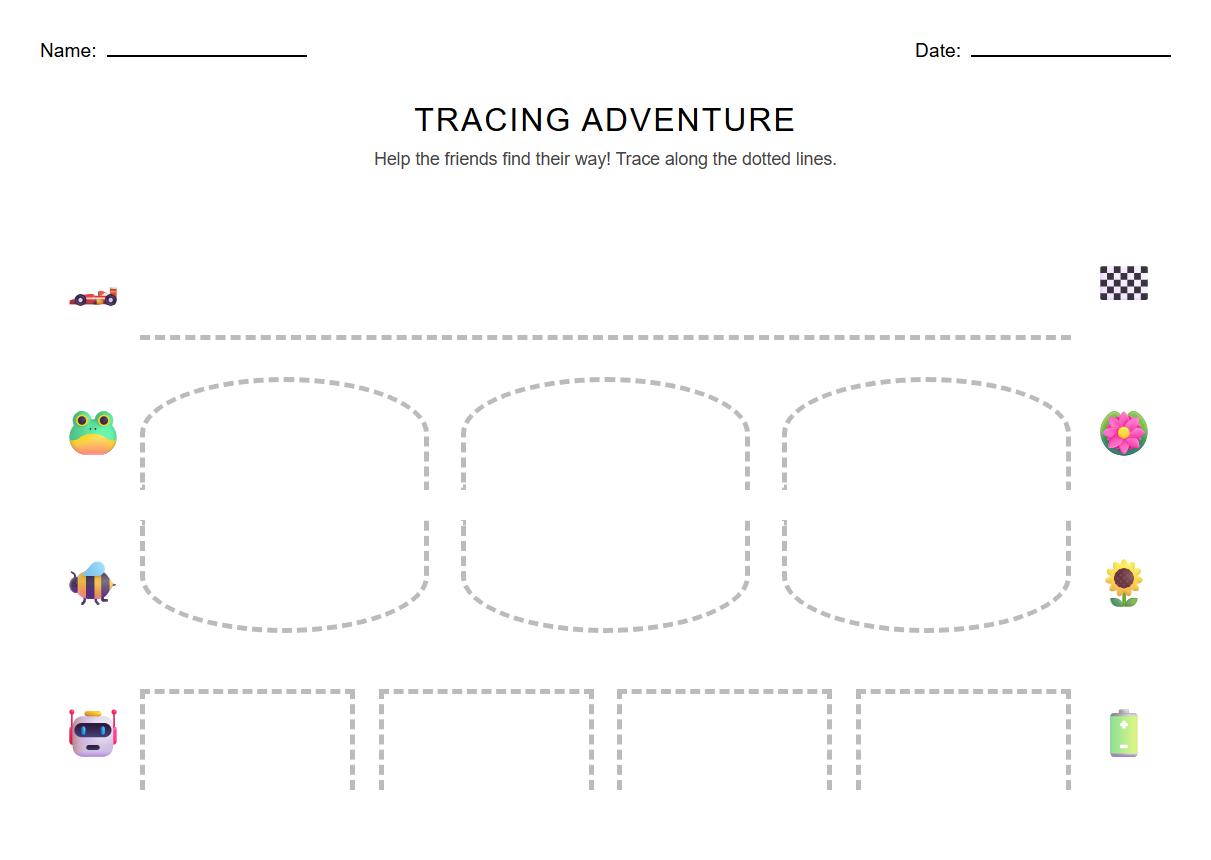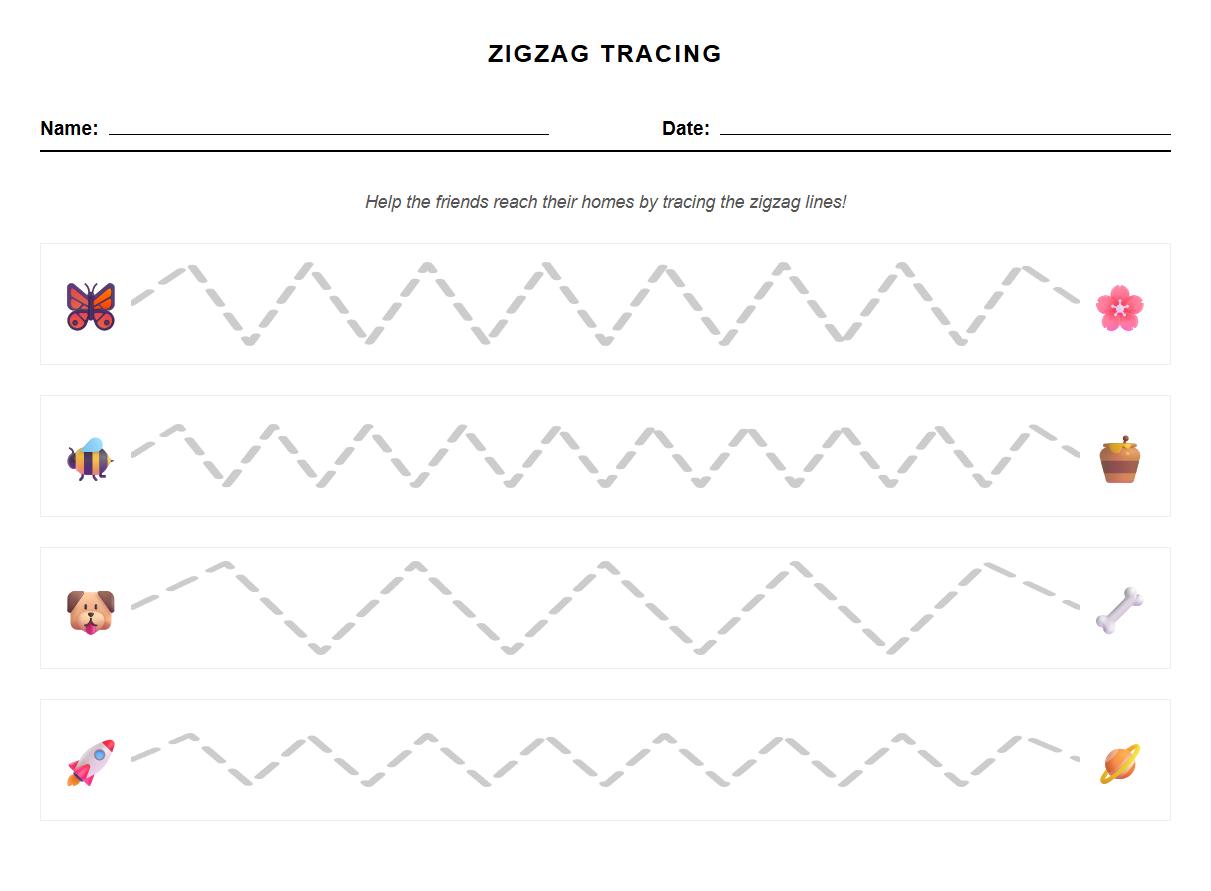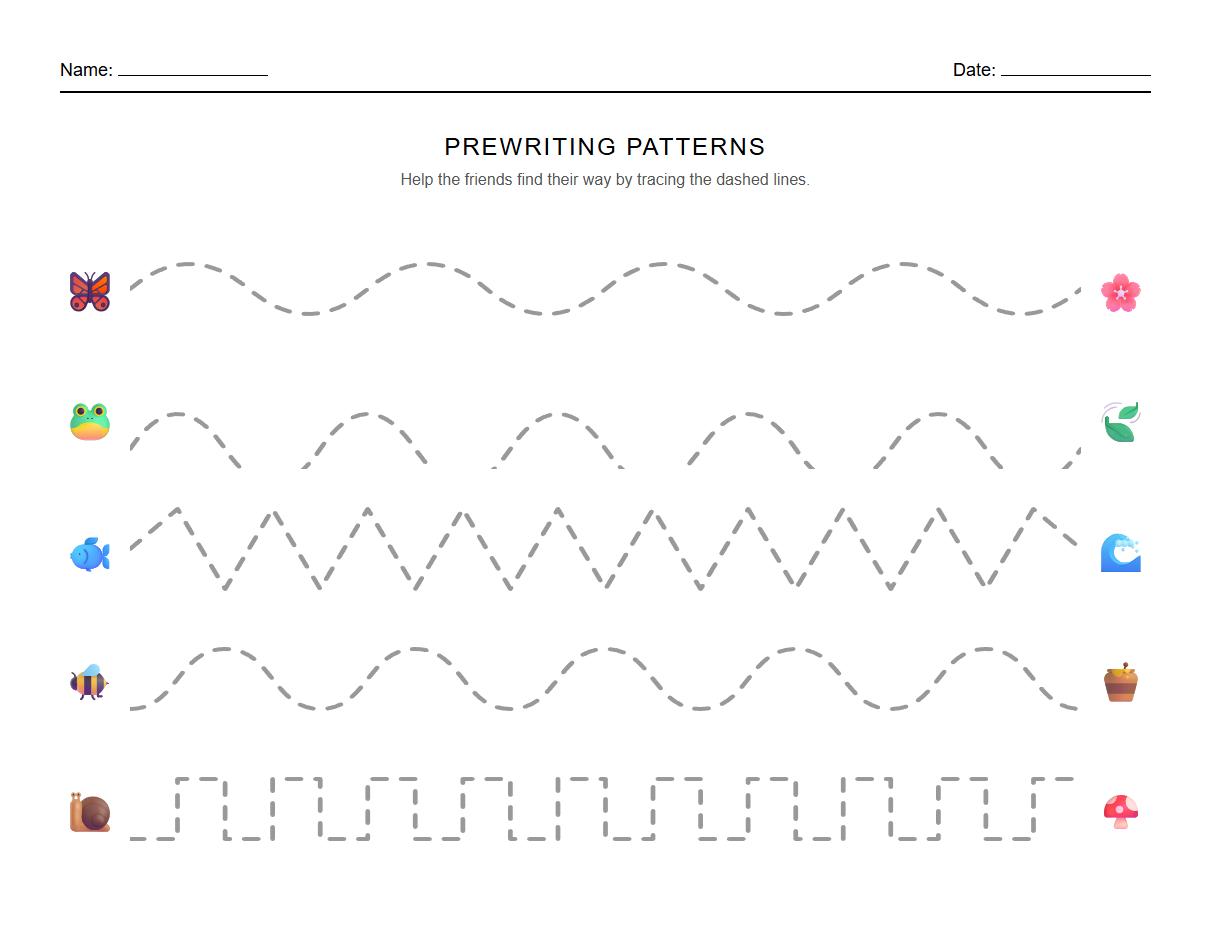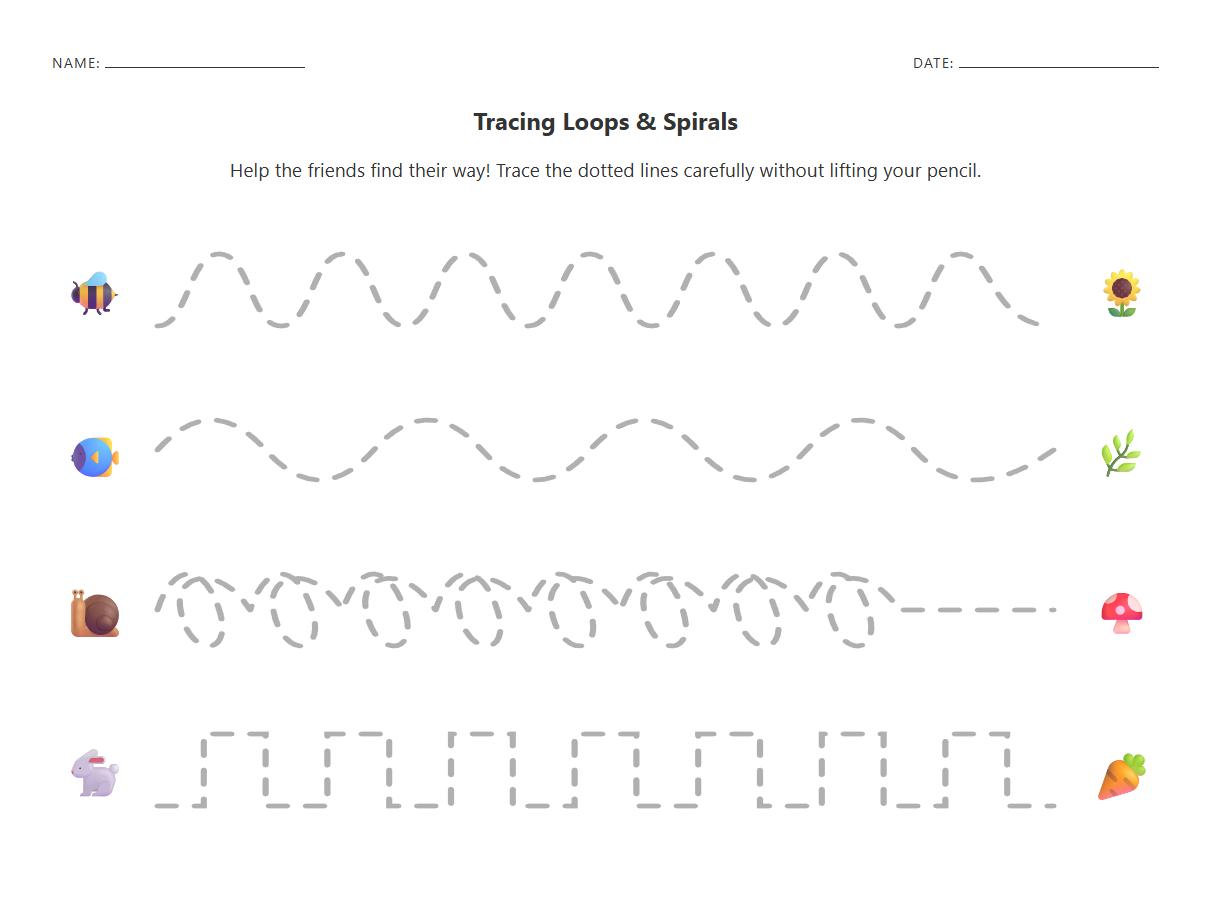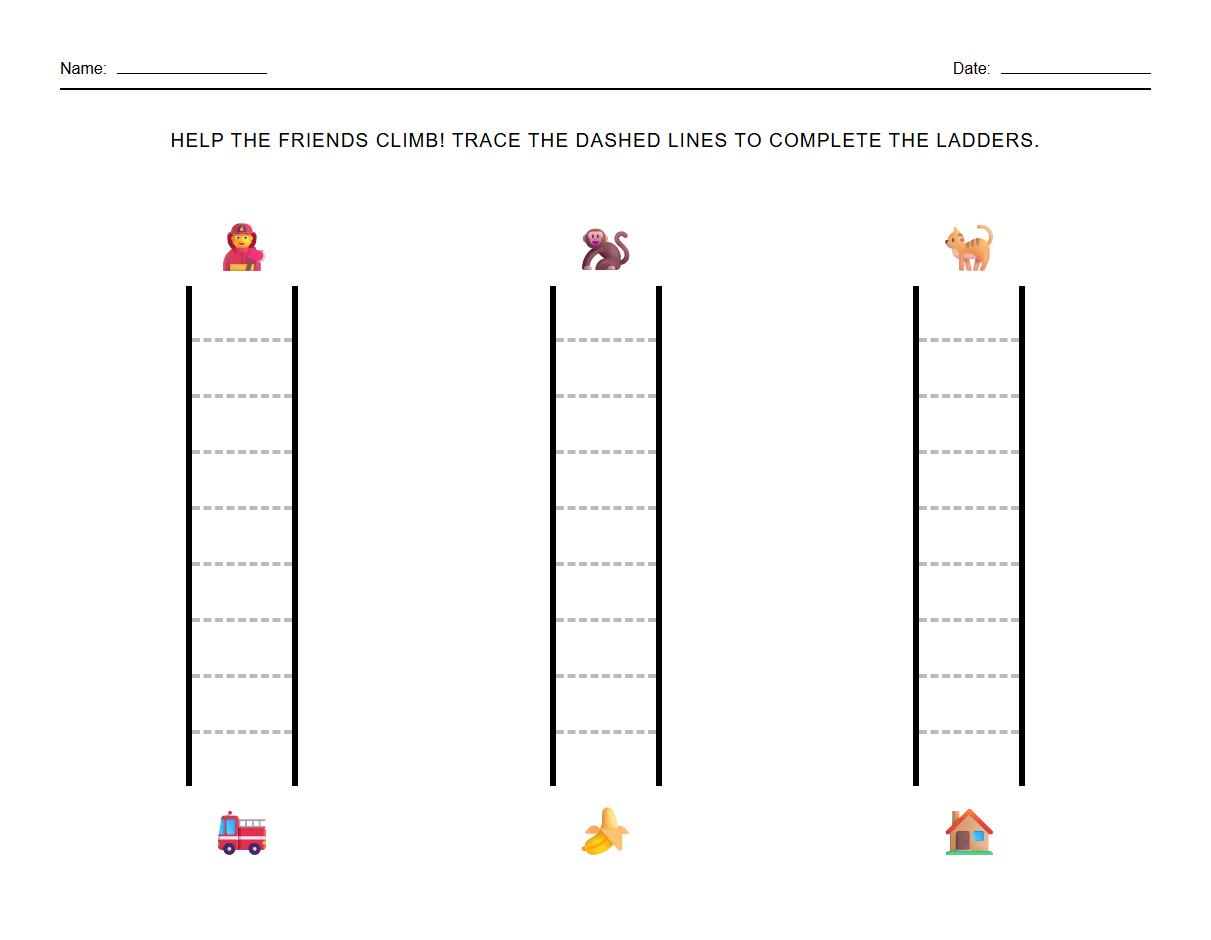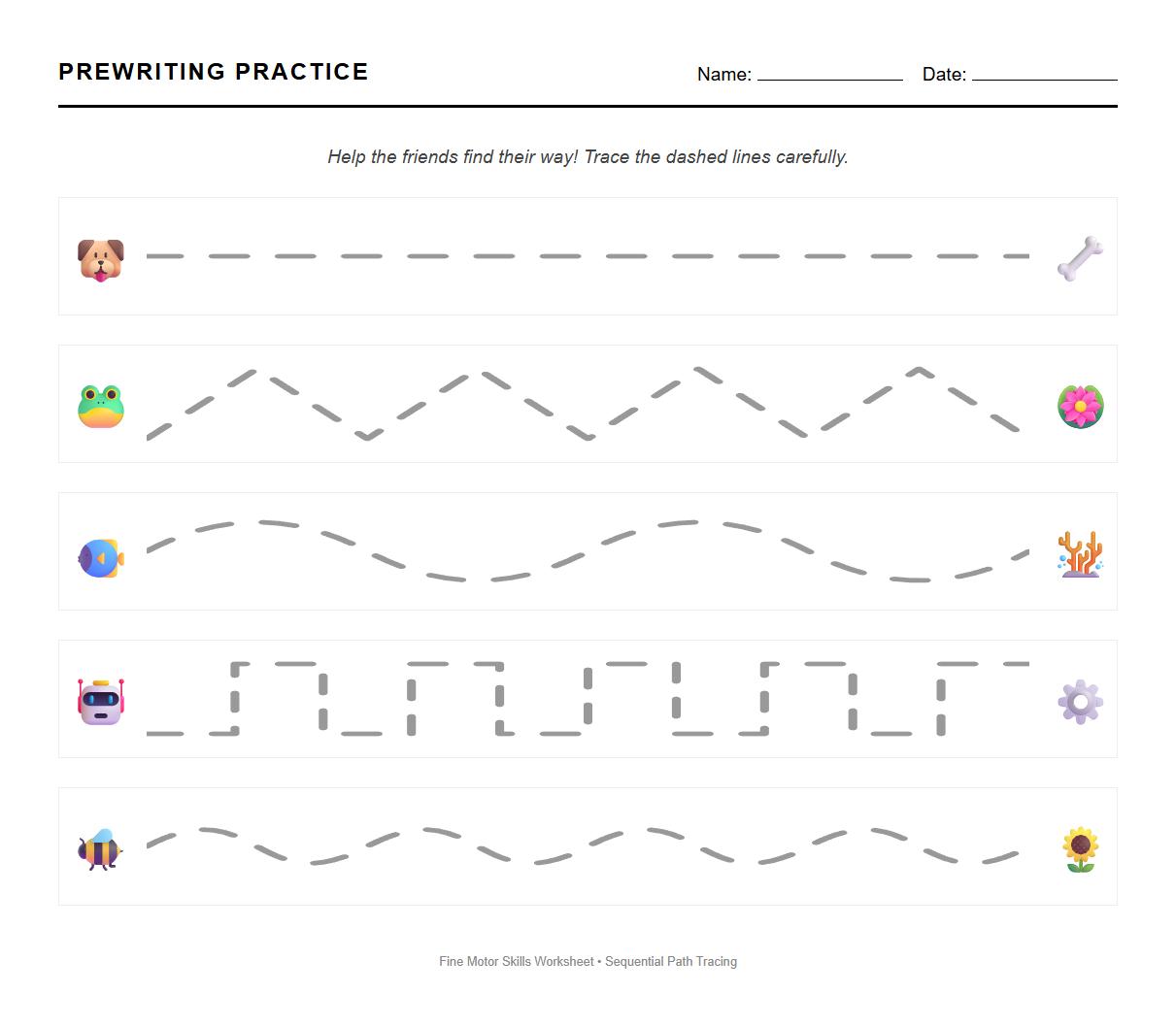
Kindergarten students develop fine motor skills and hand-eye coordination through tracing straight and curved lines. These prewriting practice activities build a strong foundation for handwriting by encouraging precise control and smooth movements. Explore the available worksheets to support your child's early writing skills today.
Purpose of Tracing Straight Lines in Prewriting Practice
The primary purpose of tracing straight lines in prewriting practice is to develop hand-eye coordination and muscle control in young children. Straight lines help kindergarteners learn to maintain consistent pressure and direction when holding writing tools. This foundational skill supports the formation of letters and numbers later on. It also builds confidence and precision in their early writing efforts.
Benefits of Tracing Curved Lines for Fine Motor Skills
Tracing curved lines enhances a child's fine motor skills by encouraging smooth, flowing hand movements. This activity improves wrist flexibility and control, which are essential for writing letters with rounded shapes. Curved line tracing also strengthens finger dexterity and helps children distinguish different shapes. These skills contribute significantly to overall handwriting fluency.
Common Tools for Tracing Worksheets in Kindergarten
Kindergarten tracing worksheets typically use simple tools such as crayons, pencils, and markers. Thick grip pencils or triangular crayons are favored to aid children in holding writing instruments comfortably. Erasable pencils and dry-erase markers paired with laminated sheets also allow for repeated practice. These tools facilitate a hands-on learning experience that is both engaging and effective.
Supporting Early Handwriting Development through Tracing Worksheets
Tracing worksheets support early handwriting by encouraging consistent practice and muscle memory. They familiarize children with the motions required to form letters and shapes. By breaking down writing into manageable strokes, tracing sets a strong foundation for legibility. Regular use builds both confidence and skill in emerging writers.
Importance of Introducing Both Straight and Curved Lines
Introducing both straight and curved lines in prewriting activities ensures well-rounded motor skill development. Straight lines promote control and steadiness, while curved lines teach flexibility and fluidity. Together, they prepare children to produce diverse letter forms accurately. Balanced exposure prevents frustration and fosters versatility in writing.
Creative Ways to Engage Young Learners in Tracing Lines
Engage young learners by incorporating tracing into playful activities like drawing shapes, animals, or simple pictures. Using colorful markers, textured papers, or tracing apps can maintain interest. Encouraging storytelling around the traced lines adds a fun narrative element. These creative methods make tracing enjoyable and meaningful.
Frequency of Practice for Improvement in Tracing Lines
Children should practice tracing lines regularly, ideally 3-5 times per week, to see noticeable improvement. Short, consistent sessions of 10-15 minutes help maintain focus without fatigue. Frequent repetition reinforces muscle memory and confidence. However, quality practice is as important as quantity to ensure steady progress.
Challenges in Tracing Lines and Teacher Assistance
Common challenges include difficulty maintaining line boundaries, inconsistent pressure, and limited hand strength. Teachers can assist by providing guided demonstrations, hand-over-hand support, and adaptive tools such as grip aids. Using positive reinforcement and breaking tasks into smaller steps also helps children overcome frustration. Patience and individualized attention are key.
Assessing Progress in Line Tracing in Kindergarten
Progress in line tracing can be assessed through observation and completed worksheets. Teachers should look for improved control, accuracy, and confidence in tracing within set lines. Recording milestones and comparing early and recent work helps measure growth. Feedback from both teachers and parents provides a well-rounded evaluation.
Parental Support for Prewriting Practice at Home
Parents can support prewriting practice by providing a quiet, well-lit workspace and encouraging daily tracing activities. Offering praise and patience motivates children to persist. Utilizing fun materials like tracing apps, coloring books, or DIY tracing shapes engages children outside the classroom. Consistent home practice complements school learning effectively.


Line and Curve Tracing Worksheet for Visual Motor Integration in Kindergarten