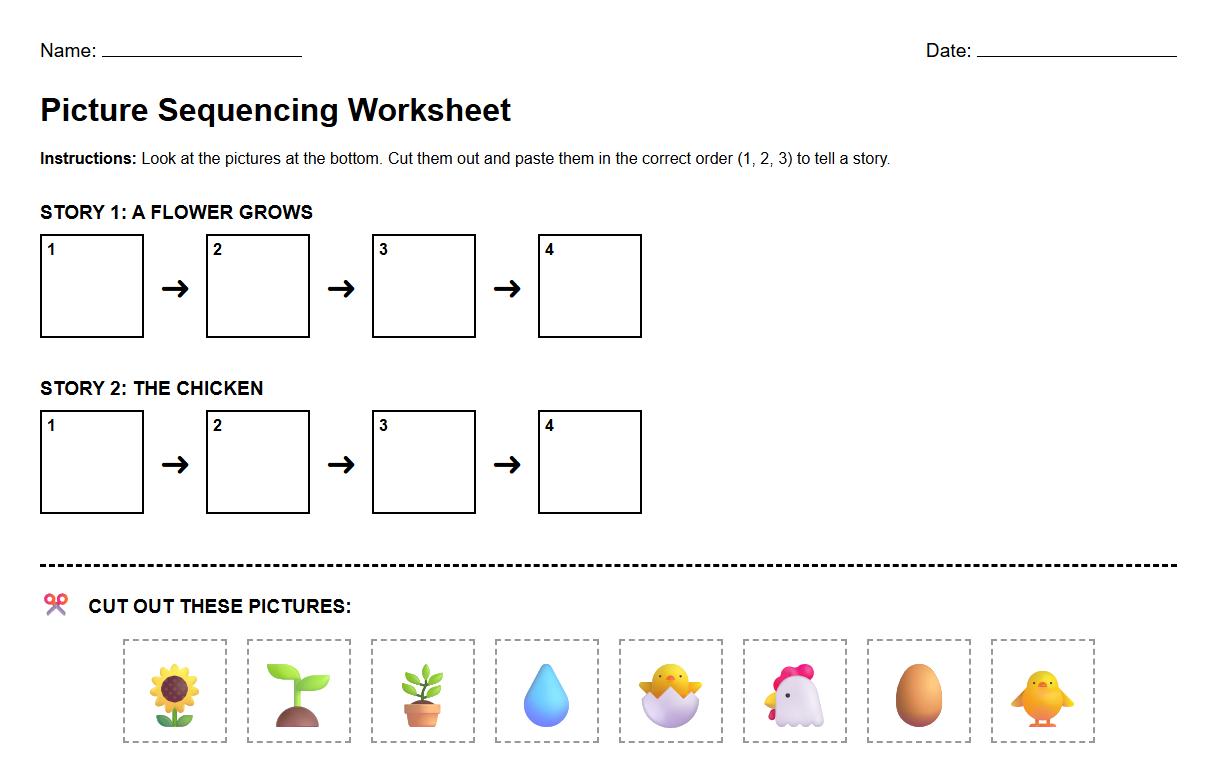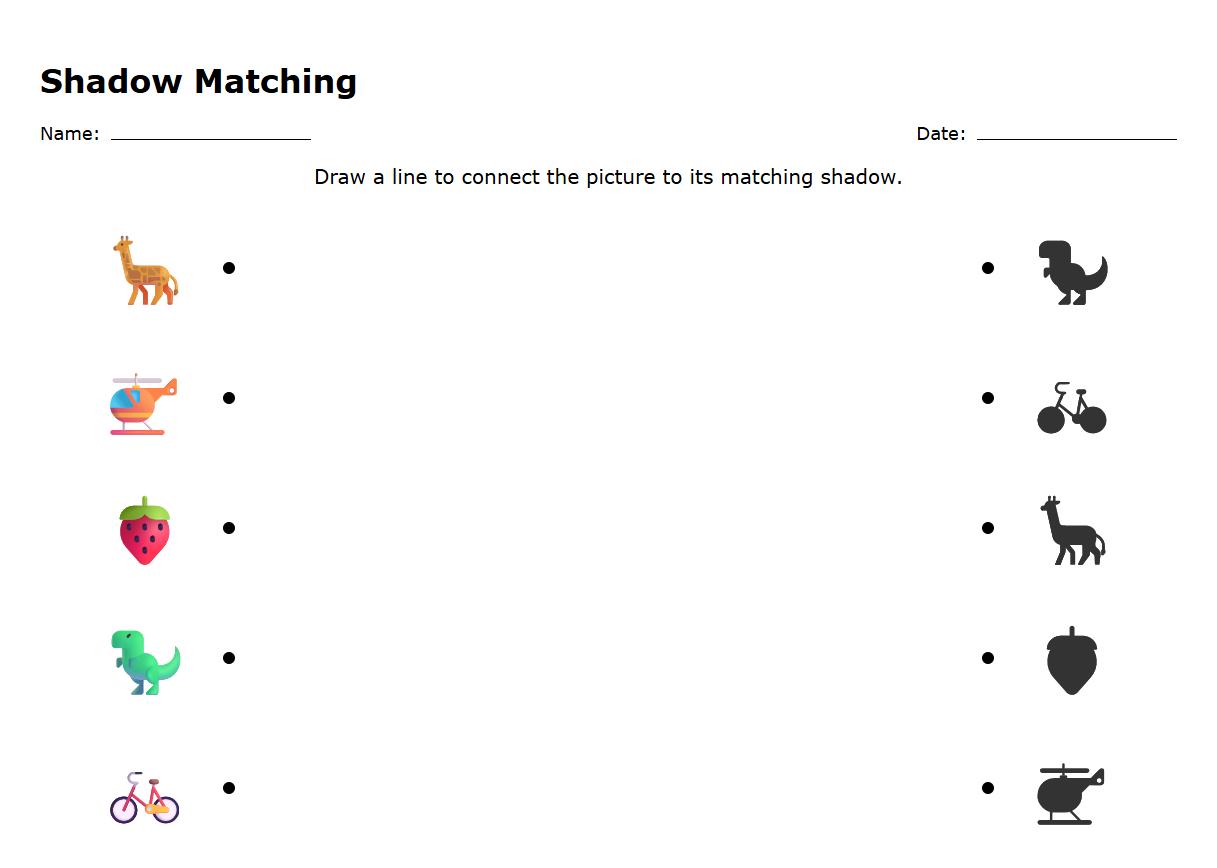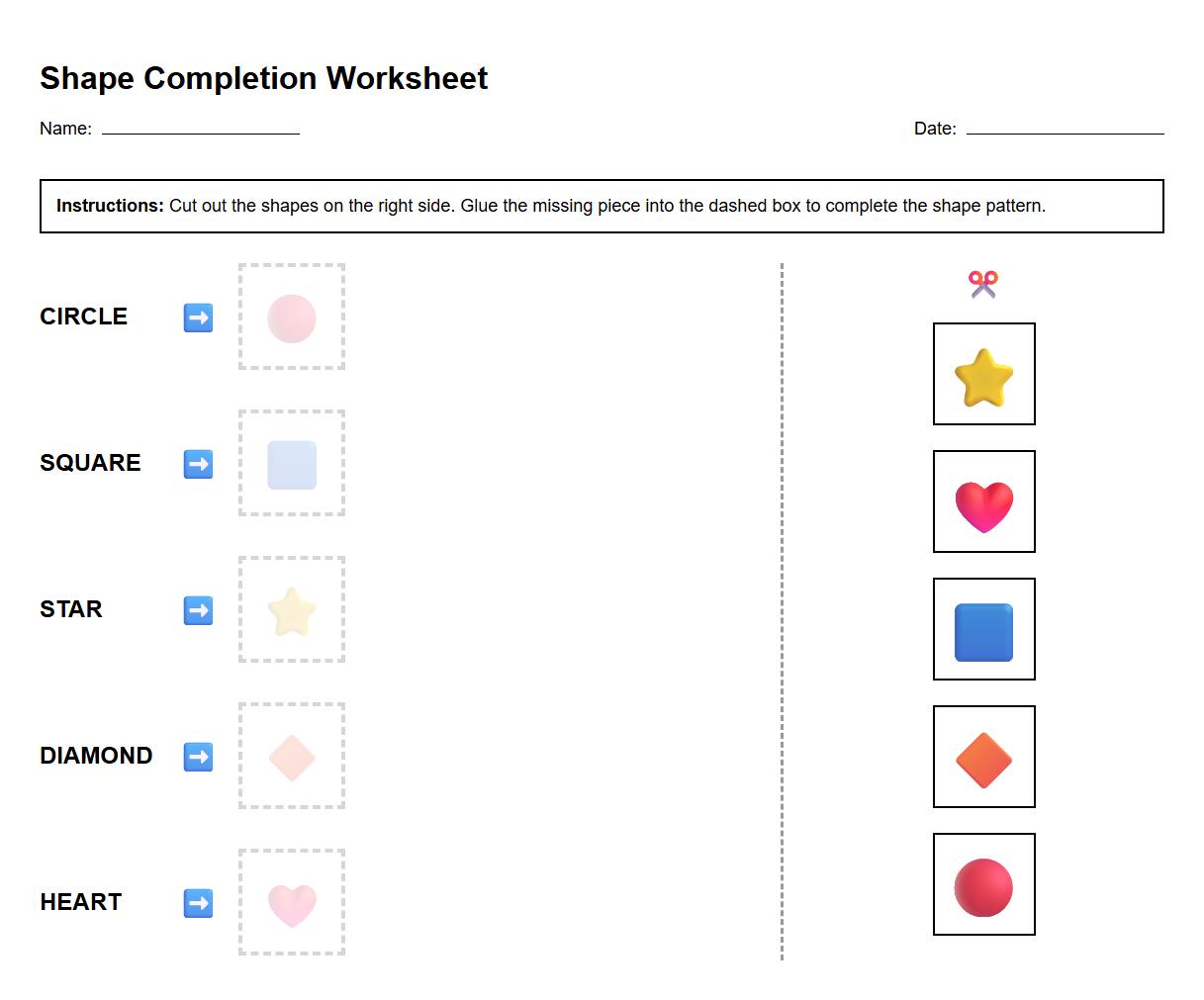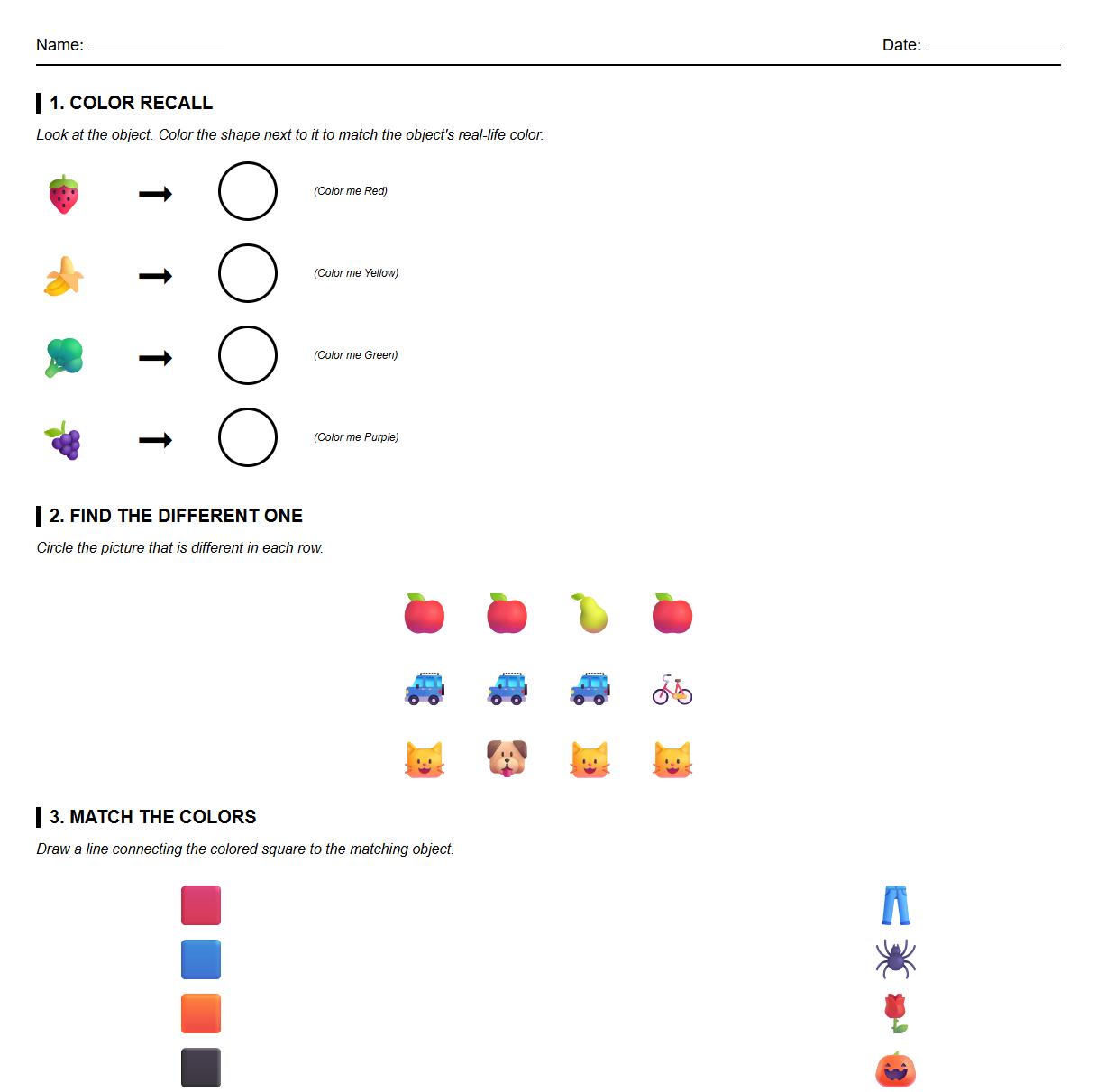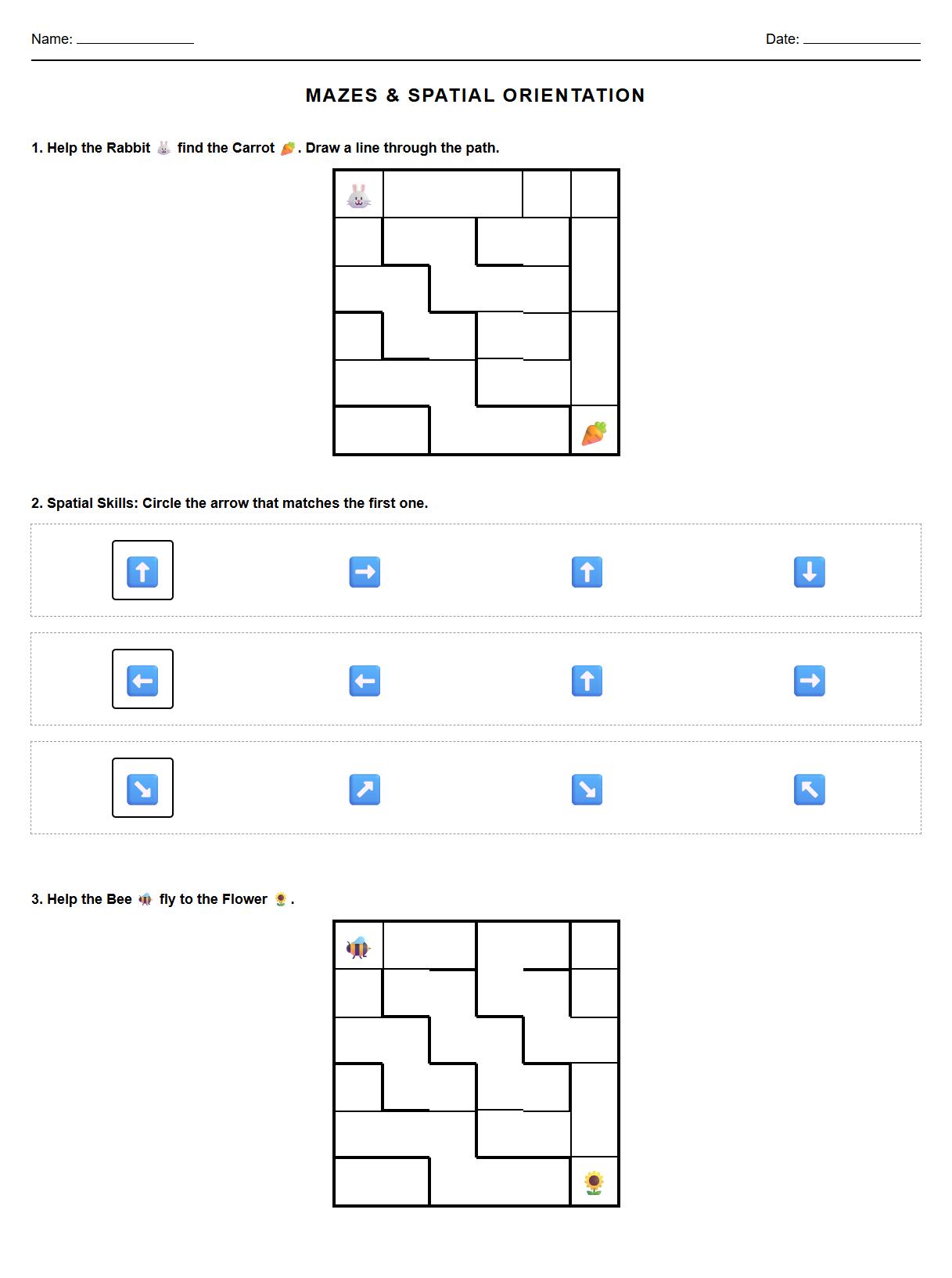
Visual discrimination matching worksheets for kindergarten enhance spatial awareness by helping young learners identify similarities and differences between shapes and objects. These activities promote critical thinking and improve attention to detail, essential skills for early math and reading development. Explore our collection of engaging worksheets designed to boost your child's spatial recognition and matching abilities.
Identifying Identical Objects
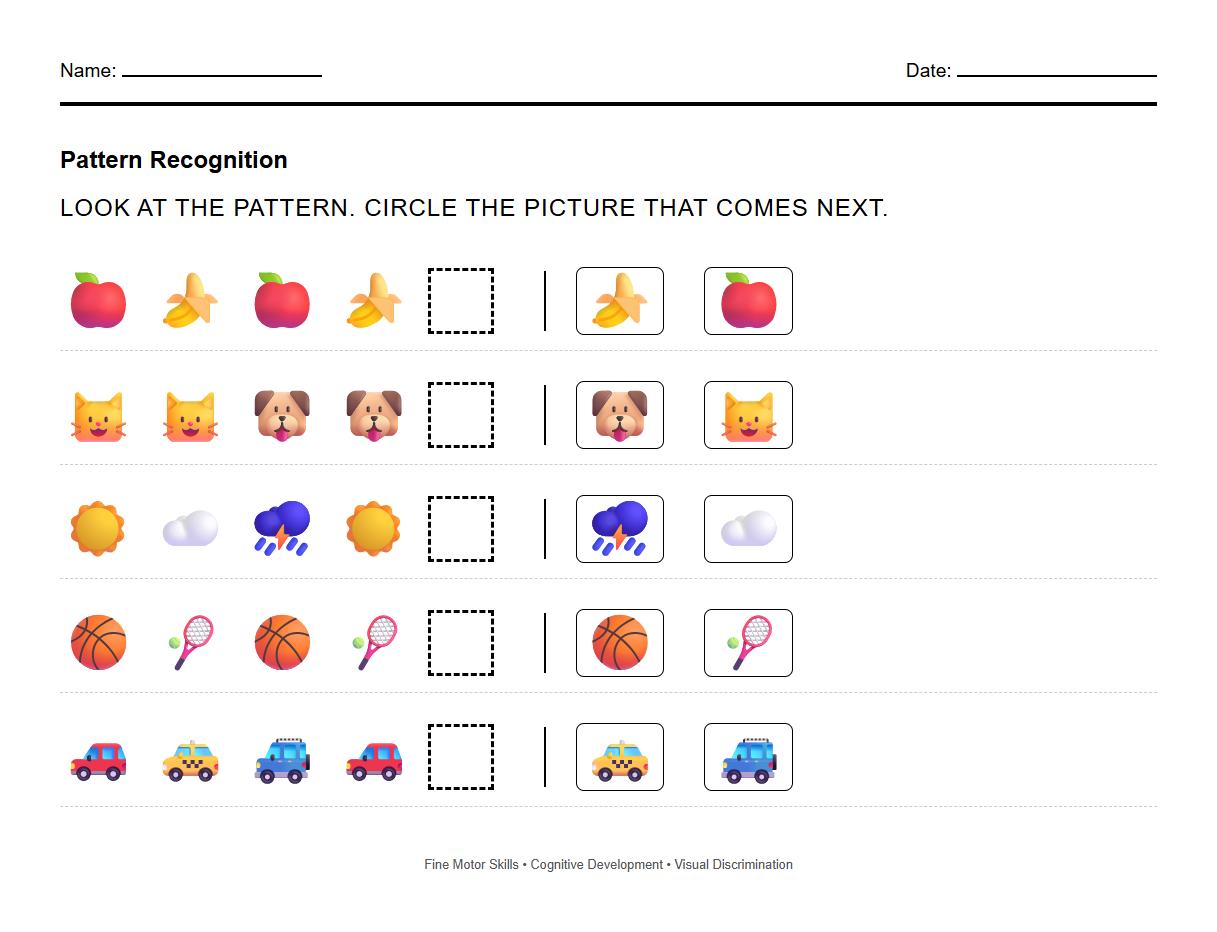
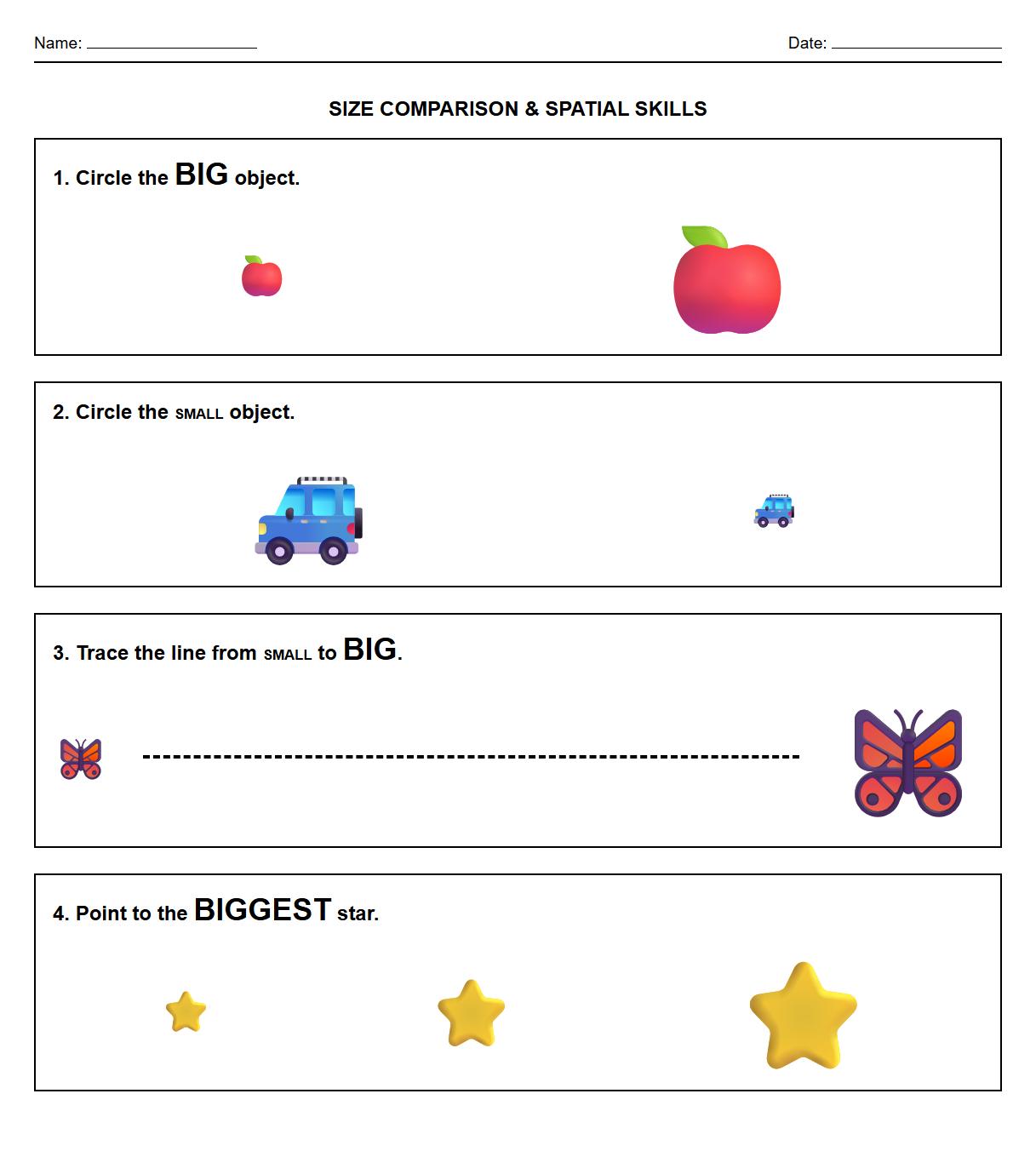
Encourage children to observe the worksheet carefully to find objects that look exactly the same. This activity helps enhance their attention to detail and visual discrimination skills. Teachers and parents can guide children to compare shapes, colors, and sizes. Identifying identical objects strengthens early cognitive development.
Matching Alike Shapes
Help children practice their shape recognition by asking them to match shapes that are alike. This fosters spatial awareness and critical thinking. Use visual cues and hints to support young learners as they find pairs. Matching tasks also promote memory and concentration.
Observing Position of Pictures
Ask children to notice which pictures share the same position on the worksheet, such as being in the same row or column. Understanding positioning aids in grasping spatial relationships. Guide kids to compare locations, reinforcing their sense of symmetry and order. This skill is foundational for later math concepts.
Identifying Items Above Specific Shapes
Use questions like "Where is the item that is above the red square?" to develop vertical spatial awareness. Children learn to orient objects relative to one another using positional language. This enhances their vocabulary and comprehension of directions. Repeated practice supports everyday navigation skills.
Recognizing Mirror Images
Challenge children to find which two images are mirror images of each other, boosting their visual and spatial reasoning. Understanding mirrors helps in distinguishing symmetry and reversals. Encouraging kids to verbalize these differences makes learning interactive. This task promotes deeper cognitive engagement.
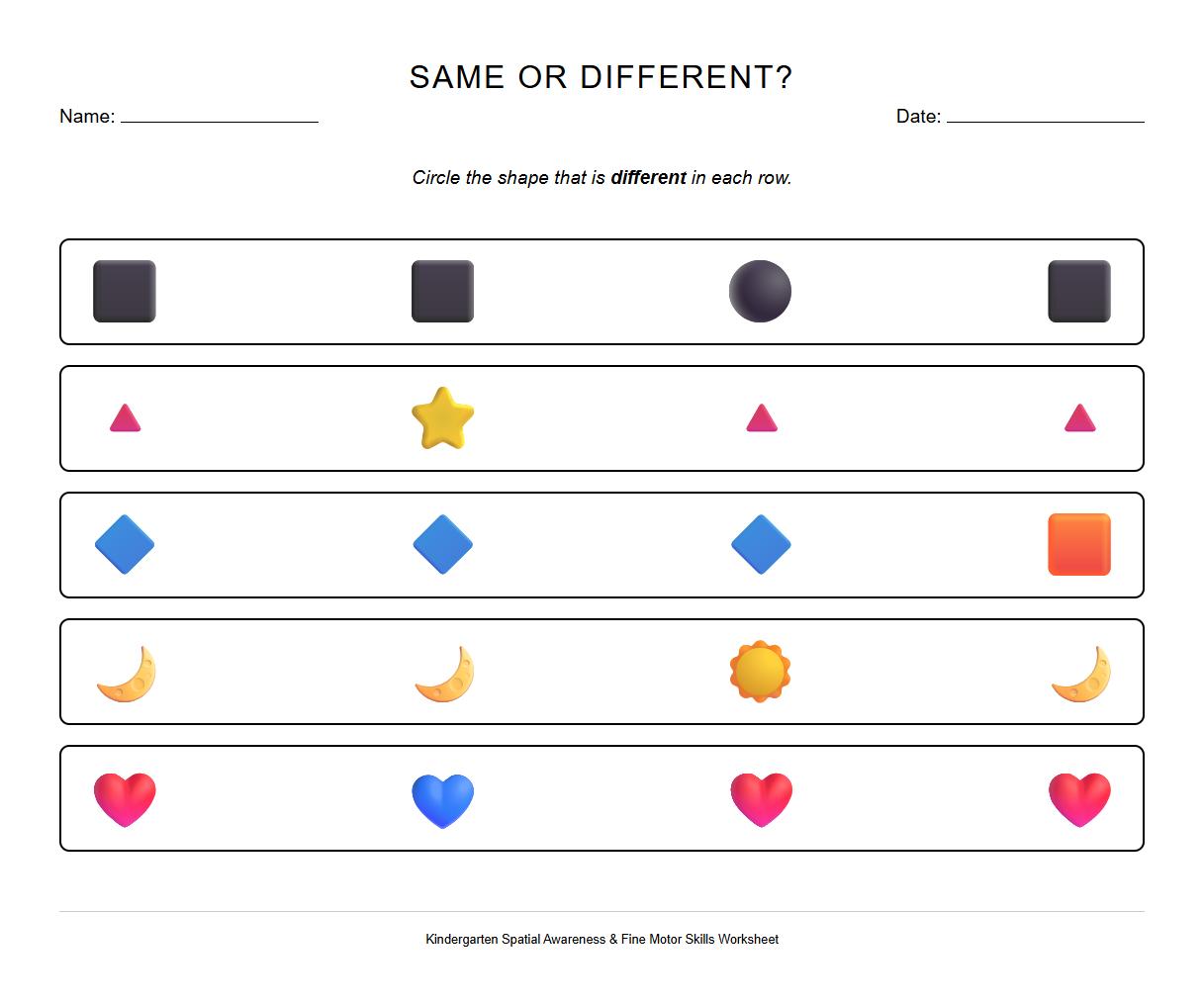
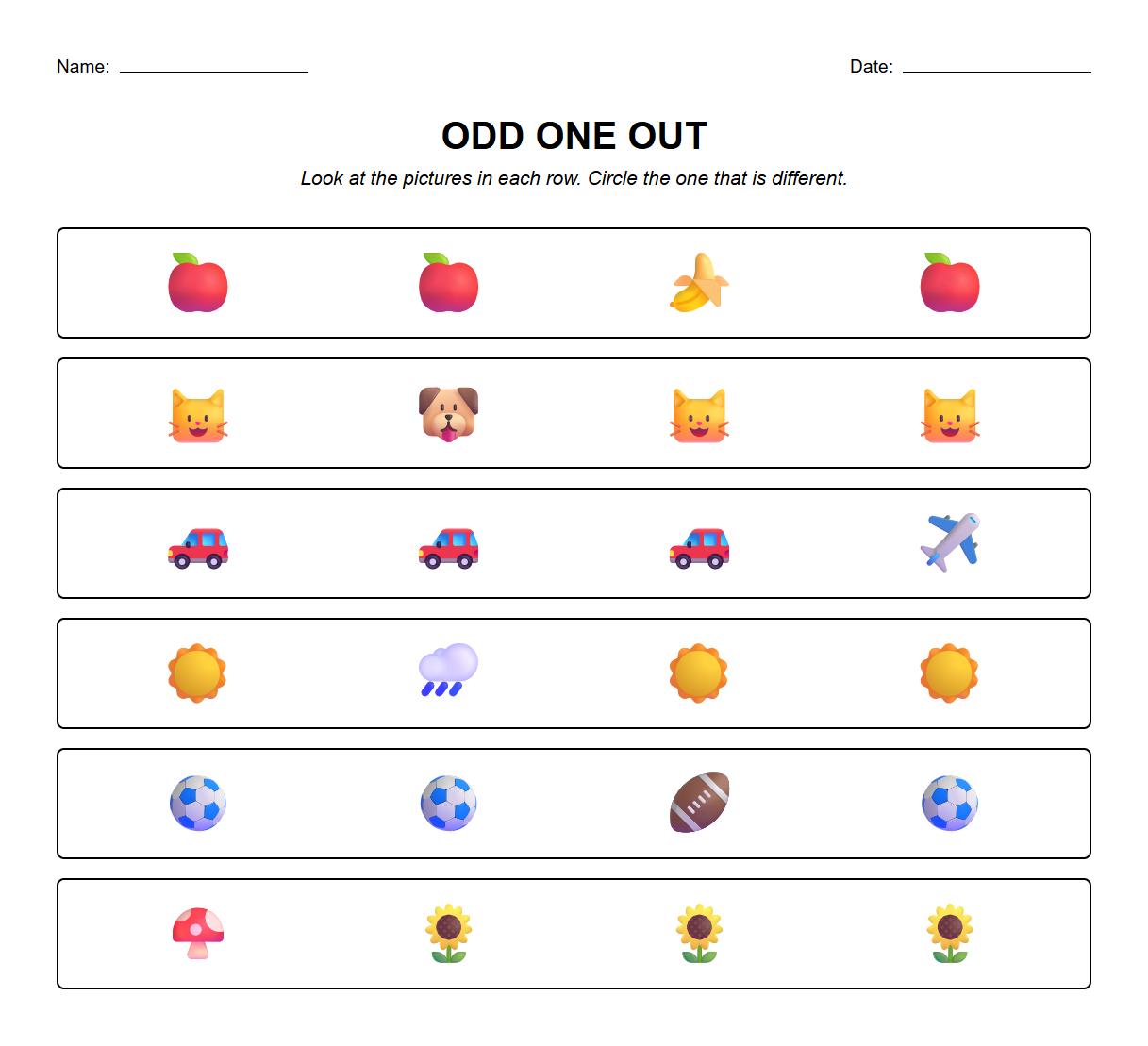
Spotting the Odd One Out
Ask children to circle the object that does not belong in a row to develop classification skills. This activity sharpens their ability to identify similarities and differences. It also encourages critical thinking and decision-making. Teachers and parents can discuss the reasons behind their choices.
Locating Objects on the Left Side
Teach children to identify which objects are on the left side to build spatial direction awareness. This helps in understanding left-right orientation, important for reading and writing skills. Visual tasks like this improve their ability to follow instructions. Reinforcing directions strengthens overall cognitive mapping.
Matching Animals Facing the Same Direction
Encourage kids to match animals facing the same direction to enhance attention to details and symmetry. This activity supports their ability to notice subtle differences and patterns. It also introduces concepts of orientation and perspective. Matching enhances both visual and logical thinking.
Identifying Objects Between Shapes
Ask children to find the object that is between the green circle and the yellow triangle to teach spatial sequencing. Recognizing positional relationships helps with organizing information and spatial memory. This exercise aids cognitive growth through visual exploration. It strengthens problem-solving skills.
Detecting Upside Down Pictures
Prompt children to identify if there are any pictures that are upside down compared to others. This sharpens their observational abilities and understanding of orientation. Detecting inverted images supports visual discrimination and attentiveness. It also builds readiness for more complex visual tasks.


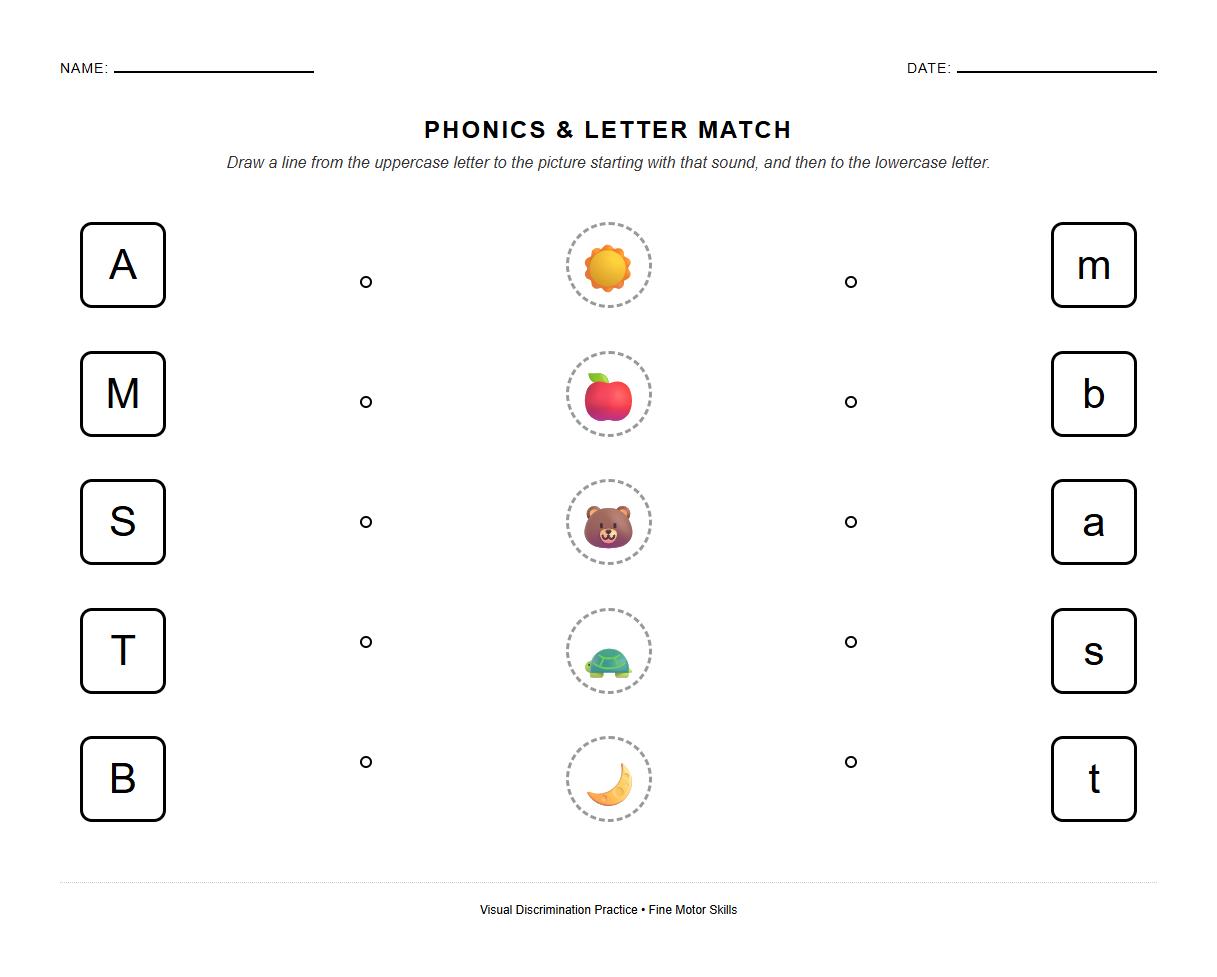
Following Directions Worksheet for Kindergarten Phonics Practice