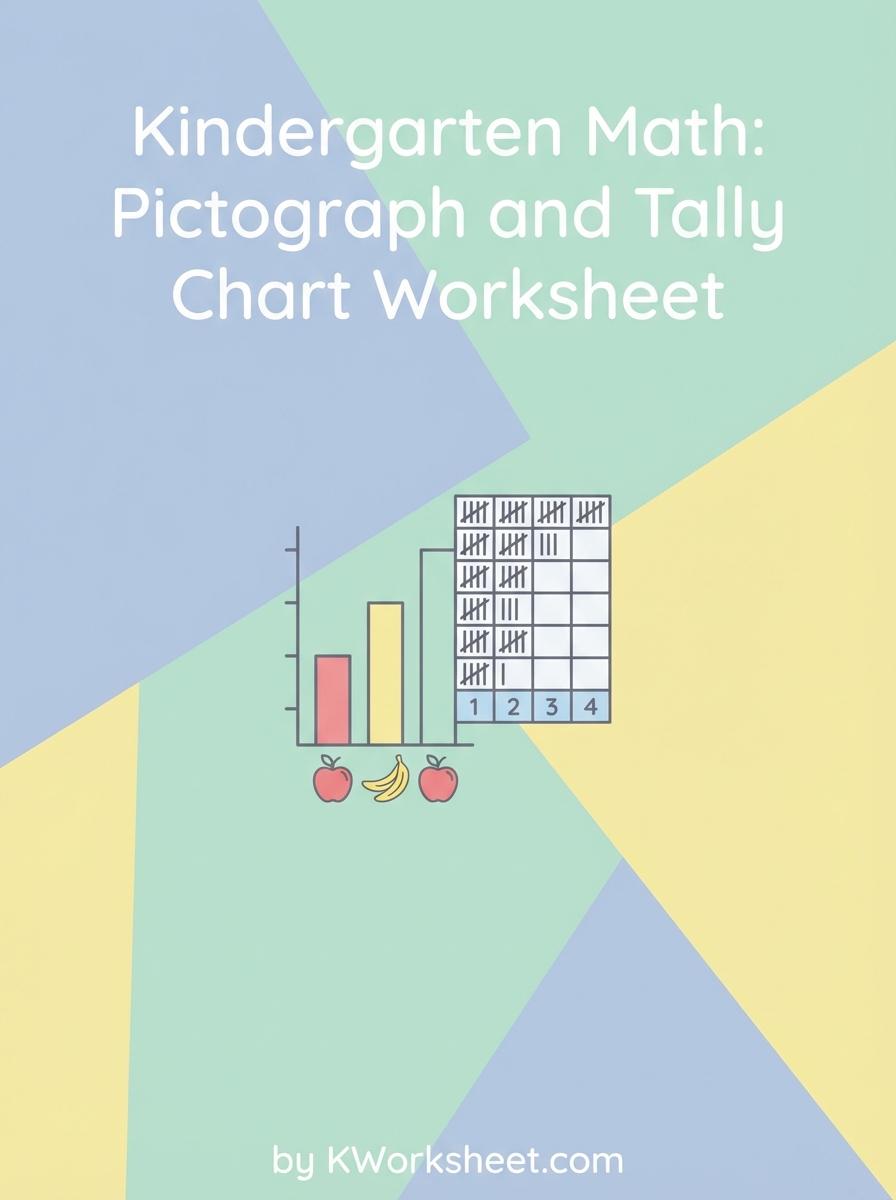
Kindergarten students develop early data interpretation skills through engaging with pictographs and tally charts, learning to recognize and represent quantities visually. These activities build a foundation in counting, comparing, and analyzing information using simple symbols and marks. Explore our collection of kindergarten math worksheets to support your child's understanding of pictographs and tally charts.
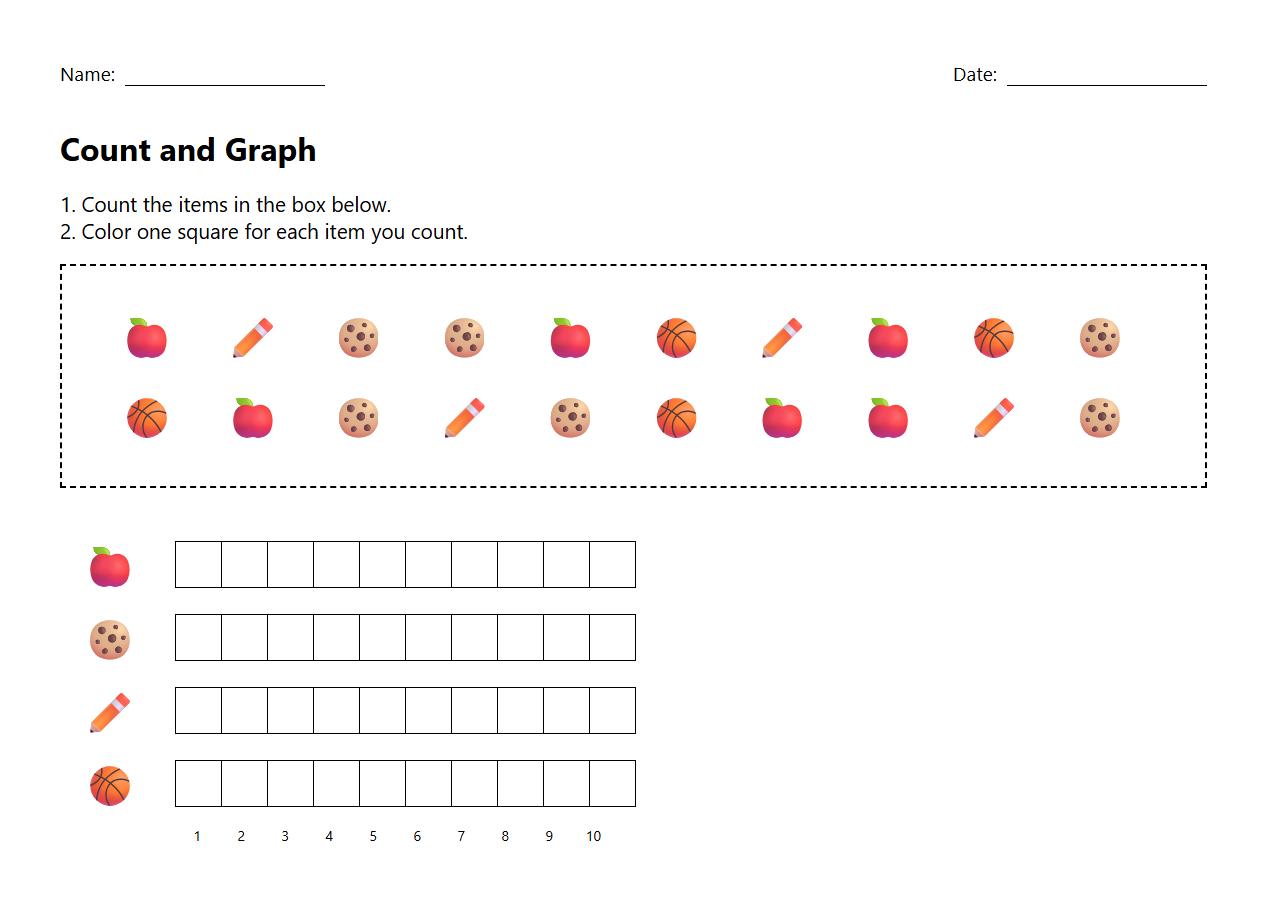
Counting Apples in the Pictograph
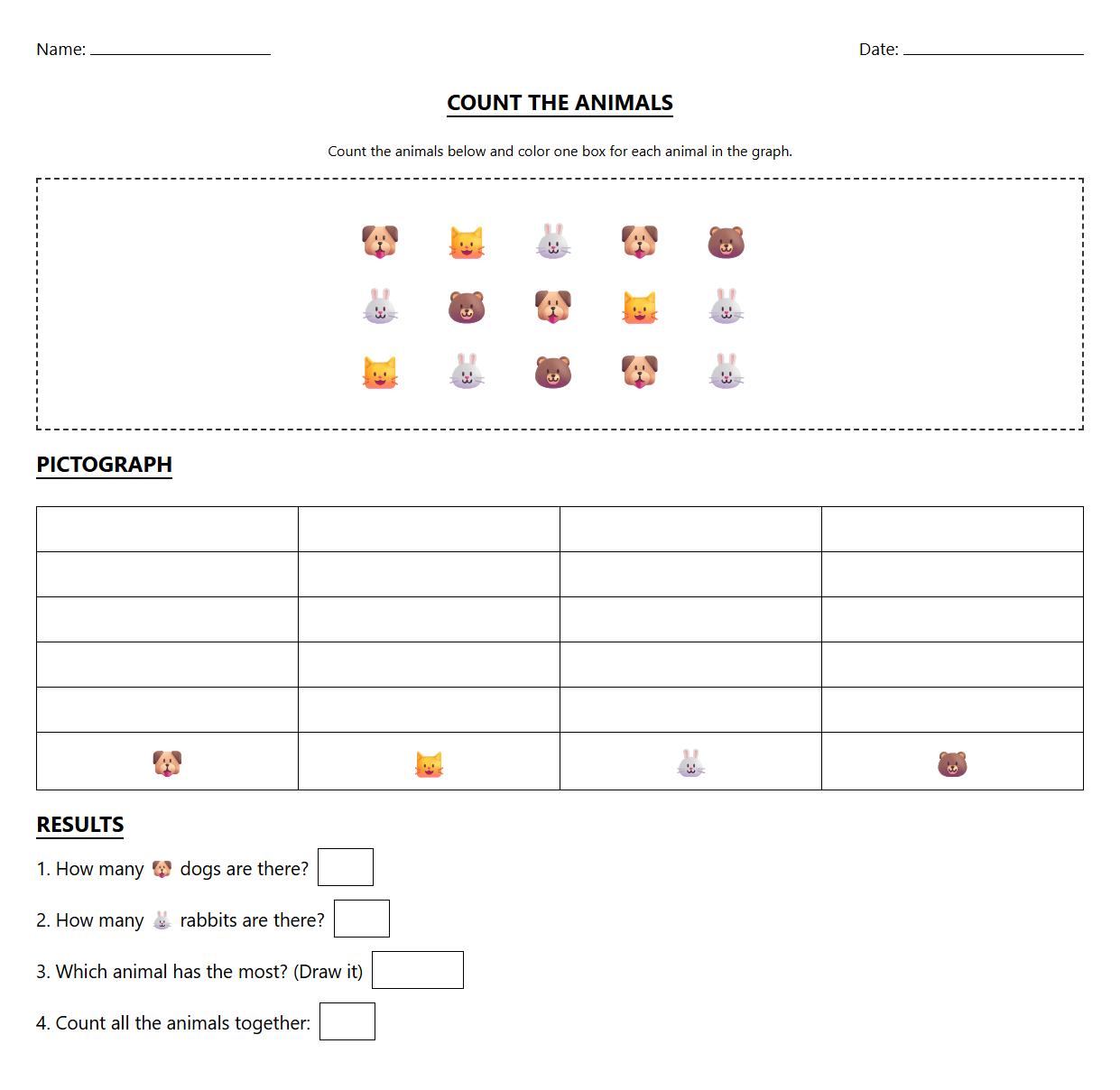
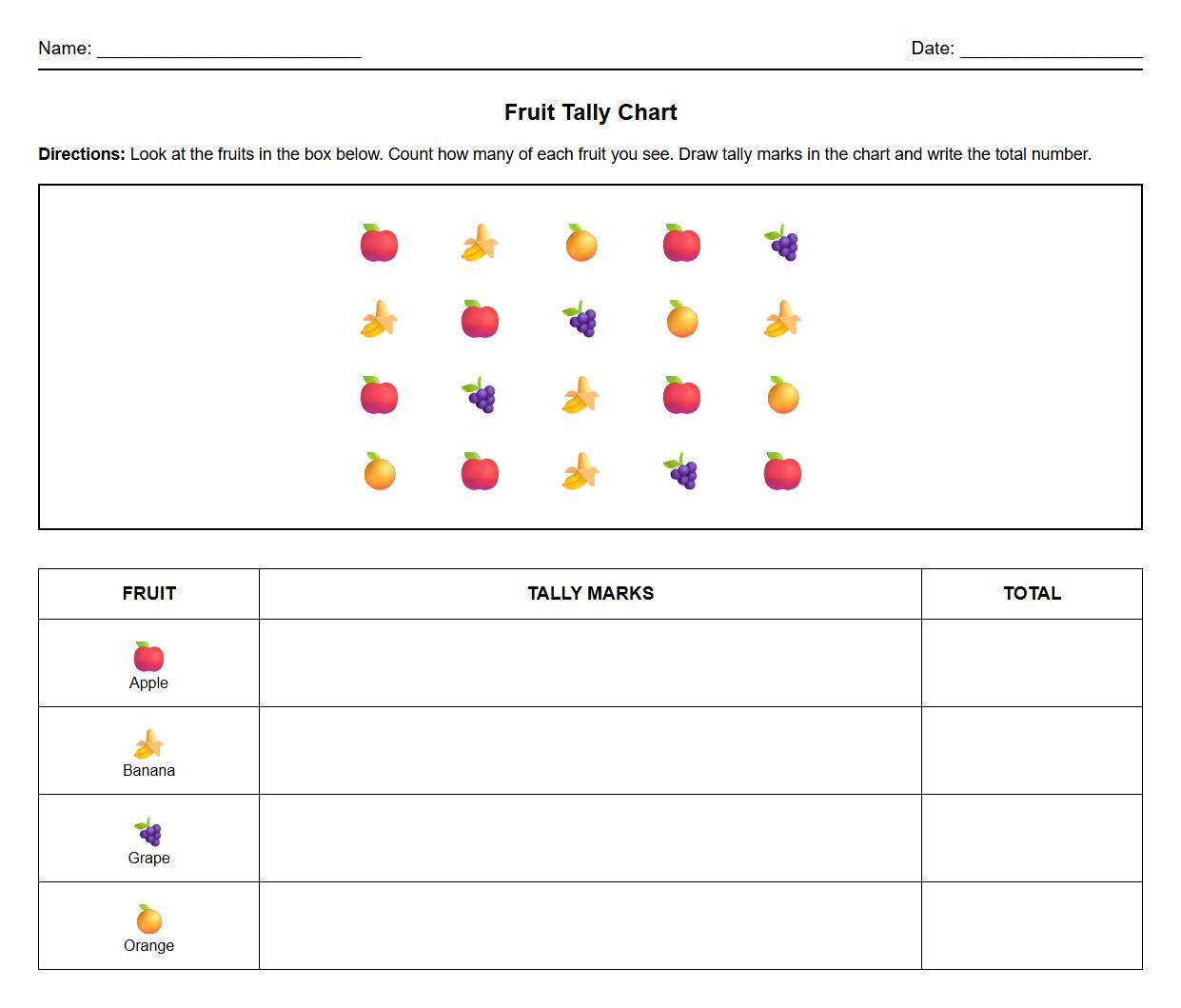
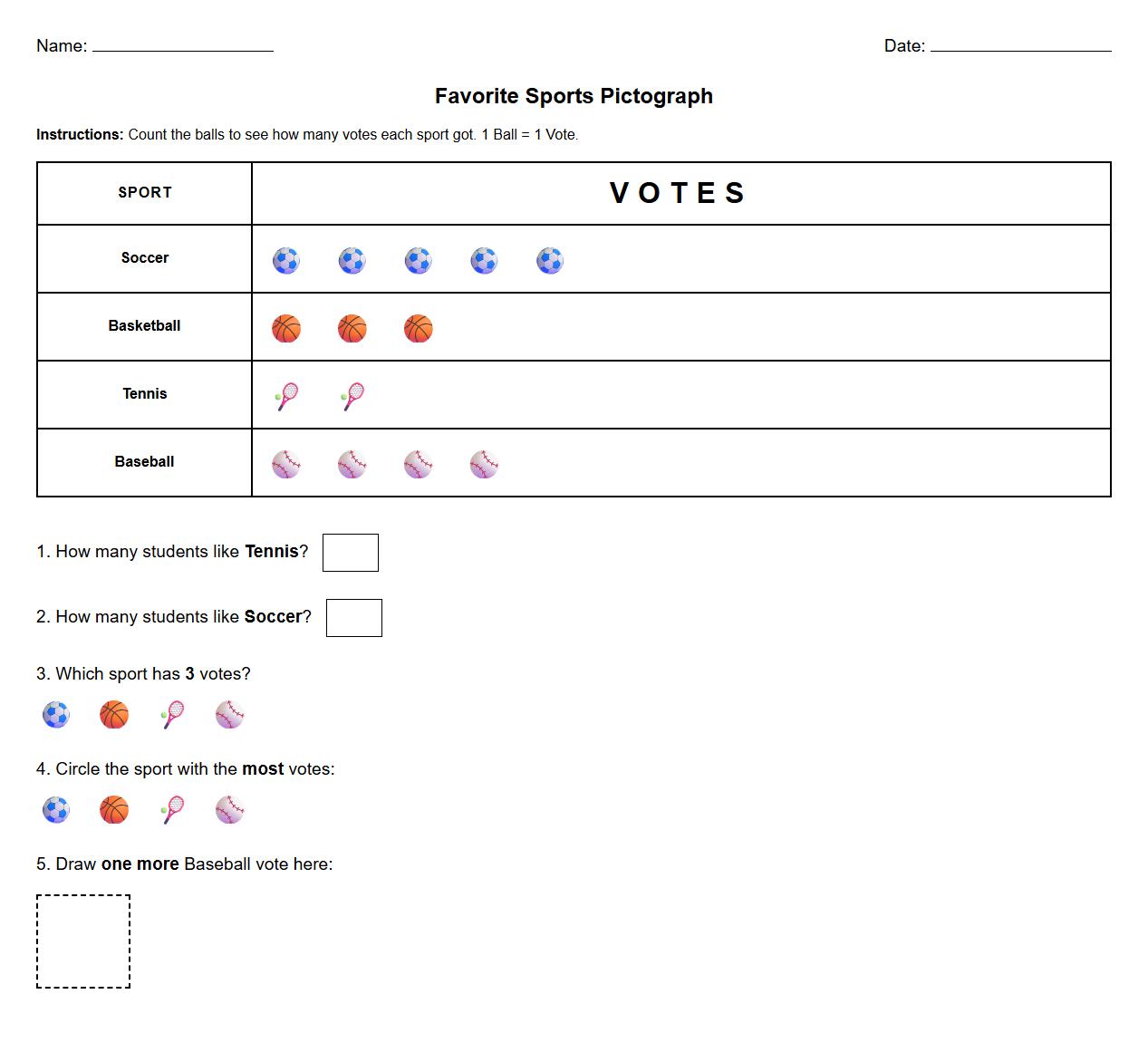
Look closely at the pictograph to count the number of apples displayed. Each apple symbol represents one unit, so total them carefully. This helps children practice their counting and observation skills effectively. Encourage the use of fingers or counters for accurate counting.
Identifying the Fruit with the Least Amount
Examine the pictograph to find which fruit has the fewest symbols. This activity supports understanding of comparison and quantity concepts. Discuss the differences in amounts with children to enhance their analytical thinking. Use colorful visuals to keep them engaged.
Comparing Stars and Hearts in the Chart
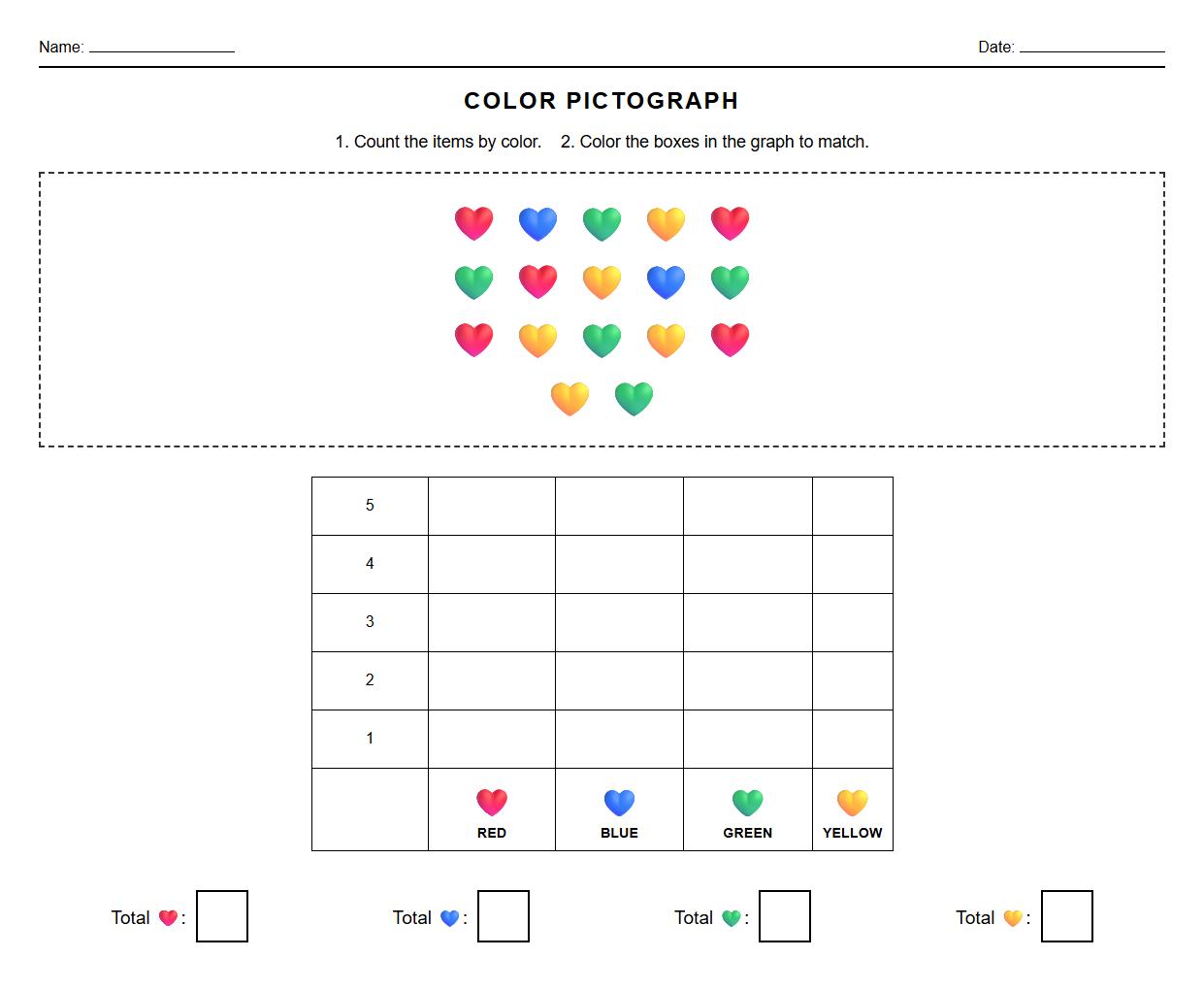
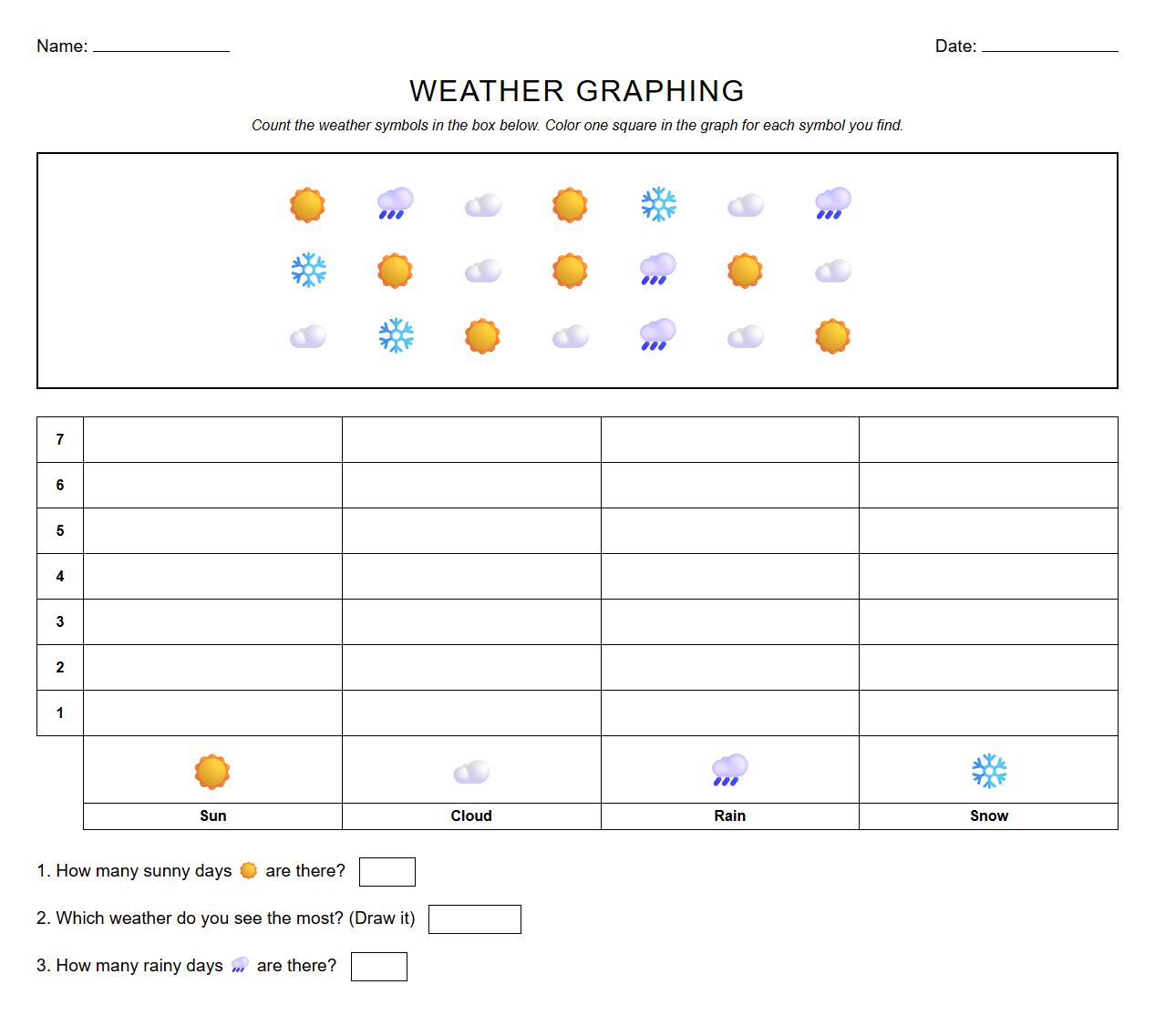
Count how many stars and hearts are shown in the chart and calculate the difference. This teaches subtraction and helps children understand numerical relationships. Using the tally or pictograph makes the process visually clear. Encourage children to explain their reasoning.
Calculating Total Number of Items in the Pictograph
Add all the symbols together to find the total number of items represented. Summing quantities across categories reinforces addition skills. Visual aids like pictographs make abstract math concepts tangible. Practice this with different charts for better retention.
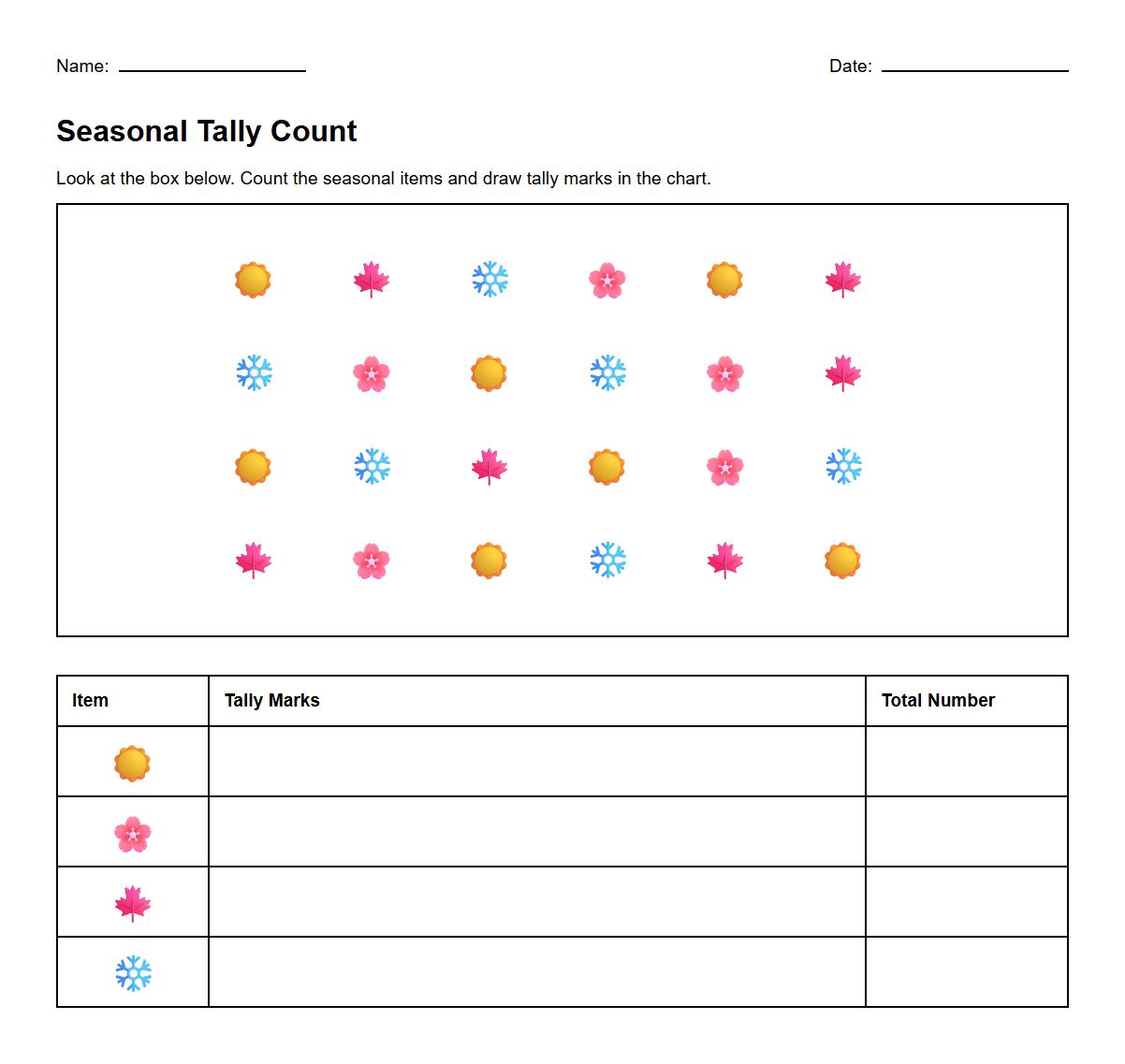
Determining the Group with the Most Tally Marks
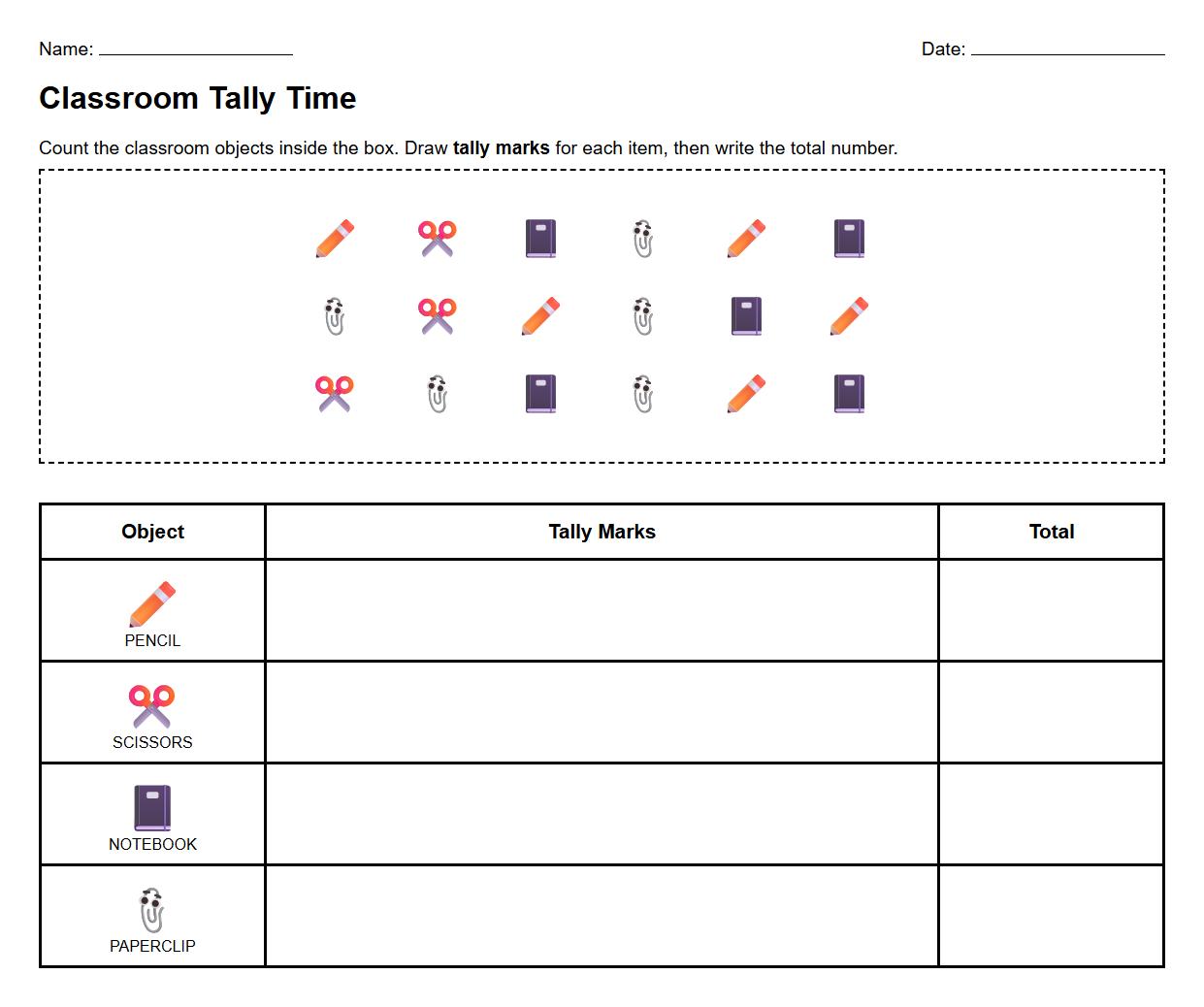
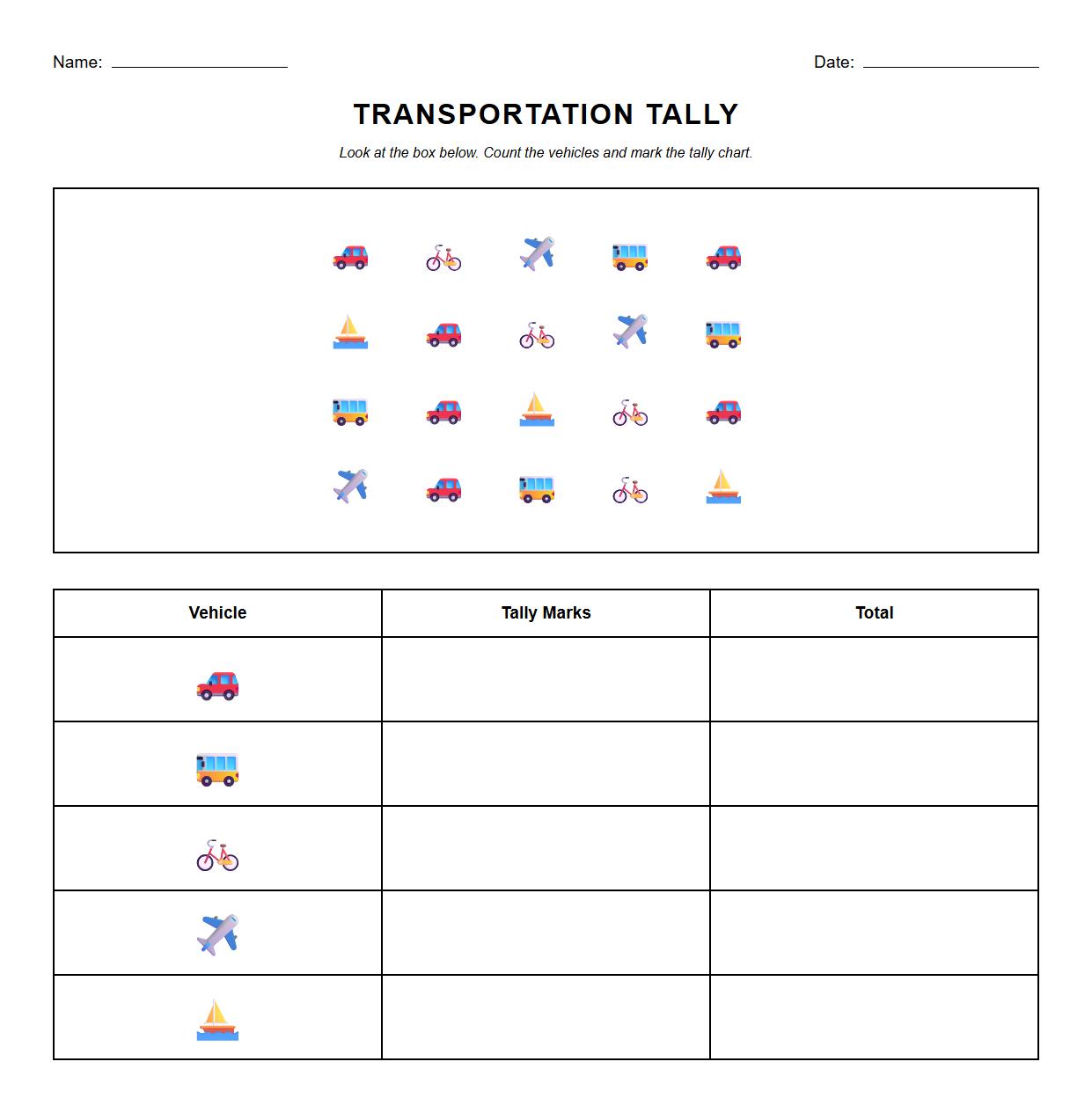
Identify which group has the highest count by examining the tally marks. Tally marks make counting by fives easier and more fun for young learners. Recognizing the largest group builds comparative math skills. Highlight patterns to help interpretation using skip counting techniques.
Counting Tally Marks Showing the Number Four
Find the section of the tally chart that shows exactly four tally marks. Understanding how tally marks represent numbers develops counting proficiency. Four tally marks are shown as a group of four vertical lines. Reinforce recognition of this format for number four with labeling activities.
Identifying Objects Equal in Number in the Tally Chart
Look for categories in the tally chart where the number of objects is the same. This promotes skills in comparing equality and equivalence. Discuss why these quantities match and what it means. Use this to introduce concepts of balance and fairness with sorting activities.
Counting Bananas and Oranges Altogether
Add the tally marks representing bananas and oranges to find their total. This exercise combines addition with data interpretation. It demonstrates how to combine categories in a meaningful way. Practice this to build confidence in arithmetic using pattern sequencing.
Finding the Item with Three Tally Marks
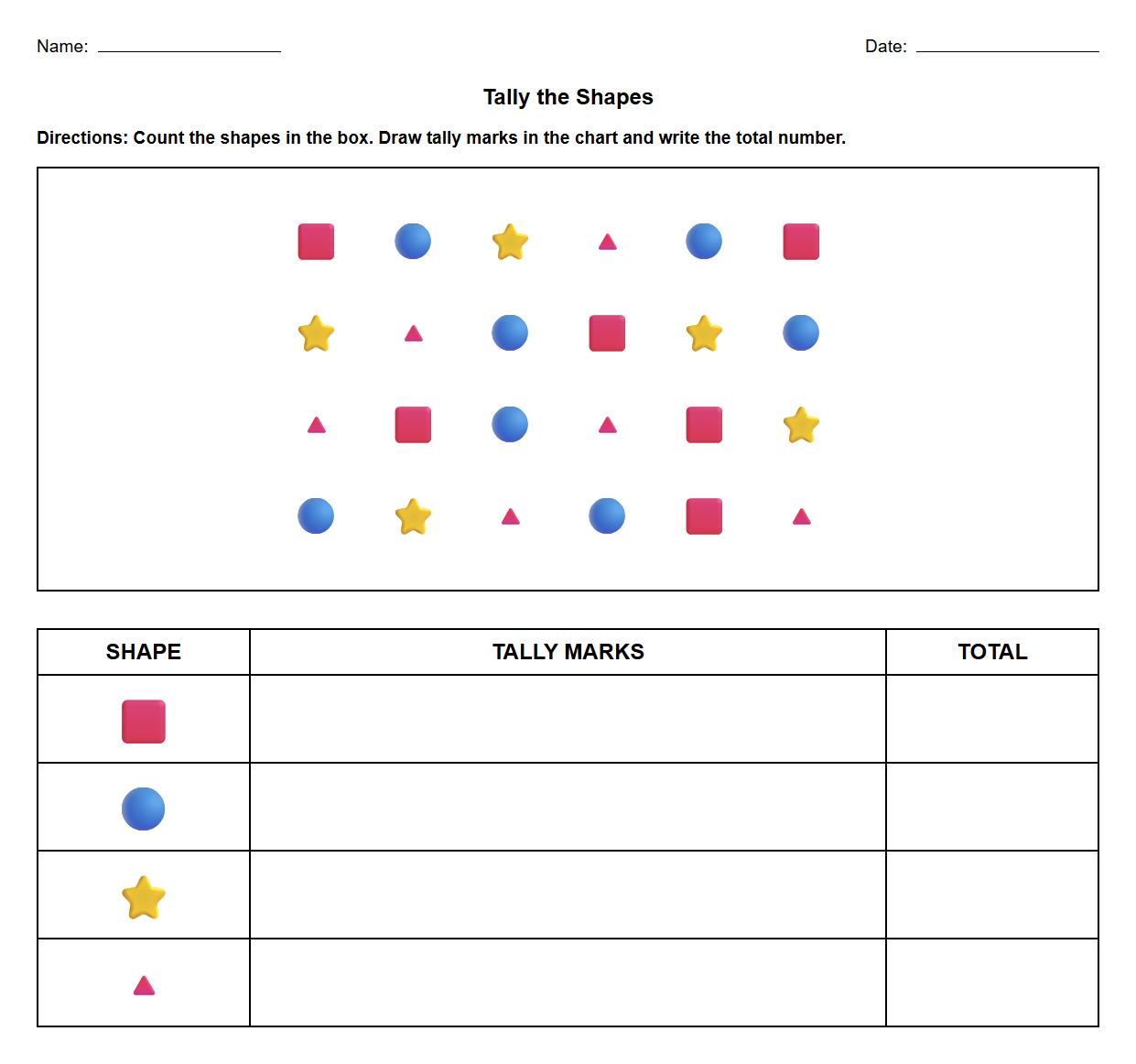
Identify which item on the tally chart has exactly three tally marks. This helps children learn to associate tally groups with small quantities. Three tally marks are displayed as three vertical lines without a crossing line. Recognizing these numbers supports early math fluency through shape identification activities.
Comparing Circles and Triangles Quantities
Count how many circles and triangles are in the chart and determine how many more circles there are. This comparison aids development of subtraction and difference understanding. Use visual methods like visual patterning to strengthen comprehension. Encourage children to explain their findings verbally.


Tally Marks to Bar Graph Activity Worksheet for Kids