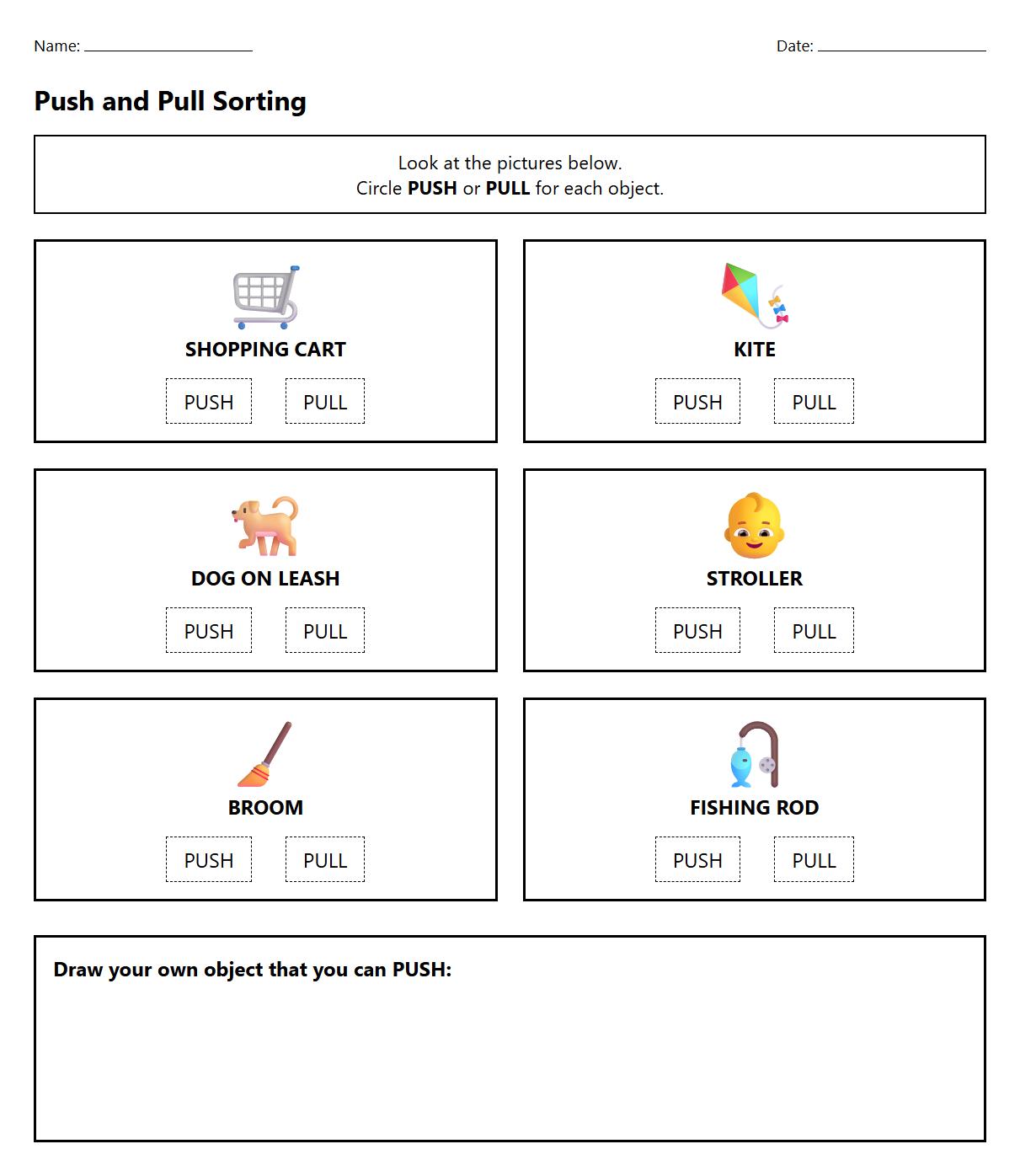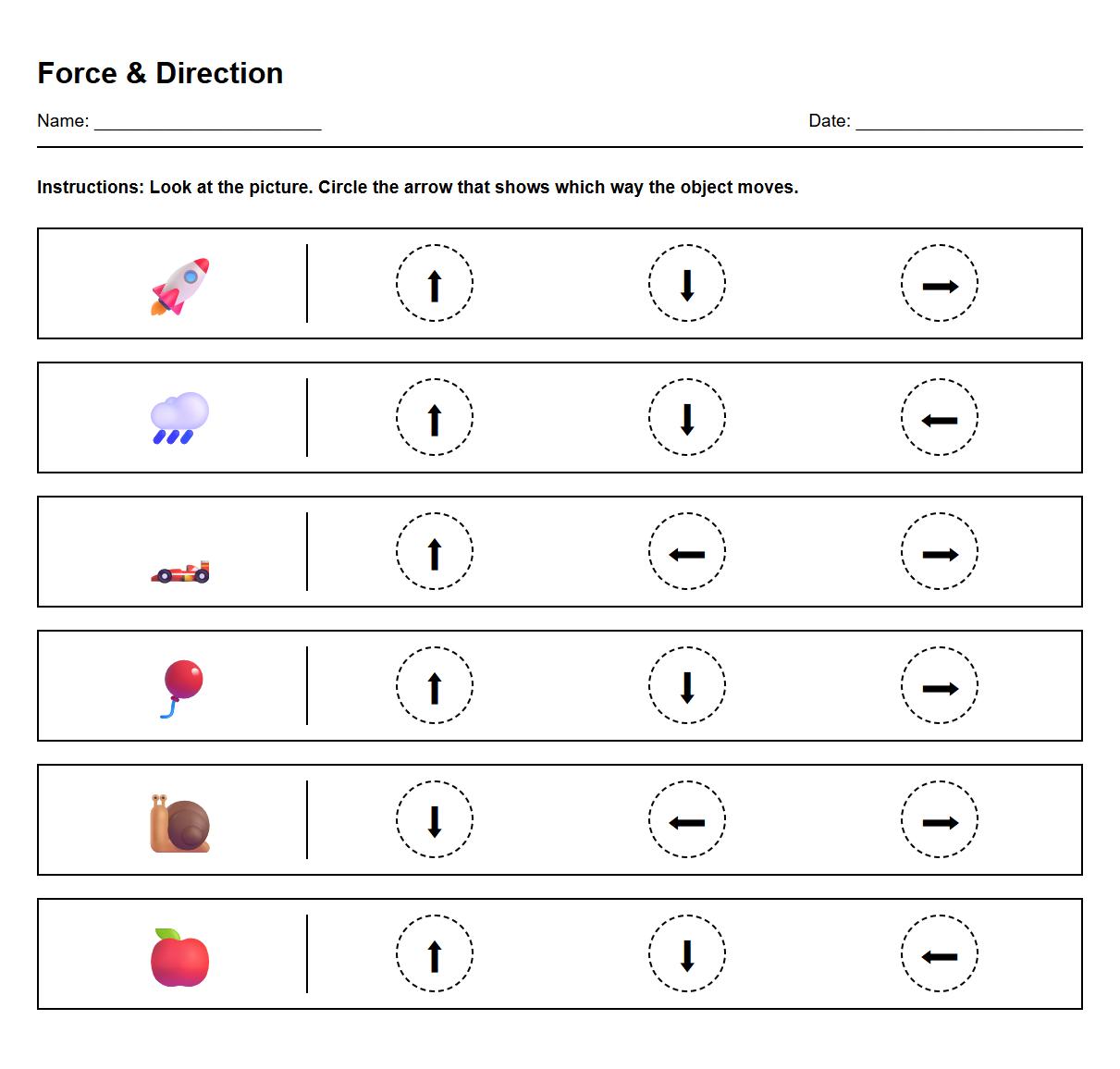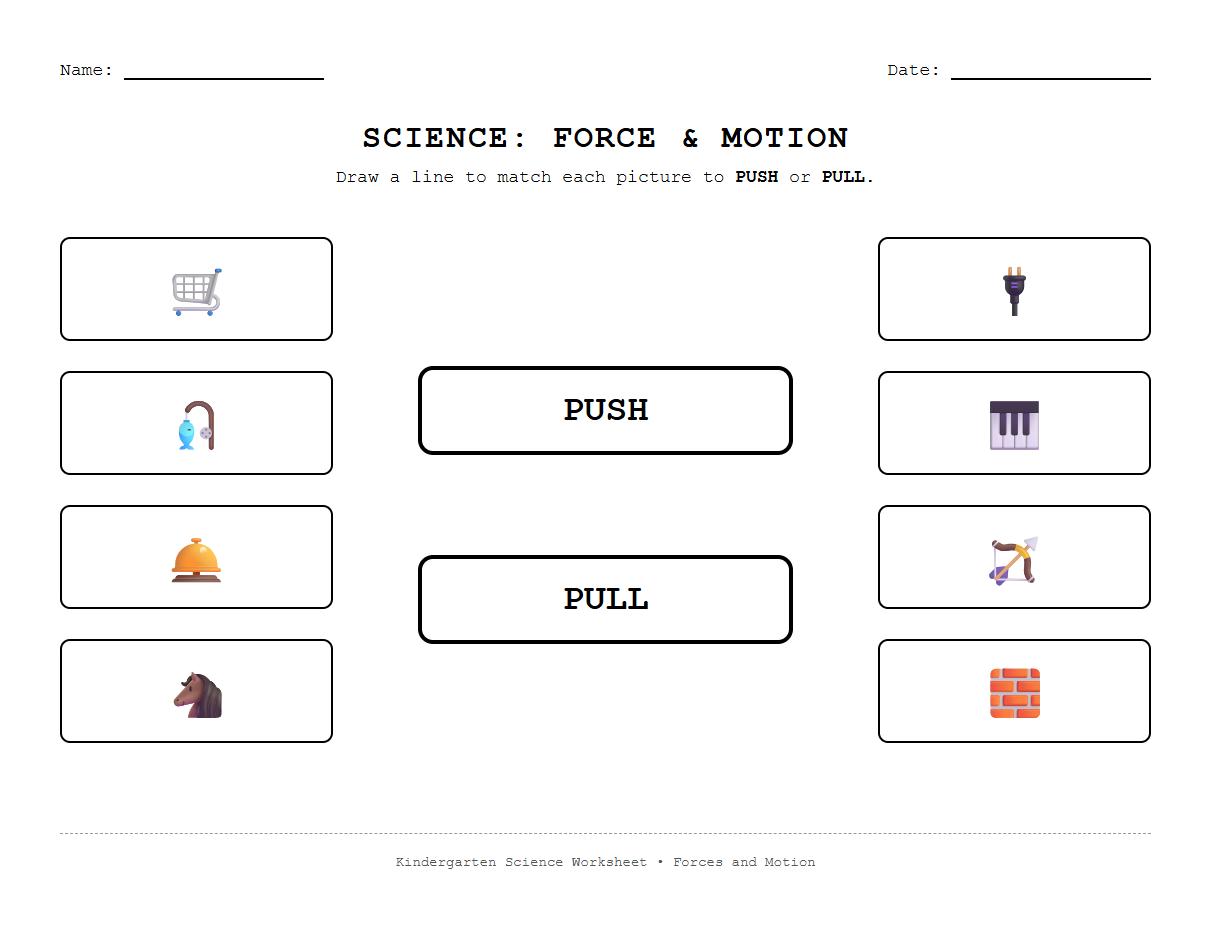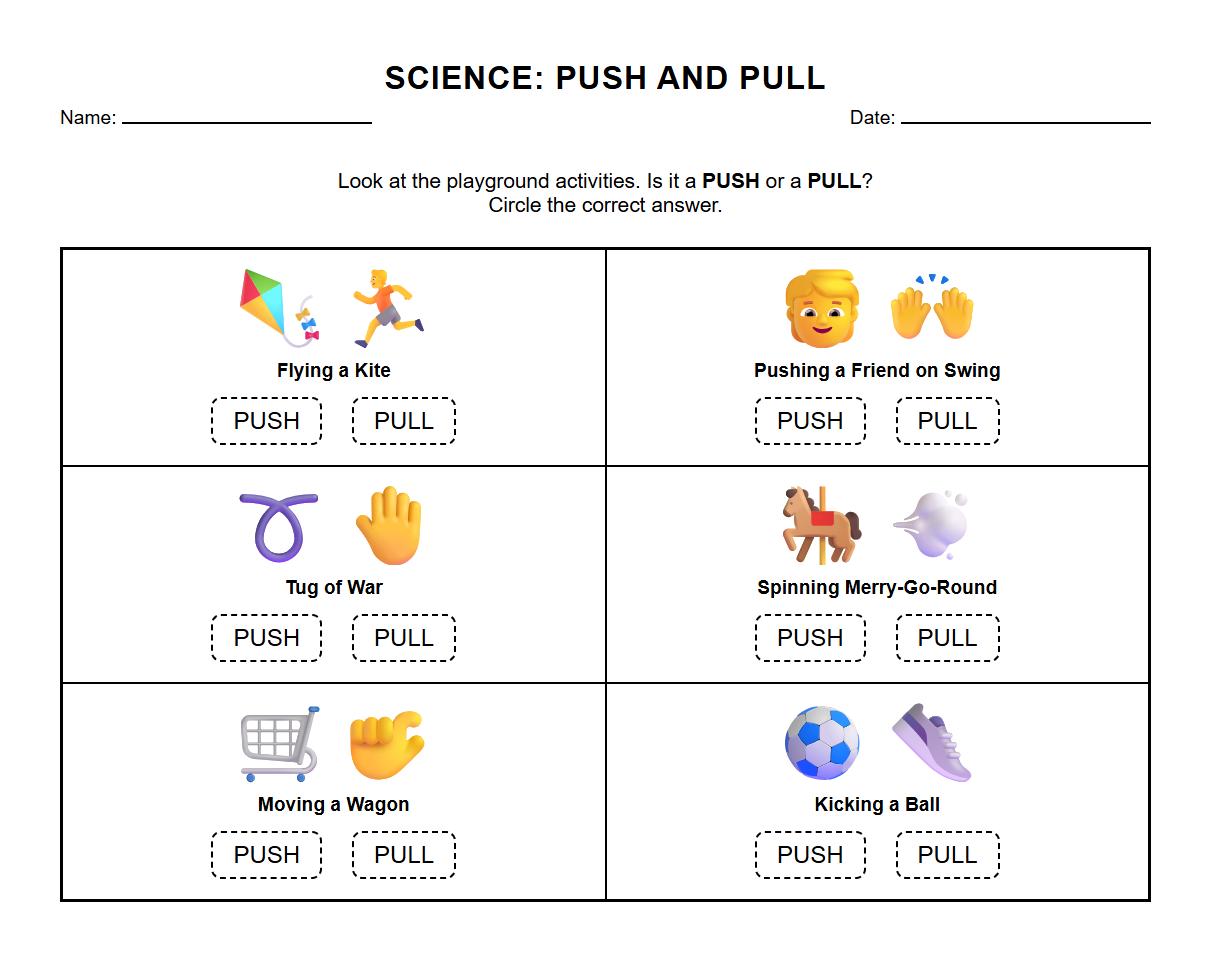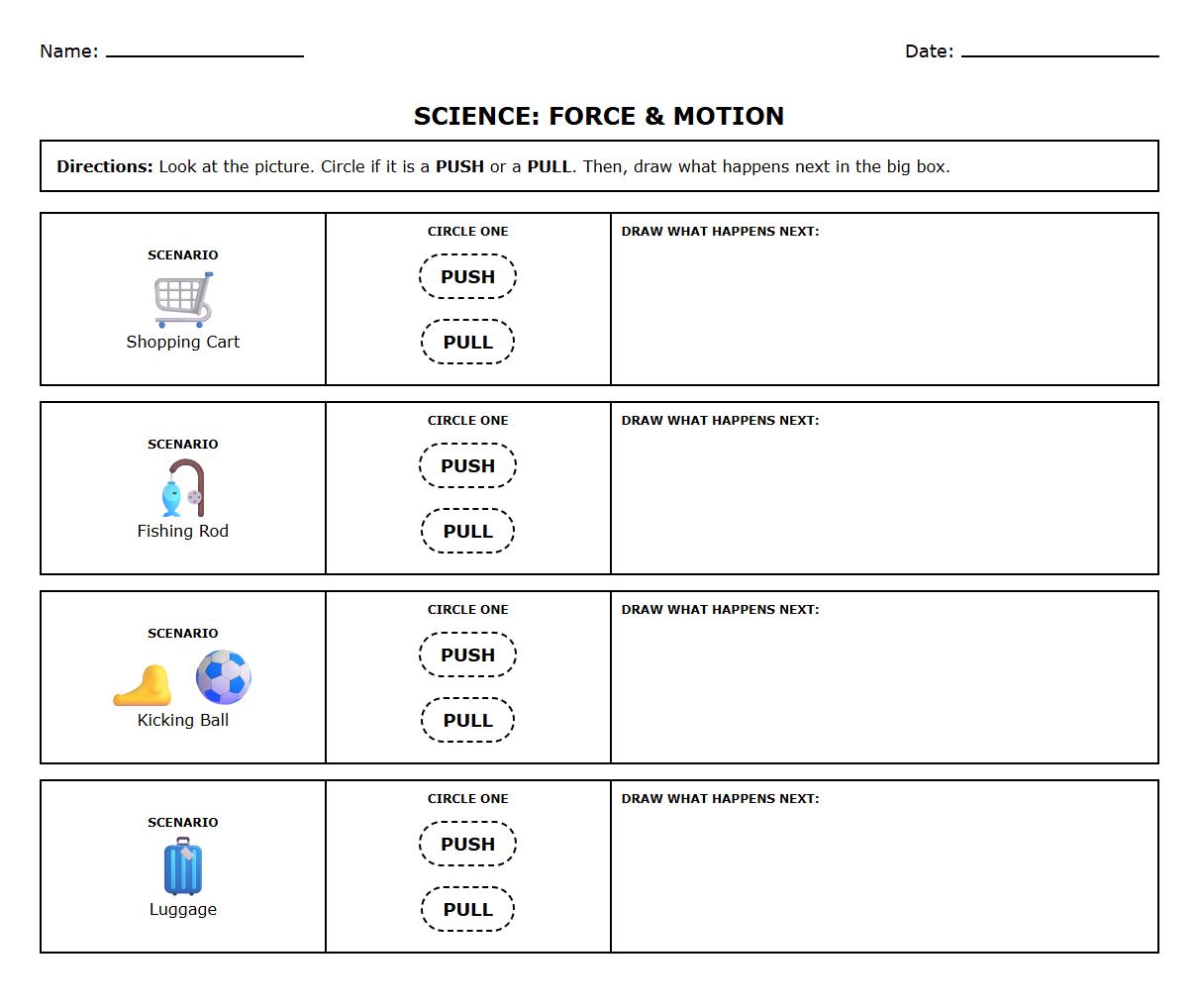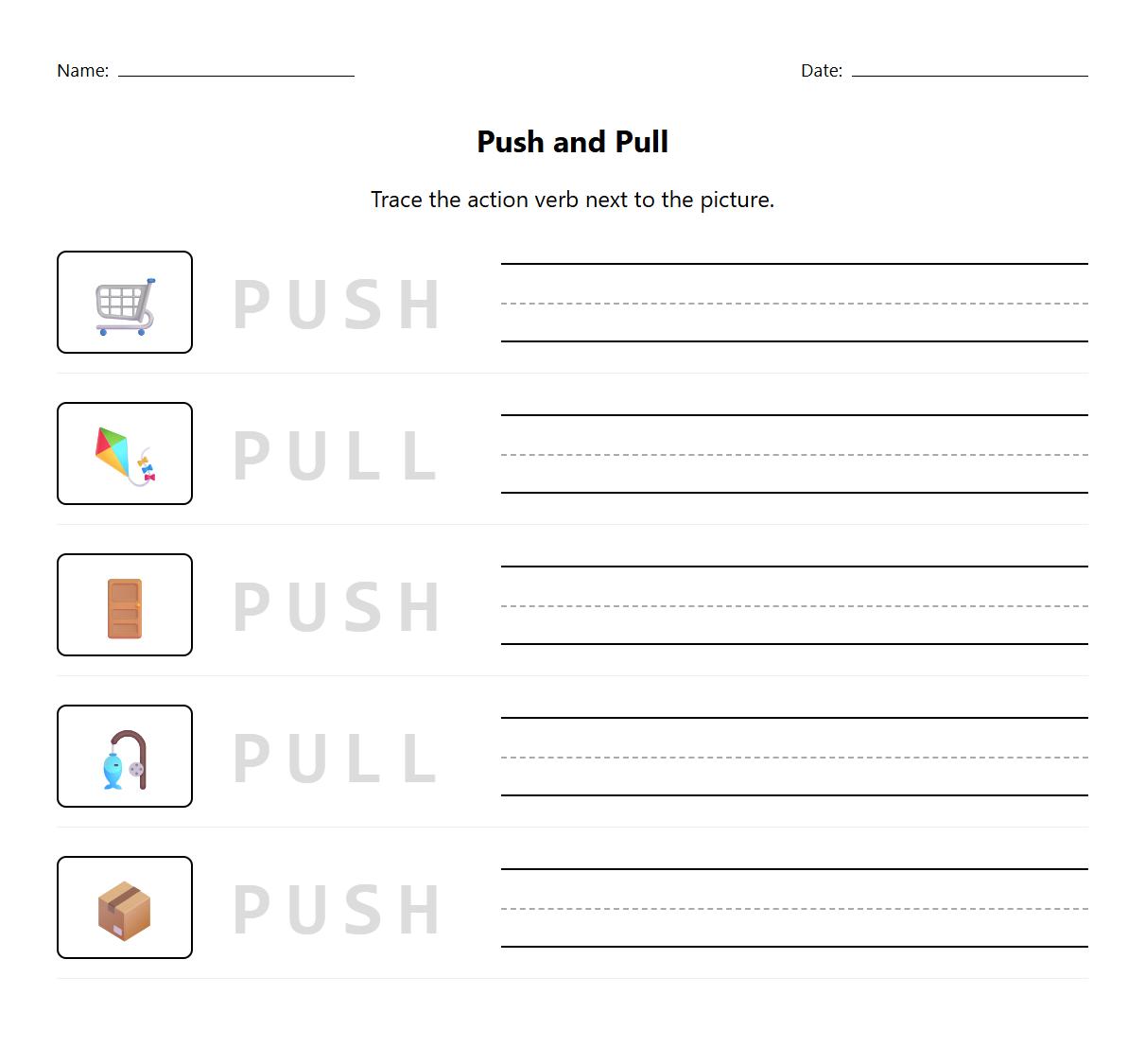
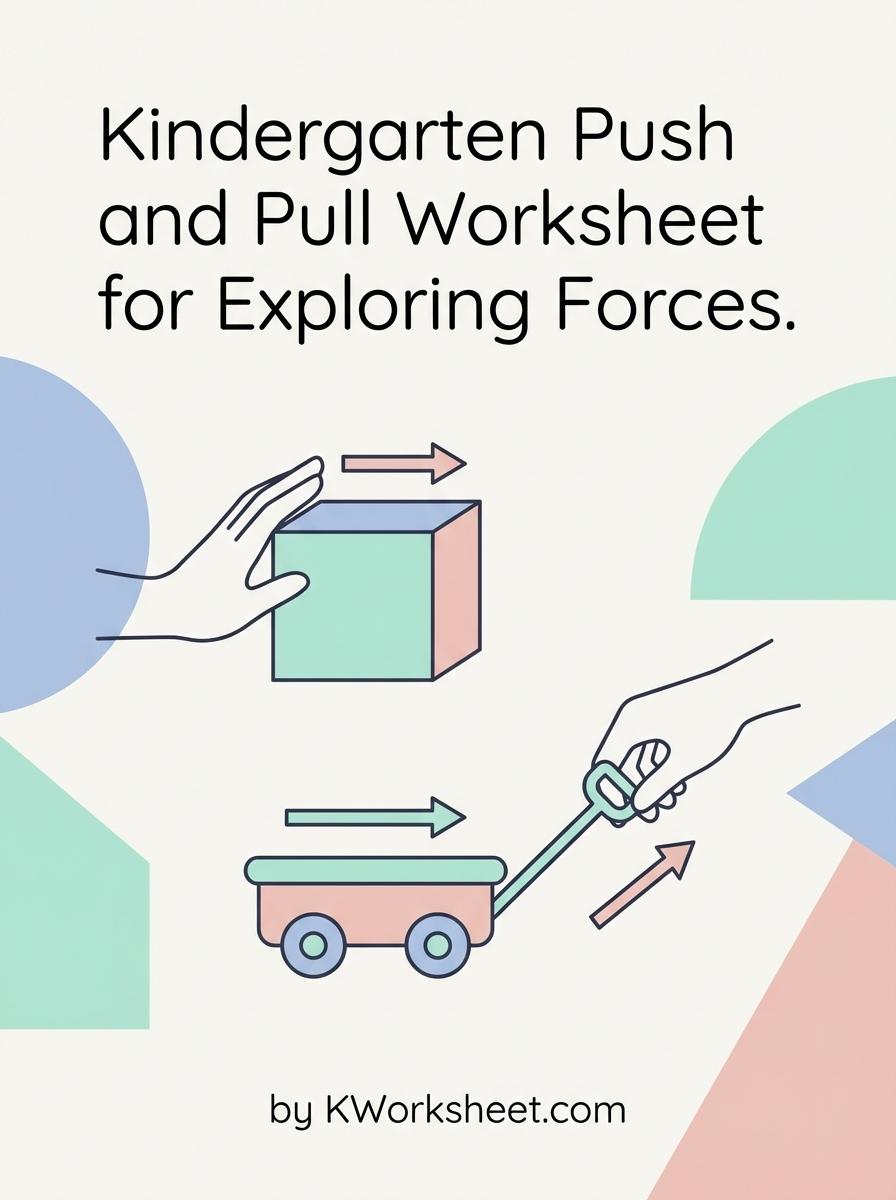
Kindergarten students develop a foundational understanding of forces by identifying simple push and pull actions in everyday activities. This worksheet encourages hands-on exploration, helping young learners recognize how objects move when pushed or pulled. Explore the range of push and pull worksheets available to support your child's discovery of basic physics concepts.
Objects to Push in the Classroom
In a kindergarten classroom, children can push desks, chairs, and toy cars. Pushing helps develop their arm strength and coordination. Encourage kids to try safe objects, like a rolling chair or a lightweight box. This activity is great for building motor skills.
Things to Pull on the Playground
On the playground, children can pull wagons, ropes, and swings. Pulling requires different muscles and teaches kids about force and movement. This activity also promotes teamwork when pulling with friends. It's a fun way to explore physical effort outdoors.
Toys You Can Both Push and Pull
A common toy that children can both push and pull is a wagon. Wagons can be pulled by the handle or pushed from behind. This dual action helps kids understand different types of movement. Playing with such toys also improves their problem-solving skills.
What Happens When You Push a Ball?
When you push a ball, it rolls forward across the floor. The harder you push, the faster and farther it moves. This shows children how force affects motion. It's a simple way to introduce basic physics concepts.
Changes When You Pull a Chair Closer
When you pull a chair closer, it moves towards you, making it easier to sit down. Pulling changes the chair's position without lifting it. This helps children understand direction and distance in space. It also strengthens their hand muscles.
How a Door Moves When You Push vs. Pull
A door opens differently depending on whether you push or pull it. Pushing usually swings the door away from you, while pulling brings it closer. Understanding this helps children learn about cause and effect. It also teaches them to follow instructions when entering or exiting rooms.
Showing How to Push and Pull with Your Hands
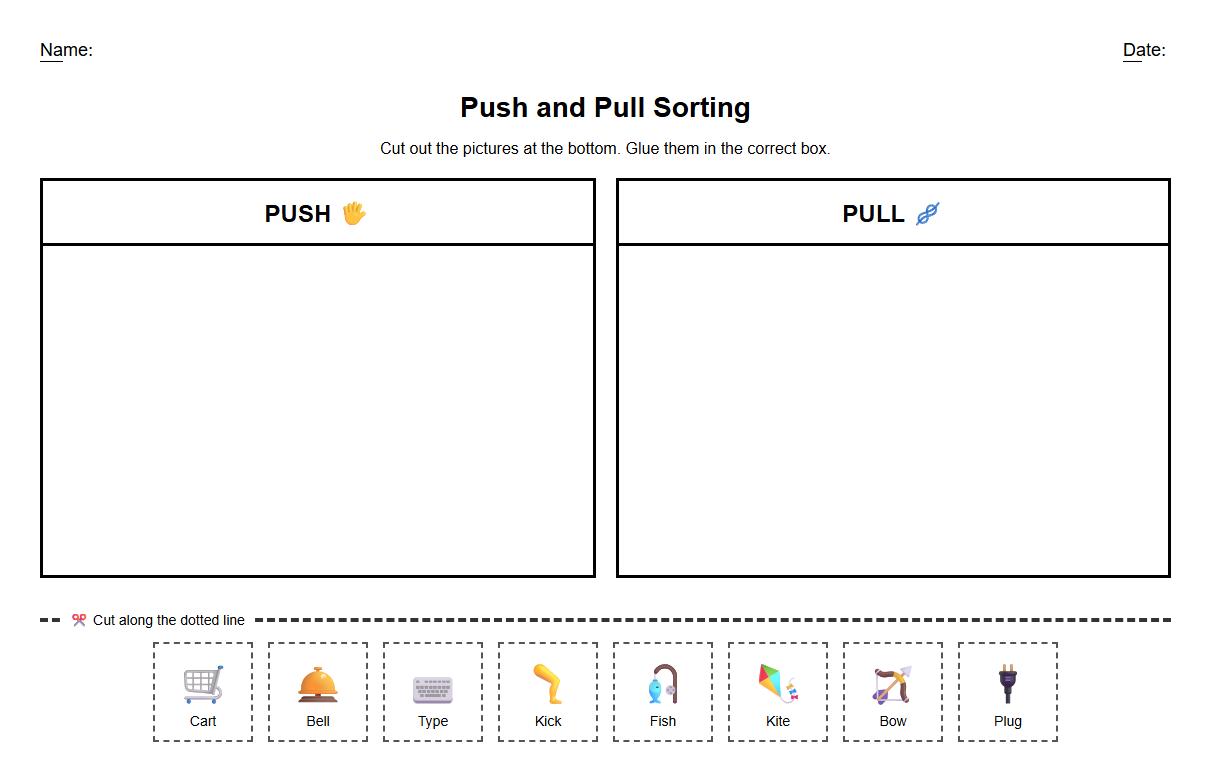
Demonstrate pushing by placing your hands flat and moving an object away from you. Pulling involves grabbing an object and bringing it closer. Encourage children to try both actions using their hands on toys or classroom materials. This tactile experience enhances their motor skills, as seen in matching activities.
Which is Easier to Push: Heavy or Light Block?
A light block is easier for children to push than a heavy one. This difference teaches them about effort and resistance. Comparing push strength with different weights is a practical science lesson. It also builds their confidence and physical strength.
Sounds When You Pull Something Across the Floor
When you pull an object across the floor, it often makes a scraping or dragging sound. These sounds vary depending on the floor type and object weight. Listening to these noises helps children connect sound with action. It's an engaging way to explore sensory experiences.
Feelings When You Push Something Very Heavy
Pushing something very heavy can make you feel strong and challenged. It requires effort, encouraging kids to try their best and not give up. This experience teaches perseverance and muscle development. It also helps them understand the limits of their strength.


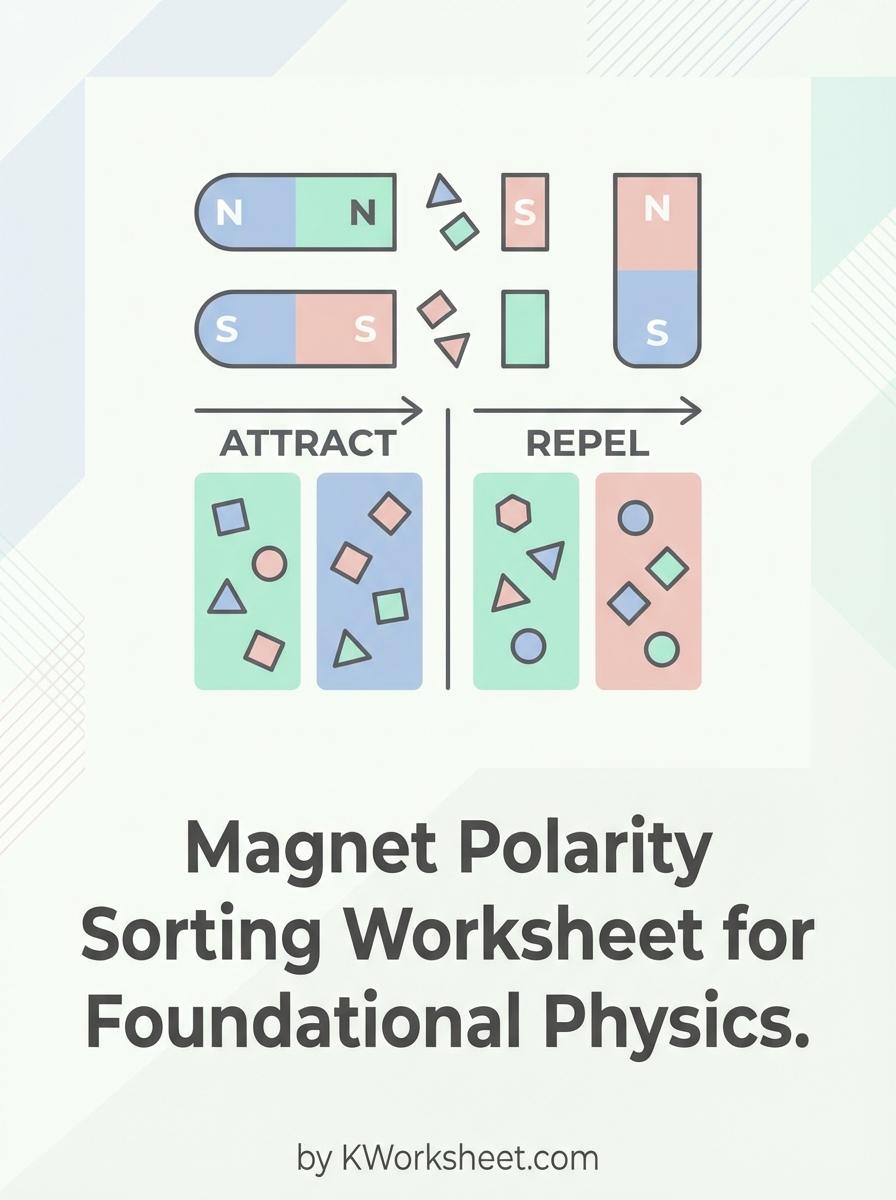
Magnet Polarity Sorting Worksheet for Foundational Physics